


Corte a laser striations are one of the most common quality concerns I encounter when working with high-power laser cutting systems. These surface lines become especially noticeable when processing thick materials such as carbon steel or stainless steel. If you’re trying to understand why this happens and how to control it, you’re in the right place. In this article, I’ll explain the root causes of laser cutting striations and provide practical methods to reduce them, helping you achieve smoother and more precise cut edges in production.
Understanding Laser Cutting Striations in Thick Materials
What Are Laser Cutting Striations?
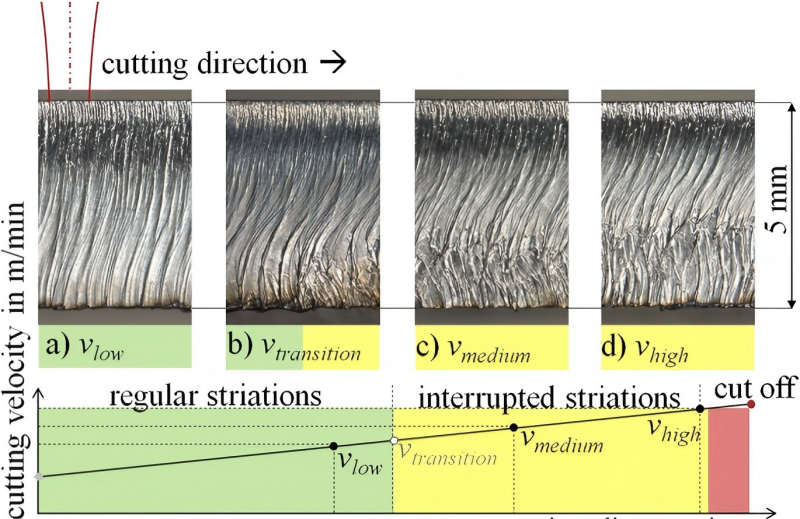
Laser cutting striations are vertical or slightly curved lines that appear on the cut edge of a material. They are formed as molten metal is removed during the cutting process, and they become more visible as material thickness increases.
Why Thick Materials Are More Affected
Thicker materials require deeper penetration of the laser beam, which increases energy loss, melt instability, and assist gas turbulence. This makes laser cutting striations more pronounced compared to thin sheet cutting.
Main Causes of Laser Cutting Striations
Inconsistent Melt Ejection
During cutting, molten metal must be efficiently ejected by assist gas. In thick materials, poor melt removal leads to uneven flow, creating visible striation patterns on the cut edge.
Insufficient Laser Power or Improper Focus
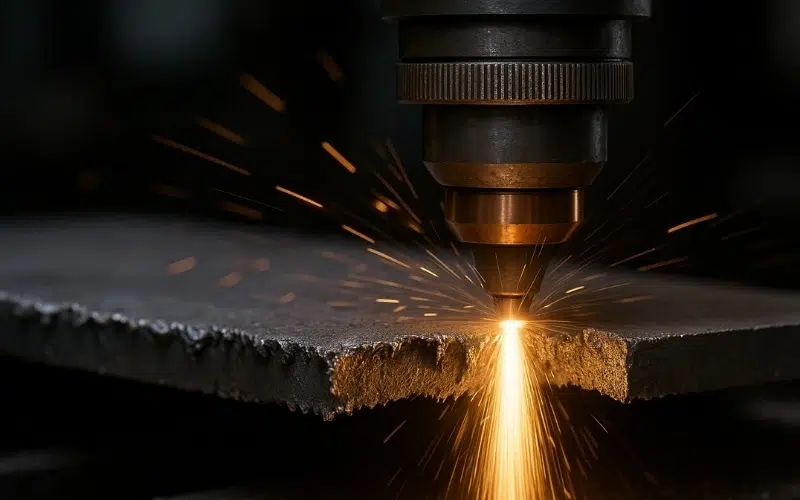
If laser power is not properly matched to material thickness, or if focus position is incorrect, the energy distribution becomes unstable, resulting in uneven cutting behavior and deeper striations.
Assist Gas Pressure Instability
Nitrogen or oxygen assist gas plays a critical role in removing molten material. Fluctuations in pressure or flow reduce cutting stability and increase surface roughness.
Cutting Speed Too High or Too Low
Improper cutting speed is another key factor. Too fast reduces energy absorption, while too slow causes excessive melting. Both conditions intensify laser cutting striations.
How to Reduce Laser Cutting Striations Effectively
Optimize Cutting Parameters
I always start by adjusting laser power, cutting speed, and focus position. Fine-tuning these parameters based on material thickness significantly improves edge quality.
Stabilize Assist Gas System
Ensuring consistent gas pressure and clean nozzles helps maintain stable melt ejection, reducing irregular edge formation.
Use Proper Nozzle Selection
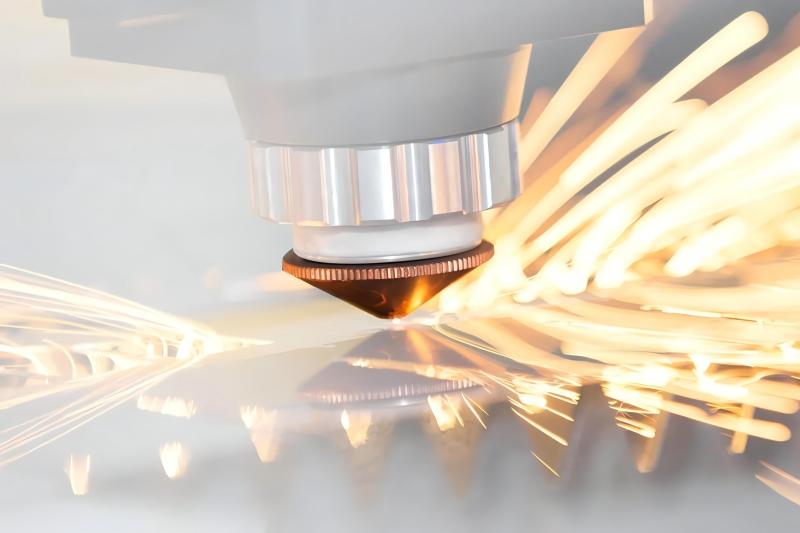
Choosing the correct nozzle diameter improves gas flow dynamics and reduces turbulence during thick plate cutting.
Improve Beam Quality and Maintenance
Regular cleaning of lenses and checking beam alignment ensures stable energy delivery, which directly reduces striation depth.
Best Practices for Thick Plate Laser Cutting
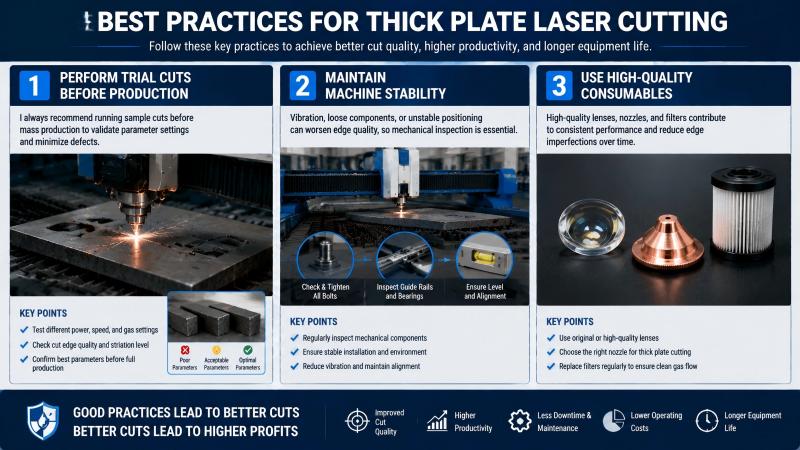
Perform Trial Cuts Before Production
I always recommend running sample cuts before mass production to validate parameter settings and minimize defects.
Maintain Machine Stability
Vibration, loose components, or unstable positioning can worsen edge quality, so mechanical inspection is essential.
Use High-Quality Consumables
High-quality lenses, nozzles, and filters contribute to consistent performance and reduce edge imperfections over time.
Perguntas frequentes
Are laser cutting striations normal in thick materials?
Yes, to some extent they are normal, but excessive striations indicate improper parameters or system instability.
Can laser cutting striations be completely eliminated?
In most cases, they cannot be fully eliminated in thick materials, but they can be significantly reduced with correct optimization.
Does higher laser power always reduce striations?
Not necessarily. Power must be balanced with speed, focus, and gas flow to achieve optimal results.
Conclusão
Understanding the causes of laser cutting striations is essential for improving cut quality in thick materials. By optimizing cutting parameters, stabilizing assist gas, maintaining equipment, and selecting proper consumables, you can significantly reduce edge imperfections and improve production consistency.
If you need further technical guidance or machine support, feel free to contact our team. I’m always here to help you achieve better cutting performance and higher manufacturing efficiency.


