


Máquina de cisalhamento Frame Bolt Tightness is essential for maintaining structural stability, accurate cutting performance, and long-term machine reliability. Loose or improperly tightened frame bolts can cause vibration, misalignment, and unexpected mechanical failures during operation. If you want to learn how to properly inspect and maintain frame bolts, you’re in the right place. In this article, I’ll explain the key inspection methods, common bolt-related problems, and maintenance practices that help ensure your shearing machine remains stable, precise, and safe throughout daily production.
Compreendendo a importância de Máquina de cisalhamento Frame Bolt Tightness
Why Frame Bolt Tightness Matters in Shearing Machines
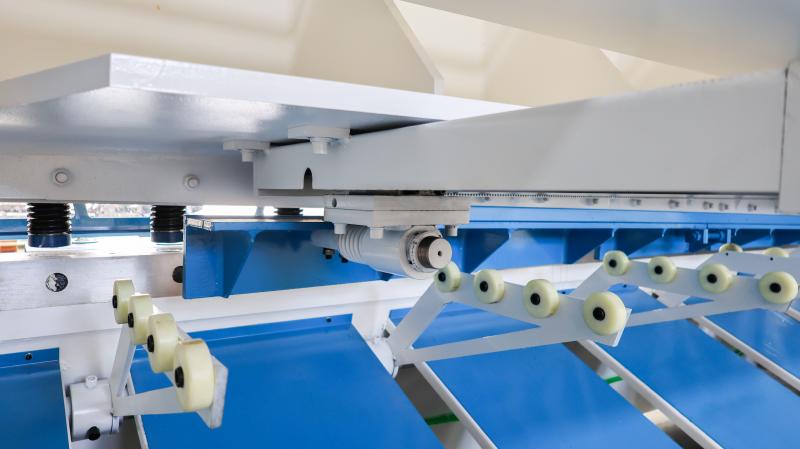
The machine frame supports the entire cutting structure, including the upper beam, lower blade assembly, hydraulic components, and drive system. Loose bolts can reduce the overall rigidity of the structure, causing deformation and vibration during cutting operations.
Adequado Shearing Machine Frame Bolt Tightness ensures that all structural components remain securely connected. This helps maintain cutting accuracy, extend machine service life, and reduce the risk of unexpected downtime.
Effects of Loose Frame Bolts on Cutting Performance
When frame bolts become loose, the machine may experience abnormal noise, increased vibration, uneven blade clearance, and reduced cutting quality. In severe cases, continuous operation with loose connections can damage key structural components.
Regular inspection allows operators to identify early warning signs before they develop into expensive repairs.
How to Check Shearing Machine Frame Bolt Tightness Step by Step
Step 1: Prepare the Machine Before Inspection
Before checking bolt tightness, I always recommend stopping the machine completely and following proper safety procedures. Turn off the power supply and ensure that all moving parts have stopped.
Clean the frame area around the bolts to remove oil, dust, and metal debris. A clean inspection surface makes it easier to identify loose fasteners, cracks, or abnormal conditions.
Step 2: Perform Visual Inspection of Frame Bolts
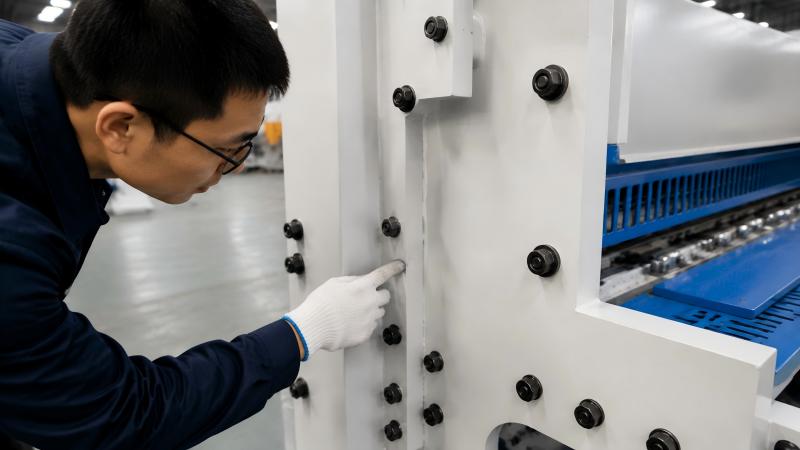
The first inspection step is checking the appearance of all major frame bolts. Look for missing bolts, damaged threads, rust, deformation, or signs of movement around the connection points.
Pay special attention to areas with high mechanical stress, such as the connection between side frames, the upper beam, and the base structure.
Step 3: Check Bolt Tightness with Proper Tools
Using the correct torque wrench is the most reliable method for checking Shearing Machine Frame Bolt Tightness. Compare the measured torque value with the recommended specification provided by the machine manufacturer.
Avoid simply tightening bolts based on experience, as excessive tightening can damage threads or create unnecessary stress on the frame.
Step 4: Inspect High-Stress Connection Areas
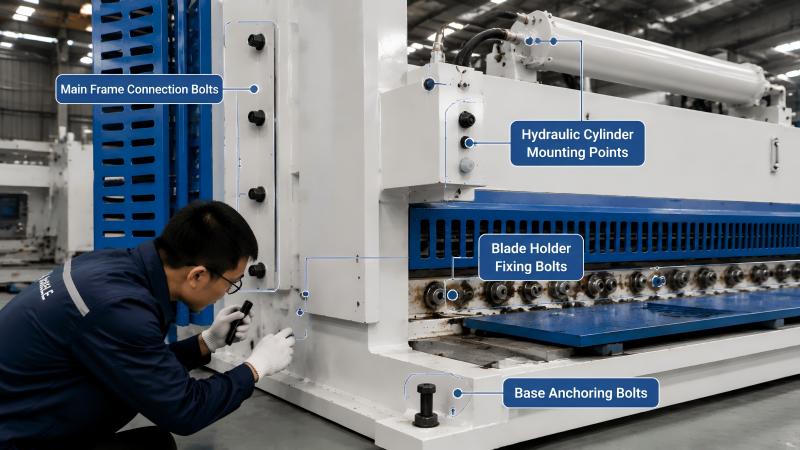
Some areas require more frequent inspection due to higher loads. These include:
- Main frame connection bolts
- Hydraulic cylinder mounting points
- Blade holder fixing bolts
- Base anchoring bolts
I recommend creating a maintenance checklist to ensure these critical locations are inspected regularly.
Step 5: Monitor Vibration and Operating Conditions
Bolt looseness is often related to abnormal machine vibration. During operation, pay attention to unusual sounds, shaking, or changes in cutting performance.
If vibration increases after long-term use, checking frame bolts should be one of the first troubleshooting steps.
Common Causes of Loose Shearing Machine Frame Bolts
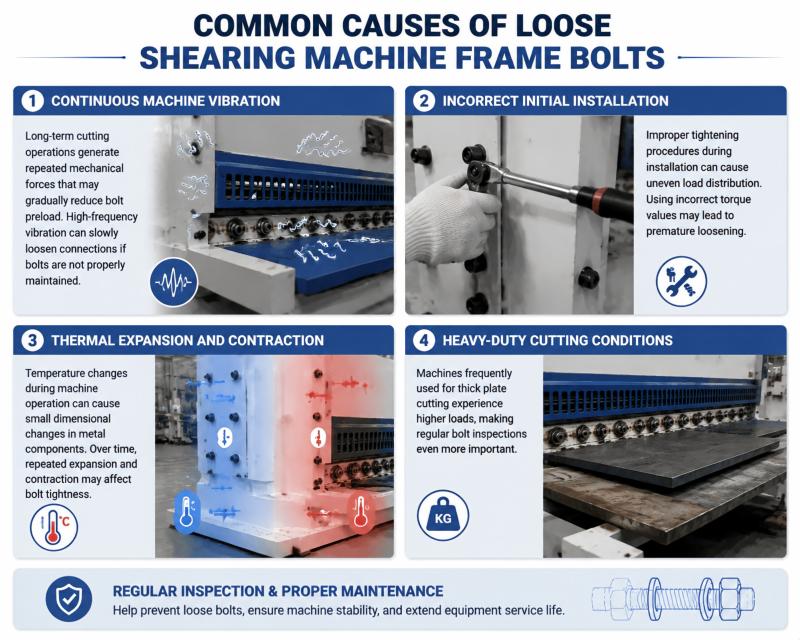
Continuous Machine Vibration
Long-term cutting operations generate repeated mechanical forces that may gradually reduce bolt preload. High-frequency vibration can slowly loosen connections if bolts are not properly maintained.
Incorrect Initial Installation
Improper tightening procedures during installation can cause uneven load distribution. Using incorrect torque values may lead to premature loosening.
Thermal Expansion and Contraction
Temperature changes during machine operation can cause small dimensional changes in metal components. Over time, repeated expansion and contraction may affect bolt tightness.
Heavy-Duty Cutting Conditions
Machines frequently used for thick plate cutting experience higher loads, making regular bolt inspections even more important.
Best Practices for Maintaining Frame Bolt Tightness
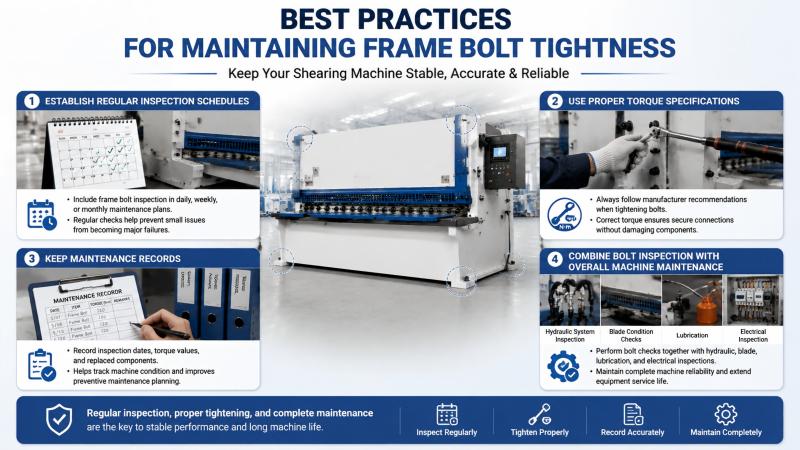
Establish Regular Inspection Schedules
I recommend including frame bolt inspection in daily, weekly, or monthly maintenance plans depending on machine workload. Regular checks help prevent small issues from becoming major failures.
Use Proper Torque Specifications
Always follow manufacturer recommendations when tightening bolts. Correct torque ensures secure connections without damaging components.
Keep Maintenance Records
Recording inspection dates, torque values, and replaced components helps track machine condition and improves preventive maintenance planning.
Combine Bolt Inspection with Overall Machine Maintenance
Bolt checks should be performed together with hydraulic system inspection, blade condition checks, lubrication, and electrical inspections to maintain complete machine reliability.
Perguntas frequentes
How often should I check Shearing Machine Frame Bolt Tightness?
The inspection frequency depends on machine usage and working conditions. Heavy-duty machines should be checked more frequently, while normal production machines can follow a regular monthly maintenance schedule.
What tools should I use to check frame bolt tightness?
A calibrated torque wrench is recommended because it provides accurate tightening measurements and helps prevent over-tightening.
Can loose frame bolts affect cutting accuracy?
Yes. Loose bolts reduce frame rigidity, which can cause vibration, alignment problems, and inconsistent cutting results.
Should I replace damaged frame bolts immediately?
Yes. Damaged or worn bolts should be replaced promptly to maintain structural safety and machine stability.
.
Conclusão
Regular inspection of Shearing Machine Frame Bolt Tightness is an important part of preventive maintenance. By checking bolt conditions, using proper torque tools, monitoring vibration, and maintaining inspection records, operators can improve machine stability and extend equipment lifespan.
A well-maintained frame provides a strong foundation for accurate cutting performance and safer operation. For more information about shearing machine maintenance or technical support, feel free to contact our team for professional assistance.


