


Машина для стрижки овец Прогностическое обслуживание is an advanced maintenance approach that helps reduce unexpected downtime and improve production reliability by using equipment data, condition monitoring, and performance analysis to identify potential failures before they happen. When managing industrial cutting operations, preventing sudden machine breakdowns is essential for maintaining efficiency and meeting delivery schedules. If you want to understand how predictive maintenance works and how it can improve shearing machine reliability, you’re in the right place. In this article, I’ll explain the principles, benefits, and practical implementation methods of predictive maintenance to help you reduce maintenance costs and improve long-term machine performance.
Понимание Машина для стрижки овец Прогностическое обслуживание
What Is Predictive Maintenance for Shearing Machines?
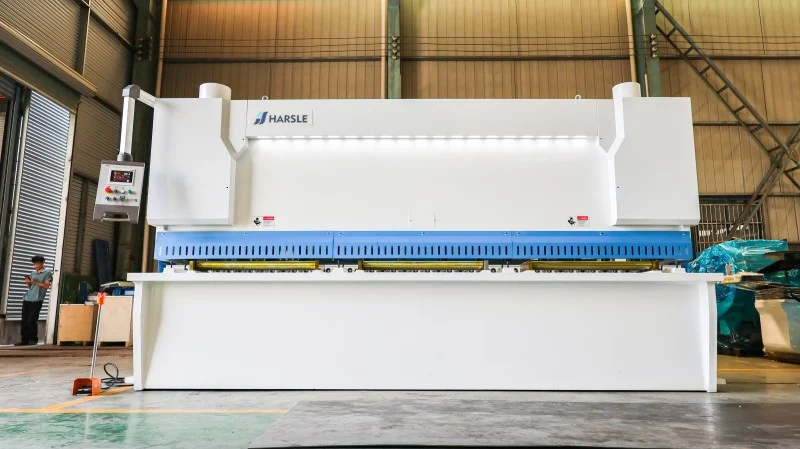
Unlike traditional maintenance methods that rely on fixed schedules or emergency repairs, predictive maintenance focuses on monitoring the actual condition of machine components. By collecting and analyzing operational data, engineers can predict when maintenance is required before a failure occurs.
Shearing Machine Predictive Maintenance typically involves monitoring key factors such as vibration, temperature, hydraulic pressure, electrical performance, blade condition, and operating cycles. These measurements provide valuable information about the machine’s health and help maintenance teams make better decisions.
Why Predictive Maintenance Is Important for Shearing Machines
A shearing machine operates under high mechanical loads, and components such as blades, hydraulic systems, bearings, motors, and control systems experience continuous stress. Small issues can gradually develop into major failures if they are not detected early.
With predictive maintenance, operators can identify abnormal conditions in advance, schedule repairs during planned downtime, and avoid unexpected production interruptions.
Key Components of Shearing Machine Predictive Maintenance
Monitoring Hydraulic System Performance
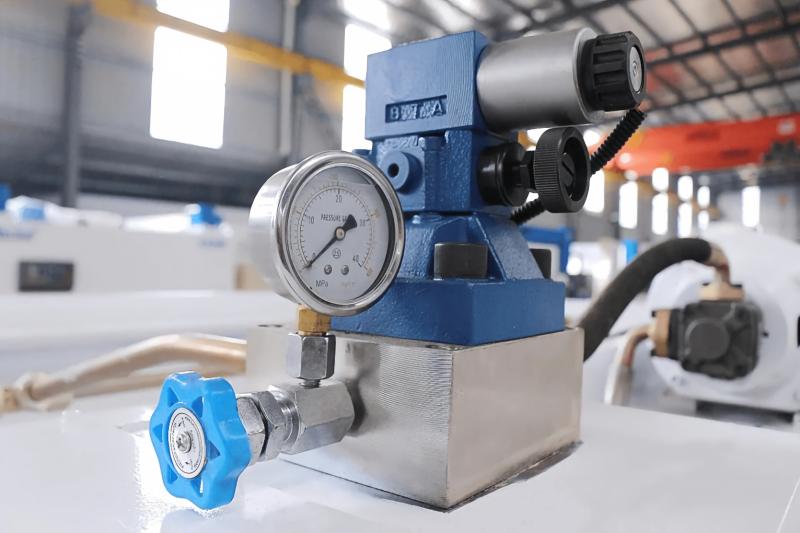
The hydraulic system is one of the most important parts of a hydraulic shearing machine. Changes in oil pressure, temperature, or flow rate may indicate problems such as pump wear, valve failure, or internal leakage.
I recommend regularly monitoring hydraulic parameters and analyzing abnormal changes. Early detection of hydraulic issues helps prevent reduced cutting force, unstable operation, and expensive component replacement.
Inspecting Blade Wear and Cutting Performance
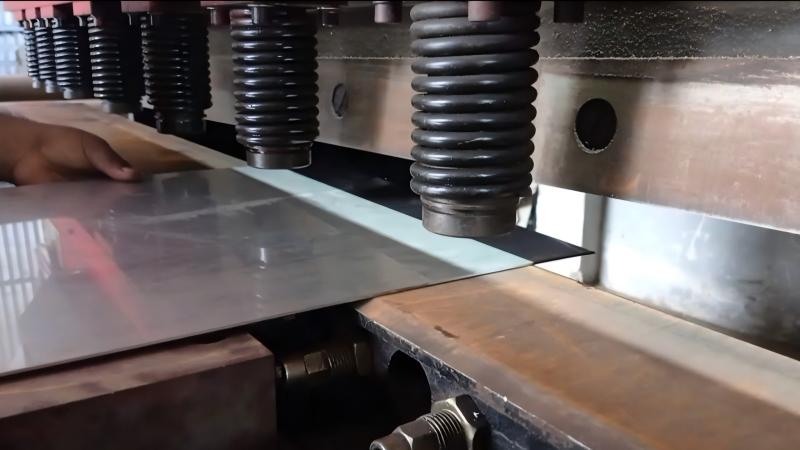
The cutting blade directly affects product quality and machine efficiency. A worn blade increases cutting resistance, creates uneven edges, and places additional stress on the machine structure.
By tracking cutting quality, cutting force, and blade usage cycles, maintenance teams can determine the optimal replacement time instead of waiting for blade failure.
Monitoring Electrical and Control Systems
Modern shearing machines rely heavily on CNC controllers, sensors, motors, and electrical components. Electrical abnormalities can cause positioning errors, unexpected stops, or inaccurate cutting results.
Regular monitoring of motor temperature, sensor signals, and electrical connections helps identify early signs of failure and maintain stable machine operation.
Using Vibration and Temperature Analysis
Abnormal vibration and temperature increases are common indicators of mechanical problems. Bearings, gears, and moving components may generate unusual patterns before failure occurs.
By using vibration sensors or thermal monitoring tools, engineers can detect these warning signals and take preventive action.
How to Implement Shearing Machine Predictive Maintenance
Step 1: Collect Machine Operation Data
The first step is establishing a reliable data collection system. Record important operating information, including working hours, cutting cycles, hydraulic pressure, temperature changes, and maintenance history.
Accurate data provides the foundation for identifying trends and predicting future problems.
Step 2: Establish Condition Monitoring Procedures
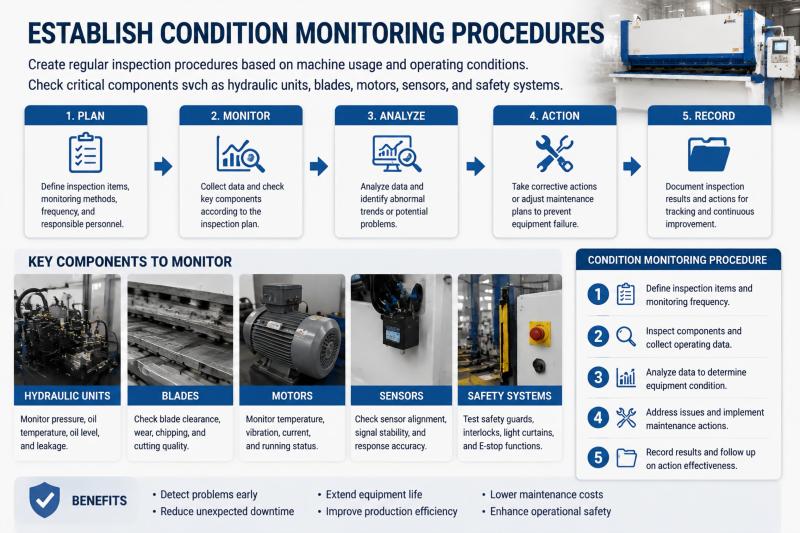
Create regular inspection procedures based on machine usage and operating conditions. Check critical components such as hydraulic units, blades, motors, sensors, and safety systems.
Consistent monitoring allows maintenance teams to compare current conditions with normal operating standards.
Step 3: Analyze Data and Identify Warning Signs
Collected data should be reviewed regularly to identify abnormal patterns. For example, increasing vibration levels may indicate bearing problems, while unstable hydraulic pressure may suggest pump or valve issues.
By analyzing these changes, engineers can schedule maintenance before a breakdown occurs.
Step 4: Create a Preventive Action Plan
Once potential problems are identified, develop a clear maintenance plan. Replace worn parts, adjust machine settings, or perform repairs during planned production pauses.
This approach reduces emergency repairs and improves overall equipment availability.
Benefits of Shearing Machine Predictive Maintenance
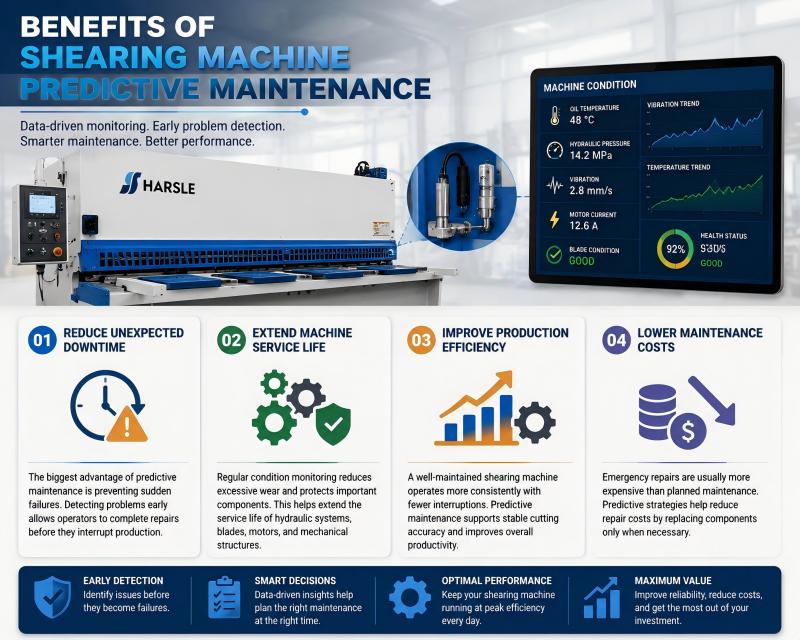
Reduce Unexpected Downtime
The biggest advantage of predictive maintenance is preventing sudden failures. Detecting problems early allows operators to complete repairs before they interrupt production.
Extend Machine Service Life
Regular condition monitoring reduces excessive wear and protects important components. This helps extend the service life of hydraulic systems, blades, motors, and mechanical structures.
Improve Production Efficiency
A well-maintained shearing machine operates more consistently with fewer interruptions. Predictive maintenance supports stable cutting accuracy and improves overall productivity.
Lower Maintenance Costs
Emergency repairs are usually more expensive than planned maintenance. Predictive strategies help reduce repair costs by replacing components only when necessary.
Вопросы и ответы
What is the difference between predictive maintenance and preventive maintenance for a shearing machine?
Preventive maintenance follows a fixed schedule, while predictive maintenance uses machine condition data to determine the actual maintenance timing.
How often should I perform Shearing Machine Predictive Maintenance?
The frequency depends on machine usage, working environment, and production intensity. Regular monitoring should be performed according to operating conditions and manufacturer recommendations.
Can predictive maintenance improve shearing accuracy?
Yes. Monitoring blade condition, hydraulic performance, and mechanical stability helps maintain consistent cutting accuracy.
What components should be monitored during predictive maintenance?
Important components include hydraulic systems, blades, motors, bearings, sensors, electrical systems, and control units.
Заключение
Shearing Machine Predictive Maintenance provides a smarter way to manage industrial cutting equipment by identifying potential problems before they become serious failures. Through condition monitoring, data analysis, and planned maintenance actions, manufacturers can reduce downtime, improve safety, and extend machine lifespan.
Implementing a predictive maintenance strategy helps ensure your shearing machine remains reliable and efficient throughout its service life. For more technical guidance or professional machine support, feel free to contact our team for expert assistance.


