


Гидравлический пресс metal stamping safety is essential for preventing crushing injuries, hand injuries, tooling failures, and unexpected machine movement during metal forming operations. Hydraulic presses generate substantial force, making proper machine setup, die installation, material handling, and operator training critical to workplace safety. In this guide, I’ll explain how to improve safety during hydraulic press metal stamping, covering machine inspections, protective devices, safe operating procedures, and routine maintenance. These practical measures help manufacturers protect operators, reduce equipment damage, and maintain reliable production.
Why Is Safety Important During Гидравлический пресс Metal Stamping?
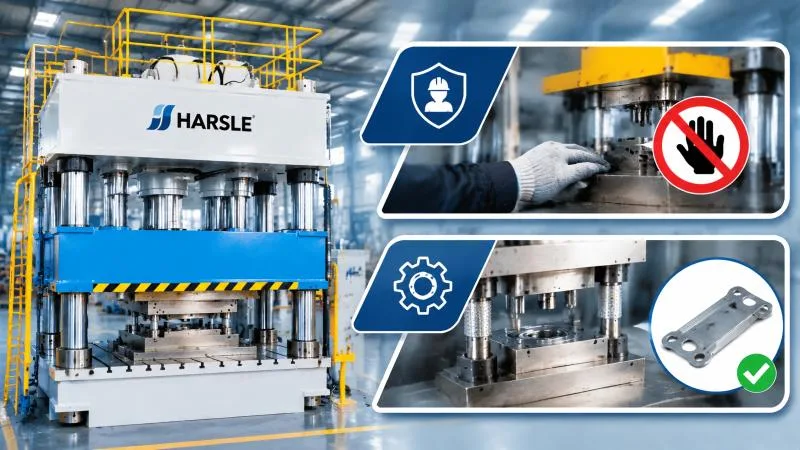
Preventing Operator Injuries
During metal stamping, operators work near moving platens, dies, hydraulic cylinders, and other mechanical components. Placing hands inside the working area or using incorrect feeding methods can result in serious crushing and pinching injuries.
Appropriate machine guarding, safety interlocks, and safe material-handling procedures help reduce these risks.
Protecting Dies and Hydraulic Press Components
Incorrect die installation, excessive stamping force, and unsuitable material positioning can cause tooling damage and uneven loading.
Regular inspections and correct operating parameters help prevent equipment failures and maintain consistent stamping quality.
How to Improve Hydraulic Press Metal Stamping Safety
Step 1: Inspect the Hydraulic Press Before Operation
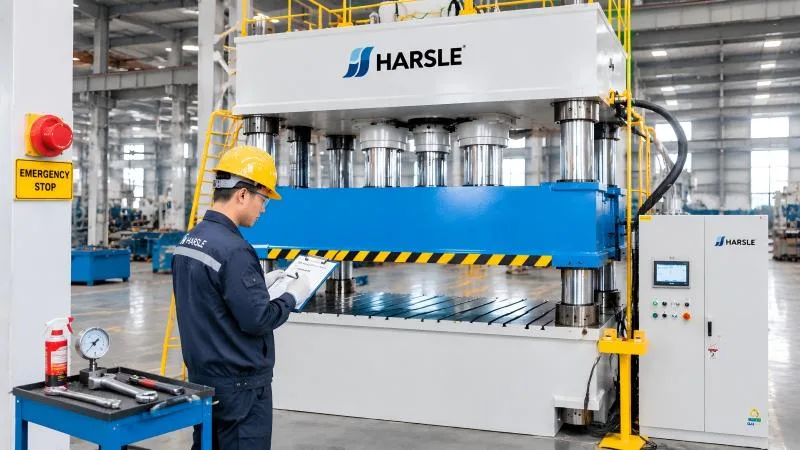
Before starting production, inspect the machine and its surrounding work area.
Pay particular attention to:
- Гидравлическая система: Check for oil leaks, damaged hoses, abnormal pressure readings, and loose connections.
- Electrical System: Inspect visible wiring, control panels, switches, and electrical connections.
- Moving Components: Check the platens, guide columns, cylinders, and other moving parts for visible damage.
- Emergency Stops: Verify that emergency stop devices function according to the manufacturer’s instructions.
- Safety Guards: Ensure that fixed guards, interlocks, and other protective devices are installed and functioning correctly.
Never operate the machine if a critical safety device is damaged or malfunctioning.
Step 2: Install and Secure Stamping Dies Correctly
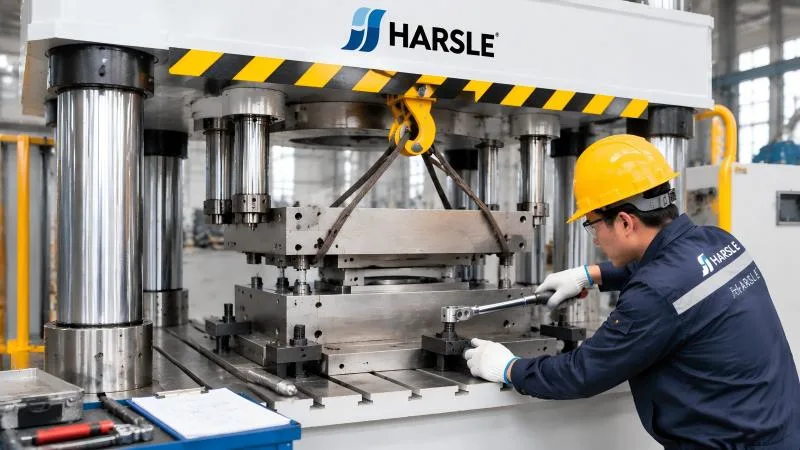
Incorrect die installation can create serious hazards during stamping operations.
Before installation, shut down the machine and follow the approved lockout/tagout (LOTO) procedure. Isolate hazardous energy sources and safely control residual hydraulic pressure.
Use suitable lifting equipment to transport heavy dies. Inspect the tooling for cracks, deformation, and excessive wear before installation.
Make sure the upper and lower dies are correctly aligned and securely fastened using the specified bolts or clamping systems. Never place your hands between the dies to adjust their positions while hazardous energy remains uncontrolled.
Step 3: Use Appropriate Machine Guards and Safety Devices
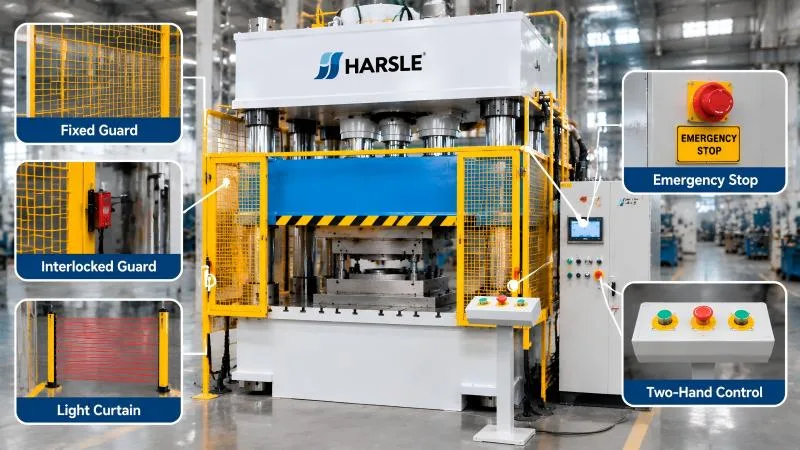
Effective protective systems are essential for preventing access to dangerous stamping areas.
Depending on the machine design and workplace risk assessment, suitable safeguards may include:
- Fixed Guards: Prevent access to hazardous mechanical components.
- Interlocked Guards: Stop or prevent hazardous operation when protected access points are opened.
- Light Curtains: Detect personnel entering designated hazardous zones.
- Two-Hand Controls: Require coordinated operation to help keep both hands away from the danger zone.
- Emergency Stop Buttons: Allow operators to stop machine operation during emergencies.
Operators must never bypass safety interlocks or remove protective guards to speed up production.
Step 4: Follow Safe Material Feeding and Stamping Procedures
Before feeding metal sheets into the hydraulic press, confirm that the material type, thickness, dimensions, and stamping requirements are compatible with the machine and die specifications.
Position the workpiece correctly using approved positioning devices or mechanical feeding equipment.
During operation:
- Keep hands away from the die area and moving platens.
- Use approved tools or automatic feeding systems where appropriate.
- Confirm that the material is correctly positioned before initiating the stamping cycle.
- Monitor the machine for abnormal noise, vibration, or hydraulic pressure changes.
- Never attempt to remove jammed material while the machine is energized.
If abnormal conditions occur, stop the operation and investigate the problem using the approved safety procedures.
Step 5: Train Operators in Hydraulic Press Safety
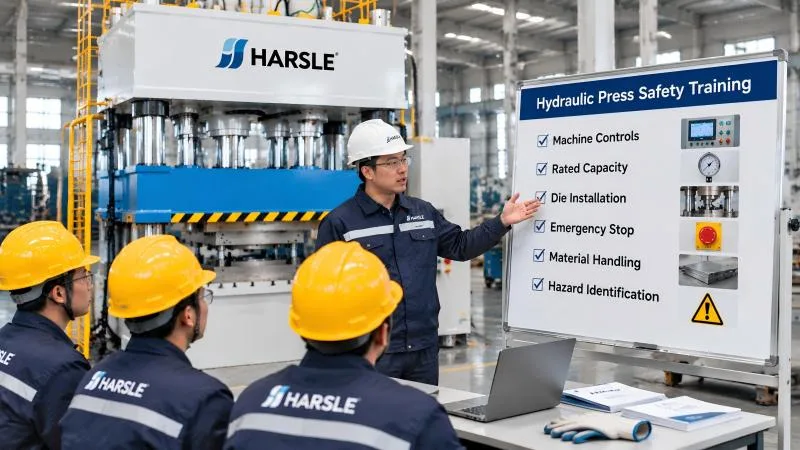
Proper operator training is essential for reducing stamping accidents.
Training should cover machine controls, rated capacity, die installation procedures, emergency stop locations, material handling, and hazard identification.
Operators should also understand the correct response to hydraulic leaks, electrical faults, abnormal machine movement, and other emergency conditions.
Electrical troubleshooting, hydraulic system adjustments, and safety-control modifications must be performed exclusively by appropriately qualified personnel.
Step 6: Establish Regular Maintenance and Safety Inspections
Preventive maintenance helps identify potential hazards before they cause equipment failures or workplace accidents.
I recommend establishing an inspection schedule covering hydraulic filters, oil levels, hoses, cylinders, electrical components, safety devices, and tooling conditions.
Keep maintenance records and document abnormal findings. Any machine with unresolved safety-related defects should remain out of service until qualified personnel complete the necessary repairs and verification.
Common Mistakes to Avoid During Metal Stamping
- Ignoring machine capacity: Never exceed the rated stamping force or operating limits.
- Bypassing safety devices: Never disable guards, interlocks, or protective controls.
- Incorrect die installation: Poor alignment and loose fasteners can cause tooling failure.
- Unsafe material feeding: Never place hands inside hazardous working areas.
- Ignoring hydraulic leaks: Damaged hoses and abnormal pressure require immediate attention.
- Skipping operator training: Only trained and authorized personnel should operate the equipment.
- Neglecting maintenance: Regular inspections are essential for reliable machine operation.
Вопросы и ответы
What Are the Main Safety Risks of Hydraulic Press Metal Stamping?
The main risks include crushing injuries, trapped fingers, unexpected ram movement, hydraulic system failures, electrical hazards, and falling materials.
What Safety Devices Should a Hydraulic Stamping Press Have?
Depending on the machine design and risk assessment, protective equipment may include fixed guards, interlocks, light curtains, two-hand controls, and emergency stop devices.
Is Lockout/Tagout Necessary When Changing Stamping Dies?
Yes. Hazardous energy must be isolated and verified before die installation, removal, or maintenance. Residual hydraulic pressure and potential mechanical movement must also be controlled.
Заключение
Improving hydraulic press metal stamping safety requires proper machine inspections, secure die installation, effective guarding, safe material feeding, operator training, and regular maintenance.
By establishing clear operating procedures and addressing potential hazards before production begins, manufacturers can reduce workplace accidents and improve equipment reliability.


