


Hydraulic Press Seal Failure can cause hydraulic oil leakage, pressure loss, unstable ram movement, and reduced machine efficiency. When seals begin to wear or become damaged, continuing operation may increase oil loss and lead to damage in cylinders or other hydraulic components. In this guide, I will explain the common causes and symptoms of seal failure, show you how to inspect the hydraulic sealing system step by step, and provide practical solutions for preventing repeated failures and maintaining reliable hydraulic press performance.
¿Qué causa? Prensa hidráulica Seal Failure?
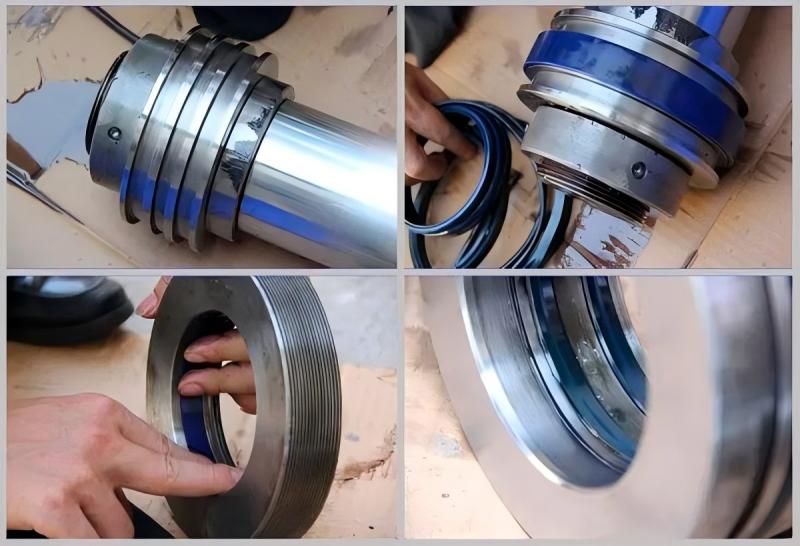
Hydraulic press seals operate under pressure, friction, temperature changes, and repeated movement. Although seals are designed for demanding working conditions, contamination, incorrect installation, excessive pressure, and component wear can shorten their service life.
Understanding why a seal failed is important. Simply replacing the damaged seal without correcting the underlying problem may result in another failure soon after repair.
Hydraulic Oil Contamination Damages Seals
Contaminated hydraulic oil is a common cause of premature seal wear. Metal particles, dust, and other contaminants can enter the sealing area and scratch seal surfaces.
Contamination may also damage the cylinder bore and piston rod. Once these surfaces develop scratches, even a new seal may begin leaking.
I recommend checking the hydraulic oil and filtration system whenever abnormal seal wear is discovered.
Excessive Pressure and Temperature Reduce Seal Life
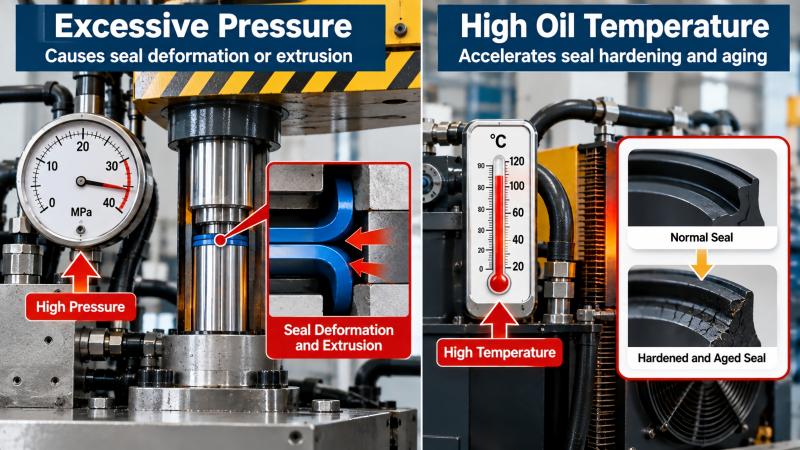
Hydraulic seals are designed to operate within specified pressure and temperature ranges. Excessive system pressure can deform or extrude sealing materials, while high oil temperature can accelerate hardening and deterioration.
If seals repeatedly fail, check actual system pressure and hydraulic oil temperature rather than replacing the seals immediately.
Incorrect Seal Installation Causes Early Failure
Improper installation can cut, twist, stretch, or deform a new seal. Installing the wrong seal size or material can also cause leakage shortly after maintenance.
The seal groove and surrounding surfaces should be cleaned and inspected before installation. Appropriate installation tools and lubrication can help prevent damage during assembly.
What Are the Symptoms of Hydraulic Press Seal Failure?
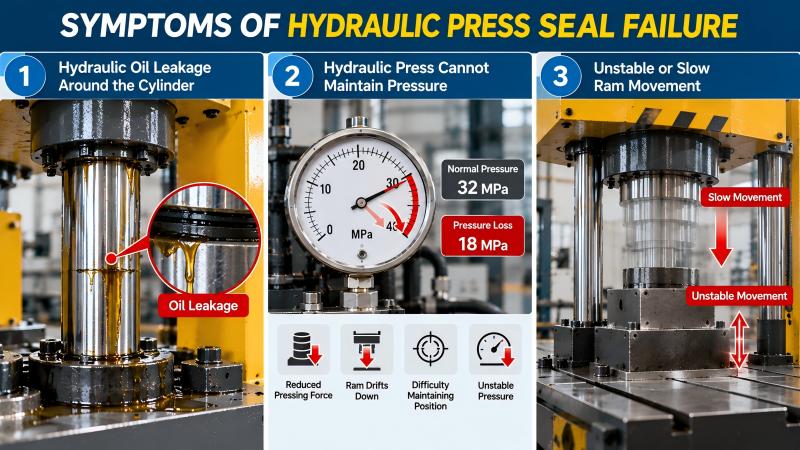
Hydraulic Oil Leakage Around the Cylinder
Visible oil around the piston rod or cylinder is one of the most obvious symptoms. A small amount of leakage should not be ignored because it may indicate developing rod seal damage.
Before replacing the seal, inspect the piston rod for scratches, corrosion, or other surface damage that could have caused the failure.
Hydraulic Press Cannot Maintain Pressure
Internal seal leakage may not always produce visible oil outside the machine. Instead, hydraulic oil can bypass the piston inside the cylinder.
This may cause pressure loss, reduced pressing force, ram drift, or difficulty maintaining a fixed position under load.
Unstable or Slow Ram Movement
Damaged seals can affect hydraulic pressure and cylinder performance. The ram may move slowly, inconsistently, or fail to hold its expected position.
Because similar symptoms can also result from valves, pumps, or oil-flow problems, I recommend checking the complete hydraulic circuit before concluding that the seal is responsible.
How to Troubleshoot Prensa hidráulica Seal Failure Step by Step?
Step 1: Identify the Location of the Hydraulic Oil Leak
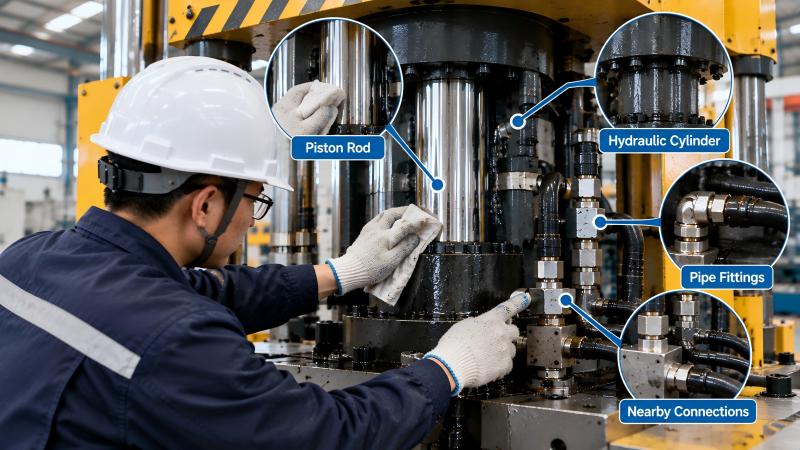
First, clean the suspected area so that fresh leakage can be identified accurately. Inspect the hydraulic cylinder, piston rod, fittings, and nearby connections.
Determine whether the oil is leaking externally or whether pressure loss suggests internal cylinder leakage.
Before disassembly, stop the machine, isolate electrical power, and safely release stored hydraulic pressure according to the manufacturer’s procedures.
Step 2: Inspect the Hydraulic Cylinder and Piston Rod
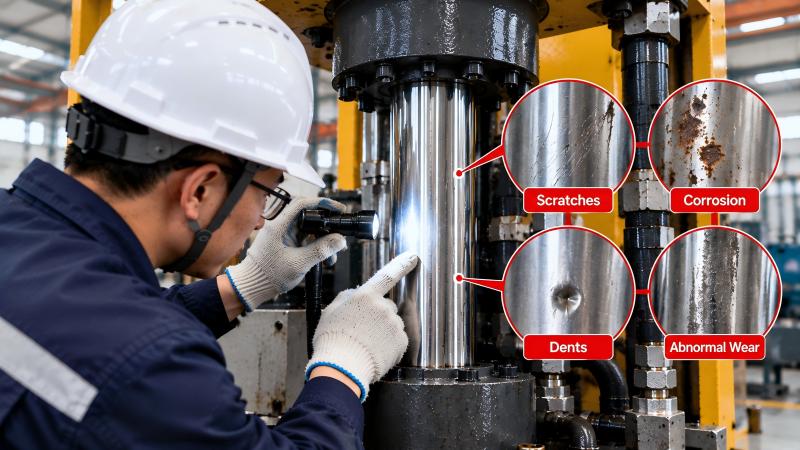
Examine the piston rod for scratches, corrosion, dents, or abnormal wear. A damaged rod surface can quickly destroy a replacement seal.
I also check cylinder alignment because excessive side loading can create uneven seal wear and shorten seal life.
If significant cylinder or rod damage is found, repairing only the seal may not provide a reliable solution.
Step 3: Inspect the Hydraulic Seals
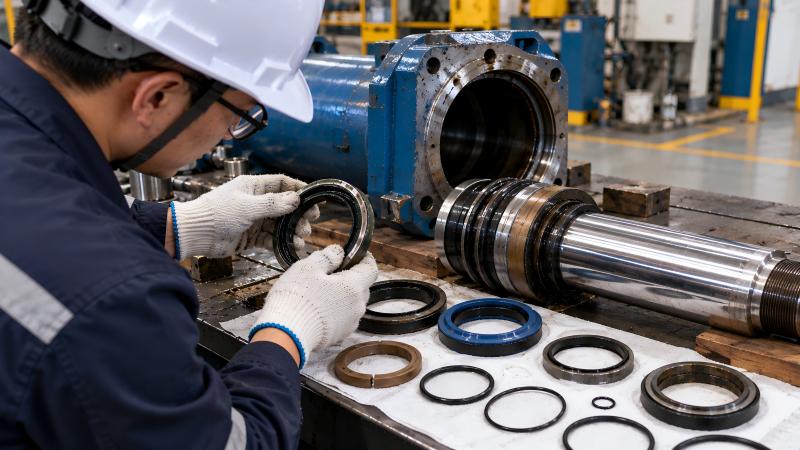
After safely disassembling the cylinder, inspect the rod seal, piston seal, wiper, O-rings, and other sealing components.
Look for cracking, hardening, deformation, cuts, extrusion, and uneven wear. The type of damage can provide useful information about the root cause.
For example, severe abrasion may indicate contaminated oil, while extrusion can be associated with excessive pressure or excessive clearance.
Step 4: Check Hydraulic Oil and System Conditions
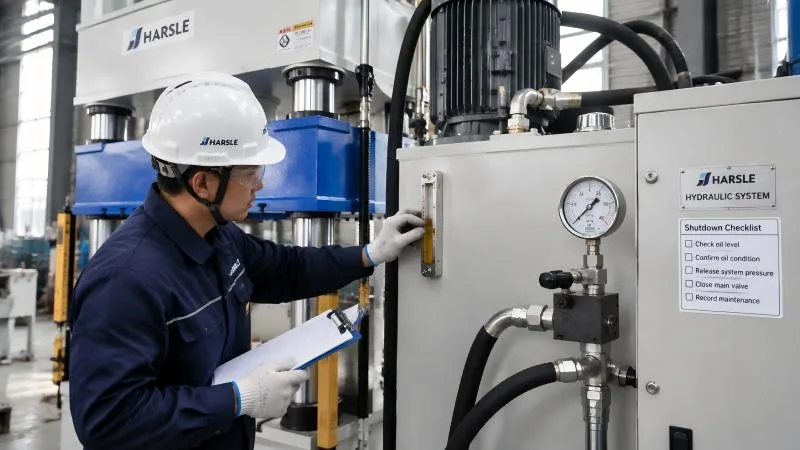
Inspect hydraulic oil cleanliness, oil level, operating temperature, filters, and system pressure.
If contamination caused the original failure, installing new seals without correcting the oil condition may lead to repeated damage. Replace contaminated oil or filters when necessary and investigate the source of abnormal contamination.
Step 5: Replace the Seal and Test the Hydraulic Press
Use seals with the correct dimensions, material, and pressure rating. Clean the seal groove carefully and avoid damaging the sealing lip during installation.
After reassembly, start the hydraulic press according to the proper commissioning procedure. Test at controlled conditions first and inspect for leakage, pressure stability, smooth cylinder movement, and abnormal temperature.
How to Prevent Hydraulic Press Seal Failure?
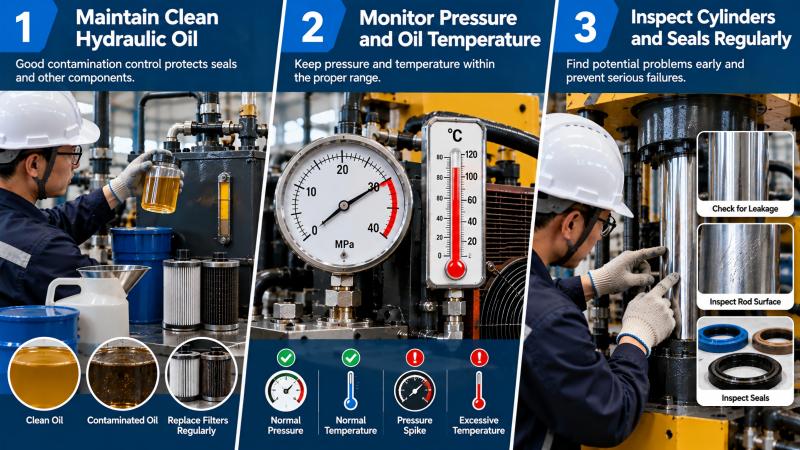
Mantenga limpio el aceite hidráulico.
Good contamination control protects seals and other precision hydraulic components. Check oil condition regularly and replace filters according to machine operating conditions.
Keep oil containers, filling equipment, and maintenance tools clean to prevent contaminants from entering the system.
Monitor Pressure and Oil Temperature
Regularly monitor hydraulic pressure and operating temperature. Repeated pressure spikes or excessive temperature can significantly reduce seal service life.
If abnormal conditions occur, determine their cause before they damage seals and other hydraulic components.
Inspect Cylinders and Seals Regularly
Routine inspections help identify minor leakage, piston rod damage, and seal deterioration before they cause serious problems.
Maintenance records are also useful for identifying repeated seal failures and determining whether the problem is related to operating conditions, contamination, or component wear.
Common Hydraulic Press Seal Problems and Solutions
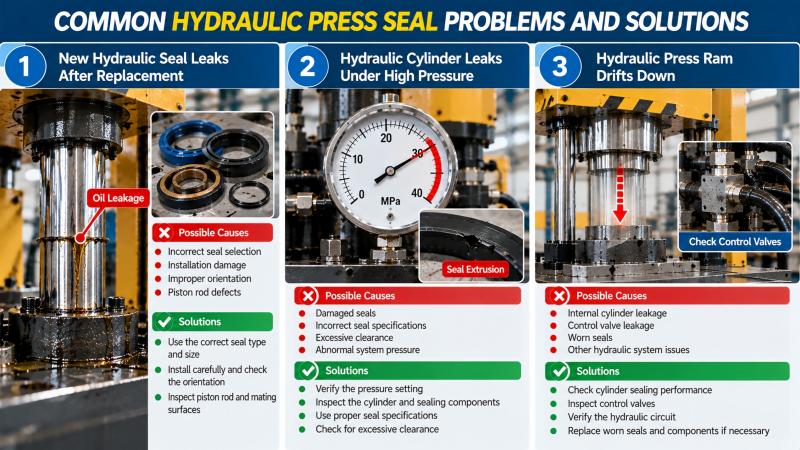
New Hydraulic Seal Leaks After Replacement
If a new seal leaks shortly after installation, check for incorrect seal selection, installation damage, improper orientation, or piston rod defects.
Do not repeatedly replace seals without inspecting the mating surfaces and installation conditions.
Hydraulic Cylinder Leaks Under High Pressure
Leakage that appears mainly at high pressure may indicate damaged seals, incorrect seal specifications, excessive clearance, or abnormal system pressure.
Verify the pressure setting and inspect the cylinder before installing another seal.
Hydraulic Press Ram Drifts Down
Ram drift can result from internal cylinder leakage, but control valve leakage may produce similar symptoms.
Check both cylinder sealing performance and the relevant hydraulic valves to accurately identify the source.
Preguntas frecuentes
What are the main signs of Hydraulic Press Seal Failure?
Common signs include external oil leakage, pressure loss, ram drift, reduced pressing force, and unstable cylinder movement.
Why do hydraulic press seals fail repeatedly?
Repeated failures may result from contaminated oil, excessive pressure or temperature, damaged cylinder surfaces, incorrect installation, misalignment, or unsuitable seal specifications.
Can I continue operating a hydraulic press with a leaking seal?
Continued operation may increase leakage and contribute to further hydraulic system problems. I recommend identifying the cause and repairing the machine before normal production continues.
Conclusión
Hydraulic Press Seal Failure should be treated as more than a simple seal replacement problem. By inspecting the leakage location, cylinder surfaces, sealing components, hydraulic oil, pressure, and temperature, operators can identify the underlying cause and reduce repeated failures.
Regular oil maintenance, correct seal installation, and preventive cylinder inspections can improve sealing reliability and reduce unexpected downtime. For additional hydraulic press troubleshooting or maintenance support, contact the HARSLE engineering team or explore our other hydraulic press documentation.


