


Presse hydraulique Produce Dimensions inaccurately when unstable hydraulic pressure, incorrect ram positioning, worn tooling, or improper material placement affects the forming process. These problems can lead to dimensional deviations, inconsistent product quality, and increased material waste. When troubleshooting dimensional inaccuracies, I recommend examining both the hydraulic press’s operating condition and the forming process. Even small variations in hydraulic pressure, ram stroke, tooling alignment, or material thickness can affect the final dimensions of pressed components. In this guide, I’ll explain the common causes of hydraulic press dimensional errors, provide step-by-step troubleshooting methods, and share practical maintenance tips to improve dimensional accuracy and production consistency.
Quelles sont les causes ? Presse hydraulique Produce Dimensions?
Unstable Hydraulic Pressure
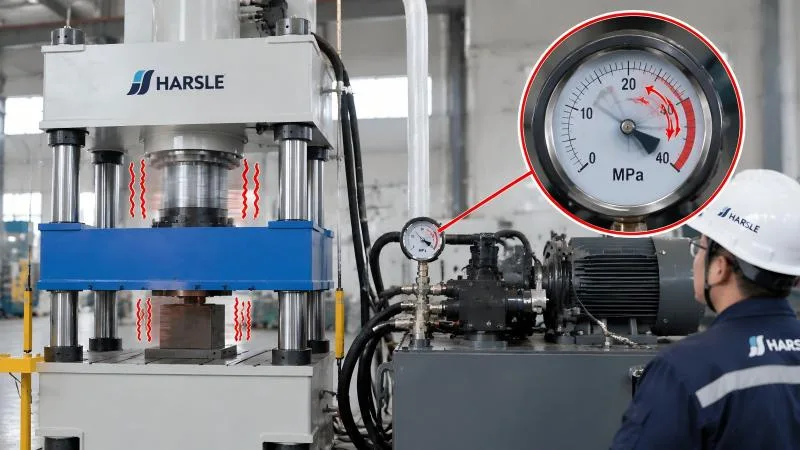
Hydraulic pressure directly affects the force applied during pressing operations. Worn pumps, internal cylinder leakage, defective pressure valves, or contaminated hydraulic oil can cause pressure fluctuations.
When forming force becomes inconsistent, material deformation may vary between production cycles, resulting in dimensional differences.
Incorrect Ram Positioning and Stroke Settings
Inaccurate ram positioning is another common cause of hydraulic press dimensional errors.
Faulty position sensors, incorrect stroke limits, or improper controller calibration can prevent the ram from reaching the required position.
This problem is particularly noticeable in precision forming operations where small displacement differences affect finished part dimensions.
Worn or Misaligned Press Tooling
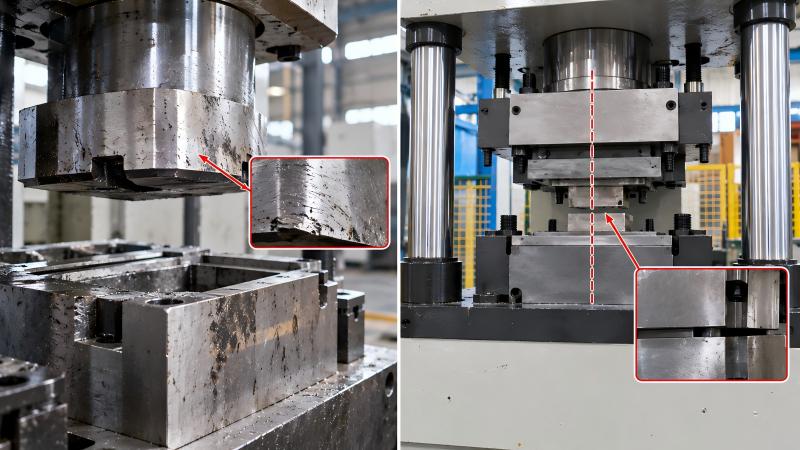
Damaged dies, worn forming surfaces, loose mounting bolts, or incorrect tooling alignment can significantly affect dimensional accuracy.
I often recommend inspecting tooling condition before adjusting machine parameters because even a properly calibrated hydraulic press cannot compensate for severely worn dies.
Material Thickness and Positioning Variations
Inconsistent material thickness, incorrect blank placement, or variations in material properties can produce different forming results.
Material springback may also cause dimensional deviations after the pressing force is released.
How to Fix Hydraulic Press Produce Dimensions Accuracy Problems
Step 1: Verify Hydraulic Pressure Stability
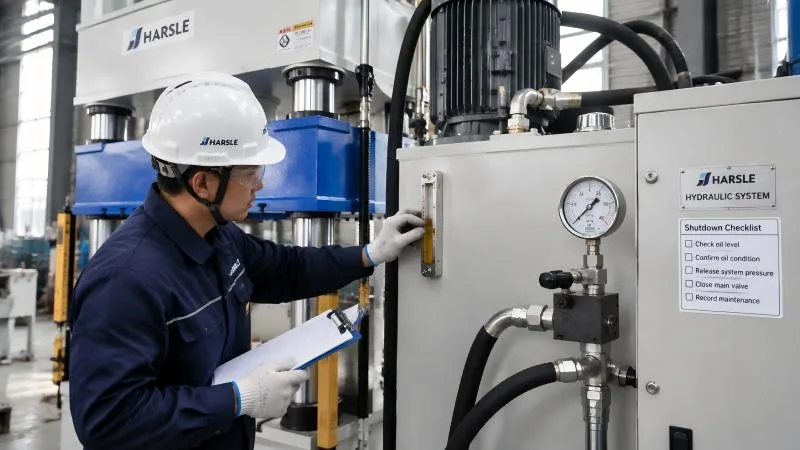
Start by checking the hydraulic oil level, oil condition, and operating pressure.
Use the machine’s diagnostic display or an appropriate pressure gauge to monitor pressure during controlled pressing cycles.
If pressure fluctuates unexpectedly, inspect the hydraulic pump, pressure control valves, and cylinder seals.
I recommend repairing confirmed faults before changing pressure settings. Always follow the manufacturer’s specified operating limits.
Step 2: Check Ram Positioning Accuracy
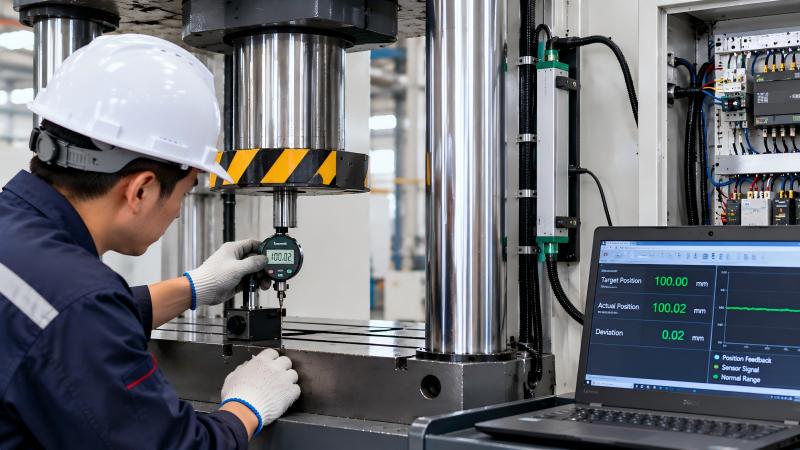
Compare the programmed ram position with its actual position using calibrated measuring equipment.
Inspect displacement sensors, electrical connections, and position feedback signals for abnormalities.
If the measurements differ, verify controller calibration and positioning parameters according to the manufacturer’s instructions.
Repeat the positioning test several times to confirm that the ram reaches the same position consistently.
Step 3: Inspect and Align Press Tooling
Before inspecting tooling, isolate the machine’s power supply, release stored hydraulic pressure, and secure the ram using approved mechanical supports.
Examine upper and lower dies for wear, deformation, cracks, and improper alignment.
Check tooling mounting surfaces and fastening components.
Replace damaged tooling and verify alignment before resuming production.
Step 4: Check Material Specifications and Placement
Measure the thickness and dimensions of incoming materials using suitable inspection instruments.
Confirm that material specifications match the requirements of the forming process.
Inspect locating pins, stops, and fixtures to ensure consistent workpiece positioning.
For materials with significant springback, evaluate approved tooling or process compensation methods through controlled testing.
Step 5: Perform Trial Pressing and Dimensional Inspection
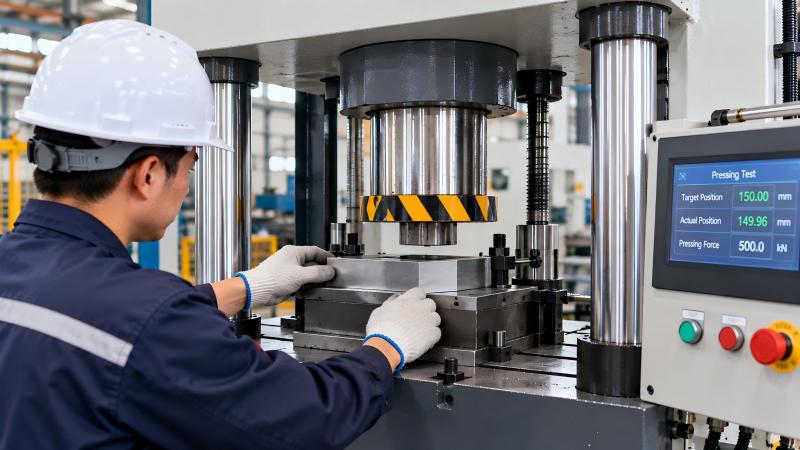
After completing adjustments, perform trial pressing under controlled operating conditions.
Measure critical dimensions using calibrated calipers, micrometers, or other suitable inspection equipment.
Compare the results with the engineering drawing and specified tolerances.
I recommend testing multiple samples to evaluate dimensional repeatability rather than relying on a single successful pressing cycle.
How to Prevent Hydraulic Press Dimensional Errors
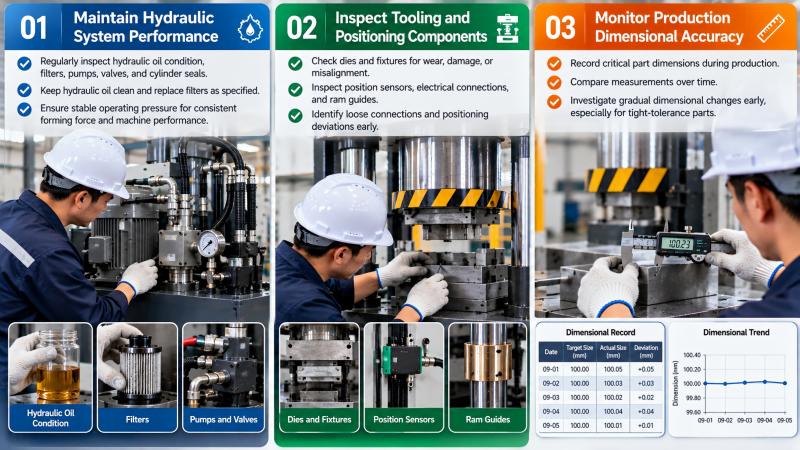
Maintain Hydraulic System Performance
Regularly inspect hydraulic oil condition, filters, pumps, valves, and cylinder seals.
Clean hydraulic oil and stable operating pressure help maintain consistent forming force and machine performance.
Inspect Tooling and Positioning Components
Include dies, fixtures, position sensors, and ram guides in routine maintenance.
Identify abnormal wear, loose connections, and positioning deviations before they affect finished products.
Monitor Production Dimensional Accuracy
Record critical part dimensions during production and compare measurements over time.
I recommend investigating gradual dimensional changes early, especially when producing components with tight tolerances.
FAQ
Why Does a Hydraulic Press Produce Dimensions Incorrect ?
Incorrect dimensions commonly result from unstable hydraulic pressure, inaccurate ram positioning, worn tooling, inconsistent materials, or improper workpiece placement.
How Can I Improve Hydraulic Press Dimensional Accuracy?
Check hydraulic pressure stability, calibrate positioning components, inspect tooling alignment, and verify material specifications. Conduct repeated trial pressing to confirm consistent results.
Can Hydraulic Oil Contamination Cause Dimensional Errors?
Yes. Contaminated hydraulic oil can interfere with valve operation and accelerate component wear, potentially affecting pressure stability and ram movement.
Why Do Hydraulic Press Parts Have Different Dimensions?
Dimensional variations may occur because of inconsistent material properties, unstable forming force, positioning errors, tooling wear, or variations in material springback.
Conclusion
Incorrect dimensions in hydraulic press operations usually indicate problems with hydraulic pressure, ram positioning, tooling condition, or material consistency. By systematically inspecting these factors and performing regular dimensional checks, you can improve forming accuracy, reduce material waste, and maintain reliable production quality.
If your hydraulic press continues producing inaccurate components, I recommend contacting the HARSLE technical support team for professional troubleshooting assistance.


