


Podczas obsługi maszyna do cięcia laserowego, Laser Cable Wear is one of the most common issues that can lead to downtime and expensive repairs. If you’re looking for practical methods to extend the life of your cables and maintain reliable machine performance, you’re in the right place. In this article, I’ll walk you through key strategies and best practices to prevent laser cable wear. By understanding the causes and implementing preventive measures, you can improve safety, reduce maintenance costs, and ensure consistent cutting quality for your production line.
Zrozumienie Laser Cable Wear
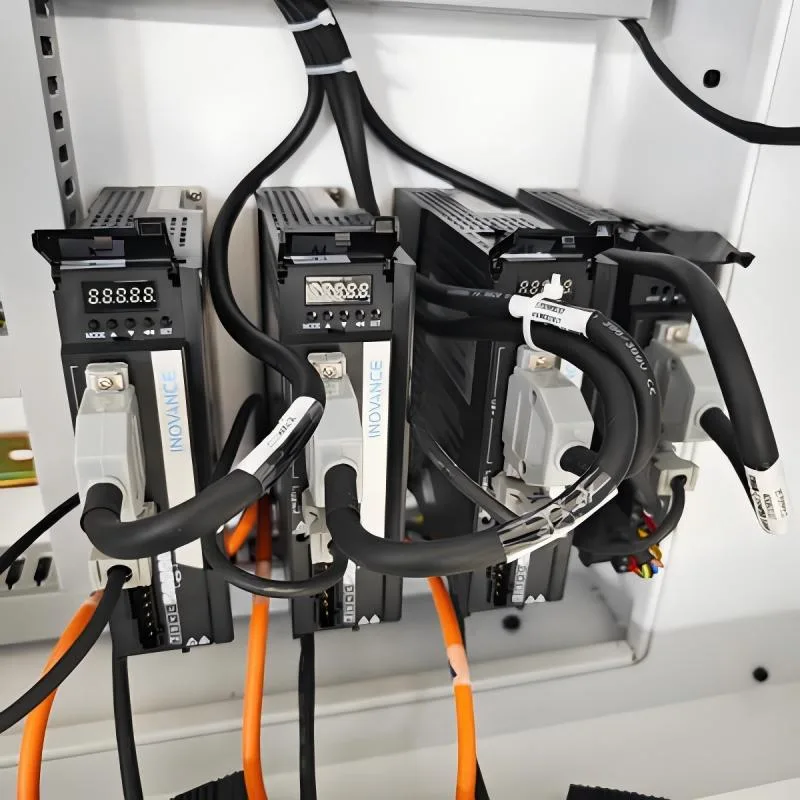
Causes of Cable Wear
Laser cables carry high currents and data signals between the power supply and the laser head. Frequent motion, bending, twisting, or improper routing can lead to insulation damage, conductor fatigue, and eventual failure. Environmental factors such as heat, dust, or metal shavings can also accelerate wear. Understanding these causes is the first step to prevention.
Effects of Worn Cables
Worn or damaged cables can result in:
- Intermittent laser power delivery
- Erratic machine performance
- Safety hazards from exposed conductors
- Unexpected downtime and costly repairs
Recognizing the signs early helps prevent larger issues.
Step-by-Step Guide to Prevent Laser Cable Wear
Step 1: Proper Cable Routing
Always ensure cables follow smooth paths with minimal bends and twists. Avoid tight radii, sharp corners, and locations where cables may be pinched or compressed. Using cable trays or protective conduits can reduce mechanical stress.
Step 2: Use of Cable Supports and Drag Chains
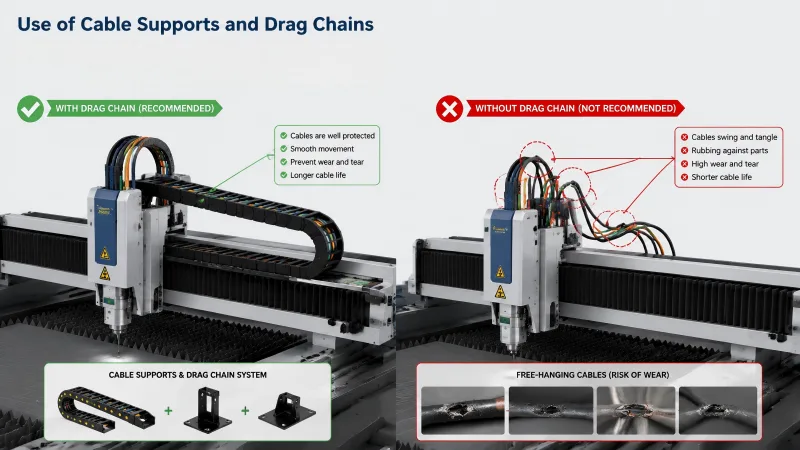
Install drag chains or cable carriers to guide the cables during movement of the laser head. This prevents free-hanging cables from swinging, tangling, or rubbing against machine components.
Step 3: Regular Inspection
Perform routine checks on all laser cables for signs of wear, such as fraying, cracks, or exposed wires. Replace damaged cables immediately to prevent further deterioration or safety incidents.
H3: Step 4: Maintain Proper Slack
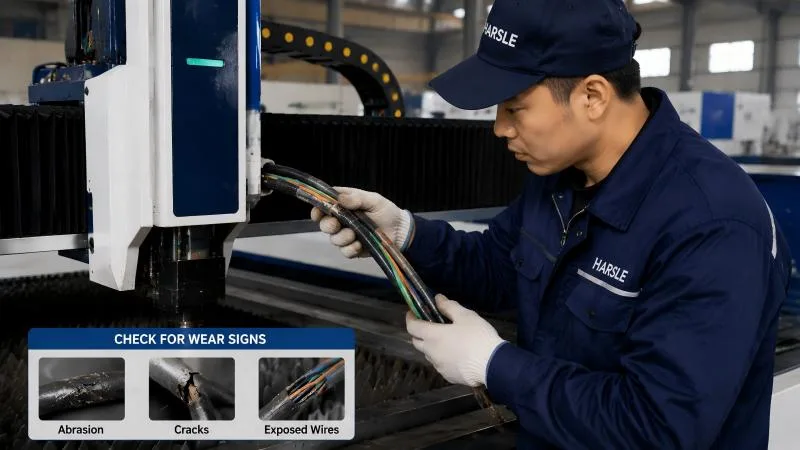
Ensure that there is enough slack for movement, but not so much that cables can snag on machine parts. Proper tension minimizes stress on connectors and conductors.
Step 5: Environmental Protection
Keep the laser cutting area clean and free of metal debris or dust. Excessive heat, oil, or chemical exposure can degrade insulation, so maintaining proper temperature and cleanliness is essential.
Step 6: Operator Training
Train operators on the correct handling of cables, emphasizing gentle movement, proper routing, and the importance of inspections. Educated operators are the first line of defense against cable wear.
Best Practices for Long-Term Cable Life
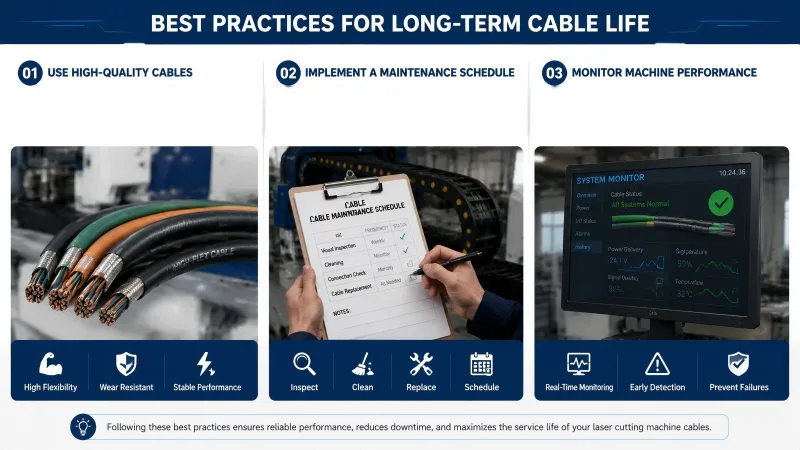
Use High-Quality Cables
Invest in cables designed for high-flex applications. These are engineered to withstand repeated bending, twisting, and movement without compromising conductivity or insulation.
Implement a Maintenance Schedule
Create a documented schedule for cable inspection, cleaning, and replacement. Consistent maintenance extends the service life and prevents unexpected downtime.
Monitoruj wydajność maszyny
Use the machine’s diagnostics and monitoring systems to detect any irregularities in power delivery or communication. Early detection of cable stress prevents failures.
Często zadawane pytania
How often should laser cables be inspected?
I recommend weekly visual inspections and more thorough checks monthly, especially in high-use production environments.
Can damaged cables affect cutting accuracy?
Yes, worn or partially damaged cables can cause fluctuations in laser power or signal loss, resulting in inconsistent cuts and reduced quality.
Are drag chains necessary for all laser machines?
While not always required, drag chains or cable carriers greatly reduce wear on moving cables, especially for machines with long travel distances or high-speed motion.
Wniosek
Zapobieganie Laser Cable Wear is essential for maintaining safe, reliable, and efficient laser cutting operations. By following proper routing, using cable supports, performing regular inspections, and training operators, you can extend cable life, reduce downtime, and maintain consistent cutting quality. Implementing these strategies ensures that your laser cutting equipment performs optimally and safely for years to come.
For further guidance or professional support, don’t hesitate to contact our team—we’re here to help you protect your equipment and maximize productivity.


