


Máquina de cisalhamento Stroke Inconsistency is a common issue that can affect cutting accuracy, production efficiency, and overall machine reliability. When the stroke length or blade movement becomes unstable, operators may experience uneven cutting results, incorrect dimensions, or unexpected machine stops. If you are facing inconsistent stroke problems and want to find effective troubleshooting methods, you are in the right place. In this article, I’ll explain the main causes of stroke inconsistency and provide practical solutions to help restore stable movement, improve cutting precision, and maintain reliable shearing machine performance.
Understanding Shearing Machine Stroke Inconsistency
O que é Máquina de cisalhamento Stroke Inconsistency?
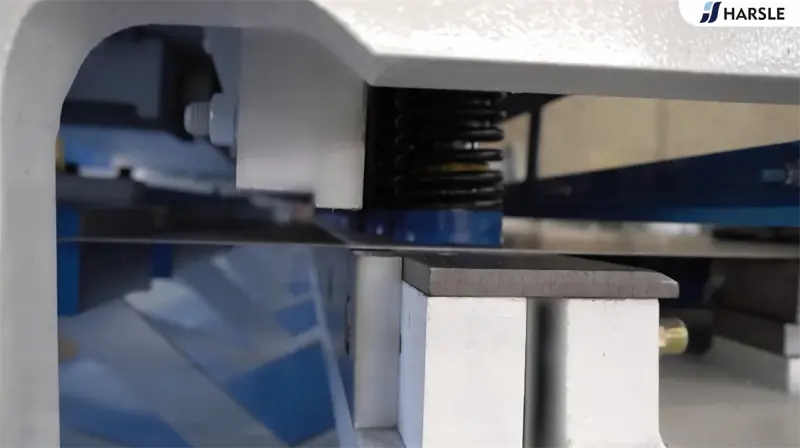
Stroke inconsistency refers to abnormal variations in the movement distance, position accuracy, or repeatability of the shearing machine ram or blade system. Under normal conditions, the blade should move smoothly and return to the same position during every cutting cycle.
When stroke performance becomes unstable, the machine may produce inconsistent cutting angles, uneven edges, or inaccurate sheet dimensions. This problem can occur in both hydraulic and CNC-controlled shearing machines due to mechanical, hydraulic, electrical, or control system issues.
Why Stroke Accuracy Is Important for Shearing Machines
The stroke movement directly affects cutting quality and production efficiency. A stable stroke ensures that the blade maintains the correct cutting clearance and position throughout operation.
For high-volume sheet metal processing, even small stroke deviations can result in material waste, repeated adjustments, and increased production costs. Maintaining accurate stroke control is therefore essential for achieving consistent cutting performance.
Common Causes of Shearing Machine Stroke Inconsistency
Instabilidade da pressão do sistema hidráulico
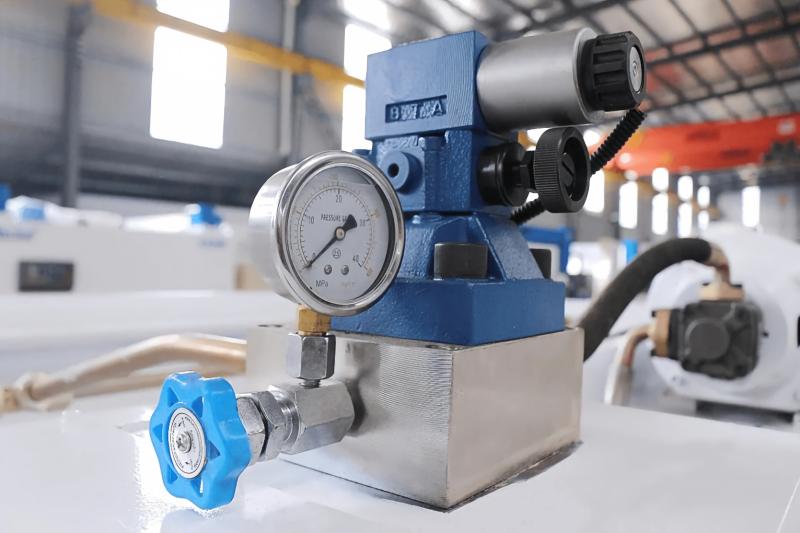
In hydraulic shearing machines, unstable hydraulic pressure is one of the most common causes of stroke variation. Problems such as oil contamination, pump wear, valve malfunction, or insufficient oil levels can affect cylinder movement.
I recommend checking hydraulic pressure regularly and inspecting components such as hydraulic pumps, proportional valves, and cylinders. Stable hydraulic performance ensures smooth blade movement and accurate stroke control.
Worn or Damaged Hydraulic Cylinder Components
Hydraulic cylinders are responsible for converting hydraulic pressure into mechanical movement. Internal leakage caused by worn seals can reduce cylinder efficiency and create uneven movement.
If the cylinder cannot maintain consistent pressure, the blade may stop at different positions during each cycle. Inspecting seals, piston conditions, and cylinder alignment can help identify these problems.
Incorrect Sensor Calibration
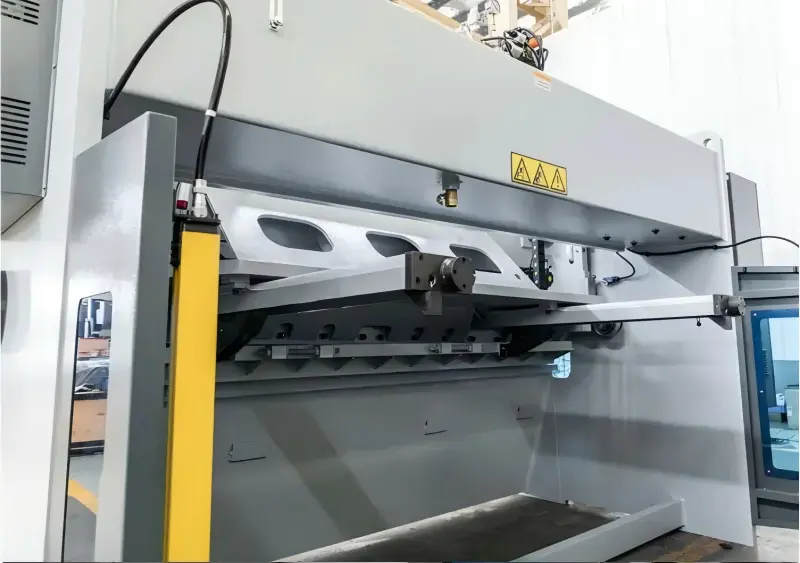
Modern CNC shearing machines rely on sensors and encoders to measure blade position. If sensors become misaligned, dirty, or incorrectly calibrated, the control system may receive inaccurate position feedback.
I recommend checking sensor mounting positions and recalibrating the system according to manufacturer specifications. Proper calibration helps maintain accurate stroke positioning.
Problemas nos sistemas elétricos e de controle
Electrical faults can also cause stroke inconsistency. Loose wiring connections, unstable signals, or controller errors may interrupt communication between sensors, valves, and the CNC system.
Regular inspection of electrical components helps prevent signal loss and ensures reliable machine operation.
Mechanical Wear and Poor Alignment
Mechanical components such as guide rails, connecting parts, and moving structures experience continuous stress during operation. Wear or misalignment can increase movement resistance and affect stroke repeatability.
Regular lubrication and mechanical inspection are important steps for maintaining smooth blade movement.
How to Fix Shearing Machine Stroke Inconsistency Problems
Step 1: Check Hydraulic System Conditions
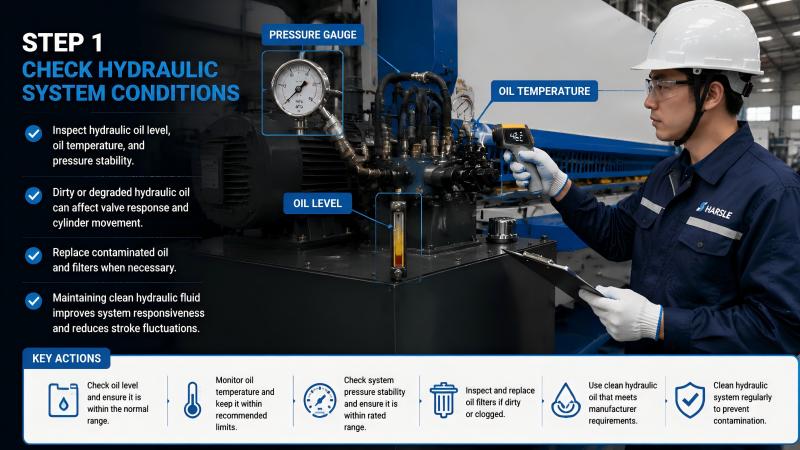
Start by inspecting hydraulic oil level, oil temperature, and pressure stability. Dirty or degraded hydraulic oil can affect valve response and cylinder movement.
Replace contaminated oil and filters when necessary. Maintaining clean hydraulic fluid improves system responsiveness and reduces stroke fluctuations.
Step 2: Inspect and Adjust Sensors
Check all position sensors, limit switches, and feedback devices. Ensure they are securely installed and free from dust, oil, or metal particles.
After inspection, perform sensor calibration through the CNC controller to ensure accurate position detection.
Step 3: Verify CNC Parameter Settings
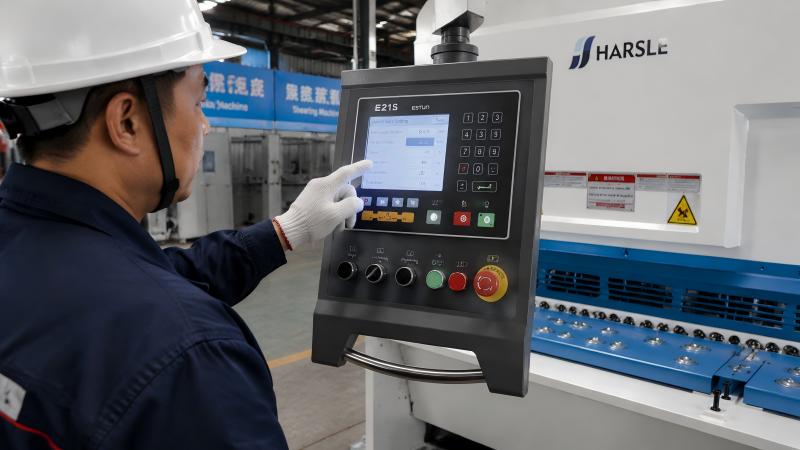
Incorrect CNC settings may cause abnormal blade movement. Check stroke parameters, position limits, speed settings, and control programs.
I recommend comparing current parameters with the machine manufacturer’s recommended settings before making adjustments.
Step 4: Inspect Mechanical Components
Examine guide rails, bearings, connecting rods, and other moving parts for excessive wear or looseness.
Tighten loose components and replace damaged parts to restore mechanical stability.
Step 5: Perform Test Cutting and Calibration
After completing repairs, run several test cycles and measure cutting results. Confirm that the blade returns accurately and maintains consistent stroke performance.
Fine adjustment may be required to achieve optimal cutting accuracy.
Best Practices to Prevent Shearing Machine Stroke Problems
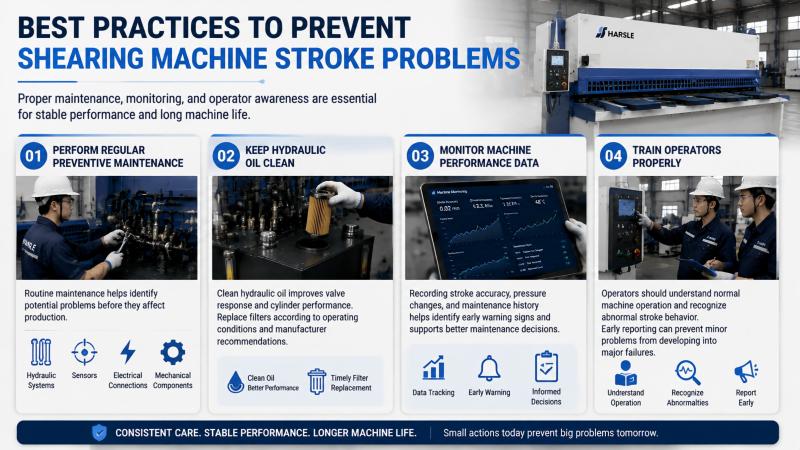
Perform Regular Preventive Maintenance
Routine maintenance helps identify potential problems before they affect production. Regularly inspect hydraulic systems, sensors, electrical connections, and mechanical components.
Keep Hydraulic Oil Clean
Clean hydraulic oil improves valve response and cylinder performance. Replace filters according to operating conditions and manufacturer recommendations.
Monitor Machine Performance Data
Recording stroke accuracy, pressure changes, and maintenance history helps identify early warning signs and supports better maintenance decisions.
Train Operators Properly
Operators should understand normal machine operation and recognize abnormal stroke behavior. Early reporting can prevent minor problems from developing into major failures.
Perguntas frequentes
What causes Shearing Machine Stroke Inconsistency?
Common causes include hydraulic pressure instability, sensor calibration errors, mechanical wear, electrical faults, and incorrect CNC parameters.
How can I improve shearing machine stroke accuracy?
Regular calibration, hydraulic maintenance, sensor inspection, and mechanical alignment checks can significantly improve stroke accuracy.
Can hydraulic oil problems affect stroke performance?
Yes. Contaminated or insufficient hydraulic oil can reduce pressure stability and cause inconsistent blade movement.
Conclusão
Consertando Shearing Machine Stroke Inconsistency requires a systematic approach that includes hydraulic inspection, sensor calibration, mechanical adjustment, and CNC parameter verification. By identifying the root cause and applying proper maintenance methods, you can restore stable blade movement, improve cutting accuracy, and reduce production interruptions.
A well-maintained shearing machine delivers better performance, longer service life, and more reliable results. For additional technical guidance or professional machine support, feel free to contact our team for expert assistance.


