


Máquina de cisalhamento Structural Vibration is a common issue that can affect cutting accuracy, machine stability, and overall production efficiency. When operating a shearing machine, I often find that excessive vibration is not caused by a single factor but by a combination of mechanical, structural, and operating conditions. If you are experiencing abnormal machine movement, increased noise, uneven cutting results, or faster component wear, understanding the root causes of vibration is essential. In this article, I’ll explain the main causes of shearing machine structural vibration and provide practical methods to identify and reduce these problems to improve machine performance and service life.
Entendimento Máquina de cisalhamento Structural Vibration
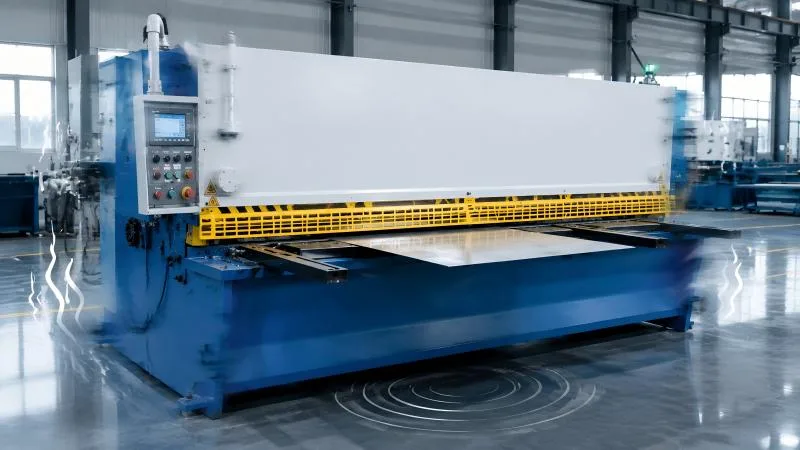
What Is Structural Vibration in a Shearing Machine?
Structural vibration refers to unwanted oscillation or movement of the machine frame and mechanical components during operation. A shearing machine generates significant cutting forces when processing metal sheets, and these forces can create vibrations if the machine structure, installation, or components are not properly controlled.
Normal vibration is expected during cutting, but excessive Shearing Machine Structural Vibration indicates that the machine may have mechanical instability, poor alignment, or improper operating conditions.
Why Structural Vibration Affects Cutting Performance
Excessive vibration directly influences cutting quality. It can cause blade movement, inaccurate cutting angles, uneven edges, and increased stress on mechanical components.
Long-term vibration also accelerates wear on bearings, hydraulic components, guide systems, and fasteners. Therefore, controlling vibration is important for maintaining accuracy and extending equipment lifespan.
Main Causes of Shearing Machine Structural Vibration
Componentes mecânicos soltos
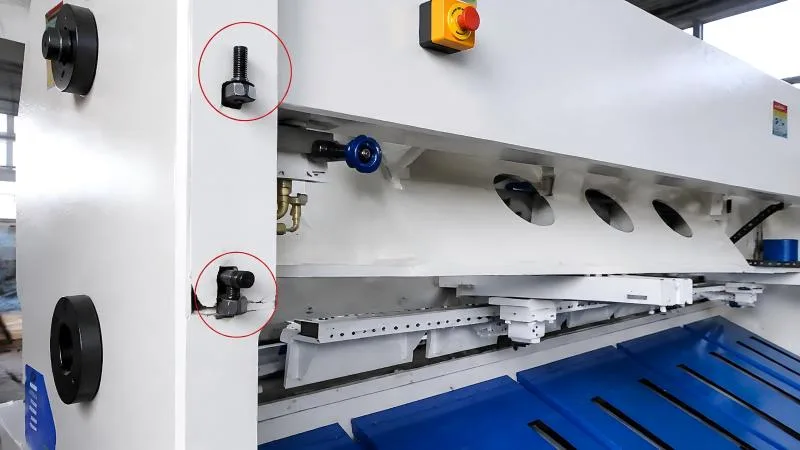
Loose Bolts and Fasteners Increase Machine Movement
One of the most common causes of vibration is loose mechanical connections. During continuous cutting operations, repeated impact forces can gradually loosen bolts, mounting screws, and structural joints.
Loose components reduce the rigidity of the machine frame, allowing more movement during cutting. I recommend regularly checking all important fasteners, especially those connecting the frame, blade system, and hydraulic components.
Poorly Tightened Structural Parts Affect Stability
If structural components are not properly tightened, the machine may experience additional vibration under high cutting loads. Regular inspection and proper torque adjustment help maintain the original rigidity of the shearing machine.
Improper Machine Installation
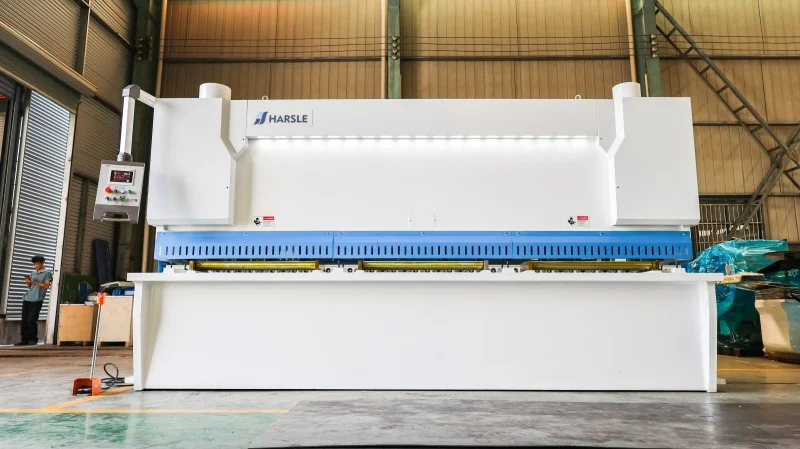
Uneven Foundation Causes Machine Instability
A stable foundation is essential for reducing vibration. If the installation surface is uneven or the machine is not properly leveled, the frame may experience slight movement during operation.
Before commissioning a shearing machine, I always recommend checking the foundation condition and using leveling equipment to ensure proper installation.
Incorrect Machine Alignment Creates Additional Stress
Misalignment between mechanical components can create uneven force distribution. This increases vibration and may reduce cutting accuracy.
Proper alignment of the blade system, hydraulic components, and moving parts helps ensure smoother operation.
Blade Problems and Cutting Conditions
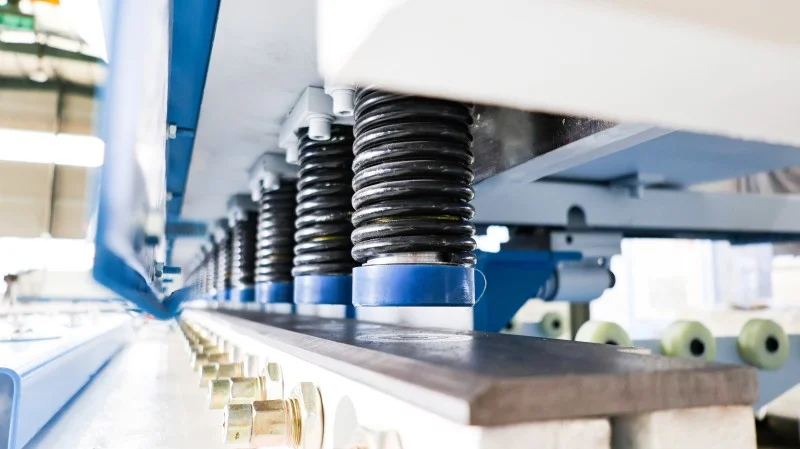
Worn or Incorrectly Adjusted Blades Increase Vibration
The cutting blade is one of the most important components affecting vibration performance. A worn blade requires more cutting force, creating additional impact and instability.
Incorrect blade clearance can also increase vibration because the material is not cut under optimal conditions. Regular blade inspection and adjustment are necessary for stable cutting performance.
Improper Cutting Parameters Affect Machine Stability
Processing materials beyond the machine’s designed capacity can increase vibration. Excessive thickness, unsuitable cutting speed, or incorrect blade clearance may create higher impact forces.
Operators should follow recommended operating parameters to reduce unnecessary mechanical stress.
Problemas no sistema hidráulico
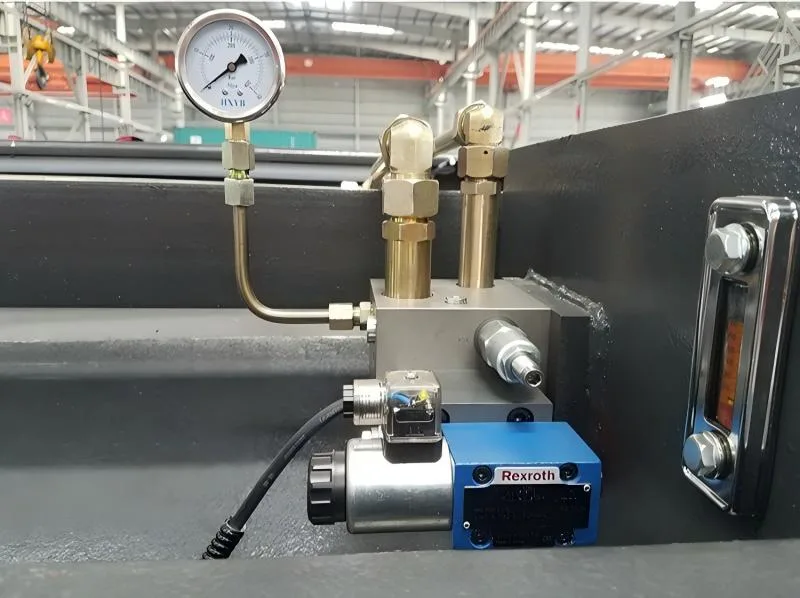
Hydraulic Pressure Fluctuation Causes Unstable Movement
Hydraulic shearing machines rely on stable hydraulic pressure for smooth blade movement. Pressure fluctuations caused by contaminated oil, pump wear, or valve problems can create irregular motion.
I recommend regularly checking hydraulic oil condition, pressure levels, and hydraulic components to prevent vibration caused by unstable hydraulic performance.
Worn Hydraulic Components Increase Mechanical Shock
Damaged hydraulic valves, pumps, or cylinders may cause sudden movement changes during operation. These irregular movements can transfer additional forces to the machine structure.
Regular hydraulic maintenance helps maintain stable operation and reduce vibration-related problems.
How to Troubleshoot Shearing Machine Structural Vibration
Step 1: Inspect Mechanical Connections
Start by checking all bolts, fasteners, and structural joints. Tighten loose components and verify that mounting points are secure.
This simple inspection can often identify the source of abnormal vibration.
Step 2: Check Machine Level and Installation Condition
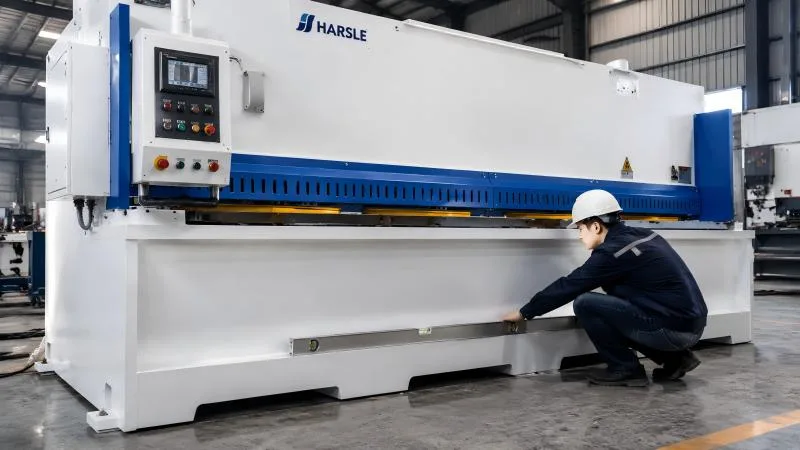
Use precision measuring tools to confirm that the machine remains level. If necessary, adjust the foundation or leveling system to restore stability.
Step 3: Inspect Blade Condition and Clearance
Check blade sharpness, alignment, and clearance settings. Replace damaged blades and adjust clearance according to material thickness requirements.
Step 4: Monitor Hydraulic System Performance
Inspect hydraulic oil quality, pressure stability, and component condition. Repair or replace worn hydraulic parts if abnormal conditions are detected.
Step 5: Analyze Operating Conditions
Review cutting parameters, material specifications, and machine workload. Adjust operating conditions to avoid excessive stress on the machine structure.
Best Practices to Reduce Shearing Machine Structural Vibration
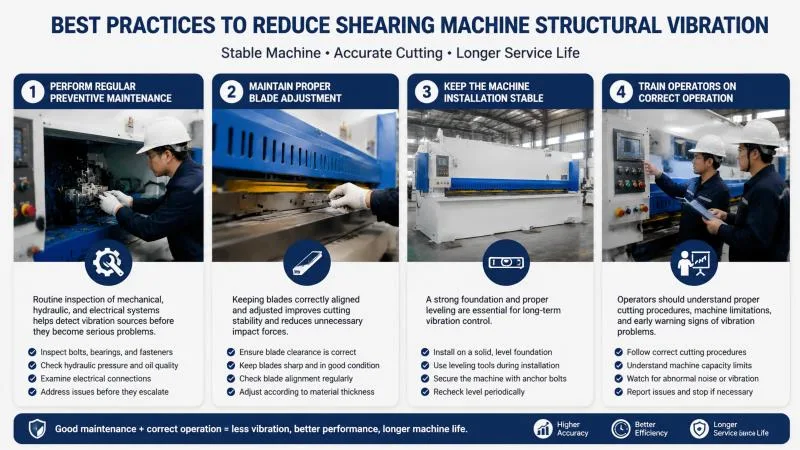
Perform Regular Preventive Maintenance
Routine inspection of mechanical, hydraulic, and electrical systems helps detect vibration sources before they become serious problems.
Maintain Proper Blade Adjustment
Keeping blades correctly aligned and adjusted improves cutting stability and reduces unnecessary impact forces.
Keep the Machine Installation Stable
A strong foundation and proper leveling are essential for long-term vibration control.
Train Operators on Correct Operation
Operators should understand proper cutting procedures, machine limitations, and early warning signs of vibration problems. Good operating habits help prevent unnecessary machine stress.
Perguntas frequentes
What are the main causes of Shearing Machine Structural Vibration?
Common causes include loose components, improper installation, blade problems, hydraulic instability, and incorrect operating conditions.
Can vibration affect shearing machine cutting accuracy?
Yes. Excessive vibration can cause inaccurate cuts, uneven edges, and reduced product quality.
How can I reduce vibration on a hydraulic shearing machine?
Regular maintenance, proper installation, blade adjustment, hydraulic inspection, and correct operating parameters can effectively reduce vibration.
Conclusão
Understanding the causes of Shearing Machine Structural Vibration is essential for maintaining cutting accuracy, improving machine reliability, and reducing maintenance costs. By checking mechanical connections, maintaining hydraulic stability, adjusting blades properly, and following preventive maintenance procedures, operators can significantly reduce vibration problems.
A stable shearing machine provides better cutting performance, longer service life, and higher production efficiency. For more technical support or guidance on shearing machine maintenance, feel free to contact our team for professional assistance.


