


Ein Annual Hydraulische Presse Wartungshandbuch is essential for keeping hydraulic presses reliable, accurate, and efficient throughout long-term operation. Regular yearly maintenance helps identify potential problems before they cause unexpected downtime, production delays, or expensive repairs. If you want to improve hydraulic press performance, extend component life, and create a structured maintenance plan, you are in the right place. In this article, I’ll explain how to use an annual maintenance guide effectively, including inspection procedures, hydraulic system checks, component maintenance, and practical tips for maintaining stable machine performance.
Why an Annual Hydraulische Presse Maintenance Guide Is Important
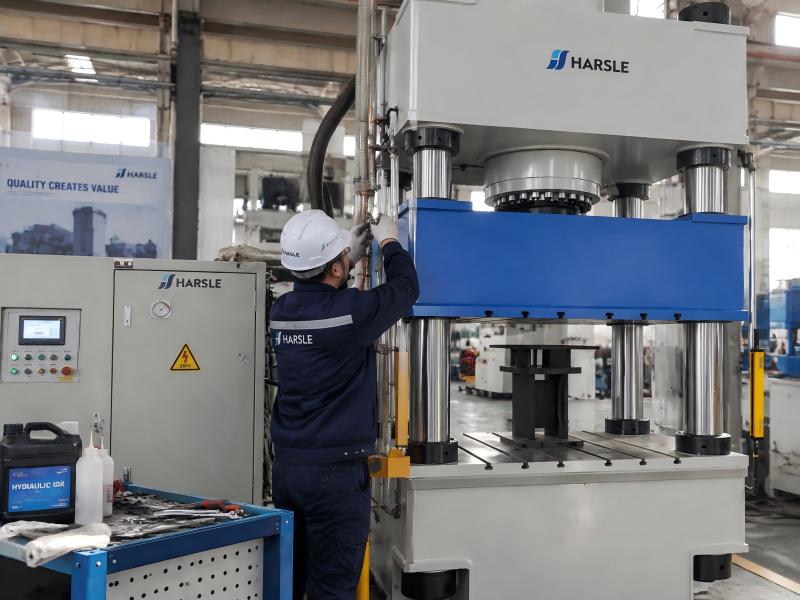
Prevent Unexpected Hydraulic Press Failures
A hydraulic press operates under high pressure and heavy loads, making regular maintenance essential. Over time, hydraulic oil contamination, component wear, loose connections, and electrical issues can reduce machine performance.
By following an Annual Hydraulic Press Maintenance Guide, I can systematically inspect important components and identify early warning signs before they develop into major failures. Preventive maintenance reduces emergency repairs and helps maintain continuous production.
Improve Machine Accuracy and Reliability
Hydraulic presses rely on precise control of pressure, movement, and positioning. Poor maintenance can lead to unstable pressure, uneven pressing force, slower operation, and reduced accuracy.
Annual inspections ensure that hydraulic systems, sensors, valves, pumps, cylinders, and mechanical structures remain in good working condition. This helps maintain consistent pressing quality and improves overall production efficiency.
How to Follow an Annual Hydraulic Press Maintenance Guide
Step 1: Inspect the Hydraulic System and Oil Condition
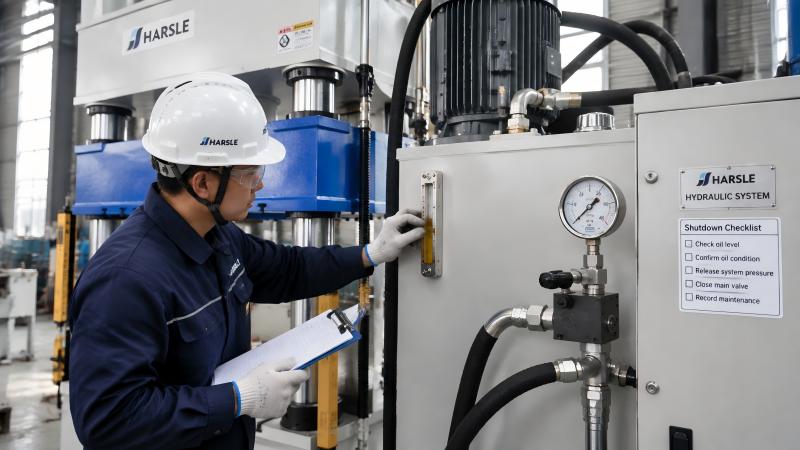
The hydraulic system is the power source of the press, so checking hydraulic oil condition should be one of the first maintenance steps.
I recommend inspecting hydraulic oil color, cleanliness, viscosity, and contamination levels. Dirty or degraded oil can damage pumps, valves, and seals, reducing hydraulic system performance.
During annual maintenance, I also check:
- Hydraulic oil level
- Oil leakage around cylinders and valves
- Filterzustand
- Stabilität des hydraulischen Drucks
- Abnormal system noise
If the oil shows signs of contamination or oxidation, replacing the oil according to manufacturer recommendations can prevent further damage.
Step 2: Check Hydraulic Press Pumps and Valves
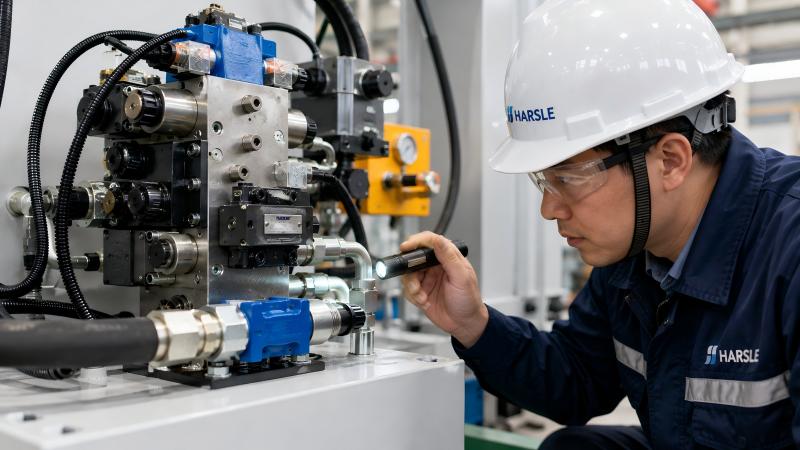
Hydraulic pumps and valves directly control pressure and oil flow. Any problems with these components can affect pressing force and machine response.
During inspection, I check hydraulic pumps for abnormal noise, vibration, leakage, or reduced output pressure. A worn pump may not provide sufficient pressure for demanding operations.
For hydraulic valves, I inspect:
- Valve body leakage
- Spool movement
- Solenoid operation
- Pressure control performance
- Signs of contamination
Keeping valves clean and properly adjusted helps maintain stable hydraulic performance.
Step 3: Inspect Cylinders, Seals, and Hydraulic Connections
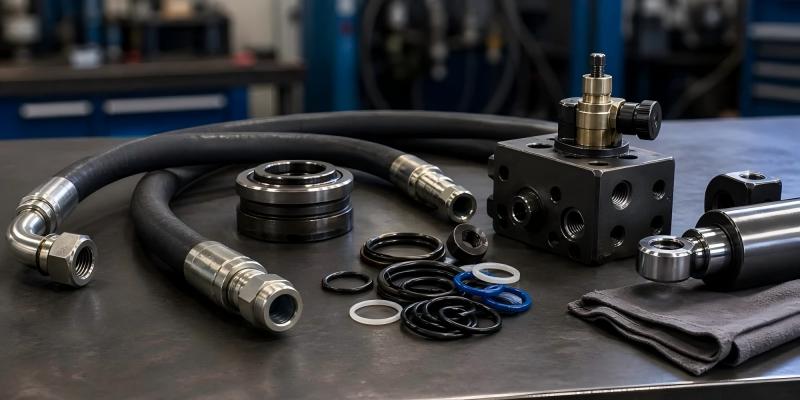
Hydraulic cylinders are responsible for generating pressing force. Damaged seals or leaking connections can reduce efficiency and create safety risks.
I carefully inspect cylinder surfaces, sealing areas, hoses, and fittings for oil leakage or physical damage.
During annual maintenance, pay attention to:
- Cylinder rod condition
- Seal wear
- Hose aging
- Loose fittings
- Connection corrosion
Replacing worn seals and damaged hoses early can prevent hydraulic failures and reduce repair costs.
Step 4: Check Electrical Components and Sensors
Modern hydraulic presses use sensors and control systems to improve accuracy and automation. Electrical problems can affect machine operation even when hydraulic components are working correctly.
I recommend checking:
- Pressure sensors
- Positionssensoren
- Wiring connections
- Control panel functions
- Safety switches
Sensor calibration should also be verified during annual maintenance. Accurate feedback signals help the control system maintain stable pressing performance.
Step 5: Inspect Mechanical Components and Safety Systems
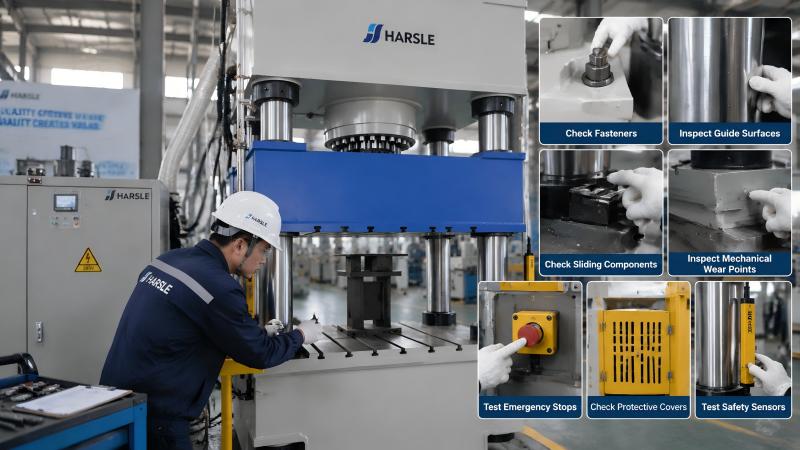
Mechanical structures experience continuous stress during operation. Annual maintenance should include checking the machine frame, fasteners, guides, and moving components.
Ich prüfe:
- Loose bolts and connections
- Guide surfaces
- Sliding components
- Mechanical wear points
- Safety protection devices
Safety systems should never be overlooked. Emergency stops, protective covers, and safety sensors must be tested to ensure reliable operator protection.
Step 6: Clean, Lubricate, and Record Maintenance Activities
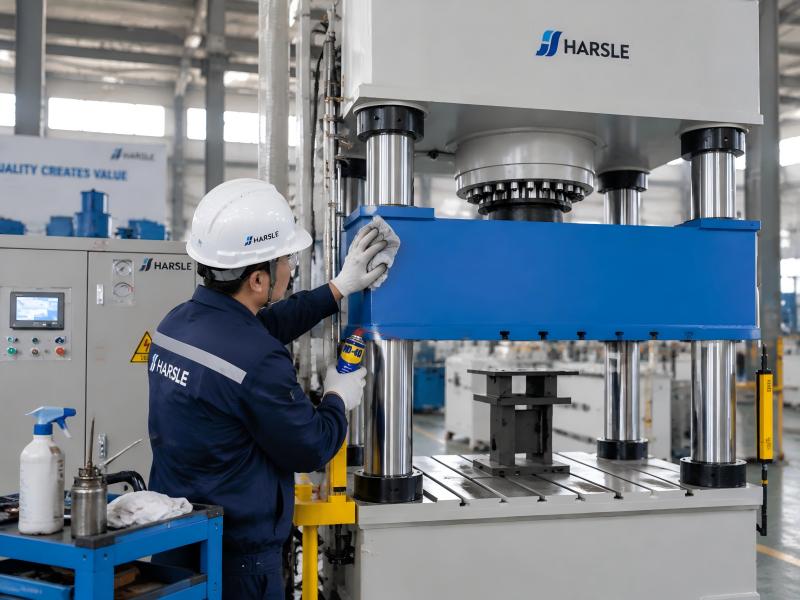
Cleaning and lubrication are simple but important steps in an annual hydraulic press maintenance program.
Dust, metal particles, and oil residue can accelerate component wear. Keeping the machine clean helps prevent contamination and improves inspection accuracy.
I also recommend applying suitable lubricants to mechanical moving parts according to manufacturer specifications.
After completing maintenance, record:
- Inspection results
- Ersetzte Komponenten
- Oil changes
- Calibration information
- Identified problems
Detailed records make future maintenance planning easier and help track machine condition over time.
Best Practices for Effective Annual Hydraulic Press Maintenance
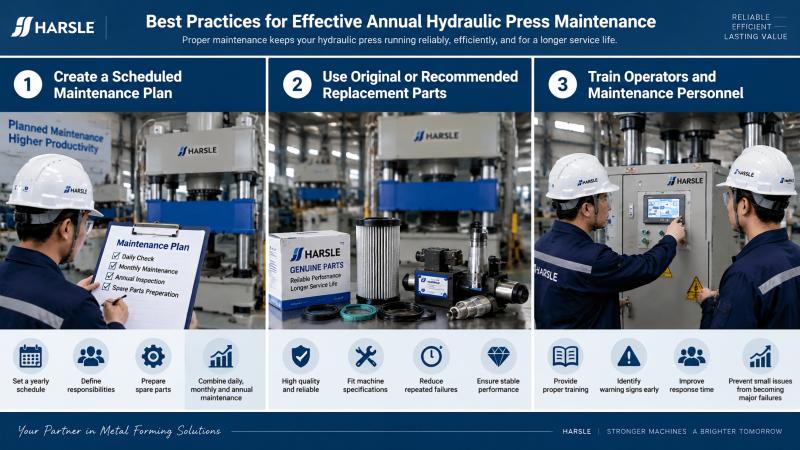
Create a Scheduled Maintenance Plan
A successful maintenance program should not rely only on fixing problems after they occur. I recommend creating a yearly schedule that clearly defines inspection tasks, responsible personnel, and required spare parts.
Combining annual inspections with daily and monthly maintenance routines provides better machine protection.
Use Original or Recommended Replacement Parts
Using high-quality replacement parts helps maintain hydraulic press performance. Incorrect filters, seals, sensors, or hydraulic components may reduce reliability and cause repeated failures.
Always select parts that meet the machine specifications and manufacturer requirements.
Train Operators and Maintenance Personnel
Operators are often the first people to notice unusual machine conditions. Proper training allows them to identify warning signs such as abnormal sounds, pressure changes, or unstable movement.
Well-trained teams can respond quickly and prevent small issues from becoming serious failures.
FAQs
How often should I use an Annual Hydraulic Press Maintenance Guide?
A complete annual maintenance inspection should typically be performed once every year. However, machines operating under heavy loads or harsh environments may require more frequent inspections.
What components should be checked during annual hydraulic press maintenance?
Important components include hydraulic oil, pumps, valves, cylinders, seals, sensors, electrical systems, mechanical structures, and safety devices.
Can annual maintenance reduce hydraulic press downtime?
Yes. Regular inspections help identify potential failures early, allowing planned repairs instead of unexpected production interruptions.
Abschluss
Following an Annual Hydraulic Press Maintenance Guide is one of the most effective ways to maintain machine reliability, improve production efficiency, and extend equipment service life. By regularly inspecting hydraulic systems, checking critical components, maintaining clean oil, testing sensors, and recording maintenance activities, I can prevent many common hydraulic press problems.
A structured annual maintenance plan not only reduces unexpected downtime but also ensures safer and more consistent machine operation. For more technical support, maintenance advice, or hydraulic press solutions, contact our team for professional assistance.


