


Prensa hidráulica Oil Spray Injuries can occur when high-pressure hydraulic oil escapes through damaged hoses, loose fittings, leaking seals, or faulty connections. Even a small hydraulic leak can create a dangerous high-pressure oil jet capable of penetrating the skin and causing serious injection injuries. To prevent these accidents, I recommend regular hydraulic system inspections, proper pressure control, timely component replacement, and appropriate operator protection. In this guide, I’ll explain the main causes of hydraulic oil spray injuries and the practical safety measures manufacturers should follow to protect workers during prensa hidráulica operation and maintenance.
Why Are Hydraulic Oil Spray Injuries Dangerous?
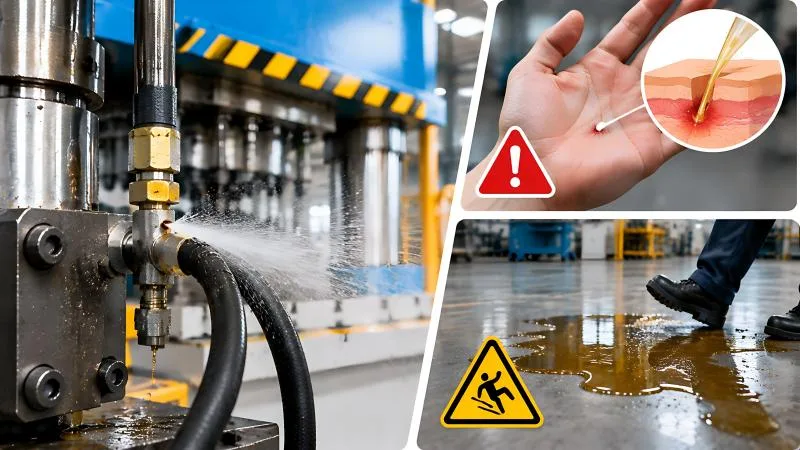
High-Pressure Hydraulic Oil Injection
Hydraulic presses operate under substantial pressure. If a hose or fitting develops a small opening, pressurized oil may escape at high velocity and penetrate the skin.
Hydraulic injection injuries can initially look like minor puncture wounds, but they may cause serious internal tissue damage. Any suspected injection injury requires immediate emergency medical evaluation, even if the wound appears small.
Slipping Hazards and Equipment Damage
Hydraulic oil leaks can spread across the workshop floor, creating slippery surfaces and increasing the risk of falls.
Oil escaping from damaged components may also contaminate electrical equipment, damage nearby machine components, and reduce hydraulic system performance.
How to Prevent Hydraulic Press Oil Spray Injuries
Step 1: Inspect Hydraulic Hoses and Connections Regularly
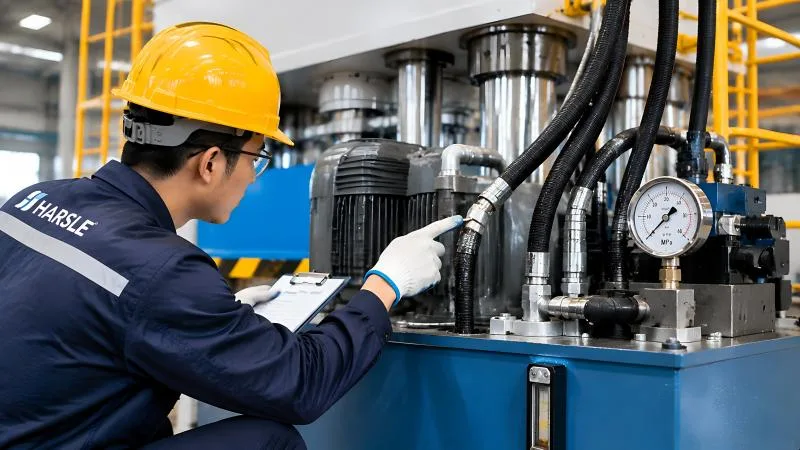
Before starting production, inspect the hydraulic system for visible damage, oil leakage, and loose connections.
Pay particular attention to:
- Hydraulic Hoses: Check for cracks, abrasion, bulging, deformation, and damaged outer layers.
- Pipe Connections: Inspect fittings, joints, and connectors for signs of leakage.
- Seals and O-Rings: Look for deterioration, hardening, and oil seepage.
- Hydraulic Cylinders: Check around cylinder rods and sealing areas for abnormal leakage.
- Pressure Gauges: Verify that pressure readings are within the machine manufacturer’s specified operating range.
Never use your hands to locate a suspected high-pressure leak. Use an appropriate inspection method, such as cardboard or another suitable leak-detection material, while maintaining a safe distance. If damage or leakage is detected, stop the machine and arrange an inspection by qualified personnel.
Step 2: Maintain Correct Hydraulic Operating Pressure
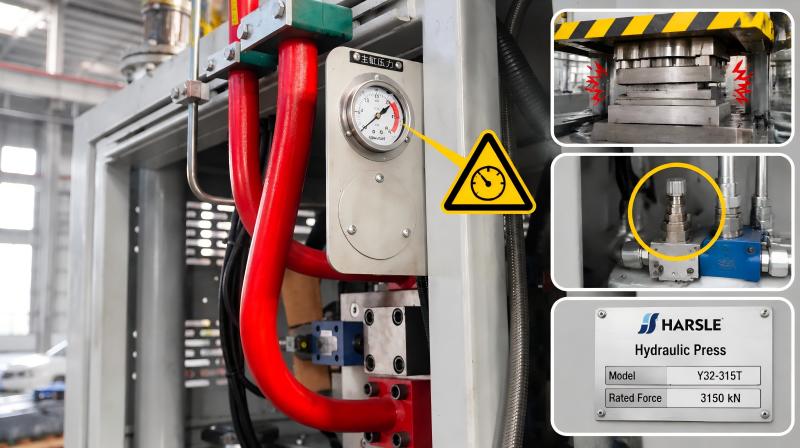
Excessive hydraulic pressure can increase stress on hoses, fittings, seals, and other system components.
Always operate the hydraulic press within its rated pressure limits. Check pressure settings against the manufacturer’s specifications and investigate abnormal pressure fluctuations.
Pressure adjustments must only be performed by qualified personnel using approved procedures. Never increase the system pressure simply to compensate for poor forming performance or an incorrect machine setup.
Step 3: Replace Damaged Hydraulic Components Promptly
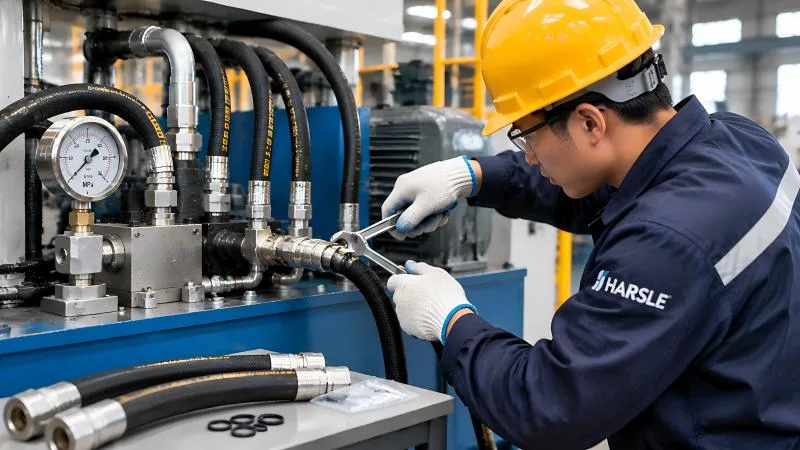
Worn hoses, deteriorated seals, and damaged fittings can fail unexpectedly under pressure.
Replace defective components with approved parts that meet the machine’s pressure, temperature, fluid compatibility, and connection requirements.
When replacing hydraulic hoses:
- Stop the machine and isolate all relevant energy sources.
- Follow the approved lockout/tagout (LOTO) procedure.
- Release or safely control residual hydraulic pressure according to the manufacturer’s instructions.
- Confirm that the affected circuit is safely depressurized.
- Replace damaged components using compatible parts and approved installation methods.
- Inspect the connections before returning the machine to service.
Never tighten leaking fittings or disconnect hydraulic hoses while the system is pressurized.
Step 4: Install Appropriate Protective Guards
Hydraulic system components should be protected against accidental contact and potential oil spray where necessary.
Depending on the machine design and risk assessment, suitable protective measures may include:
- Hose Guards: Help protect exposed hydraulic hoses from mechanical damage.
- Protective Enclosures: Reduce personnel exposure to vulnerable hydraulic connections.
- Splash Shields: Help contain oil spray from potential leakage points.
- Warning Signs: Identify hydraulic pressure hazards and restricted maintenance areas.
Protective guards should not obstruct routine inspections or interfere with machine operation. Never remove required safety guards while the equipment is running.
Step 5: Train Operators to Recognize Hydraulic Leaks
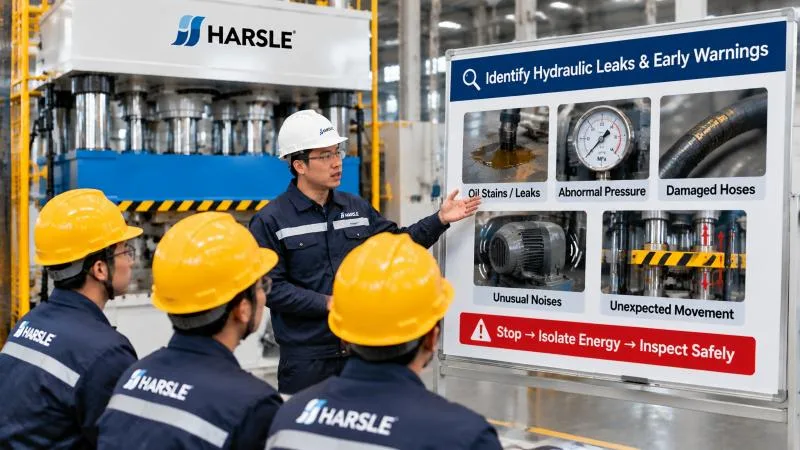
Operators should understand the warning signs of hydraulic system problems, including oil stains, abnormal pressure readings, damaged hoses, unusual noises, and unexpected machine movement.
If an oil spray or leak occurs, stop the machine when it is safe to do so, keep personnel away from the affected area, and arrange proper energy isolation before inspection.
Never touch a suspected high-pressure leak or attempt an unauthorized repair. If hydraulic oil penetrates someone’s skin, seek emergency medical treatment immediately and inform medical personnel that a high-pressure hydraulic injection injury is suspected.
Step 6: Establish Preventive Hydraulic Maintenance
Regular maintenance helps identify potential failures before they cause accidents.
I recommend establishing a maintenance schedule based on operating hours, manufacturer recommendations, and actual working conditions.
Record hose replacement dates, inspection results, pressure abnormalities, and maintenance activities. These records help maintenance teams identify recurring problems and determine when hydraulic components require replacement.
Common Mistakes to Avoid When Preventing Oil Spray Injuries
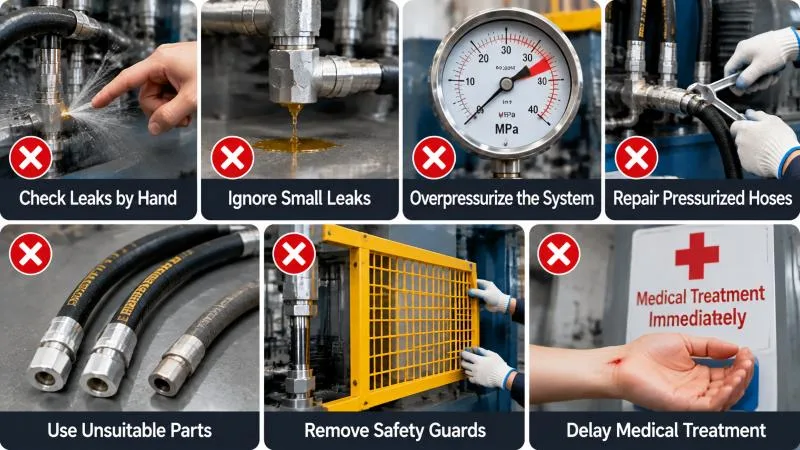
- Checking leaks with bare hands: Never use your fingers to locate high-pressure oil leaks.
- Ignoring small leaks: Minor leakage may indicate deteriorating hoses or connections.
- Overpressurizing the system: Always follow the manufacturer’s pressure specifications.
- Repairing pressurized hoses: Depressurize and isolate the system before maintenance.
- Using unsuitable replacement parts: Select hydraulic components with appropriate pressure and fluid ratings.
- Removing protective guards: Never bypass required protective devices.
- Delaying medical treatment: Suspected hydraulic injection injuries require immediate medical attention.
Preguntas frecuentes
Can Hydraulic Oil Penetrate Human Skin?
Yes. High-pressure hydraulic oil can penetrate the skin through a small opening and cause serious internal injuries. Immediate emergency medical treatment is essential.
How Often Should Hydraulic Hoses Be Inspected?
Operators should perform visual inspections before operation or each shift as required by the maintenance procedure. More detailed inspections and replacements should follow the manufacturer’s recommendations and actual hose condition.
Is It Safe to Tighten a Leaking Hydraulic Fitting During Operation?
No. Never tighten fittings or repair hydraulic connections while the system is pressurized. Stop the machine, isolate hazardous energy, and verify that residual pressure has been safely released before maintenance.
Conclusión
Preventing hydraulic press oil spray injuries requires regular inspections, correct pressure control, timely component replacement, effective protective guards, and proper operator training. By following these safety practices, manufacturers can reduce the risk of hydraulic injection injuries, protect equipment, and maintain a safer production environment.


