


Hydraulische Presse Safety Doors are essential protective components for preventing operators from accessing hazardous areas during hydraulic press operation. They help reduce the risk of crushing injuries, accidental contact with moving components, and exposure to flying debris. However, selecting the right safety door requires more than choosing a suitable size or material. I recommend considering machine structure, operating conditions, safety interlocks, visibility, and maintenance requirements. In this guide, I’ll explain how to select appropriate safety doors for industrial hydraulic presses and what manufacturers should consider to improve workplace safety.
Why Are Safety Doors Important for Hydraulische Pressen?
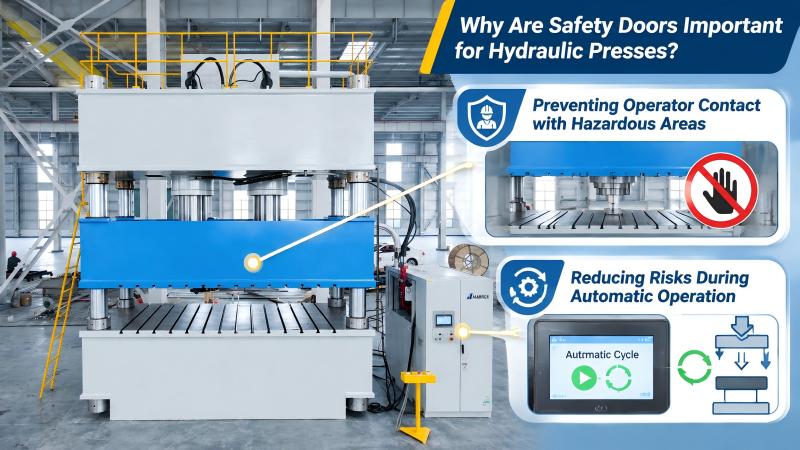
Preventing Operator Contact with Hazardous Areas
Hydraulic presses generate substantial force during forming, stamping, and pressing operations. The working area contains potentially dangerous components, including moving slides, dies, hydraulic cylinders, and tooling.
Safety doors create a physical barrier between operators and these hazardous areas. When properly designed and integrated, they help prevent unauthorized access during machine operation.
Reducing Risks During Automatic Operation
Automatic hydraulic presses may operate through programmed cycles with limited direct operator intervention. Without suitable protective doors and safety interlocks, personnel could accidentally enter hazardous areas while the machine is moving.
Interlocked safety doors help ensure that opening a protected access point initiates the appropriate safety response.
How to Select the Right Hydraulic Press Safety Doors
Step 1: Evaluate Machine Structure and Hazardous Areas
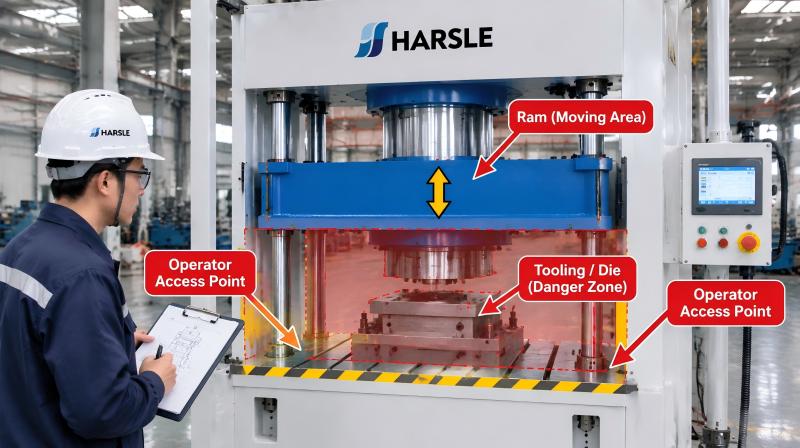
Before selecting a safety door, identify the hazardous areas that require protection.
Consider the following components:
- Pressing area: Protect the space between the upper and lower dies where pressing operations occur.
- Moving slide: Prevent access to the moving ram and associated mechanical components.
- Side working areas: Identify potential access points around the machine structure.
- Rear maintenance areas: Evaluate access to hydraulic components, mechanical assemblies, and electrical equipment.
The safety door configuration should match the hydraulic press structure and the actual hazards identified through a machine risk assessment.
Step 2: Choose the Appropriate Safety Door Type
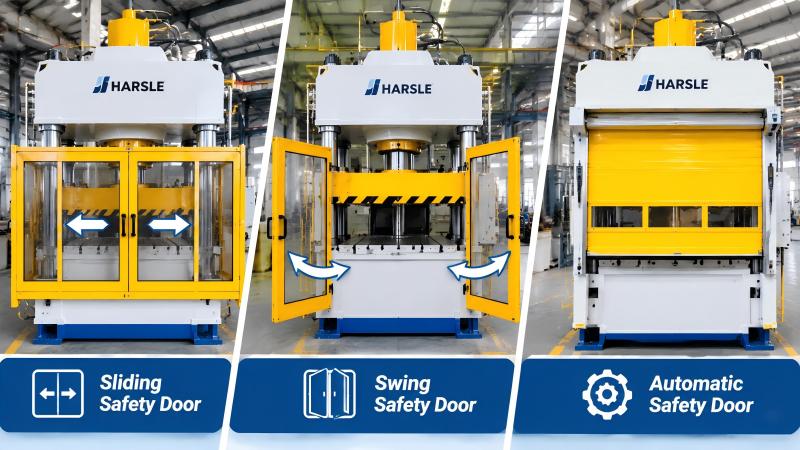
Different hydraulic press applications require different protective door configurations.
Common options include:
Sliding Safety Doors
Sliding doors move horizontally along guide rails. They are suitable for applications where workshop space is limited and operators need convenient access to the working area.
Swing Safety Doors
Swing doors open outward or inward using hinges. They provide straightforward access for inspection, tooling changes, and maintenance, provided sufficient clearance is available.
Automatic Safety Doors
Automatic doors use powered mechanisms to open and close according to the machine’s operating sequence. They are useful for automated production lines where frequent access and coordinated machine operation are required.
When choosing a door type, consider opening dimensions, operating frequency, available installation space, and the machine manufacturer’s design requirements.
Step 3: Select Suitable Door Materials and Construction
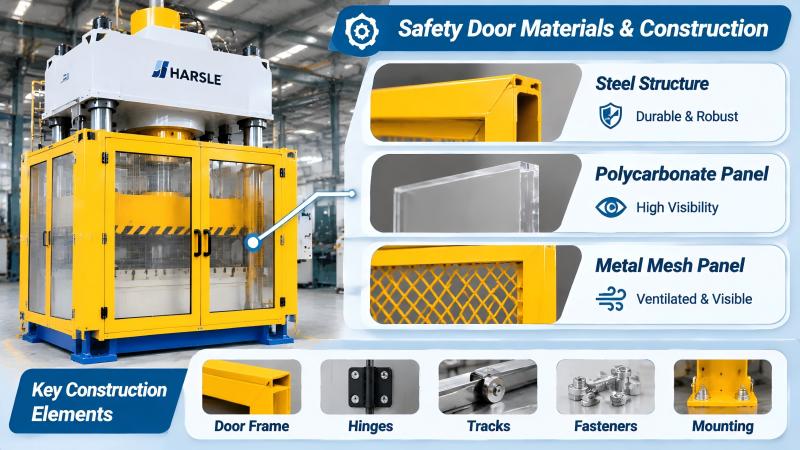
The material and structural strength of a safety door directly affect its protective performance.
Common construction options include:
- Steel structures: Provide durable physical protection and are suitable for demanding industrial environments.
- Polycarbonate panels: Offer visibility into the working area while maintaining a physical barrier when correctly designed and installed.
- Metal mesh panels: Allow ventilation and visibility, but their openings and protective distance must be suitable for the identified hazards.
I recommend selecting materials based on the expected impact, operating environment, cleaning requirements, and applicable safety standards.
The door frame, hinges, tracks, fasteners, and mounting connections must also withstand the expected operating conditions.
Step 4: Check Safety Interlocks and Electrical Integration
Safety interlocks are an important consideration when selecting hydraulic press safety doors.
An interlock system detects whether a protective door is open or closed and communicates with the machine’s safety control system.
Before selecting a configuration, check:
- Whether opening the door initiates the required safe stopping response.
- Whether the machine can restart while the protected access point remains open.
- Whether the interlock is compatible with the machine’s safety control architecture.
- Whether additional guard locking is necessary when hazardous motion continues after a stop command.
- Whether faults and unauthorized bypass attempts can be detected.
For applications requiring guard locking, the door should remain secured until the hazardous movement has stopped and access is safe.
Safety circuits must be designed, installed, and validated by qualified personnel. Never bypass interlocks to maintain production.
Step 5: Consider Visibility and Operator Accessibility
A well-designed safety door should provide convenient access without compromising protection.
Transparent viewing panels can help operators observe the pressing process without opening the protective barrier.
Also consider:
- Sufficient opening dimensions for approved material handling.
- Convenient door handles and locking mechanisms.
- Clear visibility of the working area.
- Adequate clearance for maintenance and tooling replacement.
- Ergonomic access without unnecessary reaching or bending.
These considerations help improve daily operation while maintaining appropriate safety boundaries.
Step 6: Evaluate Maintenance and Safety Compliance
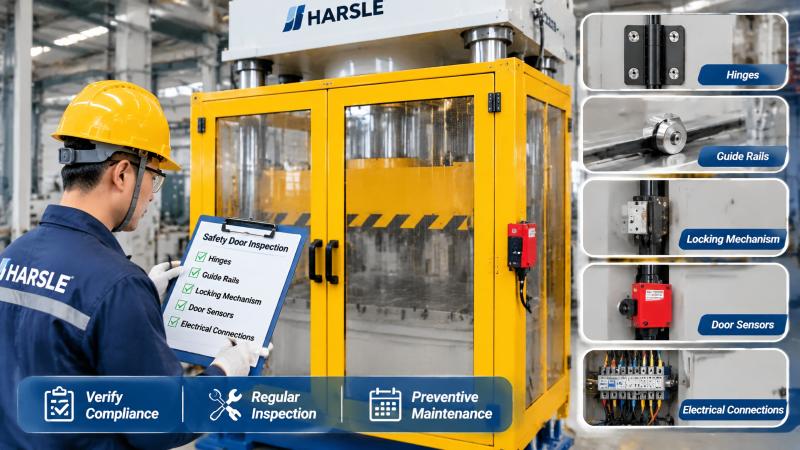
Before installation, verify that the selected safety door meets applicable machinery safety requirements and is compatible with the hydraulic press.
Inspect the hinges, guide rails, locking mechanisms, door sensors, and electrical connections regularly.
I also recommend establishing a preventive maintenance schedule to identify loose fasteners, damaged panels, worn components, and faulty interlocks before they affect safety performance.
Common Mistakes to Avoid When Selecting Hydraulic Press Safety Doors
- Choosing doors without risk assessment: The design may fail to protect all hazardous access points.
- Ignoring interlock compatibility: Incorrect integration can compromise machine safety functions.
- Using unsuitable materials: Weak panels or frames may not withstand the expected operating conditions.
- Ignoring stopping time: Doors may allow access before hazardous movement has completely stopped.
- Overlooking maintenance access: Poor door placement can make servicing difficult or encourage unsafe workarounds.
- Umgehen von Sicherheitsverriegelungen: Protective devices must never be disabled to increase production speed.
FAQs
Are Safety Doors Required for All Hydraulic Presses?
Requirements depend on machine design, operating conditions, applicable regulations, and risk assessment results. Appropriate safeguarding must be provided wherever hazardous areas could be accessed.
What Is the Difference Between an Interlocked Door and a Guard-Locking Door?
An interlocked door initiates the required safety response when opened. A guard-locking door additionally prevents access until the hazardous movement has stopped or the defined safe condition has been achieved.
Which Material Is Best for Hydraulic Press Safety Doors?
Steel provides robust structural protection, while polycarbonate offers visibility. The appropriate choice depends on the identified hazards, impact requirements, and machine configuration.
Abschluss
Selecting suitable hydraulic press safety doors requires careful consideration of machine structure, hazardous areas, door construction, interlock systems, visibility, and maintenance requirements.
By choosing appropriate protective barriers and integrating reliable safety controls, manufacturers can reduce operator exposure to hazardous movements and create a safer production environment.


