


Laser cutting sparks problem is one of the most common issues encountered in taglio laser operations. While sparks are a normal part of the cutting process, abnormal sparks often indicate underlying problems that can affect cut quality, productivity, and machine safety. If you’ve noticed excessive sparks, irregular spark direction, unusual colors, or inconsistent cutting results, you’re in the right place. In this article, I’ll explain the most common causes of laser cutting sparks problems and provide a step-by-step troubleshooting guide to help you restore optimal cutting performance and maintain high-quality production.
Understanding the Laser Cutting Sparks Problem
What Are Normal Laser Cutting Sparks?
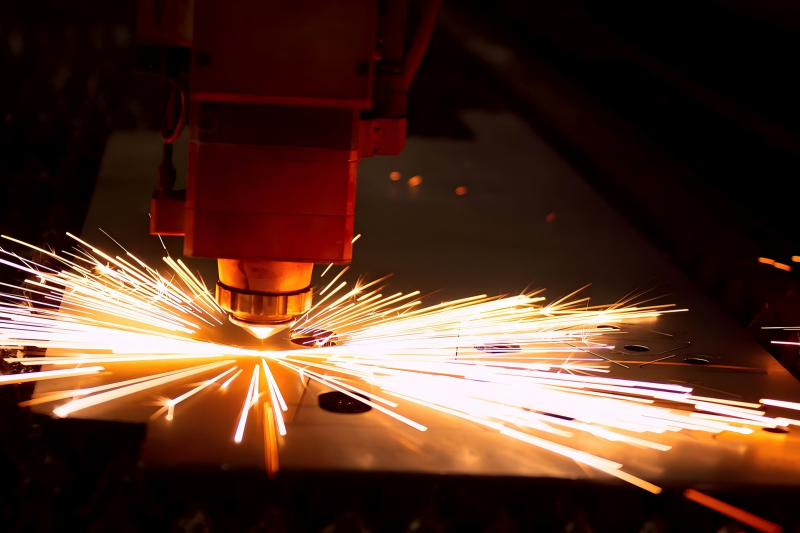
During laser cutting, sparks are generated as molten metal is expelled from the cutting kerf. Under normal conditions, sparks should appear uniform and flow downward through the cut.
Characteristics of normal sparks include:
- Consistent spark direction
- Stable spark intensity
- Minimal spatter
- Clean cutting edges
When spark behavior changes significantly, it often signals a machine or process issue.
Common Symptoms of Abnormal Sparks
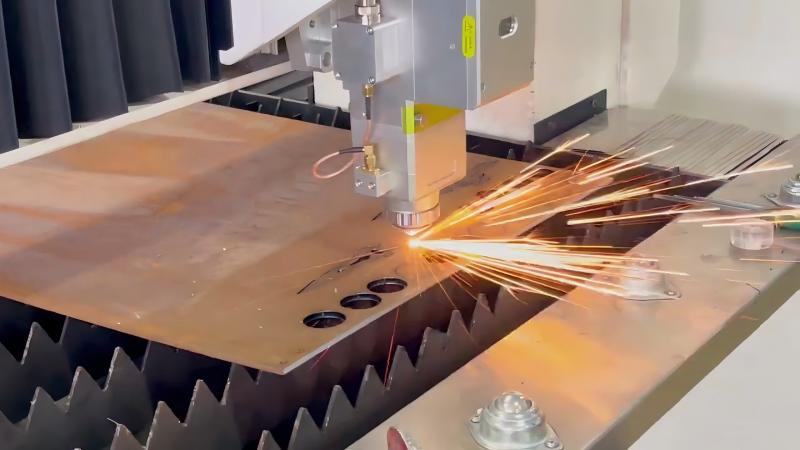
A laser cutting sparks problem may present itself through:
- Excessive spark generation
- Sparks ejecting sideways
- Intermittent spark patterns
- Bright explosive sparks
- Heavy slag accumulation
- Incomplete material penetration
Recognizing these symptoms early can help prevent larger production issues.
Common Causes of Laser Cutting Sparks Problem
Incorrect Cutting Parameters
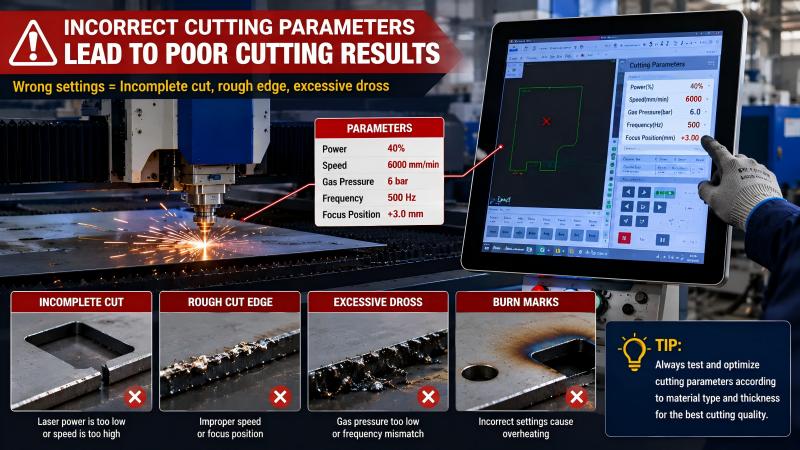
Improper cutting settings are among the most frequent causes of abnormal sparks.
Potential parameter issues include:
- Laser power set too high
- Cutting speed too fast
- Incorrect focus position
- Improper pulse frequency
- Incorrect duty cycle
When parameters are not matched to the material thickness and type, spark behavior becomes unstable.
Dirty or Damaged Nozzle
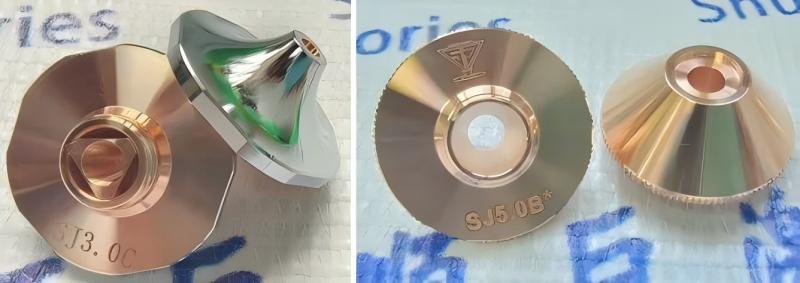
The nozzle controls assist gas flow around the cutting area.
A damaged nozzle may cause:
- Turbulent gas flow
- Sideways sparks
- Poor edge quality
- Increased dross formation
Regular inspection helps maintain stable cutting performance.
Insufficient Assist Gas Pressure
Assist gas removes molten material from the kerf.
If gas pressure is too low:
- Sparks become excessive
- Slag accumulates
- Cut edges become rough
- Penetration quality decreases
Always verify gas pressure against manufacturer recommendations.
Contaminated Protective Lens
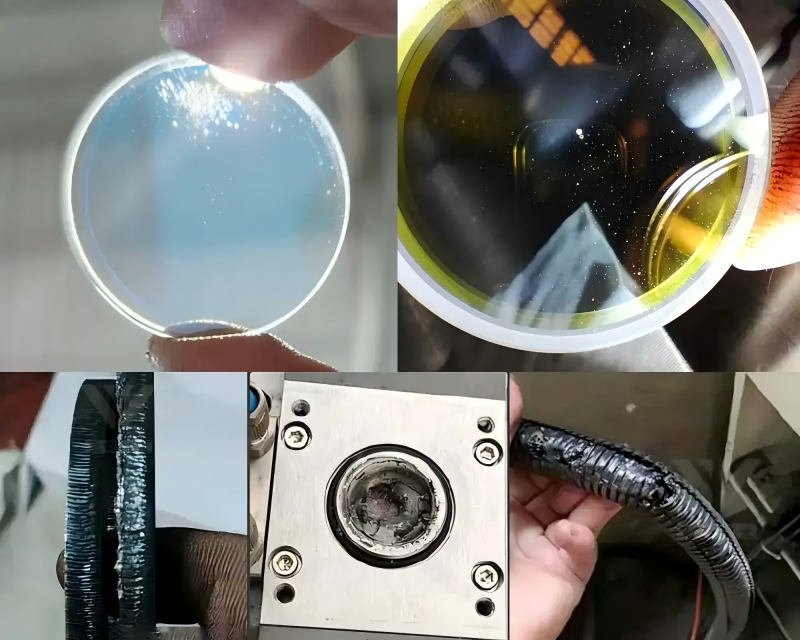
Dust, smoke residue, and debris on the protective lens reduce laser transmission efficiency.
Common effects include:
- Reduced cutting power
- Increased spark intensity
- Overheating
- Inconsistent cut quality
A clean lens is critical for stable laser performance.
Material Surface Contamination
Rust, oil, paint, and other surface contaminants can alter the cutting process.
Contaminated materials may cause:
- Irregular spark patterns
- Excessive smoke
- Unstable cutting
- Poor edge finish
Cleaning the material before cutting often improves results.
Step-by-Step Guide to Troubleshoot Laser Cutting Sparks Problem
Step 1: Observe Spark Direction and Behavior
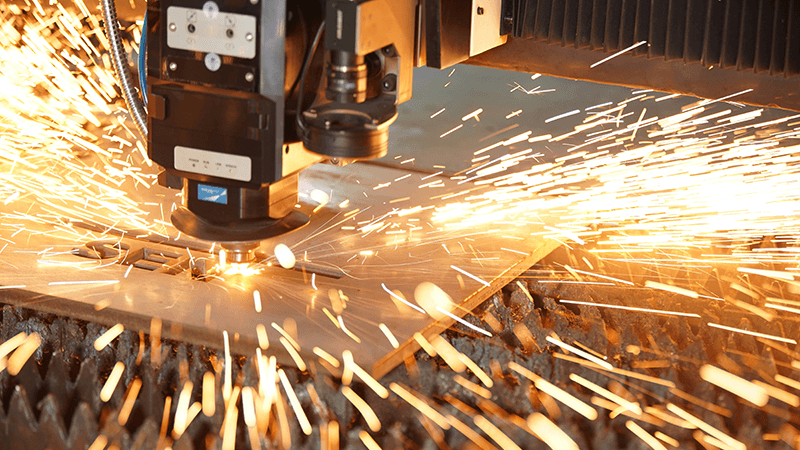
Before making adjustments, carefully observe the sparks during cutting.
Chiediti:
- Are sparks moving downward?
- Are sparks ejecting sideways?
- Are they unusually bright?
- Do they appear intermittently?
Spark behavior provides valuable clues about the root cause.
Step 2: Verify Cutting Parameters
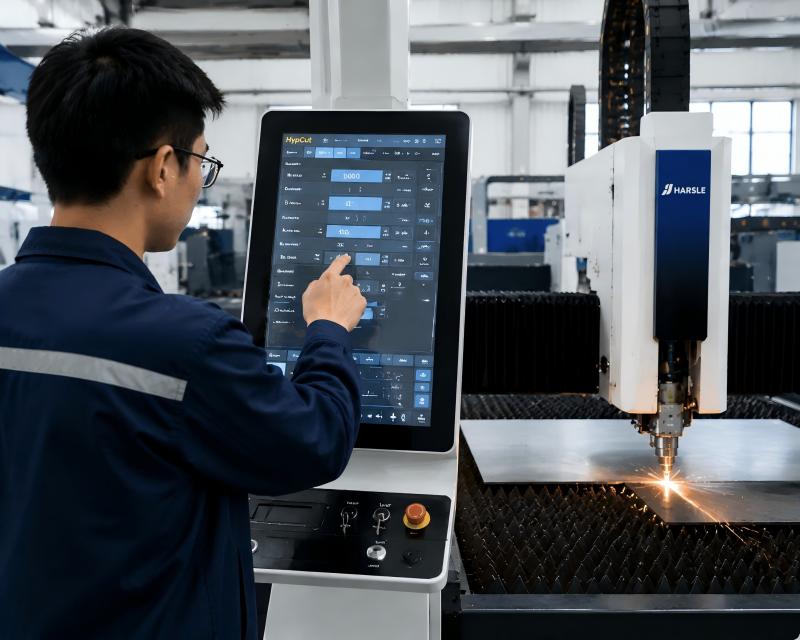
Review the cutting program and compare parameters with recommended values.
Check:
- Laser power
- Velocità di taglio
- Focus height
- Frequency settings
- Assist gas pressure
Small adjustments can significantly improve cutting stability.
Step 3: Inspect the Nozzle
Remove the nozzle and inspect it for:
- Damage
- Deformation
- Spatter buildup
- Disallineamento
Replace damaged nozzles immediately to restore proper gas flow.
Step 4: Clean the Protective Lens
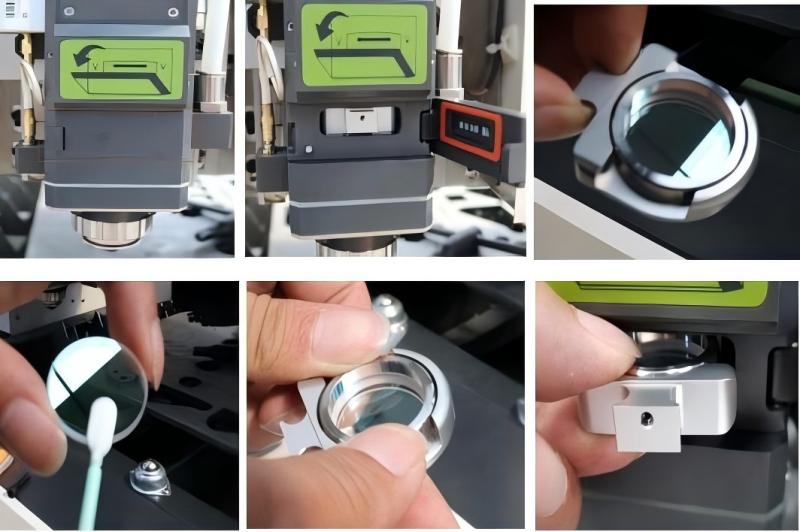
Inspect the protective lens under proper lighting.
Cercare:
- Burn marks
- Accumulo di polvere
- Oil residue
- Scratches
Clean or replace the lens as needed using approved cleaning materials.
Step 5: Check Assist Gas Supply
Verify:
- Gas purity
- Pressure levels
- Flow stability
- Hose integrity
Leaks or pressure fluctuations often contribute to laser cutting sparks problems.
Step 6: Evaluate Material Quality
Inspect the metal sheet for:
- Rust
- Surface coatings
- Contaminazione da petrolio
- Excessive oxidation
Using clean materials helps maintain stable cutting conditions.
Preventive Maintenance Tips to Avoid Spark Issues
Establish Daily Inspection Routines
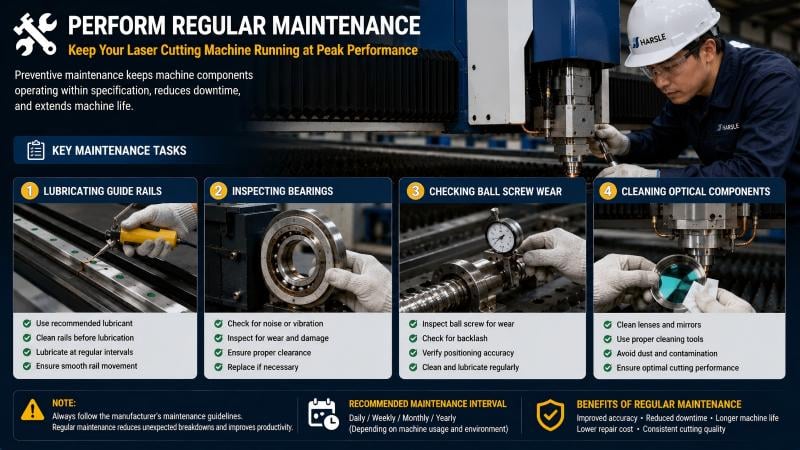
Before each production shift, I recommend checking:
- Nozzle condition
- Lens cleanliness
- pressione del gas
- Cooling system status
Routine inspections reduce the likelihood of unexpected cutting issues.
Maintain Optical Components
Optical components should be cleaned regularly to ensure maximum laser energy reaches the workpiece.
Pay special attention to:
- Protective lenses
- Focusing lenses
- Laser windows
Proper optical maintenance directly improves cutting quality.
Keep Assist Gas Systems in Good Condition
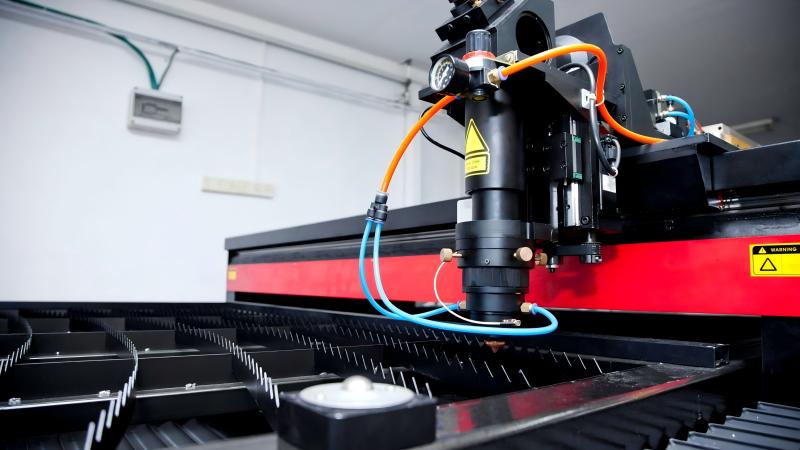
Regularly inspect:
- Regulators
- Gas hoses
- Connectors
- Filters
Stable gas delivery helps maintain consistent spark patterns and cutting performance.
Domande frequenti
Is it normal to see sparks during laser cutting?
Yes. Sparks are a natural part of the cutting process. However, excessive, irregular, or sideways sparks often indicate a laser cutting sparks problem that requires investigation.
Can a dirty lens cause abnormal sparks?
Absolutely. A contaminated protective lens reduces laser energy transmission, causing unstable cutting conditions and abnormal spark generation.
Why are sparks shooting sideways instead of downward?
Sideways sparks often indicate incorrect focus position, nozzle damage, poor gas flow, or improper cutting parameters.
Conclusione
UN laser cutting sparks problem is often an early warning sign of issues involving cutting parameters, nozzle condition, assist gas pressure, optical contamination, or material quality. By following a systematic troubleshooting process and performing routine maintenance, you can quickly identify the source of abnormal sparks and restore efficient cutting performance.
Regular inspections, proper parameter optimization, and preventive maintenance are essential for achieving consistent cutting quality and minimizing downtime. If you need further assistance diagnosing laser cutting issues or optimizing machine performance, feel free to contact the HARSLE technical team for professional support and expert guidance.


