


Laser Chiller Alarm issues are among the most common problems encountered during cięcie laserowe operations. If your laser chiller alarm keeps appearing, it usually indicates an abnormal condition in the cooling system that could affect laser performance or even damage critical components. In this article, I’ll explain the most common causes of recurring laser chiller alarms and provide practical troubleshooting steps to help you identify and resolve the problem quickly. By understanding these warning signals and following a systematic inspection process, you can reduce downtime, protect your laser source, and keep your laser cutting machine running reliably.
Why Is the Laser Chiller Important?
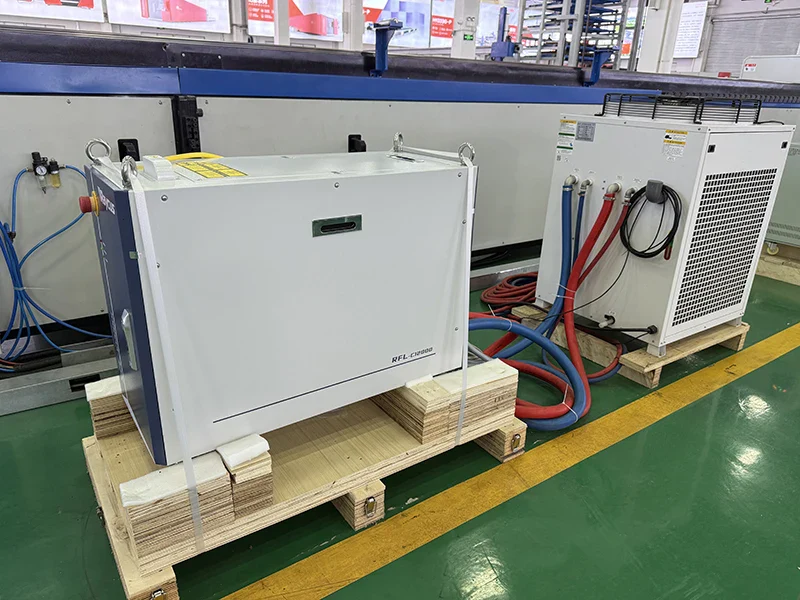
Before troubleshooting the alarm, I always remind operators that the laser chiller is responsible for maintaining a stable operating temperature for the laser source and optical components.
Without proper cooling, the laser system may experience:
- Reduced cutting performance
- Unstable laser output
- Frequent machine shutdowns
- Shortened laser source lifespan
- Permanent damage to sensitive components
When a Laser Chiller Alarm appears repeatedly, it should never be ignored.
Common Causes of a Laser Chiller Alarm
Insufficient Water Level
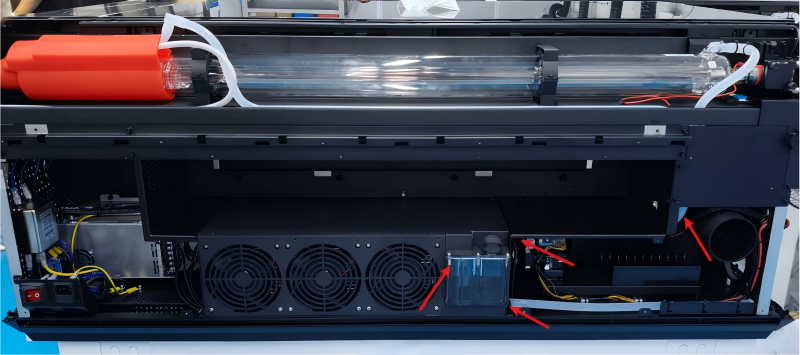
One of the most common reasons for a Laser Chiller Alarm is a low water level inside the cooling system.
Over time, water may evaporate or leak from fittings and hoses. When the water level drops below the minimum threshold, the chiller automatically triggers an alarm.
Signs include:
- Visible low water level in the tank
- Reduced cooling performance
- Water level warning codes
Water Temperature Too High
High water temperature can also trigger frequent alarms.
Możliwe przyczyny to:
- Dirty condenser fins
- Poor ventilation around the chiller
- Excessive ambient temperature
- Overloaded laser system
If the cooling capacity cannot keep up with the heat generated by the laser source, the alarm will activate to protect the equipment.
Blocked Water Flow
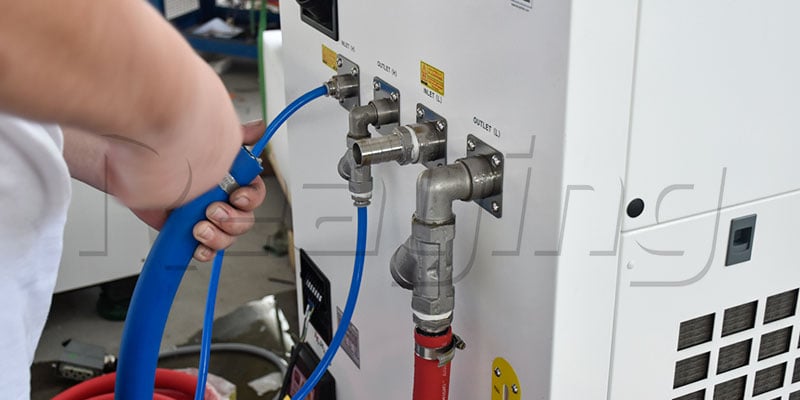
A restricted cooling circuit can prevent adequate water circulation.
Common causes include:
- Clogged filters
- Dirty pipes
- Kinked hoses
- Pump problems
Poor water flow often results in temperature fluctuations and recurring Laser Chiller Alarm notifications.
Water Pump Failure
The circulation pump is responsible for moving coolant throughout the system.
When the pump becomes worn or damaged, cooling efficiency drops significantly.
Objawy mogą obejmować:
- Nietypowy hałas pompy
- Weak water circulation
- Flow alarm messages
- Rising coolant temperature
Dirty Heat Exchanger or Condenser
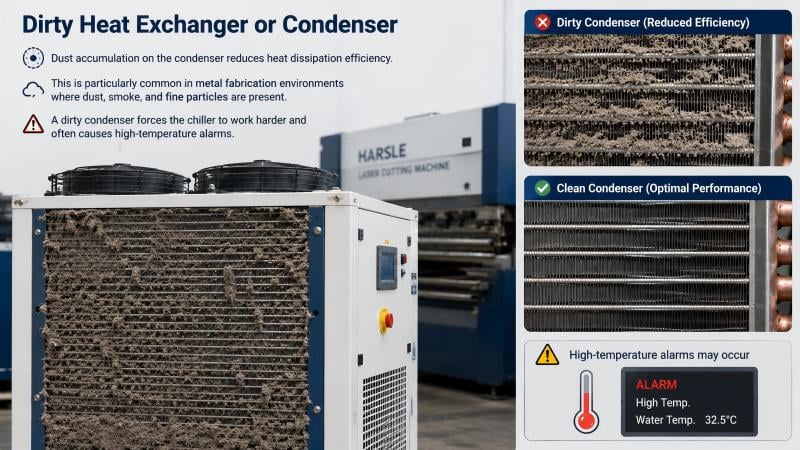
Dust accumulation on the condenser reduces heat dissipation efficiency.
This is particularly common in metal fabrication environments where dust, smoke, and fine particles are present.
A dirty condenser forces the chiller to work harder and often causes high-temperature alarms.
Faulty Sensors or Electrical Components
Sometimes the cooling system itself is operating normally, but a faulty sensor generates false alarms.
Potential electrical causes include:
- Defective temperature sensors
- Loose wiring connections
- Damaged control boards
- Communication errors between the laser machine and chiller
How to Troubleshoot a Laser Chiller Alarm Step by Step
Step 1: Check the Alarm Code
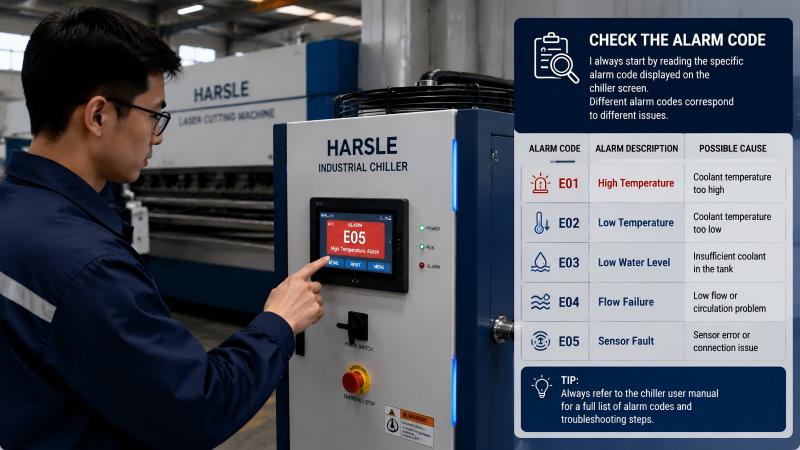
I always start by reading the specific alarm code displayed on the chiller screen.
Different alarm codes correspond to different issues such as:
- High temperature
- Low temperature
- Low water level
- Flow failure
- Sensor fault
Consult the chiller manual to identify the exact meaning.
Step 2: Inspect the Water Level
Open the reservoir inspection window and verify that the coolant level is within the recommended range.
If necessary:
- Add approved coolant or distilled water
- Check for visible leaks
- Tighten loose fittings
Step 3: Verify Water Flow
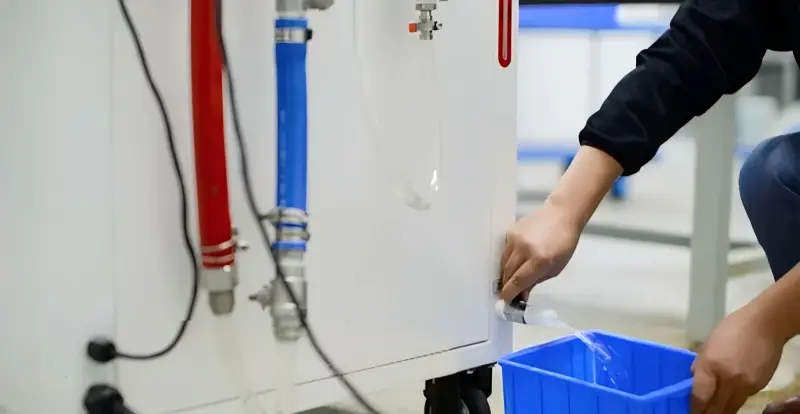
Check all hoses, filters, and circulation lines.
Ensure:
- Filters are clean
- Hoses are not blocked
- Water flow is stable
- The pump is operating normally
Step 4: Clean the Condenser
Inspect the condenser and cooling fins for dust buildup.
Use:
- Compressed air
- Soft brushes
- Vacuum equipment
Regular cleaning significantly improves cooling efficiency.
Step 5: Measure Ambient Temperature
The chiller requires sufficient airflow to operate properly.
Ensure:
- Ventilation openings remain unobstructed
- The workshop temperature stays within specifications
- Heat-producing equipment is not placed too close to the chiller
Step 6: Inspect Sensors and Electrical Connections
If mechanical issues cannot be found, inspect:
- Temperature sensors
- Flow sensors
- Control wiring
- Communication cables
Replace defective components as required.
Preventive Maintenance Tips to Avoid Repeated Laser Chiller Alarms
Perform Regular Coolant Replacement
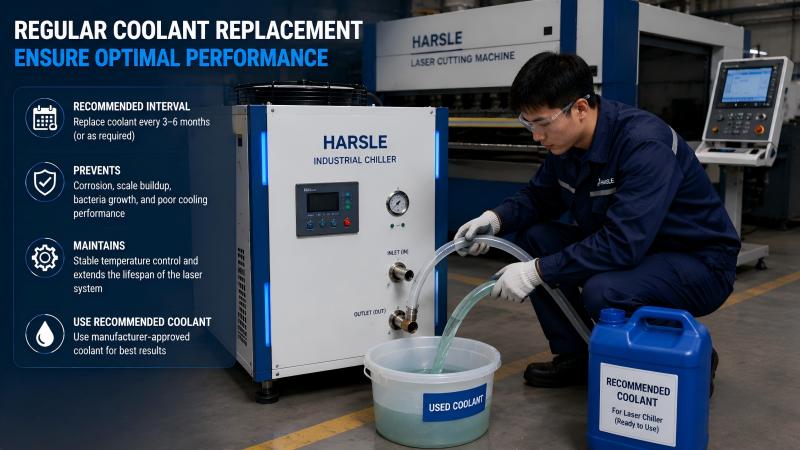
Old coolant can become contaminated and reduce cooling efficiency.
I recommend replacing coolant according to the manufacturer’s maintenance schedule.
Clean Filters Frequently
Dirty filters restrict water flow and increase system pressure.
Regular cleaning helps maintain stable operation.
Inspect Hoses and Connections
Sprawdź:
- Cracks
- Leaks
- Loose fittings
- Signs of wear
Early detection prevents unexpected failures.
Maintain a Clean Working Environment
Keeping dust away from the chiller improves heat dissipation and extends equipment life.
Często zadawane pytania
Why does my Laser Chiller Alarm keep appearing even after resetting it?
Resetting the alarm only clears the warning temporarily. If the root cause remains unresolved, such as poor water flow, high temperature, or sensor failure, the alarm will reappear.
Can a Laser Chiller Alarm damage my laser source?
The alarm itself does not cause damage. However, ignoring the alarm may allow overheating or insufficient cooling to damage the laser source and optical components.
How often should I clean the laser chiller condenser?
In most sheet metal fabrication workshops, I recommend inspecting and cleaning the condenser every month. Dusty environments may require more frequent cleaning.
Wniosek
A recurring Laser Chiller Alarm is usually a warning sign that the cooling system requires attention. Low water levels, blocked flow paths, dirty condensers, pump failures, high ambient temperatures, and faulty sensors are among the most common causes. By following a systematic troubleshooting process and performing regular preventive maintenance, you can quickly identify the problem and restore reliable cooling performance.
Proper chiller maintenance not only eliminates unnecessary alarms but also protects your laser source, improves cutting stability, and extends the lifespan of your equipment. If you need additional technical assistance, feel free to contact our support team for professional guidance and troubleshooting solutions.


