


When working with industrial laser cutting systems, one issue I frequently encounter on the shop floor is Cięcie laserowe Smoke Excess, especially during high-volume production or when cutting coated or oily materials. If you’re trying to understand why excessive smoke appears during laser cutting and how to control it effectively, you’re in the right place. In this article, I’ll break down the main causes and explain practical ways to reduce smoke generation, helping you maintain a cleaner, safer, and more efficient production environment.
Understanding Laser Cutting Smoke Excess in Production
What Is Laser Cutting Smoke Excess?
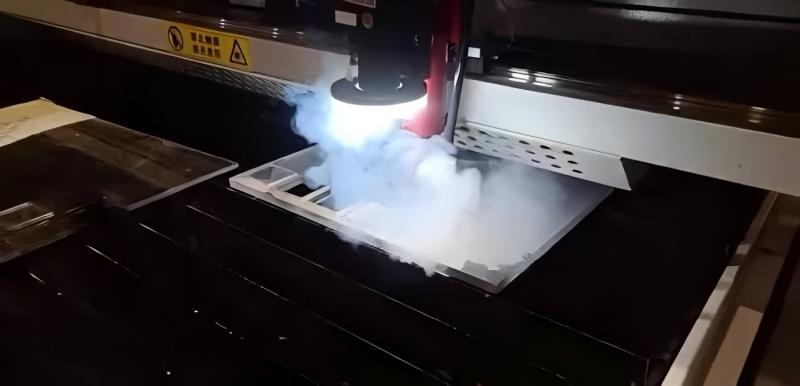
Laser cutting smoke excess refers to the overproduction of fumes, vaporized material, and combustion particles during the cutting process. While some smoke is normal, excessive smoke indicates inefficient cutting conditions or poor material preparation.
Why It Matters in Industrial Environments
Excess smoke affects more than just visibility. It can reduce cutting precision, contaminate optical components, increase maintenance frequency, and create workplace safety concerns if not properly controlled.
Main Causes of Laser Cutting Smoke Excess
Contaminated or Coated Materials
Jedną z najczęstszych przyczyn Laser Cutting Smoke Excess is cutting materials with oil, rust, paint, or protective coatings. These substances burn during processing and generate additional smoke.
Incorrect Laser Power Settings
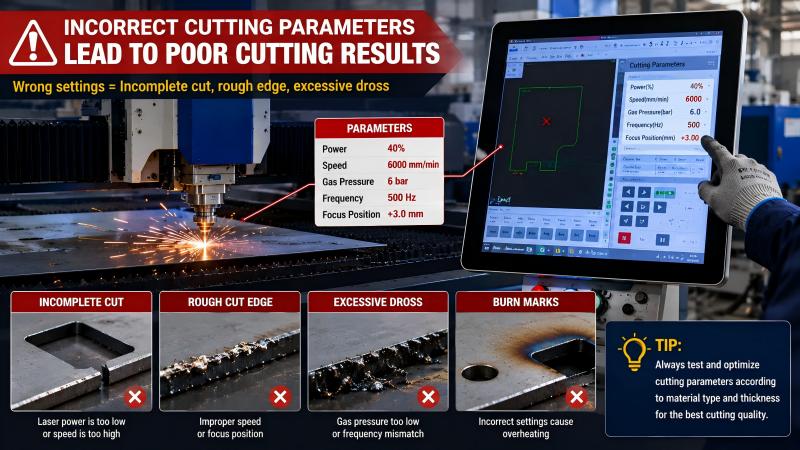
If laser power is too high, it causes excessive burning instead of clean vaporization. If too low, incomplete cutting leads to repeated heating cycles, both of which increase smoke output.
Improper Assist Gas Selection
Assist gas plays a critical role in controlling the cutting zone. Using incorrect gas type or pressure reduces combustion efficiency and increases smoke accumulation around the cutting head.
Poor Extraction and Filtration Systems
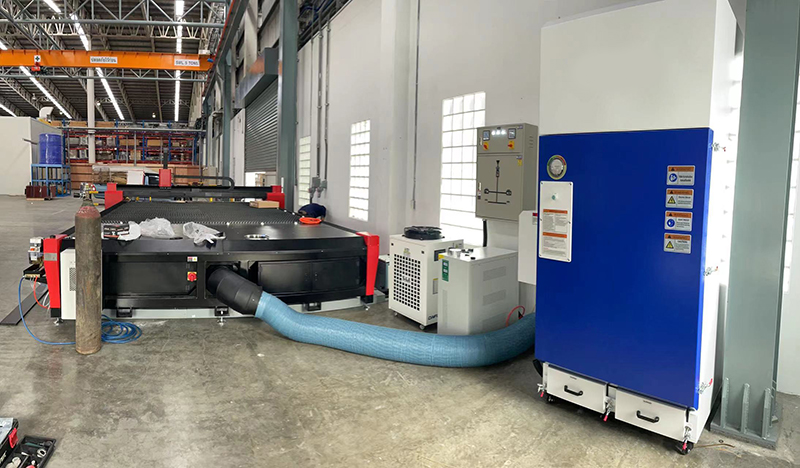
Even with optimal cutting parameters, inadequate fume extraction systems will allow smoke to build up in the workspace, making the issue appear worse than it actually is.
Thick Material Processing
Thicker plates require more energy and longer exposure time, which naturally increases thermal decomposition and results in higher smoke production.
How to Reduce Laser Cutting Smoke Excess Effectively
Clean Material Before Cutting
I always recommend ensuring that all surfaces are free from oil, rust, and coatings before cutting. Proper cleaning significantly reduces smoke formation at the source.
Optimize Laser Parameters
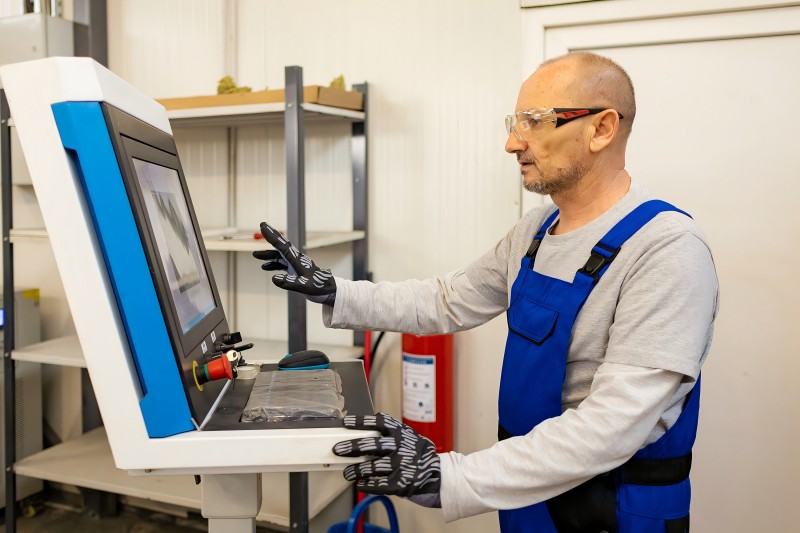
Adjusting laser power, frequency, focus position, and cutting speed helps achieve cleaner material vaporization instead of burning, reducing smoke generation.
Use Proper Assist Gas and Pressure
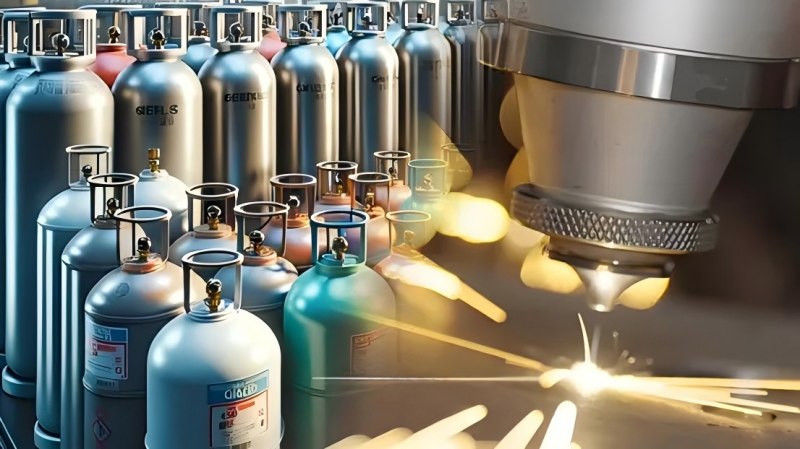
For carbon steel, oxygen or nitrogen must be selected based on application requirements. Stable and sufficient gas flow helps remove molten material efficiently and reduces smoke buildup.
Improve Fume Extraction Systems
A high-efficiency extraction and filtration system is essential. Positioning the suction system close to the cutting head ensures immediate removal of smoke particles.
Maintain Optical and Mechanical Components
Dirty lenses or misaligned nozzles can destabilize the cutting process, leading to overheating and unnecessary smoke production. Regular maintenance is critical.
Best Practices for Long-Term Smoke Control
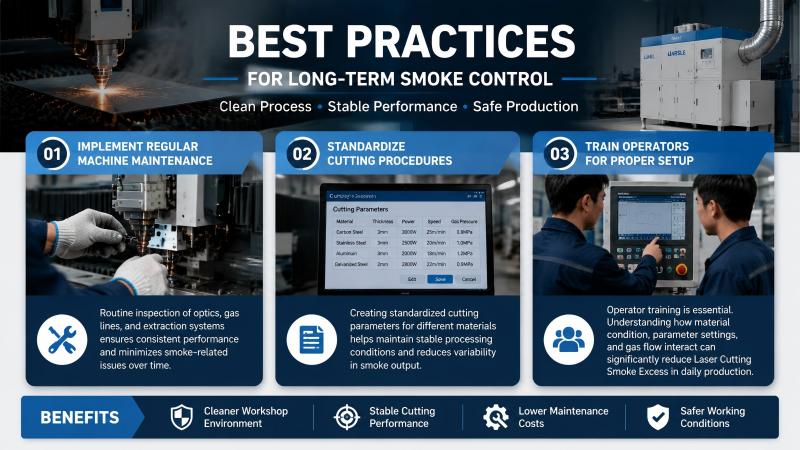
Implement Regular Machine Maintenance
Routine inspection of optics, gas lines, and extraction systems ensures consistent performance and minimizes smoke-related issues over time.
Standardize Cutting Procedures
Creating standardized cutting parameters for different materials helps maintain stable processing conditions and reduces variability in smoke output.
Train Operators for Proper Setup
Operator training is essential. Understanding how material condition, parameter settings, and gas flow interact can significantly reduce Laser Cutting Smoke Excess in daily production.
Często zadawane pytania
Is Laser Cutting Smoke Excess normal during operation?
Some smoke is normal, but excessive smoke usually indicates incorrect parameters, contaminated material, or insufficient extraction.
Can assist gas reduce laser cutting smoke?
Some smoke is normal, but excessive smoke usually indicates incorrect parameters, contaminated material, or insufficient extraction.
Does laser power affect smoke generation?
Absolutely. Too much or too little power can both increase smoke due to inefficient cutting behavior.
Is smoke harmful to laser machine components?
Yes, smoke particles can contaminate lenses, nozzles, and internal components, reducing machine lifespan and performance.
Wniosek
Zrozumienie przyczyn Laser Cutting Smoke Excess is essential for improving both production efficiency and workplace safety. By optimizing material preparation, adjusting laser parameters, improving assist gas usage, and maintaining proper extraction systems, you can significantly reduce smoke levels in daily operations.
If you need further technical support or machine optimization advice, feel free to contact our team. I’m always here to help you achieve cleaner, safer, and more efficient laser cutting performance.


