


Maszyna do strzyżenia Backgauge Motor plays a critical role in controlling positioning accuracy and ensuring consistent cutting results during shearing operations. Accurate backgauge movement helps reduce material waste and maintain stable production quality. If the motor fails, operators may experience positioning errors, unstable movement, abnormal noise, or complete backgauge system failure. In this article, I’ll explain the common causes of backgauge motor problems and provide practical troubleshooting steps to help you quickly identify issues, restore machine accuracy, and maintain reliable production performance.
Zrozumienie roli Maszyna do strzyżenia Backgauge Motor
How Does a Shearing Machine Backgauge Motor Work?
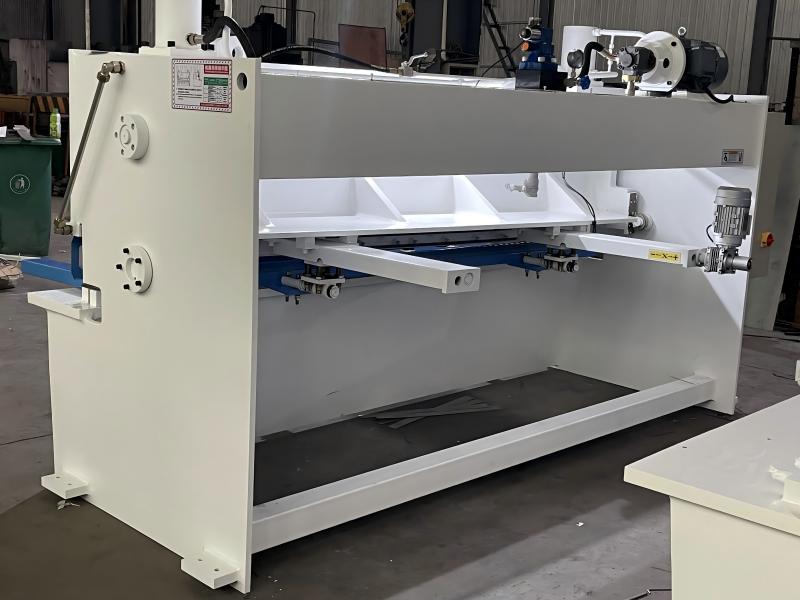
The backgauge system controls the position of the sheet metal before cutting, ensuring every cut is made at the correct dimension. The Shearing Machine Backgauge Motor provides the driving force for moving the backgauge structure along the guide rails.
During operation, the motor receives signals from the CNC controller and converts electrical energy into mechanical movement. Through components such as ball screws, gears, and transmission systems, the motor adjusts the backgauge position with high precision.
A properly functioning backgauge motor ensures accurate positioning, stable operation, and repeatable cutting performance.
Why Backgauge Motor Failure Affects Cutting Accuracy
When the backgauge motor fails or operates incorrectly, the machine may lose positioning accuracy. This can result in:
- Incorrect cutting dimensions
- Repeated positioning errors
- Slow or unstable backgauge movement
- Nienormalny hałas silnika
- Production interruptions
Identifying motor problems early helps prevent additional damage to the drive system and reduces unnecessary downtime.
Common Causes of Shearing Machine Backgauge Motor Failure
Electrical Power Supply Problems
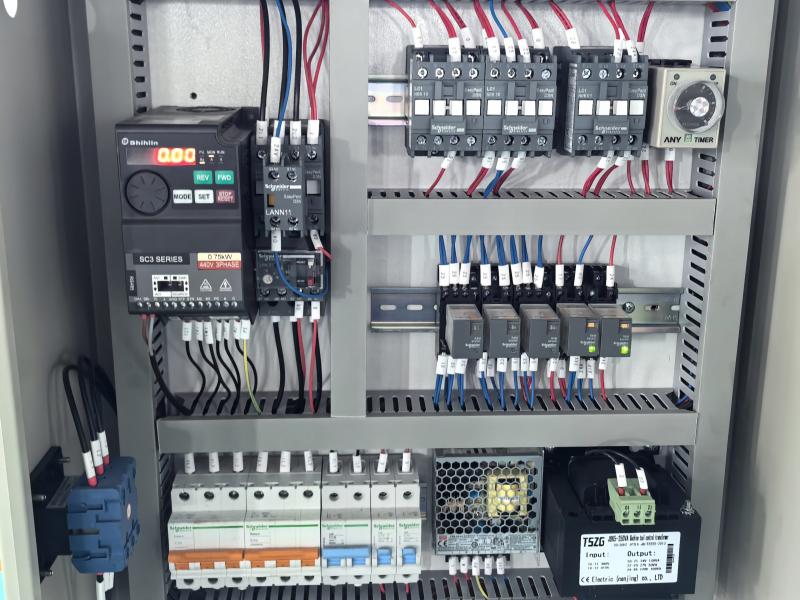
One of the most common reasons for motor failure is unstable electrical power. Voltage fluctuations, loose wiring connections, or damaged cables can prevent the motor from receiving sufficient power.
I recommend checking the following electrical components:
- Power supply voltage
- Motor connection terminals
- Control cabinet wiring
- Circuit breakers and protection devices
A stable electrical supply is essential for maintaining reliable motor operation.
Motor Overheating During Operation
Excessive heat can reduce motor performance and shorten service life. Overheating may occur due to continuous heavy operation, poor ventilation, overload conditions, or internal motor damage.
Operators should check whether the motor temperature is within the normal operating range. If abnormal heat is detected, investigate the cause before continuing production.
Backgauge Mechanical Resistance
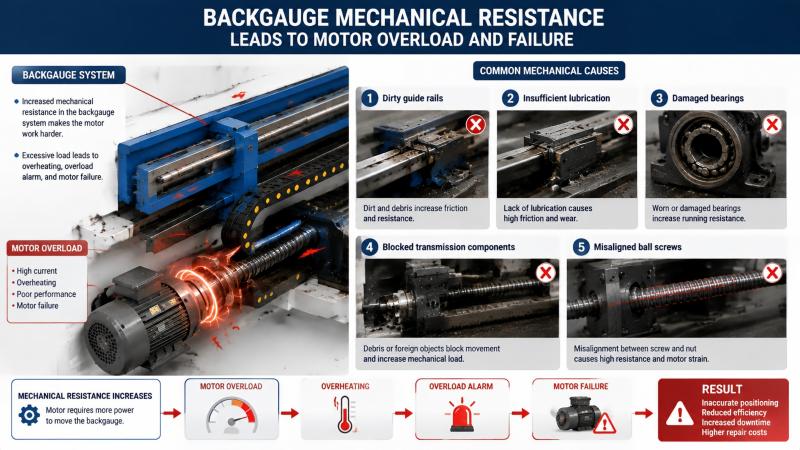
Sometimes the motor itself is not the problem. Increased mechanical resistance can overload the motor and cause failure.
Common mechanical causes include:
- Dirty guide rails
- Niewystarczające smarowanie
- Damaged bearings
- Blocked transmission components
- Misaligned ball screws
Regular cleaning and lubrication help reduce unnecessary motor load.
Drive System or Controller Issues
The motor depends on the CNC controller and motor drive system for accurate movement. A damaged servo drive, incorrect parameter settings, or communication errors may appear as motor failure.
Before replacing the motor, I recommend checking the controller alarms and drive status information to confirm the actual cause.
Step-by-Step Guide to Troubleshoot Backgauge Motor Failure
Step 1: Check Alarm Messages and Machine Status
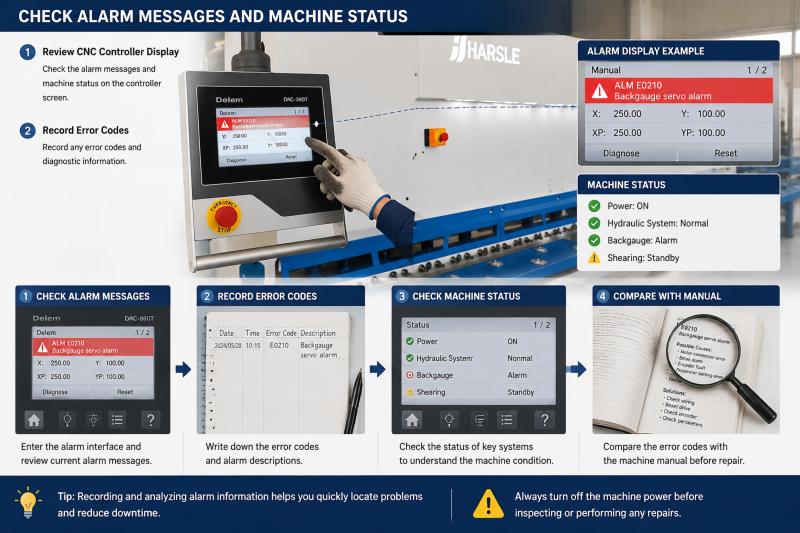
The first step is reviewing the CNC controller display and drive system alarms. Many modern shearing machines provide diagnostic information that helps locate the problem quickly.
Record any error codes and compare them with the machine manual before performing repairs.
Step 2: Inspect Electrical Connections
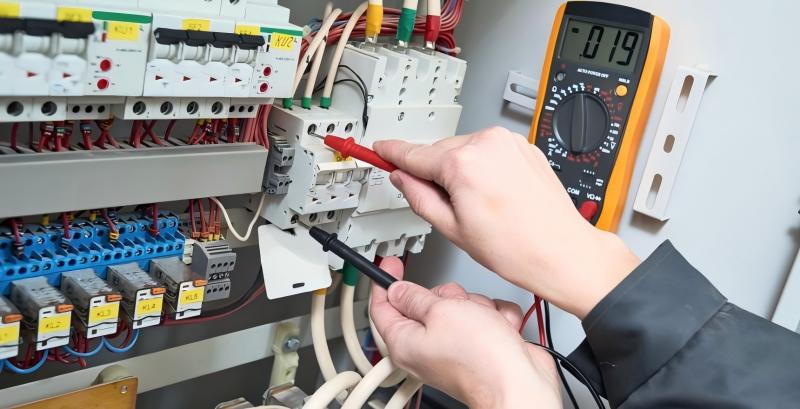
Turn off the machine power and inspect all related electrical connections.
Check:
- Kable zasilające silnika
- Kable enkodera
- Połączenia końcowe
- Drive module connections
Loose or damaged wiring can interrupt communication between the controller and the motor.
Step 3: Test Motor Movement Manually
After confirming the electrical system is normal, test the backgauge movement manually.
Observe:
- Whether the motor starts smoothly
- Whether unusual noise appears
- Whether movement speed is consistent
- Whether the backgauge stops at the correct position
Abnormal movement can indicate either motor problems or mechanical resistance.
Step 4: Inspect Mechanical Transmission Components
A complete inspection of the mechanical system is necessary when the motor shows signs of overload.
Check:
- Guide rail cleanliness
- Stan śruby kulowej
- Coupling connection
- Stan smarowania
- Mechanical alignment
Removing dirt and correcting alignment issues can often restore normal operation.
Step 5: Calibrate Backgauge Position Accuracy
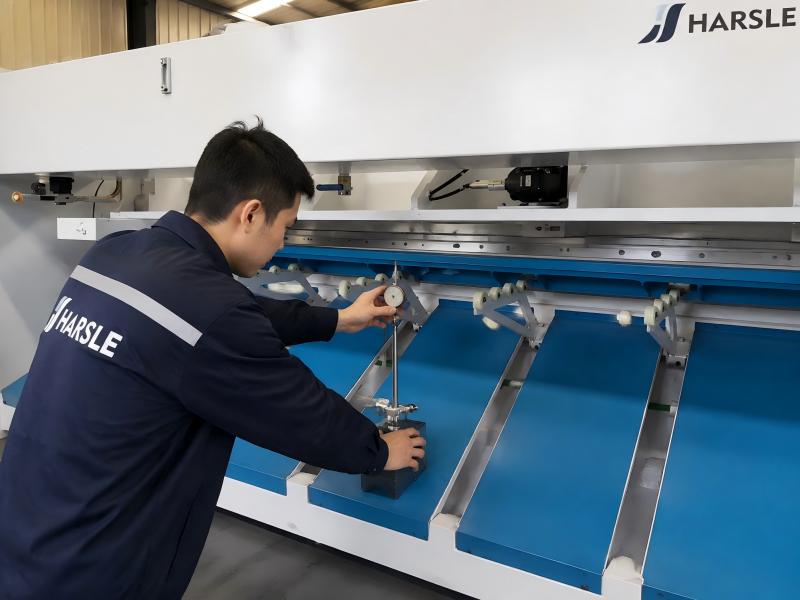
After repairing the motor or mechanical system, recalibration is required.
Use measurement tools to verify the actual backgauge position and compare it with the CNC system value. Proper calibration ensures the Shearing Machine Backgauge Motor delivers accurate positioning results.
Best Practices to Prevent Backgauge Motor Failure
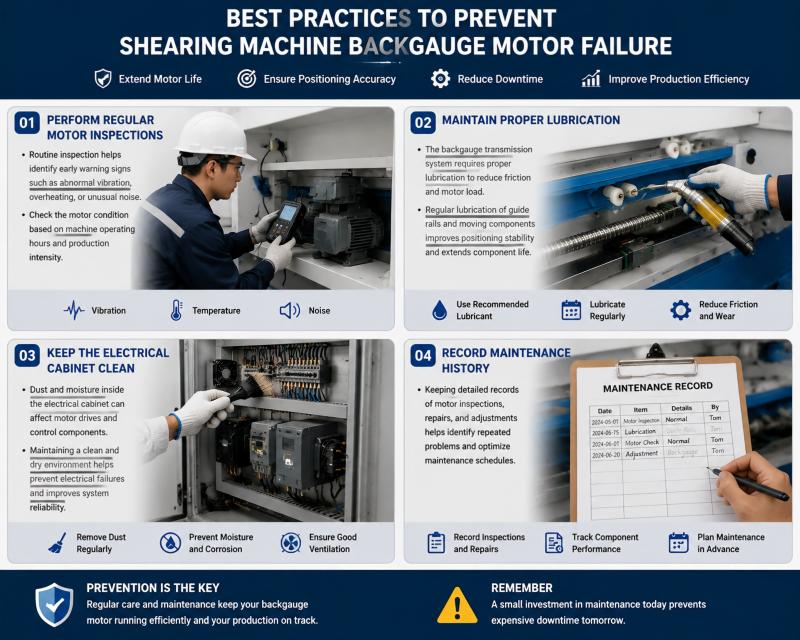
Perform Regular Motor Inspections
Routine inspection helps identify early warning signs such as abnormal vibration, overheating, or unusual noise.
I recommend checking the motor condition based on machine operating hours and production intensity.
Maintain Proper Lubrication
The backgauge transmission system requires proper lubrication to reduce friction and motor load.
Regular lubrication of guide rails and moving components improves positioning stability and extends component life.
Keep the Electrical Cabinet Clean
Dust and moisture inside the electrical cabinet can affect motor drives and control components.
Maintaining a clean and dry environment helps prevent electrical failures and improves system reliability.
Record Maintenance History
Keeping detailed records of motor inspections, repairs, and adjustments helps identify repeated problems and optimize maintenance schedules.
Często zadawane pytania
What are the common signs of Shearing Machine Backgauge Motor failure?
Common signs include inaccurate positioning, abnormal motor noise, slow movement, overheating, and complete backgauge movement failure.
How often should I maintain a Shearing Machine Backgauge Motor?
Maintenance frequency depends on production conditions. Regular inspection should be performed according to machine usage and manufacturer recommendations.
Can a mechanical problem cause backgauge motor failure symptoms?
Yes. Problems such as poor lubrication, damaged guide rails, or transmission resistance can overload the motor and create similar symptoms.
Should I replace the motor immediately when the backgauge stops working?
Not always. First check electrical connections, drive systems, and mechanical components to identify the actual cause.
Wniosek
Niezawodny Shearing Machine Backgauge Motor is essential for maintaining accurate positioning and stable cutting performance. When motor failure occurs, checking electrical systems, inspecting mechanical components, and performing proper calibration can help restore normal operation quickly.
By implementing regular inspections, proper lubrication, and preventive maintenance practices, operators can reduce unexpected downtime and extend the service life of the backgauge system. For more technical support or machine maintenance guidance, feel free to contact our team for professional assistance.


