


Skuteczny Maszyna do strzyżenia Operator Safety Training helps operators recognize hazards, use safety devices correctly, and respond appropriately to abnormal machine conditions. I recommend combining theoretical instruction, hands-on demonstrations, supervised practice, and regular competency assessments. Training should cover machine components, personal protective equipment (PPE), safe material feeding, emergency stops, and daily inspections. In this guide, I’ll explain how to build a practical training program that reduces workplace accidents, prevents equipment damage, and supports safer, more efficient production.
Why Is Maszyna do strzyżenia Operator Safety Training Important?
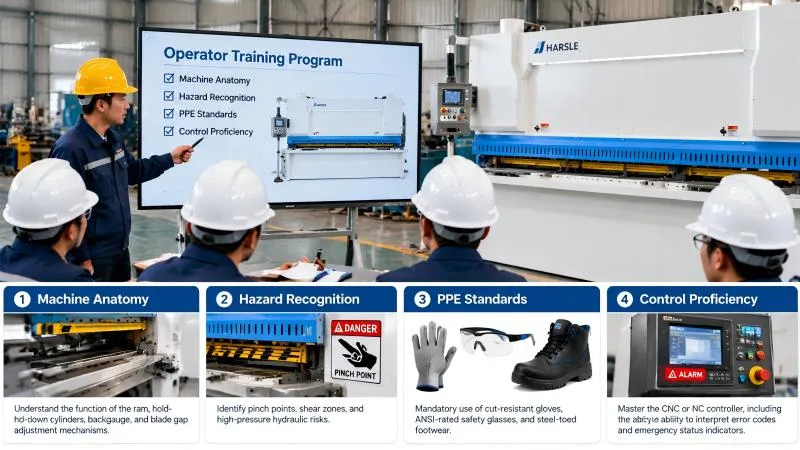
A hydraulic shearing machine uses substantial force to cut sheet metal, creating risks such as crushing, cutting, material movement, and hydraulic system failures. Operators who lack proper training may place their hands near the cutting zone, ignore warning signs, or use incorrect operating procedures.
A structured training program helps operators understand these hazards before operating the equipment. It also establishes clear responsibilities, ensuring that routine operation remains separate from technical maintenance and repairs.
Essential Topics for Shearing Machine Operator Safety Training
1. Understand Machine Components and Hazards
Operators should understand the functions of the upper and lower blades, hold-down cylinders, backgauge, control panel, foot pedal, and emergency stop buttons.
Training must identify dangerous areas, including the cutting zone, material feeding area, rear discharge zone, and moving mechanical components. Operators should also understand how incorrect blade gaps, excessive material thickness, and improper positioning can cause jamming or unsafe material movement.
2. Use Personal Protective Equipment Correctly
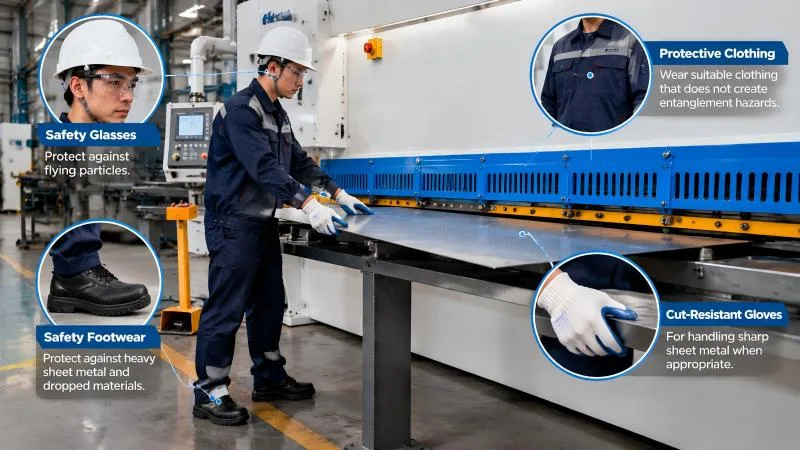
PPE requirements should follow the machine manufacturer’s instructions and the facility’s risk assessment.
Typical protective equipment includes:
- Safety glasses to protect against flying particles.
- Safety footwear to protect against heavy sheet metal and dropped materials.
- Suitable protective clothing that does not create entanglement hazards.
- Cut-resistant gloves for handling sharp sheet metal when appropriate.
Gloves should never be worn near moving components if they could become caught. Operators must follow site-specific rules for material handling and machine operation.
3. Practice Safe Material Feeding and Positioning
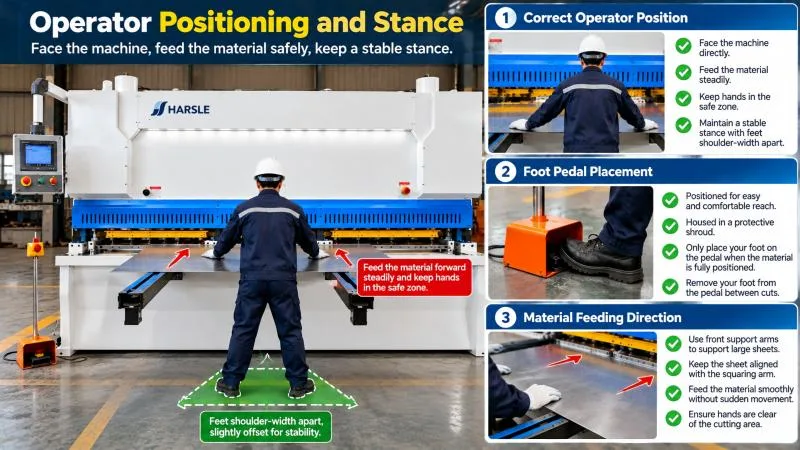
Operators must learn how to position sheet metal, use front support arms, and align materials against the squaring arm or backgauge where applicable.
Teach operators to keep their hands outside the cutting zone and never reach beneath guards or into moving components. Large or heavy sheets may require mechanical lifting equipment or additional personnel following an approved handling procedure.
Operators should also understand machine capacity limits. Material thickness, tensile strength, and blade clearance all affect cutting performance. Never exceed the machine’s rated capacity.
4. Learn Emergency Stop and Abnormal-Condition Procedures
Every operator should know the locations and functions of all emergency stop devices.
Training should cover immediate stopping conditions, including unusual banging or grinding, material jamming, excessive hydraulic pressure, unexpected machine movement, and faulty foot-pedal operation.
After an emergency stop, operators must identify and report the problem rather than repeatedly restarting the machine. If a fault involves mechanical, electrical, or hydraulic components, qualified maintenance personnel must inspect the equipment before production resumes.
How to Implement a Practical Shearing Machine Safety Training Program
Step 1: Conduct a Pre-Operation Inspection Demonstration
Show operators how to inspect guards, check for visible hydraulic leaks, examine accessible blade areas, and verify that the work area is clear.
Demonstrate safety-device checks only through the manufacturer’s approved procedures. Any failed inspection must be reported, and the machine must remain out of service until the problem is properly resolved.
Step 2: Provide Supervised Hands-On Training
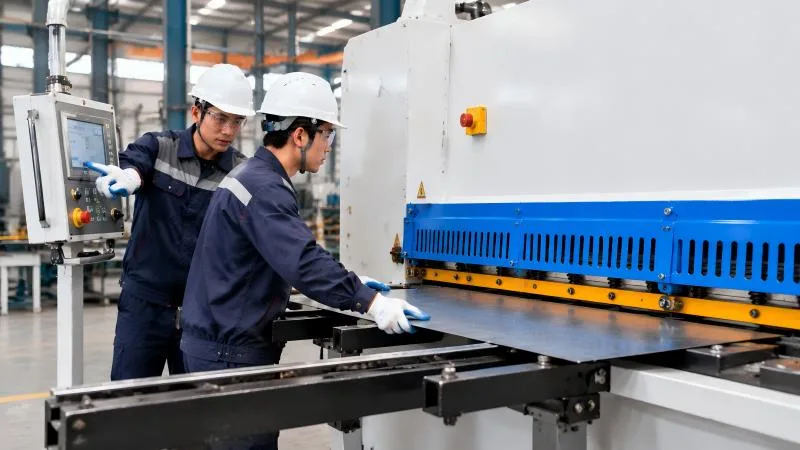
After theoretical instruction, let trainees practice machine setup and material feeding under the direct supervision of an authorized trainer.
Use suitable test materials and demonstrate correct positioning, controller operation, and safe stopping procedures. Trainees should not operate independently until they have demonstrated the required skills.
Step 3: Assess Operator Competency
Use a practical assessment to confirm that each operator can identify hazards, complete the inspection checklist, operate controls correctly, and respond to simulated abnormal conditions.
Document the results and provide additional instruction where necessary. Training records should include the operator’s name, training date, assessment results, and authorization status.
Step 4: Schedule Refresher Training
I recommend reviewing operator competency regularly and providing refresher training after incidents, near misses, equipment modifications, or changes to operating procedures.
Short safety meetings and toolbox talks can reinforce key practices, while periodic observations help identify unsafe habits before they lead to accidents.
Często zadawane pytania
How Often Should Shearing Machine Operators Receive Safety Training?
Operators should receive initial training before independent operation, followed by refresher training based on workplace risks, company procedures, and applicable regulations. Additional training is necessary whenever equipment or operating conditions change significantly.
Who Is Qualified to Train Shearing Machine Operators?
Training should be delivered by competent personnel who understand the machine, its safety systems, and applicable operating procedures. Technical maintenance topics should be handled by appropriately qualified electrical or hydraulic technicians.
Can Operators Repair Safety Interlocks?
No. Operators must not bypass, modify, or attempt unauthorized repairs to safety interlocks. Faulty safety devices must be reported immediately, and repairs must be performed by qualified personnel.
Wniosek
Effective Shearing Machine Operator Safety Training combines hazard awareness, correct PPE use, safe material handling, emergency response, supervised practice, and documented competency assessments. By making these activities part of daily operations, manufacturers can reduce workplace risks and improve equipment reliability.


