


Машина для стрижки овец Maintenance Schedule is essential for maintaining cutting accuracy, extending equipment lifespan, and preventing unexpected downtime during production. When operating a shearing machine, a properly planned maintenance schedule helps operators and maintenance teams identify potential issues before they develop into serious failures. In this article, I’ll explain how to create an effective maintenance plan, including daily checks, periodic inspections, and preventive maintenance tasks. By following a structured schedule, you can improve machine reliability, maintain cutting performance, and ensure safer production operations.
Understanding the Importance of a Машина для стрижки овец Maintenance Schedule
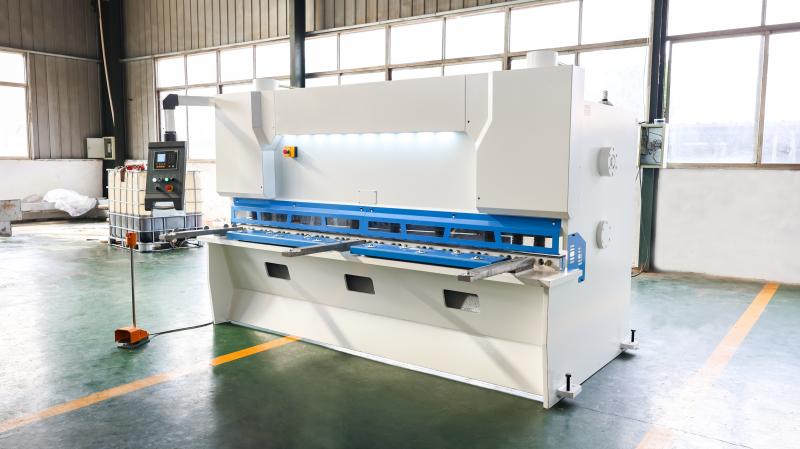
Why Regular Maintenance Is Essential for Shearing Machines
Shearing machines operate under high mechanical loads, and components such as blades, hydraulic systems, electrical parts, and guide mechanisms experience continuous wear during production. Without regular maintenance, small problems can gradually reduce cutting quality and lead to expensive repairs.
A detailed Shearing Machine Maintenance Schedule allows operators to monitor machine conditions, maintain stable performance, and reduce production interruptions caused by unexpected failures.
Benefits of a Preventive Maintenance Plan
A preventive maintenance approach provides several advantages:
- Improves cutting accuracy and consistency
- Reduces machine downtime
- Extends the service life of key components
- Improves operator safety
- Lowers long-term maintenance costs
How to Create a Shearing Machine Maintenance Schedule Step by Step
Step 1: Identify Critical Machine Components
Before creating a maintenance plan, I recommend identifying all important components that require regular inspection. Different parts have different maintenance requirements.
Inspect Cutting Blades and Tooling System
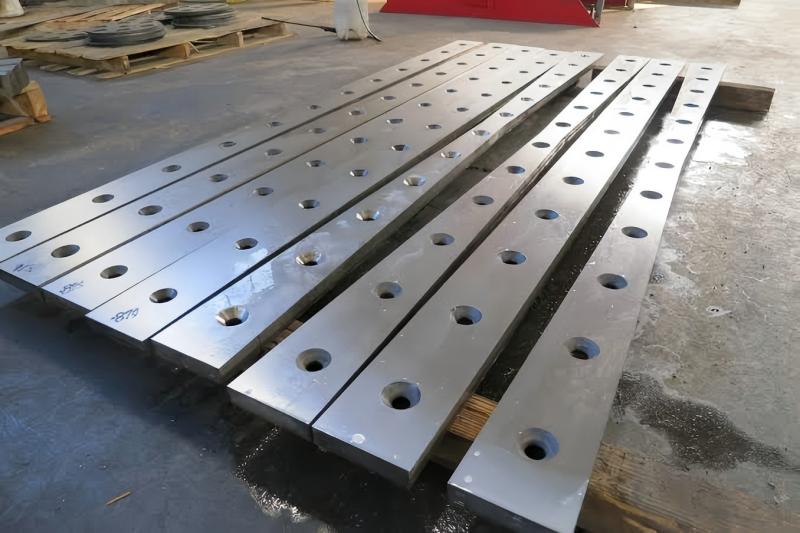
The blades are among the most important components of a shearing machine. Regularly check blade sharpness, clearance settings, cracks, and uneven wear.
Dull or damaged blades increase cutting force requirements and may cause poor edge quality. Including blade inspection in your maintenance schedule helps maintain accurate cutting performance.
Check Hydraulic System Components
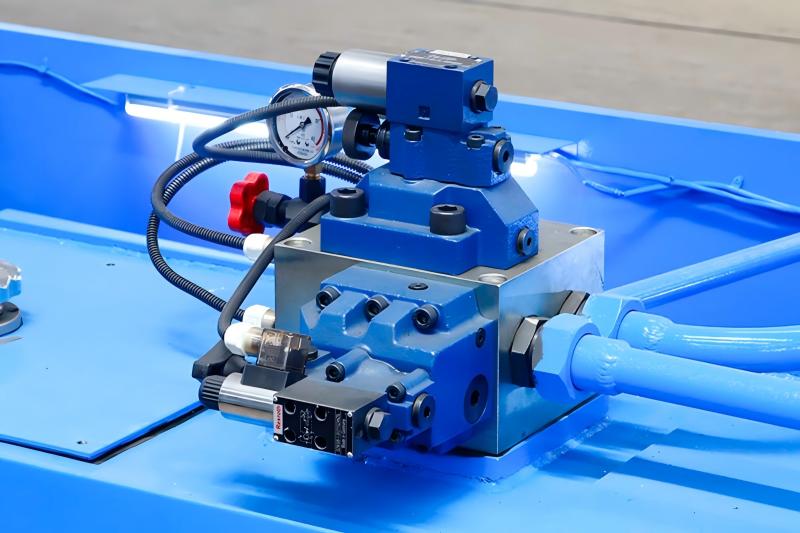
For hydraulic shearing machines, inspect oil levels, hydraulic pressure, cylinders, valves, and hoses regularly.
Hydraulic leaks, contaminated oil, or unstable pressure can reduce machine efficiency and damage internal components. Routine hydraulic checks should be included in both daily and monthly maintenance tasks.
Inspect Electrical and Control Systems
Electrical components such as wiring, switches, sensors, and control panels should also be inspected regularly.
Loose connections, overheating components, or damaged cables may cause machine failures and safety risks.
Step 2: Establish Daily Maintenance Tasks
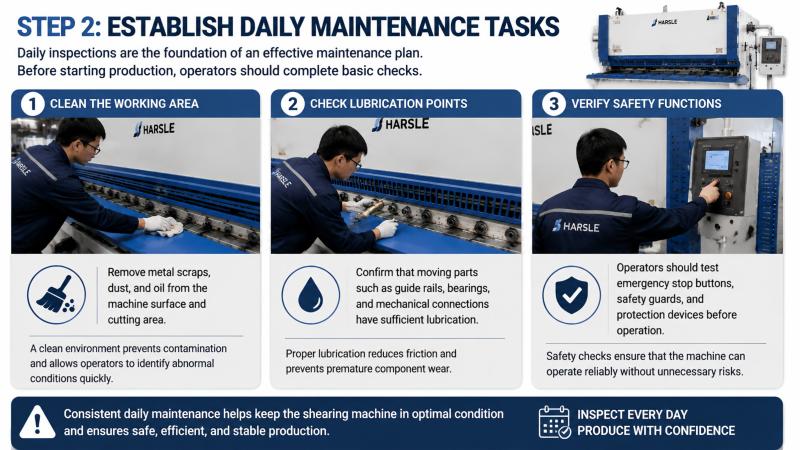
Daily inspections are the foundation of an effective maintenance plan. Before starting production, operators should complete basic checks.
Clean the Working Area
Remove metal scraps, dust, and oil from the machine surface and cutting area. A clean environment prevents contamination and allows operators to identify abnormal conditions quickly.
Check Lubrication Points
Confirm that moving parts such as guide rails, bearings, and mechanical connections have sufficient lubrication.
Proper lubrication reduces friction and prevents premature component wear.
Verify Safety Functions
Operators should test emergency stop buttons, safety guards, and protection devices before operation.
Safety checks ensure that the machine can operate reliably without unnecessary risks.
Step 3: Plan Weekly and Monthly Maintenance Tasks
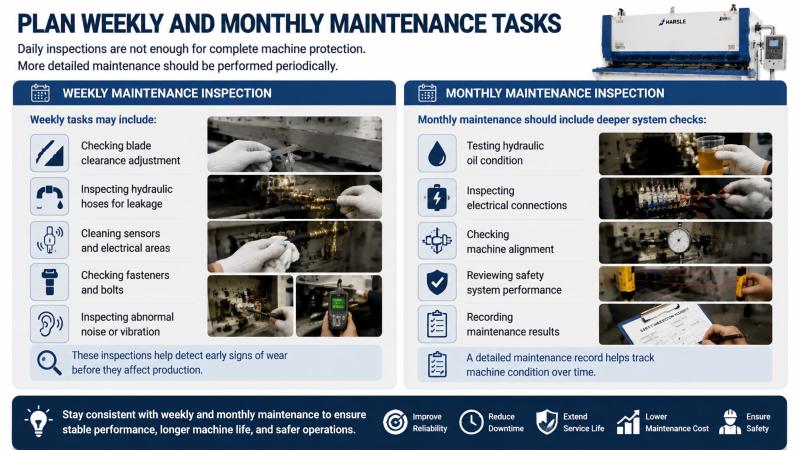
Daily inspections are not enough for complete machine protection. More detailed maintenance should be performed periodically.
Weekly Maintenance Inspection
Weekly tasks may include:
- Checking blade clearance adjustment
- Inspecting hydraulic hoses for leakage
- Cleaning sensors and electrical areas
- Checking fasteners and bolts
- Inspecting abnormal noise or vibration
These inspections help detect early signs of wear before they affect production.
Monthly Maintenance Inspection
Monthly maintenance should include deeper system checks:
- Testing hydraulic oil condition
- Inspecting electrical connections
- Checking machine alignment
- Reviewing safety system performance
- Recording maintenance results
A detailed maintenance record helps track machine condition over time.
Step 4: Create a Maintenance Record System
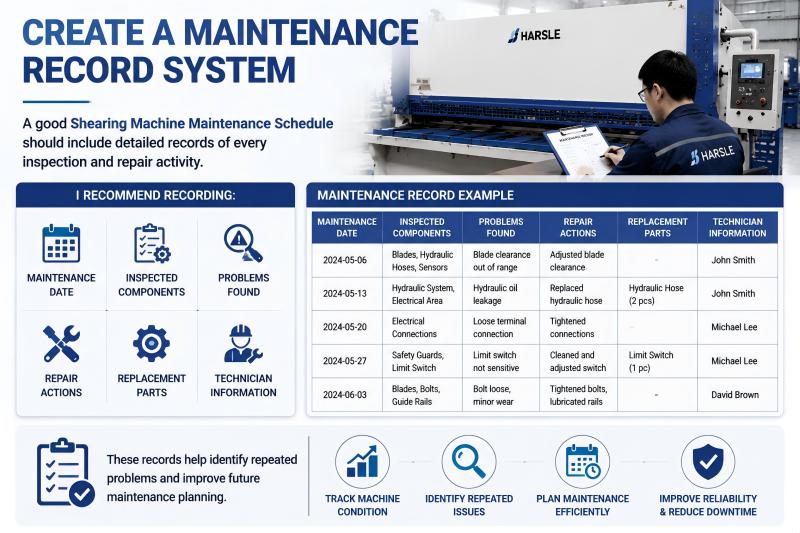
A good Shearing Machine Maintenance Schedule should include detailed records of every inspection and repair activity.
I recommend recording:
- Maintenance date
- Inspected components
- Problems found
- Repair actions
- Replacement parts
- Technician information
These records help identify repeated problems and improve future maintenance planning.
Step 5: Adjust the Schedule Based on Operating Conditions
Not every shearing machine requires the same maintenance frequency. Production volume, material type, and working environment all influence maintenance needs.
For example, machines operating continuously in heavy production environments may require more frequent inspections compared with machines used occasionally.
Adjusting the maintenance schedule according to actual conditions ensures better equipment protection.
Common Mistakes When Creating a Shearing Machine Maintenance Schedule
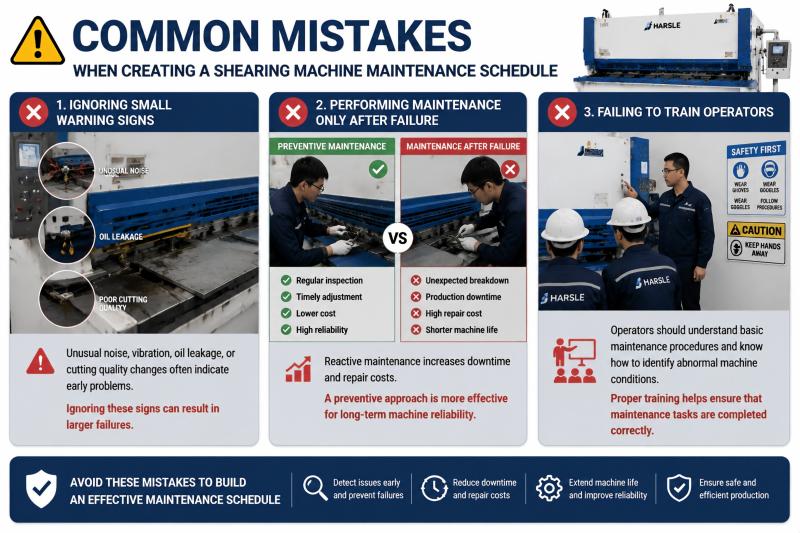
Ignoring Small Warning Signs
Unusual noise, vibration, oil leakage, or cutting quality changes often indicate early problems. Ignoring these signs can result in larger failures.
Performing Maintenance Only After Failure
Reactive maintenance increases downtime and repair costs. A preventive approach is more effective for long-term machine reliability.
Failing to Train Operators
Operators should understand basic maintenance procedures and know how to identify abnormal machine conditions.
Proper training helps ensure that maintenance tasks are completed correctly.
Вопросы и ответы
How often should I perform shearing machine maintenance?
Daily visual inspections should be performed before operation, while detailed maintenance can be scheduled weekly, monthly, or based on machine working hours.
What should be included in a Shearing Machine Maintenance Schedule?
A complete schedule should include blade inspection, hydraulic system checks, electrical inspection, lubrication, cleaning, safety testing, and maintenance records.
Can preventive maintenance improve cutting accuracy?
Yes. Regular maintenance keeps blades, hydraulic systems, and mechanical components in proper condition, helping maintain consistent cutting quality.
Who should perform shearing machine maintenance?
Daily checks can be performed by trained operators, while complex inspections and repairs should be handled by qualified maintenance technicians.
Заключение
Creating a proper Shearing Machine Maintenance Schedule is one of the most effective ways to improve machine reliability and reduce unexpected downtime. By combining daily inspections, periodic maintenance, component checks, and accurate maintenance records, you can keep your shearing machine operating efficiently for a longer service life.
A well-organized maintenance plan not only improves production stability but also enhances workplace safety. For more information about shearing machine operation, maintenance, or technical support, feel free to contact our team for professional assistance.


