


When operating a shearing machine, protecting operators from potential hazards is always a top priority. آلة القص Safety Guards play an essential role in preventing accidental contact with moving blades and dangerous areas during cutting operations. If you want to learn how to properly inspect these safety components and ensure reliable machine protection, you’re in the right place. In this article, I’ll explain the key inspection steps, common issues, and maintenance practices that help keep shearing machines safe, compliant, and efficient in daily production environments.
فهم أهمية آلة القص Safety Guards
Why Safety Guards Are Essential for Shearing Machines
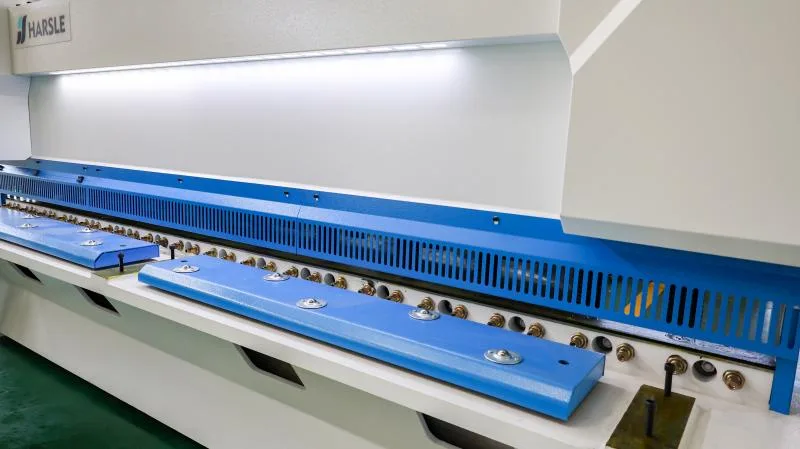
A shearing machine uses extremely sharp blades and generates high cutting forces, which creates potential risks during operation. Safety guards are designed to isolate hazardous areas, prevent accidental access, and provide operators with a safer working environment.
Properly maintained Shearing Machine Safety Guards not only protect workers but also support stable production by reducing unexpected interruptions caused by safety-related problems.
Common Types of Shearing Machine Safety Guards
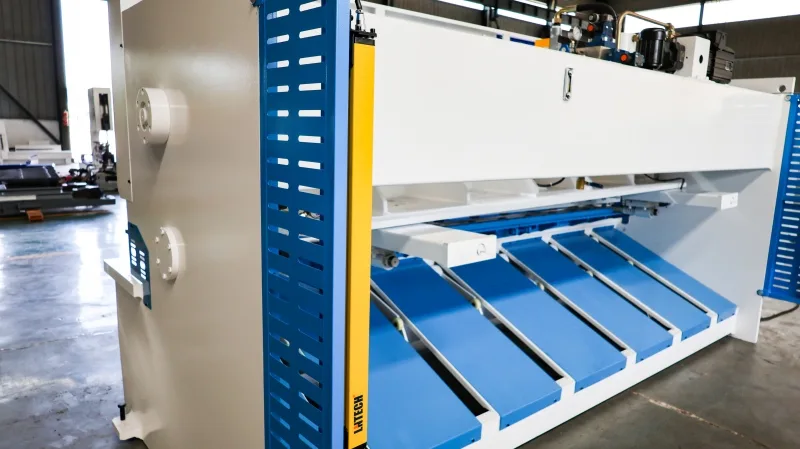
Depending on the machine design, safety protection systems may include front guards, rear guards, protective covers, safety fences, light curtains, and emergency stop devices. Each component has a specific function and should be inspected regularly.
How to Inspect Shearing Machine Safety Guards Step by Step
Step 1: Check Guard Structure and Physical Condition
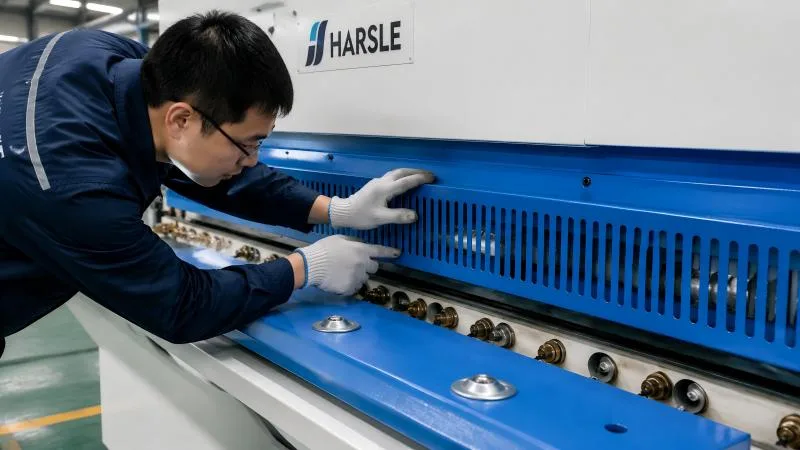
The first step is to visually inspect all protective guards for damage, deformation, cracks, or missing parts. A damaged guard may fail to provide sufficient protection during operation.
I recommend checking whether the guard structure remains firmly installed and whether bolts, hinges, and mounting points are properly tightened. Loose components can reduce protection effectiveness and create additional safety risks.
Step 2: Inspect Guard Position and Alignment
Safety guards must remain correctly positioned to block access to dangerous areas. Misaligned guards may leave gaps where operators could accidentally reach moving blades.
During inspection, verify that the guard distance complies with safety requirements and that no modifications have reduced the original protection range.
Step 3: Test Safety Interlock Functions
Many modern shearing machines use safety interlock systems that stop operation when a protective cover is opened. These systems should be tested regularly to ensure they respond correctly.
I recommend checking whether the machine stops immediately when the guard is opened or when the safety device is triggered. Any delay or failure requires immediate attention.
Step 4: Inspect Light Curtains and Detection Devices
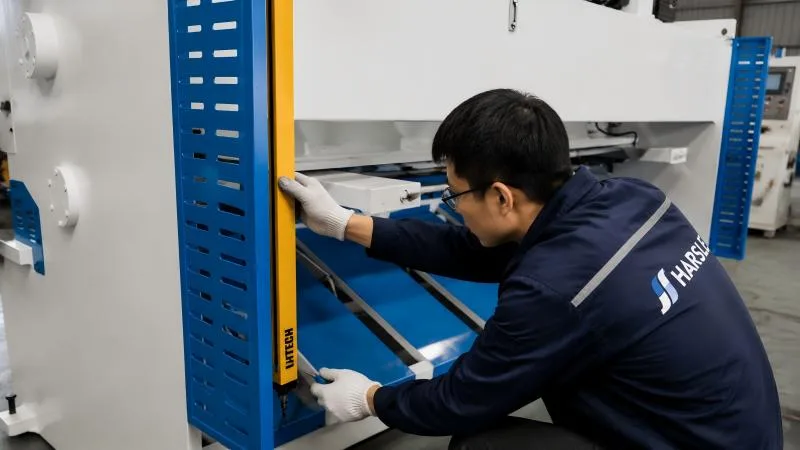
For machines equipped with photoelectric safety devices, inspect the sensor alignment and cleanliness. Dust, oil, or metal particles can interfere with detection performance.
Make sure the light curtain can detect interruptions correctly before starting production. Regular cleaning helps maintain accurate safety protection.
Step 5: Check Emergency Stop Devices
Emergency stop buttons are a critical part of the overall safety system. Operators should verify that emergency stops are easily accessible and function properly.
During testing, confirm that activating the emergency stop immediately stops blade movement and disables hazardous machine functions.
Common Problems Affecting Shearing Machine Safety Guards
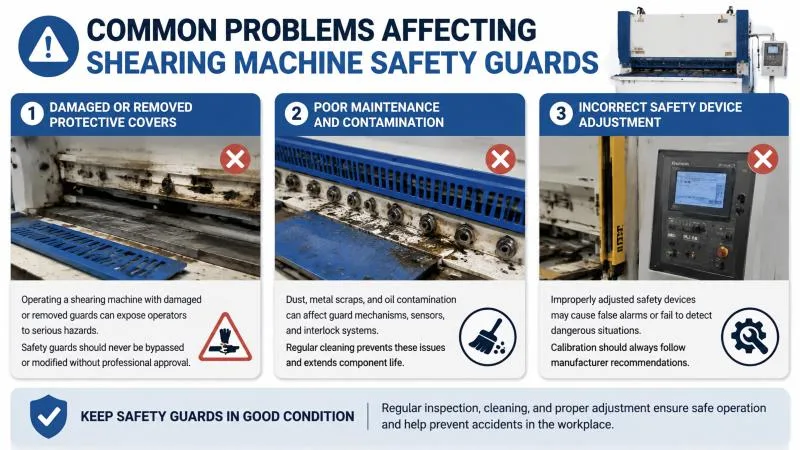
Damaged or Removed Protective Covers
One common mistake is operating a shearing machine with damaged or removed guards. Even temporary removal can expose operators to serious hazards.
Safety guards should never be bypassed or modified without professional approval.
Poor Maintenance and Contamination
Dust, metal scraps, and oil contamination can affect guard mechanisms, sensors, and interlock systems. Regular cleaning prevents these issues and extends component life.
Incorrect Safety Device Adjustment
Improperly adjusted safety devices may cause false alarms or fail to detect dangerous situations. Calibration should always follow manufacturer recommendations.
Best Practices for Maintaining Shearing Machine Safety Guards
Perform Regular Safety Inspections
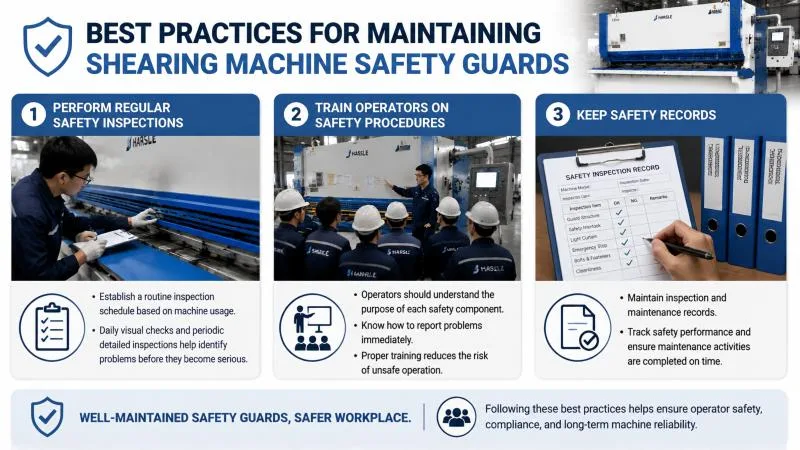
I recommend establishing a routine inspection schedule based on machine usage. Daily visual checks and periodic detailed inspections help identify problems before they become serious.
Train Operators on Safety Procedures
Operators should understand the purpose of each safety component and know how to report problems. Proper training reduces the risk of unsafe operation.
Keep Safety Records
Maintaining inspection records helps track safety performance and ensures that maintenance activities are completed on time.
التعليمات
How often should I inspect Shearing Machine Safety Guards?
Safety guards should be visually checked before daily operation, with more detailed inspections performed regularly according to machine usage and manufacturer recommendations.
Can I operate a shearing machine without safety guards?
No. Operating without proper safety protection significantly increases the risk of injury and should never be allowed.
What should I do if a safety guard is damaged?
Stop operation immediately and repair or replace the damaged component before restarting the machine.
Do safety guards affect shearing machine productivity?
Properly designed safety guards improve workplace safety without reducing productivity. They help prevent accidents and unexpected downtime.
خاتمة
Regular inspection and maintenance of Shearing Machine Safety Guards are essential for protecting operators and ensuring reliable machine performance. By checking guard structures, testing safety devices, maintaining detection systems, and training operators, you can reduce risks and maintain a safer production environment.
A well-maintained safety system is an important part of efficient shearing operations. For more guidance on machine safety, maintenance, or technical support, feel free to contact our team for professional assistance.


