


In metal fabrication, many buyers and factory managers are interested in one key question: how does automatic rolling actually work on a CNC 4 roll plate rolling machine? At the same time, another common question often follows: why is a four-roll plate rolling machine generally easier to operate and more stable than a traditional three-roll machine?
The answer lies in the machine structure, the rolling sequence, and the control logic behind automatic rolling CNC 4 roll plate rolling machine systems. A four-roll design allows the plate to be aligned, clamped, prebent, and rolled in a more controlled way, which is why it is widely considered a more efficient solution for cylinder forming.
For buyers, plant owners, and engineering managers who are not familiar with rolling technology, understanding the principle of automatic rolling CNC 4 roll plate rolling machine operation is important when evaluating machine capability, production efficiency, and forming accuracy.
Basic Structure of a CNC 4 Roll Plate Rolling Machine
To understand how automatic rolling works, it is necessary to first understand the role of each roller in a CNC 4 roll plate rolling machine.
The top roller drives plate rotation during the rolling process.
The bottom roller clamps the plate and establishes the reference position.
The two side rollers control the bending radius and determine how the plate gradually forms into a cylinder.
Among these components, the most important point is this: the side rollers control curvature. They do not simply support the plate. Instead, they provide the bending action that changes the plate from a flat sheet into a curved shell.
Because of this structure, a CNC 4 roll plate rolling machine can perform automatic rolling CNC 4 roll plate rolling machine functions with greater control than simpler roll arrangements.
Plate Alignment
One of the biggest reasons a four-roll machine is easier to operate is its plate alignment capability.
In a CNC 4 roll plate rolling machine, the plate can be clamped between the top roller and bottom roller at an early stage of the process. Once clamped, the plate remains under control and is less likely to drift sideways during rolling. This means the machine can align the material more easily and maintain a stable centerline throughout the rolling cycle.
This feature makes automatic rolling CNC 4 roll plate rolling machine operation much easier for the operator, especially when processing long or heavy plates.
By comparison, a three-roll machine often requires repeated manual correction to prevent the plate from moving off line. If the material is not aligned properly, it may result in cone-shaped parts, uneven rolling, or inconsistent seam gaps.
For many customers, this is one of the most practical advantages of a four-roll system: better alignment means easier operation and more stable results.
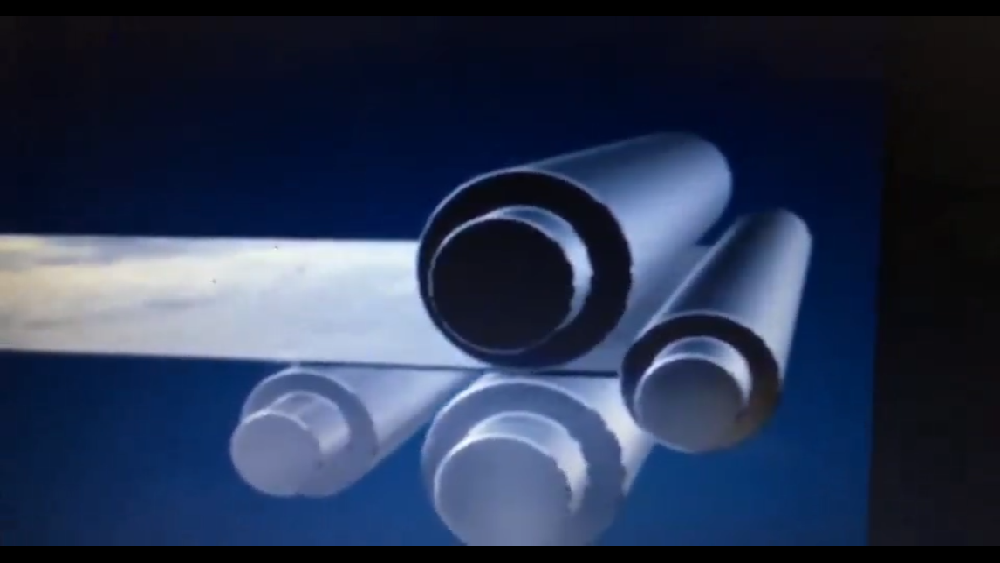
Pre-bending Principle
Prebending is one of the most important forming functions in plate rolling.
If a plate is rolled without prebending, both ends of the sheet will retain straight sections. These straight edges reduce the quality of the final cylinder and often require additional forming or correction later.
A CNC 4 roll plate rolling machine solves this by allowing one end of the plate to be prebent before the main rolling process begins. After that, the opposite end can also be prebent during the rolling cycle. This is a major reason why four-roll machines can produce cylinders with much smaller flat ends than traditional three-roll machines.
From a forming perspective, prebending improves efficiency, reduces extra handling, and makes automatic rolling CNC 4 roll plate rolling machine systems more suitable for accurate cylinder production.
This is not only a technical function, but also a real production advantage.
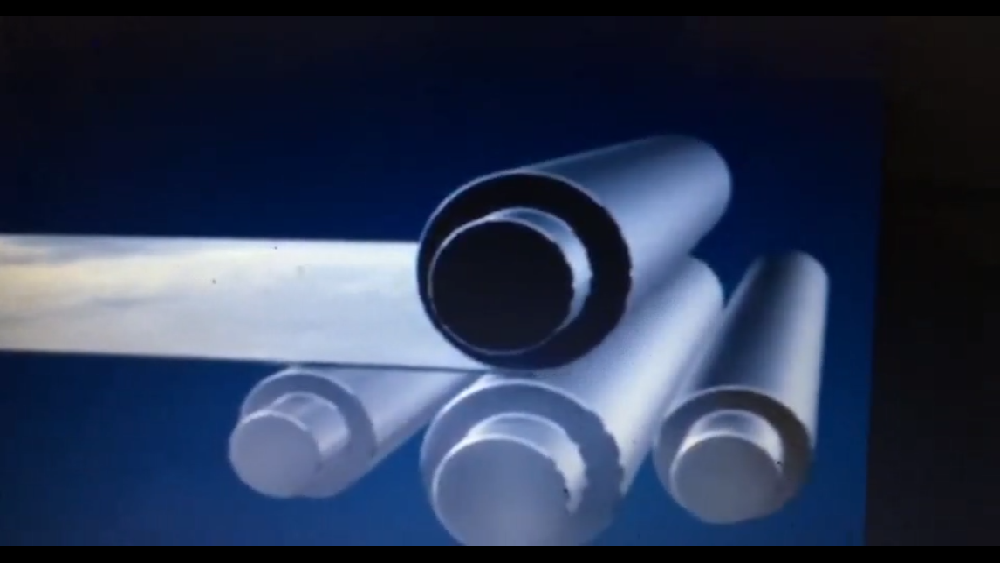
Continuous Rolling Process
After alignment and prebending, the machine enters the main rolling stage.
The rolling process can be understood in a simple sequence:
side rollers gradually move upward
→ plate continuously bends
→ curvature increases
→ cylinder forms
This process is based on gradual plastic deformation. The plate does not suddenly become round in one step. Instead, it is progressively bent as it passes through the rollers, and the curvature increases until the required diameter is reached.
This is why a CNC 4 roll plate rolling machine can achieve stable and repeatable automatic rolling results. The machine applies bending in a controlled, continuous way rather than relying on repeated manual repositioning.
For buyers and non-operators, this is a key point to understand: the machine works by controlling the forming path, not by forcing the plate into shape all at once.
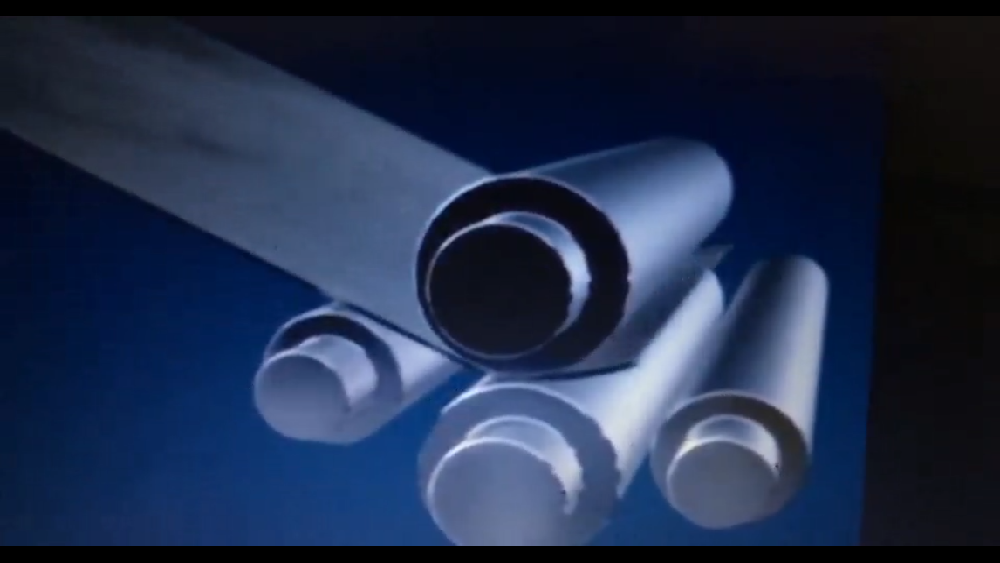
Eliminating the Flat End
Even after the main rolling stage, the trailing edge of the plate may still contain a straight section if no corrective action is taken.
This is where reverse rolling becomes important.
In a CNC 4 roll plate rolling machine, reverse rolling is used to apply bending action to the trailing end of the plate so that the remaining straight section can be reduced or eliminated. This second corrective forming step is one of the reasons the machine can achieve better final roundness.
Many customers do not realize why reverse rolling is needed, but in practice its purpose is clear: to eliminate the trailing edge straight section and improve the overall cylinder quality.
This makes automatic rolling CNC 4 roll plate rolling machine systems particularly useful in applications where seam fit-up and roundness matter.
Precision Control and Compensation
Good rolling results depend on more than just machine power. They also depend on precision control.
In a CNC 4 roll plate rolling machine, forming accuracy is mainly influenced by:
- roller displacement
- hydraulic control
- compensation adjustment
Roller displacement determines the actual forming geometry. Hydraulic control ensures the rollers move in a stable and repeatable way. Compensation adjustment helps correct differences between the two sides of the machine.
A common real-world issue is unequal seam gap. If one side of the rolled shell closes more tightly than the other, the rollers may not be perfectly parallel, or the displacement on the tipping side and fixed side may not match.
This is why compensation is necessary. By adjusting the relative position of the rollers, the machine can restore balance and improve rolling accuracy.
For customers evaluating machine capability, this section is important because it shows that automatic rolling CNC 4 roll plate rolling machine performance depends on controlled geometry, not only on hydraulic force.
Why Automatic Rolling Still Needs Manual Trial Rolling
This is one of the most important technical points in the entire process.
A CNC 4 roll plate rolling machine does not automatically calculate the best forming trajectory for every new workpiece. Instead, the machine repeats a proven set of roller movements.
The actual logic is:
manual rolling
↓
record roller position
↓
save program
↓
automatic repetition
In other words, the first workpiece is usually rolled manually so the operator can find the correct roller displacement for the required material, thickness, width, and diameter. Once a good result is achieved, these positions are stored in the control system. After that, the machine can repeat the same path in automatic mode.
This is the real meaning of automatic rolling in many production environments. It is not automatic thinking. It is automatic repetition of a verified rolling path.
This point is especially important for customers who expect the machine to generate all rolling parameters by itself. In reality, automatic rolling CNC 4 roll plate rolling machine operation is most effective when a correct program has already been established.
Applications of CNC 4 Roll Plate Rolling Machines
Because of their forming efficiency and ease of operation, CNC 4 roll plate rolling machines are used in many industries.
Typical applications include:
- pressure vessels
- storage tanks
- wind towers
- shipbuilding
- steel structures
In these industries, cylinder quality, repeatability, and production speed are all important. That is why automatic rolling capability is a strong advantage. Once the rolling program is verified, the same workpiece can be repeated with much greater consistency.
For manufacturers handling frequent repeat orders, this makes the CNC 4 roll plate rolling machine an attractive production solution.
Conclusion
A CNC 4 roll plate rolling machine offers several major advantages over traditional rolling systems. Its ability to provide automatic alignment, efficient prebending, stable cylinder forming, and repeatable automatic rolling makes it easier to operate and more suitable for high-accuracy production.
Rather than relying only on operator experience, the machine uses controlled roller motion and stored displacement logic to improve forming quality and consistency. For buyers, plant managers, and engineers, this is the real value of automatic rolling CNC 4 roll plate rolling machine technology.
A CNC 4 roll plate rolling machine simplifies thhe rolling process while maintaining high precision and productivity.
FAQ About Automatic Rolling in Plate Rolling Machines
What is automatic rolling in a plate rolling machine?
Automatic rolling refers to a programmed rolling process in which the machine repeats previously recorded roller movements. Once the correct roller positions are determined through manual rolling, the control system can reproduce the same forming path automatically.
Why is automatic rolling easier on a four-roll plate rolling machine?
A four-roll plate rolling machine can clamp and align the plate automatically before rolling begins. This design stabilizes the material position and reduces manual adjustments, making automatic rolling more efficient and accurate.
Does automatic rolling calculate the rolling path automatically?
No. In most cases, automatic rolling does not calculate the forming trajectory by itself. The operator first performs manual rolling to determine the correct roller displacement, and the machine then repeats these movements during automatic rolling.
Why is prebending necessary in plate rolling?
Prebending removes the straight edges that normally appear at both ends of a plate during rolling. Without prebending, the cylinder would contain flat sections that affect the final shape.
What industries use CNC 4 roll plate rolling machines?
CNC four-roll plate rolling machines are widely used in industries such as pressure vessel manufacturing, storage tank production, wind tower fabrication, shipbuilding, and steel structure construction.


