


Problemi di contaminazione dell'olio idraulico are one of the common causes of pressa idraulica performance issues, including unstable pressure, slow movement, component wear, and unexpected downtime. When hydraulic oil becomes contaminated, it can affect pumps, valves, cylinders, and other precision components. In this guide, I will explain how to identify oil contamination, diagnose the root causes, and apply effective maintenance methods to keep the hydraulic system clean and reliable.
What Causes Hydraulic Oil Contamination Problems?
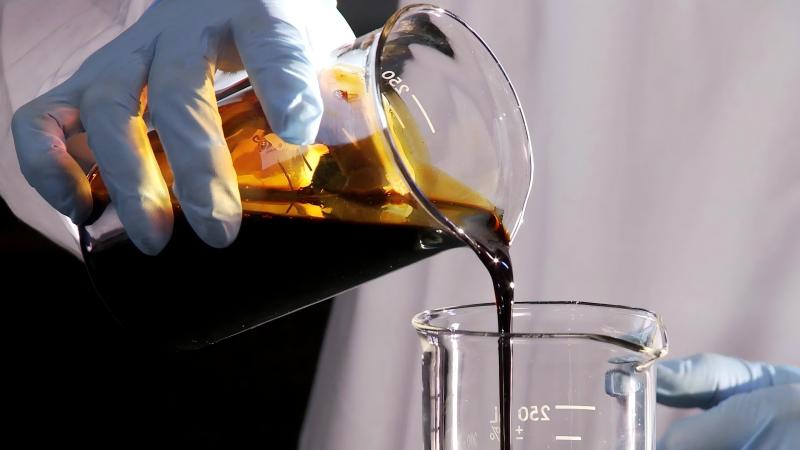
Hydraulic systems require clean oil to transfer pressure efficiently and protect internal components. During long-term operation, hydraulic oil may become contaminated by solid particles, moisture, air, chemical degradation, or external pollutants.
Understanding the source of contamination is the first step toward preventing system failures and maintaining stable hydraulic press performance.
Solid Particle Contamination in Hydraulic Oil
Solid particles are one of the most common types of hydraulic oil contamination. Metal particles, dust, dirt, and wear debris can enter the hydraulic system through improper maintenance, component wear, or poor sealing.
These particles can damage pumps, block valves, increase friction, and accelerate the wear of hydraulic components. When hydraulic oil contains excessive particles, the system may experience pressure instability, abnormal noise, or slower machine movement.
I recommend checking oil cleanliness regularly and replacing filters according to machine operating conditions.
Moisture and Water Contamination
Water contamination can reduce hydraulic oil performance and damage internal components. Moisture may enter the system through condensation, improper storage, damaged seals, or environmental conditions.
Water in hydraulic oil can cause rust, reduce lubrication performance, and affect valve operation. In severe cases, it may lead to pump damage and shortened component life.
Checking oil appearance and performing regular oil analysis can help detect moisture contamination early.
Oil Aging and Chemical Degradation
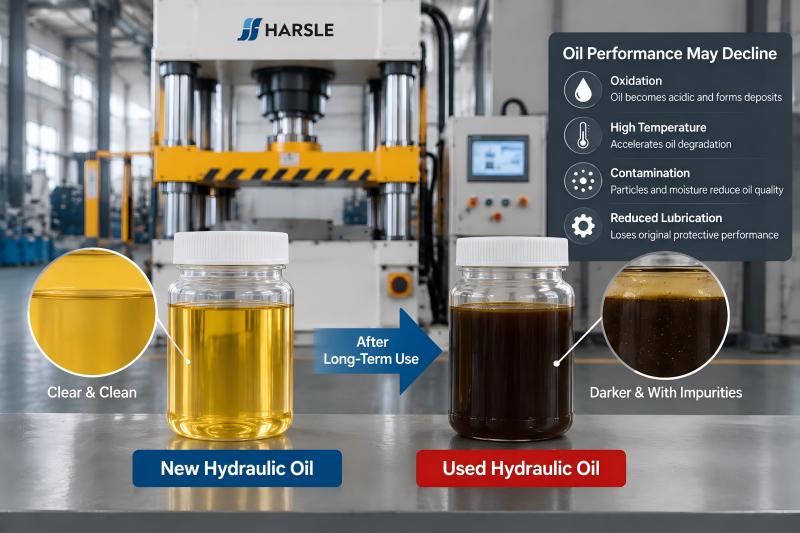
Hydraulic oil can lose its original performance after long-term use. High temperatures, oxidation, and continuous operation may cause oil degradation.
Aged hydraulic oil may become darker, produce deposits, or lose its ability to lubricate and protect components effectively.
Regular oil testing helps determine whether the hydraulic oil still meets operating requirements or needs replacement.
How to Diagnose Hydraulic Oil Contamination Problems Step by Step?
Step 1: Check Hydraulic Oil Appearance and Condition
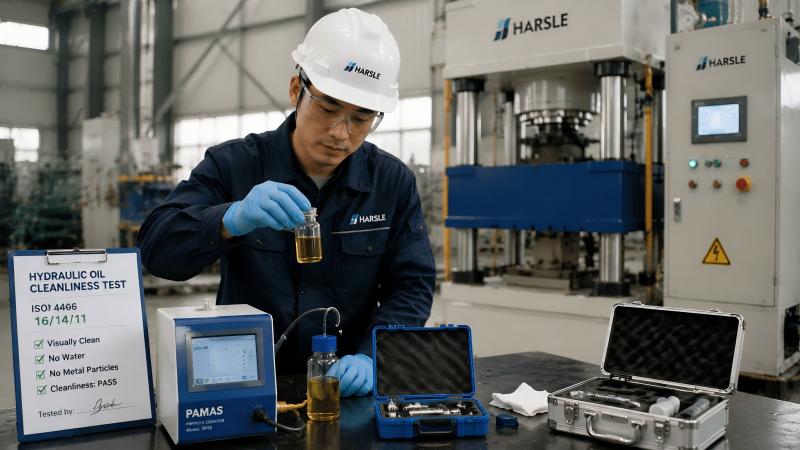
The first step in diagnosing hydraulic oil contamination problems is inspecting the oil condition. Observe the oil color, transparency, and any visible particles or unusual changes.
Clean hydraulic oil usually maintains a consistent appearance, while contaminated oil may appear cloudy, dark, or contain visible impurities.
I recommend checking oil samples from the hydraulic tank instead of relying only on surface observations, as contaminants may settle at the bottom of the tank.
Step 2: Perform Hydraulic Oil Cleanliness Testing
Visual inspection can identify obvious contamination, but professional oil analysis provides more accurate information.
Oil testing can detect particle levels, water content, viscosity changes, and chemical degradation. The results help determine whether contamination levels are within acceptable limits.
For high-performance hydraulic presses, maintaining proper oil cleanliness is essential for protecting precision components and ensuring stable operation.
Step 3: Inspect Hydraulic Filters and Filtration System
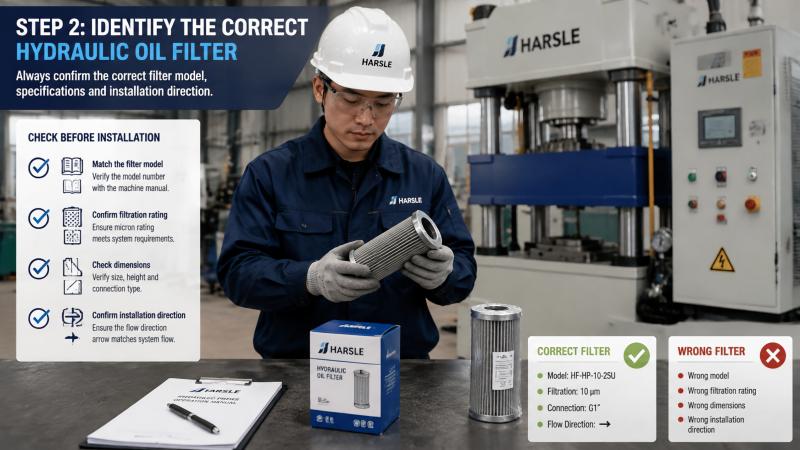
Hydraulic filters play an important role in removing contaminants from the oil. A clogged or damaged filter can reduce filtration efficiency and allow particles to circulate through the system.
Check filter condition, replacement intervals, and possible bypass conditions. If filters become blocked frequently, investigate the source of contamination instead of only replacing the filter repeatedly.
A properly maintained filtration system helps extend the service life of hydraulic components.
Step 4: Check Hydraulic Components for Contamination Damage
If hydraulic oil contamination has existed for a long time, internal components may already be affected.
Inspect pumps, valves, cylinders, and seals for signs of wear, leakage, abnormal noise, or reduced performance. Contaminated oil can create scratches, increase internal leakage, and reduce component efficiency.
Identifying damaged components early helps prevent larger failures and expensive repairs.
Step 5: Identify External Sources of Contamination
After confirming contamination, the next step is finding where it enters the system.
Possible sources include poor tank sealing, dirty maintenance tools, improper oil filling procedures, damaged breathers, or contaminated replacement oil.
I recommend keeping the hydraulic system closed whenever possible and using clean equipment during maintenance operations.
How to Prevent Hydraulic Oil Contamination Problems?
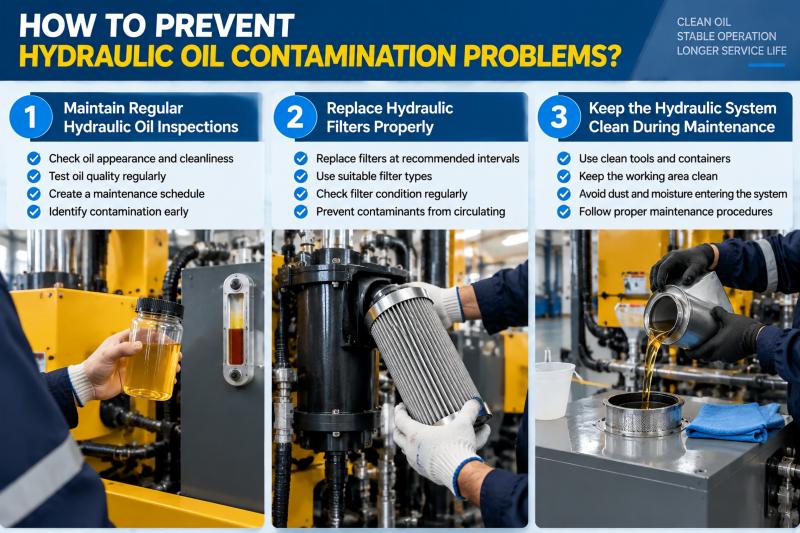
Maintain Regular Hydraulic Oil Inspections
Regular oil inspection is one of the most effective ways to prevent contamination-related failures. I suggest creating a maintenance schedule based on machine usage, working environment, and production conditions.
Routine checks help identify contamination before it affects hydraulic performance.
Replace Hydraulic Filters Properly
Filters should be replaced according to operating conditions and manufacturer recommendations. Delayed replacement can reduce filtration performance and allow contaminants to circulate.
Using suitable filters and maintaining correct replacement intervals improves hydraulic system reliability.
Keep the Hydraulic System Clean During Maintenance
Maintenance procedures directly affect oil cleanliness. Dust, moisture, and foreign materials can enter the system during oil replacement or component repair.
Keep tools, containers, and working areas clean when servicing hydraulic equipment. Proper maintenance practices help reduce unnecessary contamination risks.
Common Hydraulic Oil Contamination Problems and Solutions
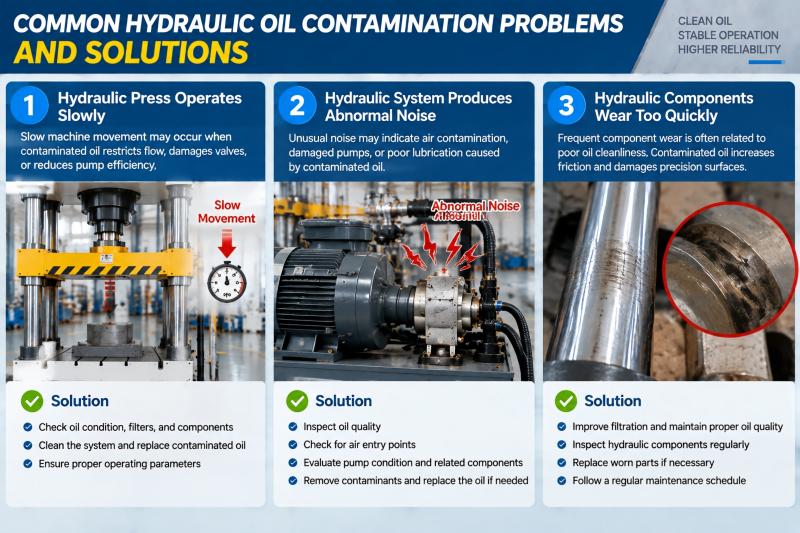
Hydraulic Press Operates Slowly
Slow machine movement may occur when contaminated oil restricts flow, damages valves, or reduces pump efficiency.
Check oil condition, filters, and hydraulic components. Cleaning the system and replacing contaminated oil can help restore normal operation.
Hydraulic System Produces Abnormal Noise
Unusual noise may indicate air contamination, damaged pumps, or poor lubrication caused by contaminated oil.
Inspect oil quality, check for air entry points, and evaluate pump condition to identify the source.
Hydraulic Components Wear Too Quickly
Frequent component wear is often related to poor oil cleanliness. Contaminated oil increases friction and damages precision surfaces.
Improve filtration, maintain proper oil quality, and inspect the hydraulic system regularly to reduce wear.
Domande frequenti
What are the common causes of hydraulic oil contamination problems?
Common causes include dust, metal particles, moisture, poor maintenance practices, oil degradation, and contaminated replacement oil.
How can I check if hydraulic oil is contaminated?
You can inspect oil appearance, check for visible particles, and perform professional oil analysis to measure contamination levels.
How often should hydraulic oil be tested?
Testing frequency depends on machine usage, operating environment, and production conditions. Machines operating under heavy loads usually require more frequent inspection.
Conclusione
Diagnosing Problemi di contaminazione dell'olio idraulico requires checking oil condition, testing cleanliness levels, inspecting filtration systems, and identifying contamination sources. Maintaining clean hydraulic oil helps improve machine reliability, reduce component wear, and extend the service life of pressa idraulica equipment.
At HARSLE, we provide professional hydraulic press solutions and technical support to help customers maintain stable production. For more maintenance guidance or hydraulic system troubleshooting assistance, contact our engineering team or explore additional documentation resources.


