


Pressa idraulica Electrical Faults can cause unexpected shutdowns, abnormal machine movements, control system alarms, or complete startup failure. When these problems occur, I recommend diagnosing the electrical system systematically instead of replacing components immediately. In this guide, I will explain how to check the power supply, wiring, sensors, relays, PLC signals, and other electrical components step by step. By identifying the actual source of the fault, you can reduce unnecessary repairs, shorten downtime, and restore reliable hydraulic press operation more efficiently.
Quali sono le cause? Pressa idraulica Electrical Faults?
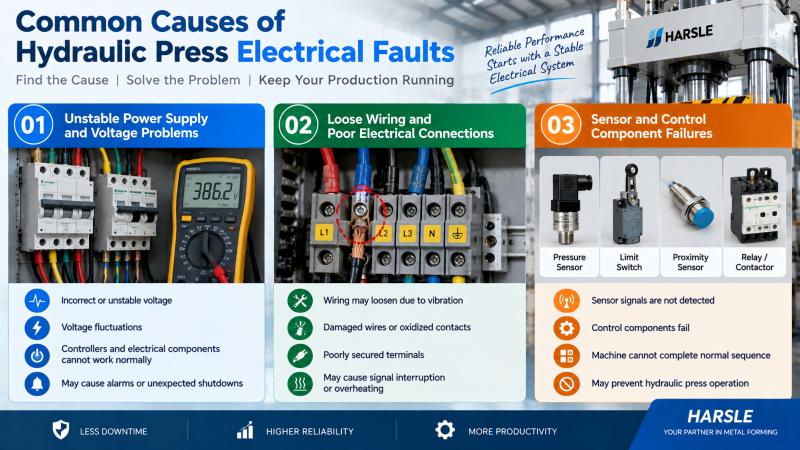
A hydraulic press combines hydraulic and electrical systems, so an electrical problem can directly affect hydraulic movement and machine control. Common causes include unstable power supplies, loose wiring, damaged electrical components, sensor failures, and control signal problems.
Unstable Power Supply and Voltage Problems
Incorrect or unstable voltage can prevent controllers, motors, relays, and other electrical components from operating normally. Voltage fluctuations may also cause intermittent alarms or unexpected machine shutdowns.
I recommend checking the incoming three-phase power supply, control voltage, circuit breakers, and power modules. If voltage is abnormal, determine the cause before restarting the machine.
Loose Wiring and Poor Electrical Connections
Machine vibration and long-term operation can gradually loosen terminals and connectors. Damaged wires, oxidized contacts, or poorly secured terminals may interrupt electrical signals.
Pay particular attention to terminal blocks, motor connections, PLC wiring, sensors, and grounding connections. Discoloration or overheating around a terminal can also indicate poor contact.
Sensor and Control Component Failures
Pressure sensors, position sensors, limit switches, proximity switches, relays, and contactors provide important signals for hydraulic press operation. A faulty component can prevent the machine from completing its normal operating sequence.
When troubleshooting, I check both the component itself and its related wiring rather than assuming the sensor is defective.
How to Diagnose Hydraulic Press Electrical Faults Step by Step
Step 1: Check the Electrical Fault Symptoms and Alarm Codes
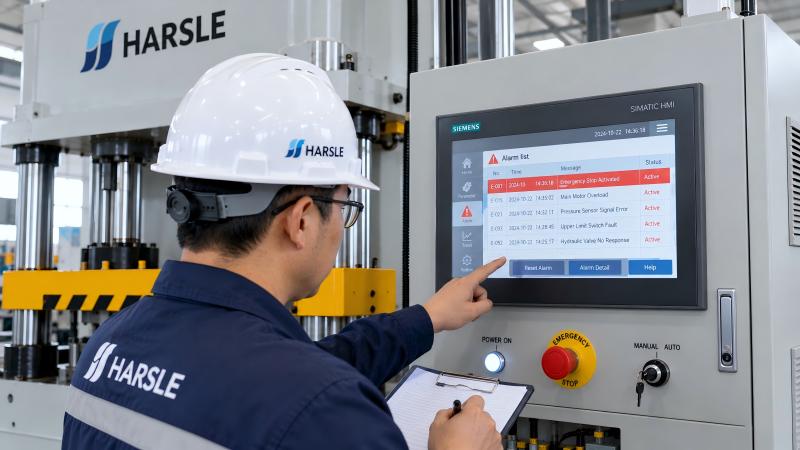
Before opening the electrical cabinet, record exactly what happens when the fault occurs. Check whether the hydraulic press cannot start, stops during operation, produces an alarm, or fails during a particular movement.
Review the HMI or controller for alarm codes and diagnostic messages. This information can significantly narrow the troubleshooting area.
Before inspecting or servicing electrical components, isolate electrical power according to the machine’s safety procedures. Electrical measurements on energized circuits should only be performed by qualified personnel using appropriate equipment.
Step 2: Inspect the Hydraulic Press Power Supply
If the machine does not start, I first verify that the main electrical supply is available and stable. Check the main switch, circuit breakers, fuses, power supply modules, and relevant indicator lights.
A multimeter can be used by qualified personnel to verify the specified supply and control voltages. Compare measured values with the electrical schematic and machine specifications rather than relying on a generic voltage value.
If a fuse or circuit breaker has operated, identify the underlying cause before replacing or resetting it.
Step 3: Check Wiring, Terminals, and Electrical Connections
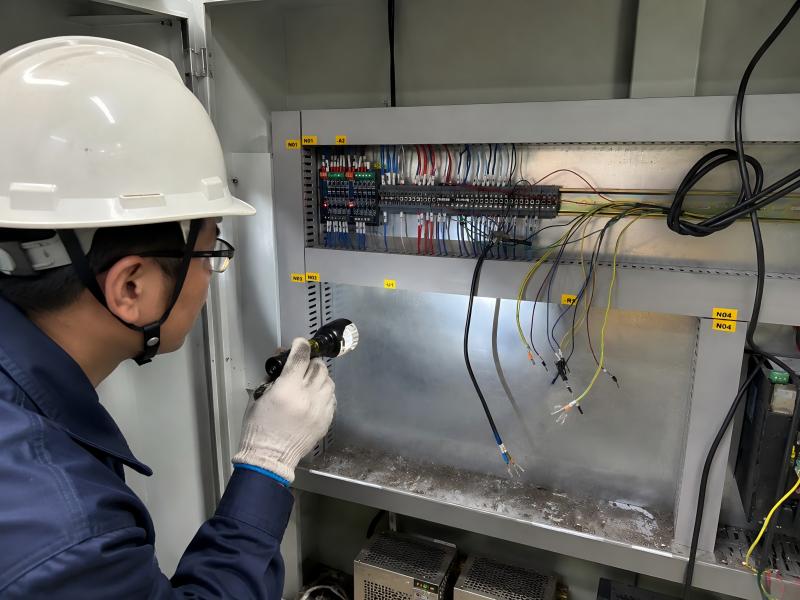
Next, inspect the electrical cabinet and field wiring. Look for loose terminals, damaged insulation, disconnected plugs, overheating marks, and contaminated connectors.
Carefully check cables connected to motors, valves, sensors, and PLC modules. A cable may appear normal externally while having an intermittent internal connection, so suspicious circuits may require continuity testing after safe isolation.
Step 4: Verify Sensors and PLC Input Signals
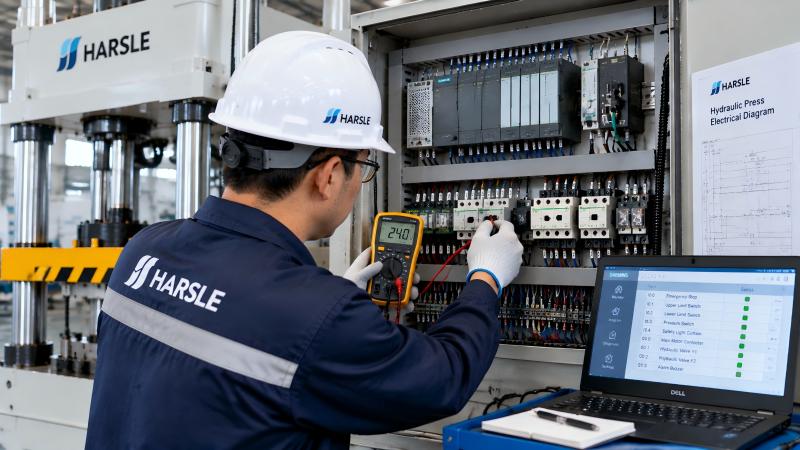
If the hydraulic press powers on but cannot complete a movement, I check whether the PLC receives the required input signals.
For example, a cylinder movement may depend on signals from a limit switch, pressure sensor, safety device, or position sensor. Use the PLC diagnostic interface to compare the actual input status with the expected operating sequence.
If the PLC does not receive a signal, inspect the corresponding sensor, connector, cable, and power supply.
Step 5: Check PLC Outputs, Relays, and Solenoid Valves
If all required input conditions are satisfied but the machine still does not respond, inspect the output side.
Check whether the PLC provides the expected output command and whether the associated relay, contactor, or solenoid valve receives that command. This helps distinguish a PLC logic problem from a failed external electrical component.
Avoid manually forcing PLC outputs unless the procedure is specifically authorized by the manufacturer, as unexpected machine movement can create serious hazards.
How to Prevent Hydraulic Press Electrical Faults?
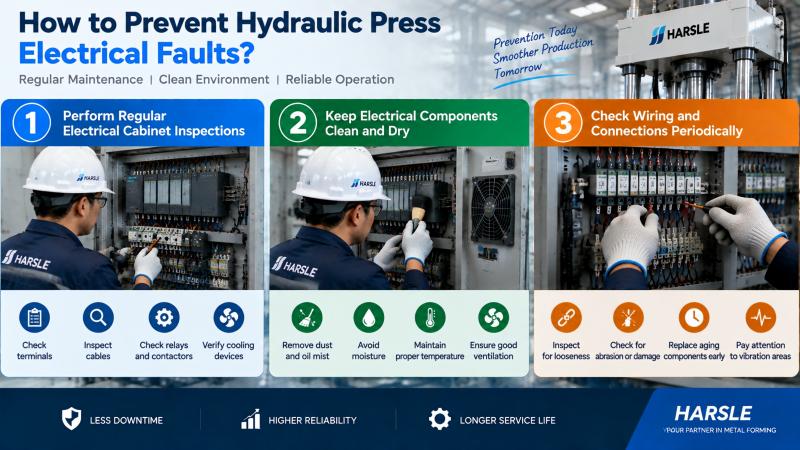
Perform Regular Electrical Cabinet Inspections
Preventive inspection helps detect developing problems before they interrupt production. I recommend regularly checking terminals, cables, relays, contactors, PLC modules, and cooling devices.
Maintenance records are also useful for identifying components that repeatedly cause faults.
Keep Electrical Components Clean and Dry
Dust, oil mist, moisture, and excessive temperature can reduce electrical component reliability. Keep the electrical cabinet clean and make sure cooling fans and ventilation systems operate correctly.
Electrical cabinets should remain properly closed during normal machine operation to prevent contaminants from entering.
Check Wiring and Connections Periodically
Regularly inspect wiring for looseness, abrasion, heat damage, and aging. Components exposed to frequent vibration deserve particular attention.
Replacing deteriorated cables and connectors early is usually more efficient than waiting for an intermittent fault to cause unexpected downtime.
Common Hydraulic Press Electrical Problems and Solutions
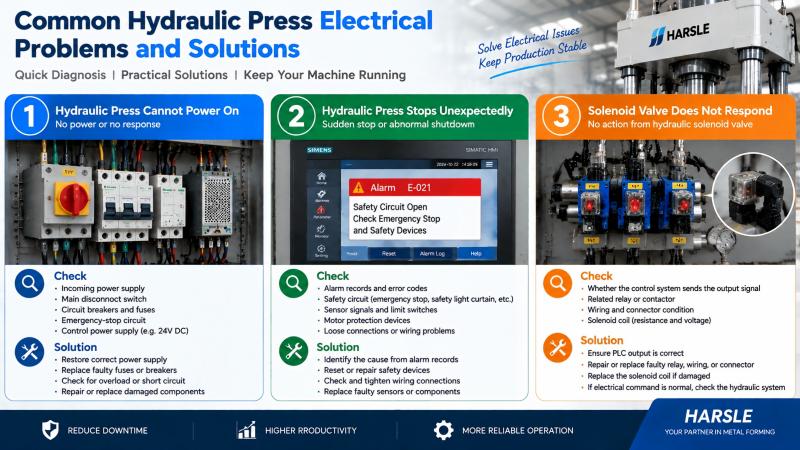
Hydraulic Press Cannot Power On
If the machine cannot power on, check the incoming supply, main disconnect, circuit breakers, fuses, emergency-stop circuit, and control power supply.
Do not repeatedly reset a tripped protection device. Determine whether an overload, short circuit, or component failure caused the trip.
Hydraulic Press Stops Unexpectedly
Unexpected shutdowns may result from loose connections, safety circuit activation, sensor signal loss, motor protection, or control system faults.
Review alarm records and determine which control condition changed immediately before the machine stopped.
Solenoid Valve Does Not Respond
If a hydraulic solenoid valve does not operate, verify whether the control system is sending the required output signal. Then inspect the relay, wiring, connector, and solenoid coil.
If the electrical command is correct but the hydraulic function still fails, further hydraulic troubleshooting may be necessary.
Domande frequenti
What are the most common Hydraulic Press Electrical Faults?
Common faults include unstable power supplies, blown fuses, tripped circuit breakers, loose wiring, failed sensors, damaged relays or contactors, and PLC input/output signal problems.
How do I diagnose a hydraulic press that will not start?
I recommend checking the main power supply, emergency-stop circuit, safety devices, control voltage, alarms, and PLC status first. These checks help determine which part of the startup sequence is incomplete.
Can a sensor failure stop a hydraulic press?
Yes. If a required sensor does not provide the correct signal, the control system may prevent movement to protect the operator and equipment.
Conclusione
Diagnosing Hydraulic Press Electrical Faults effectively requires a systematic process. Start with alarm information, verify the power supply, inspect wiring and connections, and then check sensors, PLC inputs, outputs, relays, and solenoid controls. This approach makes it easier to locate the actual fault while avoiding unnecessary component replacement.
At HARSLE, we provide hydraulic press technical support and troubleshooting guidance for industrial users. If an electrical problem cannot be safely identified or continues after basic inspection, contact our engineering team for further diagnosis and support.


