


pressa idraulica hydraulic oil Maintenance plays a critical role in ensuring stable machine performance, accurate pressing force, and long service life. When hydraulic oil becomes contaminated, degraded, or improperly maintained, it can lead to problems such as pressure loss, overheating, valve failure, and component wear. If you want to improve hydraulic press reliability and reduce unexpected downtime, you are in the right place. In this article, I’ll explain practical methods to optimize hydraulic oil maintenance procedures, including oil inspection, filtration, replacement, and daily management practices to keep your hydraulic press operating efficiently.
Capire l'importanza di Pressa idraulica Manutenzione dell'olio idraulico
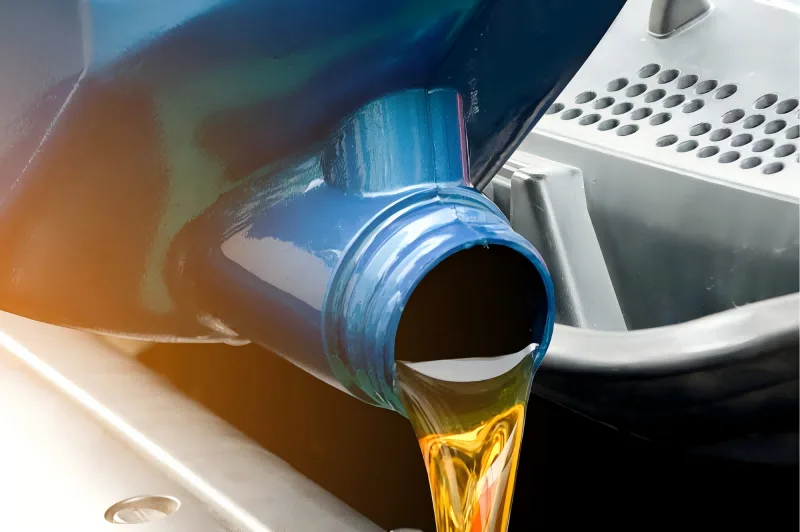
Why Hydraulic Oil Quality Matters in Hydraulic Presses
Hydraulic oil is the working medium that transfers power throughout the hydraulic system. It provides lubrication, reduces friction, controls temperature, and ensures smooth movement of cylinders and valves.
Poor oil conditions can directly affect hydraulic press performance. Contaminated oil may cause internal wear, unstable pressure, slow operation, and reduced pressing accuracy. Therefore, proper hydraulic press hydraulic oil Maintenance is essential for maintaining machine efficiency and preventing costly repairs.
Common Problems Caused by Poor Hydraulic Oil Maintenance
When hydraulic oil is not properly maintained, several issues may appear:
- Hydraulic pumps may experience excessive wear due to contaminated oil.
- Valves may become stuck because of particles and sludge.
- Hydraulic cylinders may develop leakage caused by damaged seals.
- Oil temperature may increase due to reduced lubrication performance.
- Machine efficiency may decrease due to unstable hydraulic pressure.
Regular maintenance helps identify these problems before they develop into major failures.
How to Improve Hydraulic Press Hydraulic Oil Maintenance
Step 1: Perform Regular Hydraulic Oil Inspections
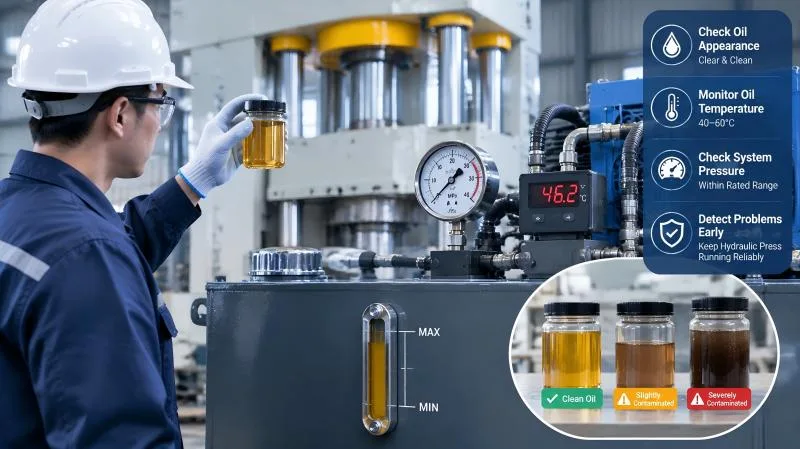
Check Oil Appearance and Cleanliness
The first step in improving hydraulic oil maintenance is establishing a regular inspection schedule. I recommend checking oil color, transparency, and contamination levels according to machine operating conditions.
Clean hydraulic oil usually has a consistent appearance. If the oil becomes dark, cloudy, or contains visible particles, it may indicate oxidation, moisture contamination, or foreign materials.
Monitor Hydraulic Oil Temperature and Pressure
Oil temperature and system pressure provide important information about hydraulic system health. Abnormal temperature increases may indicate poor lubrication, clogged filters, or excessive internal leakage.
Monitoring these parameters regularly helps operators identify early warning signs and take corrective actions before failures occur.
Step 2: Maintain Proper Hydraulic Oil Filtration
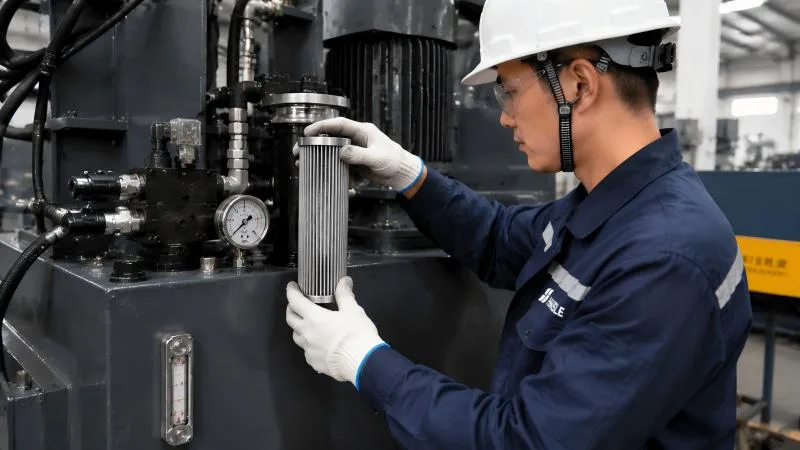
Replace Hydraulic Filters at the Correct Interval
Hydraulic filters remove contaminants from oil and protect sensitive components such as pumps and valves. However, clogged filters reduce system efficiency and may allow contaminants to circulate.
I recommend inspecting filter conditions regularly and replacing them according to manufacturer recommendations or operating conditions.
Use High-Quality Filtration Systems
Using suitable filtration equipment improves oil cleanliness and extends hydraulic component life. High-efficiency filters can remove small particles that may damage precision hydraulic parts.
For demanding applications, additional offline filtration systems can help maintain consistent oil quality during continuous operation.
Step 3: Replace Hydraulic Oil Properly
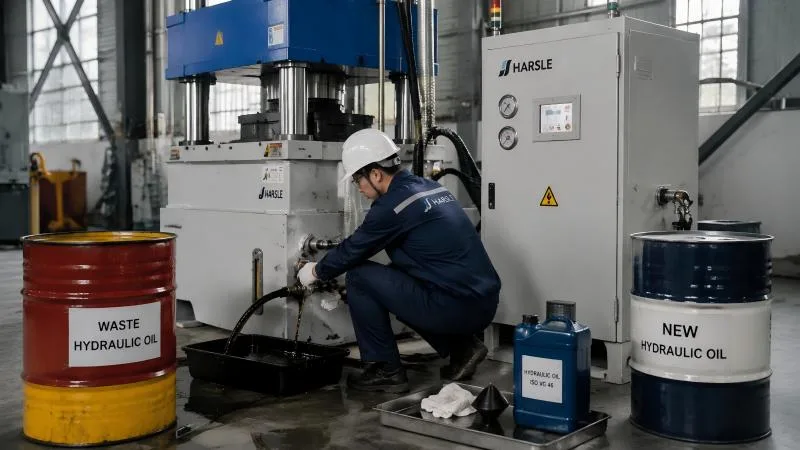
Determine the Right Oil Replacement Schedule
Hydraulic oil does not last forever. Over time, oxidation, heat, and contamination reduce its performance.
The replacement interval depends on factors such as operating temperature, working environment, machine workload, and oil type. Regular oil analysis can help determine the optimal replacement time.
Follow Correct Oil Replacement Procedures
When replacing hydraulic oil, I recommend draining old oil completely, cleaning the hydraulic tank, checking filters, and refilling with the correct oil specification.
Mixing different oil types should be avoided because it may reduce lubrication performance and affect hydraulic system stability.
Step 4: Keep the Hydraulic System Clean
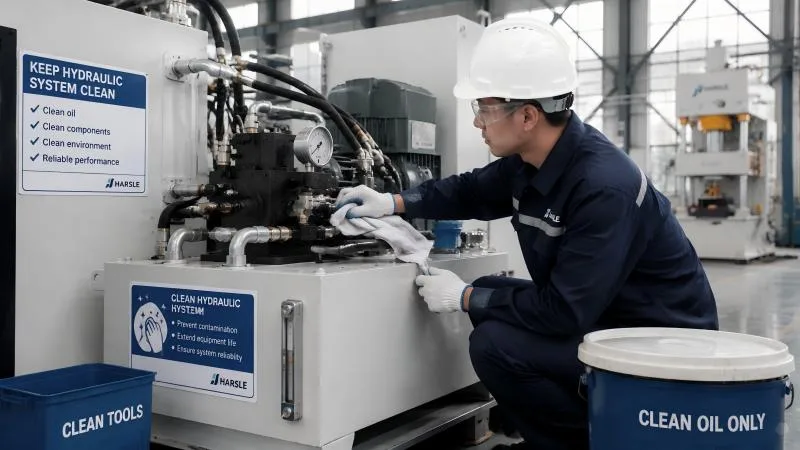
Prevent External Contamination
Dust, metal particles, moisture, and other contaminants can enter the hydraulic system during operation or maintenance.
Operators should keep the hydraulic tank area clean and ensure that filling equipment, containers, and tools are free from contamination.
Maintain Proper Sealing Performance
Damaged seals can allow external contaminants to enter the system while also causing hydraulic oil leakage.
Regular inspection of cylinders, pipelines, and connection points helps maintain system cleanliness and prevent oil loss.
Step 5: Record Maintenance Data and Analyze Trends
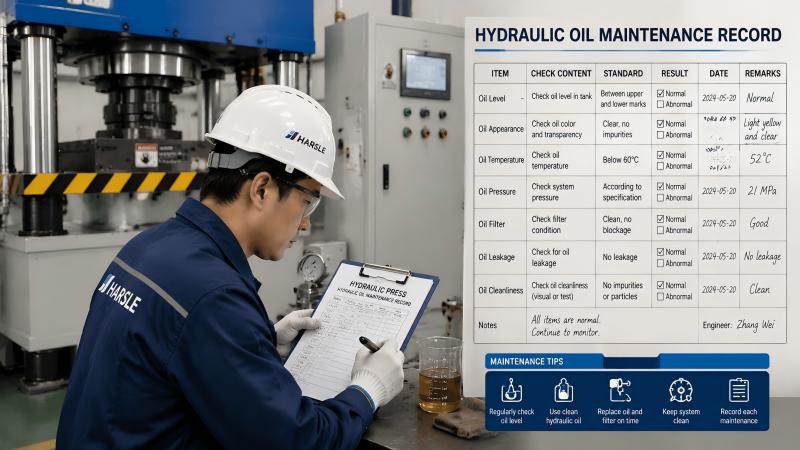
Create a Hydraulic Oil Maintenance Record
Keeping detailed maintenance records improves long-term equipment management. I recommend recording oil replacement dates, inspection results, filter changes, and abnormal operating conditions.
These records help identify repeated problems and improve future maintenance planning.
Use Oil Analysis for Predictive Maintenance
Professional oil analysis can detect particle contamination, water content, viscosity changes, and oxidation levels.
By analyzing oil conditions, maintenance teams can make better decisions and avoid unnecessary replacement or unexpected breakdowns.
Best Practices for Long-Term Hydraulic Press Oil Management
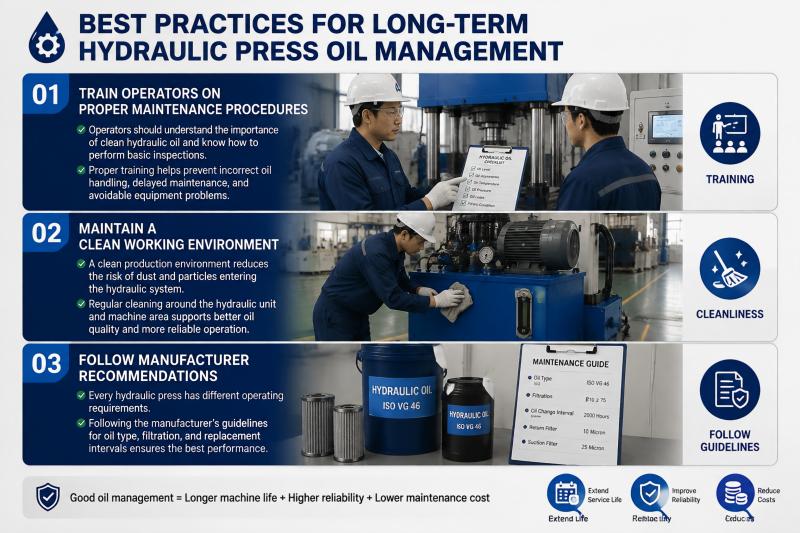
Train Operators on Proper Maintenance Procedures
Operators should understand the importance of clean hydraulic oil and know how to perform basic inspections.
Proper training helps prevent incorrect oil handling, delayed maintenance, and avoidable equipment problems.
Maintain a Clean Working Environment
A clean production environment reduces the risk of dust and particles entering the hydraulic system.
Regular cleaning around the hydraulic unit and machine area supports better oil quality and more reliable operation.
Follow Manufacturer Recommendations
Every hydraulic press has different operating requirements. Following the manufacturer’s guidelines for oil type, filtration, and replacement intervals ensures the best performance.
Domande frequenti
How often should hydraulic oil be replaced in a hydraulic press?
The replacement interval depends on machine usage, operating temperature, and oil condition. Regular oil testing is the best way to determine the correct replacement timing.
What are the signs of poor hydraulic press oil quality?
Common signs include abnormal noise, unstable pressure, overheating, slow movement, oil discoloration, and increased component wear.
Can contaminated hydraulic oil damage a hydraulic press?
Yes. Contaminated oil can damage pumps, valves, cylinders, and seals, resulting in reduced performance and expensive repairs.
Conclusione
Migliorare hydraulic press hydraulic oil Maintenance is essential for maintaining machine reliability, reducing downtime, and extending equipment lifespan. By regularly inspecting oil conditions, maintaining filtration systems, replacing oil correctly, and preventing contamination, operators can ensure stable hydraulic performance.
A well-maintained hydraulic system improves pressing accuracy, reduces repair costs, and supports efficient production. For more technical guidance or professional support on hydraulic press maintenance, feel free to contact our team for expert assistance.


