


Macchina per taglio Safety Guards are essential for protecting operators from blade contact, flying metal fragments, and unexpected machine movement. The required safeguards typically include fixed blade guards, interlocked access guards, emergency stop devices, and, where appropriate, light curtains or other presence-sensing systems. The exact configuration depends on the machine design, risk assessment, and applicable safety regulations. In this guide, I’ll explain the main types of shearing machine guards, how to inspect them, and what operators should check before starting production.
What Safety Guards Are Required on a Macchina per taglio?
1. Fixed Blade Guards
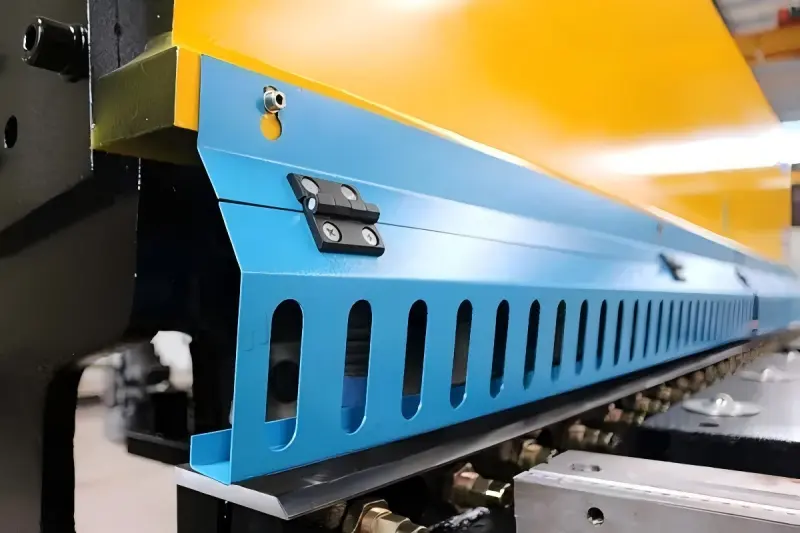
Fixed guards prevent operators from reaching dangerous areas around the upper and lower blades. They are commonly installed along the front and sides of the cutting zone, with openings designed to restrict access to hazardous moving parts.
I recommend checking that all fixed guards are securely fastened, free of deformation, and installed according to the manufacturer’s specifications. Never remove a guard simply to make material feeding easier.
2. Interlocked Access Guards
Interlocked guards use safety switches to monitor the position of a movable guard or access door. If the guard is opened, the safety system prevents hazardous movement or initiates a stop, depending on the machine’s design.
Inspect the interlock switches, mounting brackets, and electrical connections for visible damage. Operators must never bypass an interlock to continue production. Functional testing should follow the manufacturer’s approved procedure.
3. Light Curtains and Presence-Sensing Devices
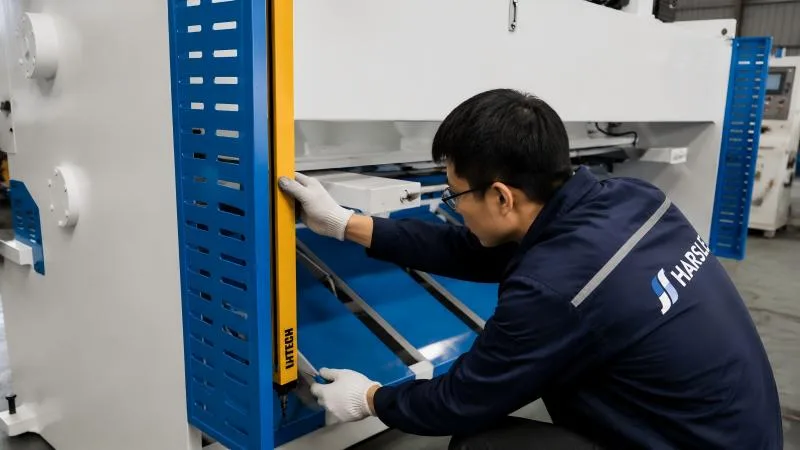
Light curtains create an invisible protective barrier using infrared beams. When a person or object interrupts the protected field, the safety system initiates the configured protective response.
These devices may be suitable for certain machine layouts, but they are not automatically appropriate for every shearing operation. Their effectiveness depends on the risk assessment, stopping time, mounting distance, and safety-system design.
I recommend verifying that the sender and receiver are correctly aligned and that the machine responds as specified when the protected field is interrupted. Never assume a light curtain protects every access point.
4. Side and Rear Guards
Side and rear guards restrict access to hazardous areas that operators may not see during normal cutting operations. These areas can include blade mechanisms, moving components, and the rear discharge zone.
Check that guards are properly secured and that access points are controlled. If personnel need to enter a restricted area for maintenance or scrap removal, follow the approved shutdown and lockout/tagout procedure.
How to Inspect Shearing Machine Safety Guards
Step 1: Perform a Visual Guard Inspection
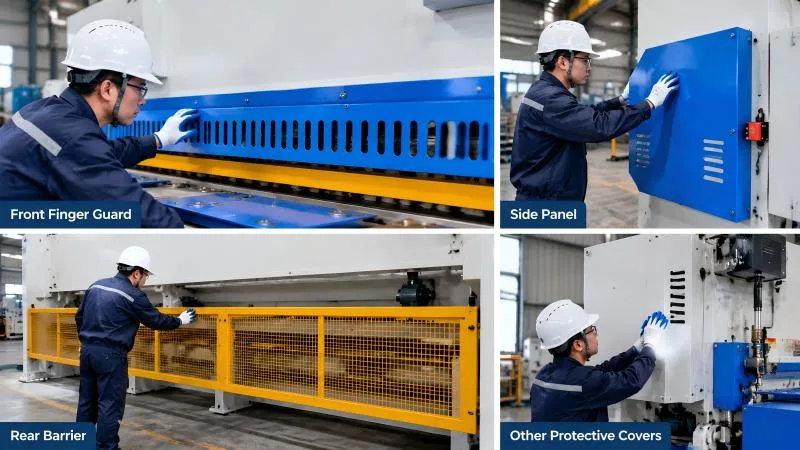
Before starting the machine, examine the front finger guard, side panels, rear barriers, and other protective covers. Look for missing fasteners, cracks, deformation, or unauthorized modifications.
Any damaged or missing guard must be reported immediately. Do not operate the machine until the defect has been assessed and corrected.
Step 2: Test Emergency Stops and Interlocks
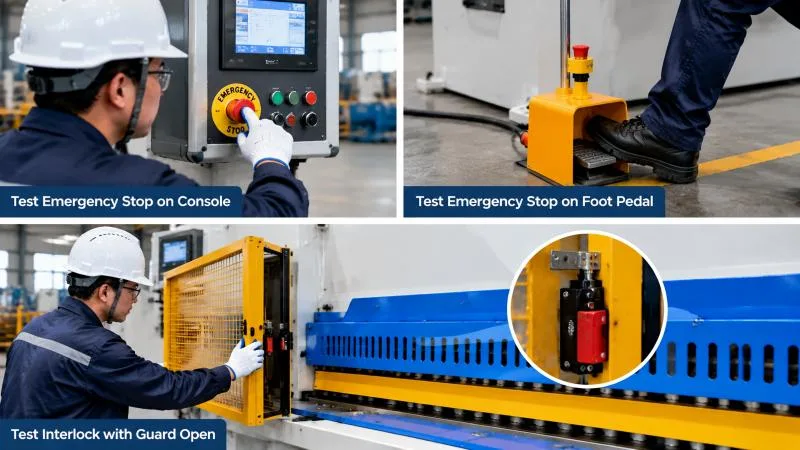
Check the emergency stop devices and guard interlocks according to the manufacturer’s instructions. Confirm that the safety functions produce the expected response under the approved test conditions.
An emergency stop is a supplementary protective measure, not a substitute for physical guards or proper operating procedures.
Step 3: Verify Safety Sensor Operation
If the machine uses light curtains or other presence-sensing devices, inspect their alignment, indicators, and mounting condition. Perform the prescribed functional test without placing hands or other body parts in the cutting zone.
If a sensor fails to trigger the expected protective response, stop using the machine and contact qualified maintenance personnel.
Step 4: Document Inspection Results
Record the inspection date, machine identification, test results, and any defects found. Clearly identify failed checks and prevent operation until authorized personnel confirm that the machine is safe to use.
Common Mistakes to Avoid When Using Machine Guards
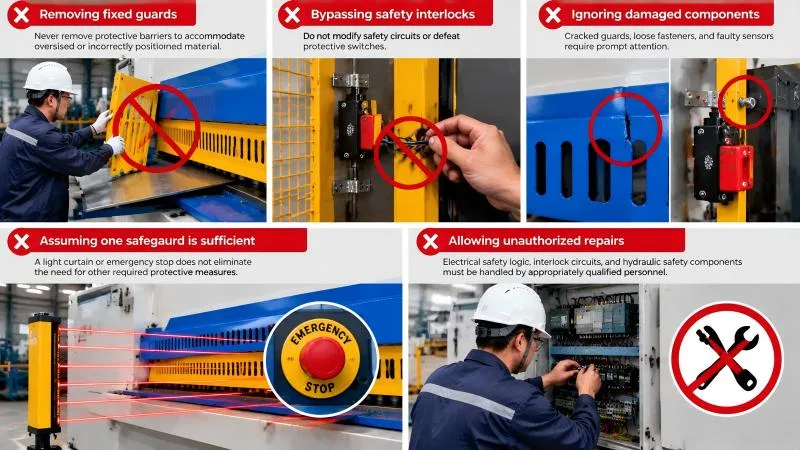
- Removing fixed guards: Never remove protective barriers to accommodate oversized or incorrectly positioned material.
- Bypassing safety interlocks: Do not modify safety circuits or defeat protective switches.
- Ignoring damaged components: Cracked guards, loose fasteners, and faulty sensors require prompt attention.
- Assuming one safeguard is sufficient: A light curtain or emergency stop does not eliminate the need for other required protective measures.
- Allowing unauthorized repairs: Electrical safety logic, interlock circuits, and hydraulic safety components must be handled by appropriately qualified personnel.
FAQ
What Are the Most Important Shearing Machine Safety Guards?
Fixed blade guards, interlocked access guards, and appropriate side and rear barriers are key protective measures. Depending on the machine and risk assessment, additional safeguards such as light curtains may also be required.
Are Light Curtains Mandatory on Every Shearing Machine?
No. The required safeguarding depends on the machine configuration, access risks, applicable regulations, and the results of a risk assessment. A light curtain must be suitable for the specific hazard and correctly integrated into the safety system.
Can an Operator Run a Shearing Machine With a Damaged Guard?
No. If a guard is damaged, missing, or not functioning correctly, the operator should stop the machine, report the problem, and prevent further use until the issue has been resolved.
Conclusione
Properly selected and maintained Shearing Machine Safety Guards help prevent blade contact, unauthorized access, and injuries caused by unexpected machine movement. I recommend combining regular guard inspections, functional testing, operator training, and documented maintenance to maintain a safe working environment.


