


Prensa hidráulica Service Frequency plays a critical role in maintaining machine reliability, production efficiency, and long-term performance. When operating a hydraulic press, regular servicing helps prevent unexpected failures, reduce downtime, and protect key components such as hydraulic pumps, valves, cylinders, and electrical systems. If you are wondering how often a hydraulic press should be serviced and what maintenance tasks should be performed, you are in the right place. In this article, I’ll explain the recommended service intervals, essential inspection points, and practical maintenance methods to help you keep your hydraulic press operating safely and efficiently.
Entendimento Prensa hidráulica Service Frequency
Why Regular Hydraulic Press Service Is Important
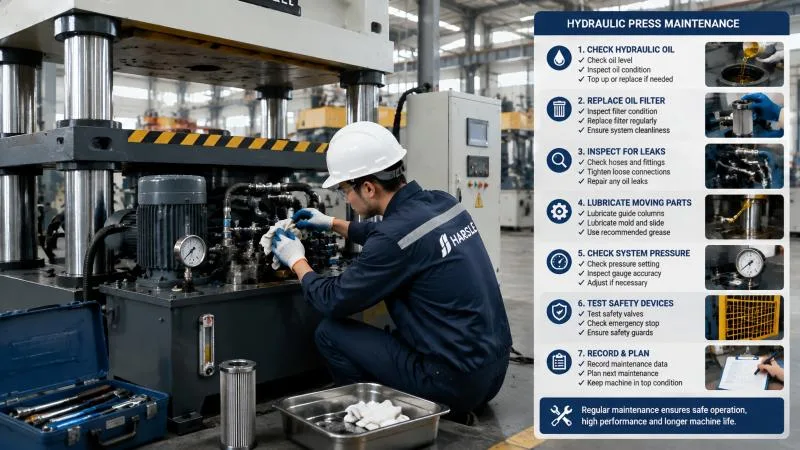
A hydraulic press operates under high pressure and heavy mechanical loads, which means its components experience continuous stress during production. Over time, hydraulic oil can degrade, seals can wear, and mechanical parts may lose their original performance.
Following the correct Hydraulic Press Service Frequency helps identify potential problems before they develop into major failures. Regular servicing improves machine accuracy, maintains stable pressure output, and extends the service life of critical components.
Factors That Affect Hydraulic Press Maintenance Intervals
There is no single service schedule that applies to every hydraulic press. The ideal maintenance frequency depends on several factors, including:
- Machine operating hours
- Production intensity
- Working environment conditions
- Hydraulic oil quality
- Load requirements
- Manufacturer recommendations
A hydraulic press used for continuous industrial production requires more frequent inspection compared with a machine used occasionally.
Recommended Hydraulic Press Service Schedule
Daily Hydraulic Press Inspection Tasks
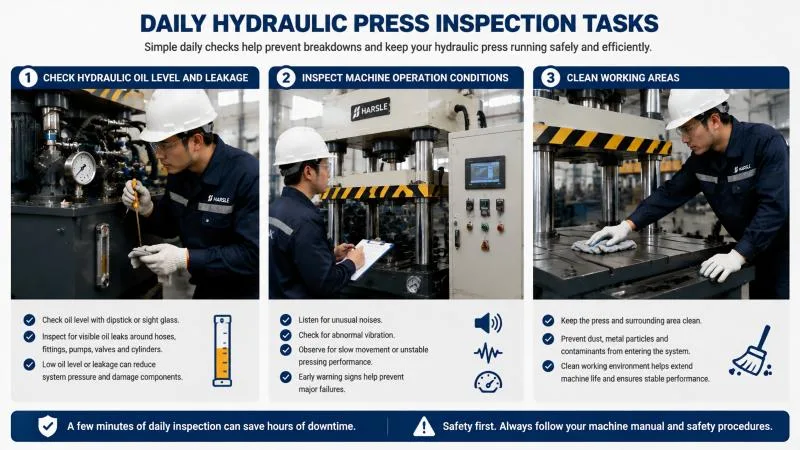
Check Hydraulic Oil Level and Leakage
Before starting daily operations, I recommend checking the hydraulic oil level and inspecting the machine for visible leaks. Low oil levels or hydraulic leakage can reduce system pressure and damage pumps or valves.
Inspect Machine Operation Conditions
Operators should observe unusual noises, vibration, slow movement, or unstable pressing performance. These early warning signs often indicate developing mechanical or hydraulic problems.
Clean Working Areas
Keeping the hydraulic press clean prevents dust, metal particles, and contaminants from entering moving parts or the hydraulic system.
Monthly Hydraulic Press Maintenance Tasks
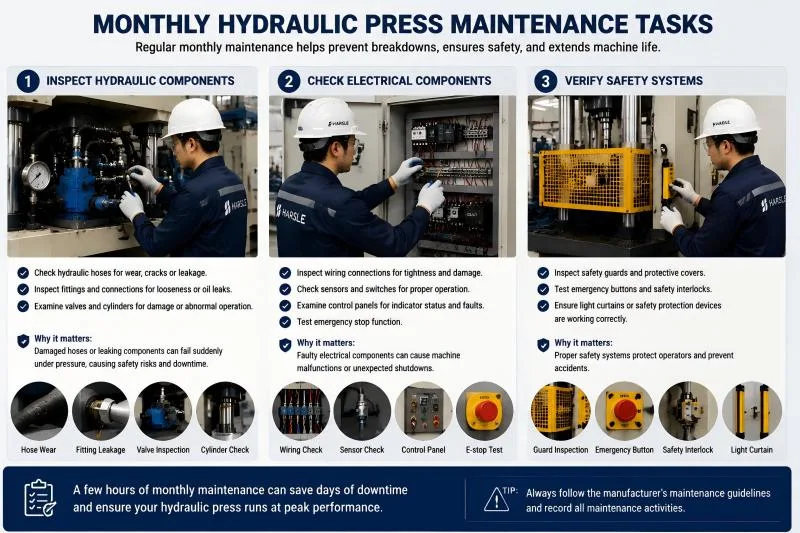
Inspect Hydraulic Components
Monthly inspections should include checking hydraulic hoses, fittings, valves, and cylinders for wear, leakage, or damage.
A damaged hydraulic hose can suddenly fail under pressure, creating safety risks and production interruptions.
Check Electrical Components
Electrical systems should be inspected regularly, including wiring connections, sensors, control panels, and emergency stop functions.
Loose connections or damaged electrical components may cause machine malfunctions or unexpected shutdowns.
Verify Safety Systems
Safety devices such as guards, emergency buttons, and protection systems should be tested to ensure they function correctly.
Periodic Hydraulic Press Service Requirements
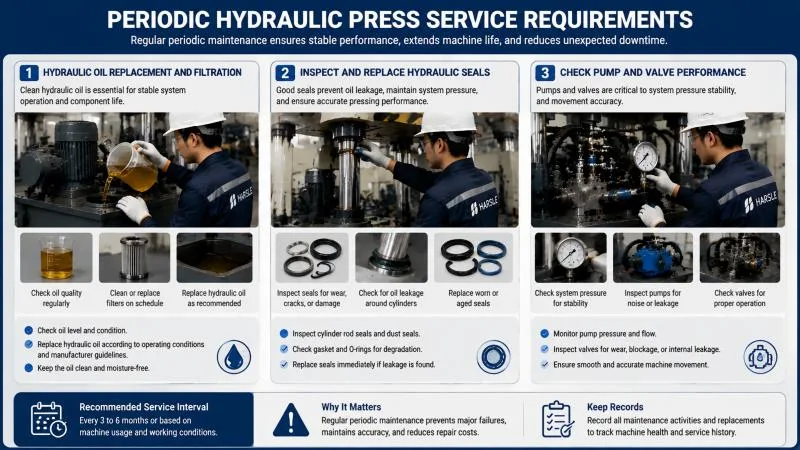
Hydraulic Oil Replacement and Filtration
Hydraulic oil is one of the most important factors affecting machine performance. Over time, oil can become contaminated with particles, moisture, and oxidation products.
I recommend checking oil quality regularly and replacing hydraulic oil according to operating conditions and manufacturer guidelines.
Inspect and Replace Hydraulic Seals
Hydraulic seals prevent oil leakage and maintain system pressure. Aging or damaged seals can reduce pressing force and affect machine accuracy.
During scheduled maintenance, inspect cylinder seals and replace worn components when necessary.
Check Pump and Valve Performance
Hydraulic pumps and control valves directly affect pressure stability and movement accuracy. Regular inspection helps detect wear, internal leakage, or abnormal operation.
How to Create an Effective Hydraulic Press Maintenance Plan
Step 1: Record Machine Operating Data
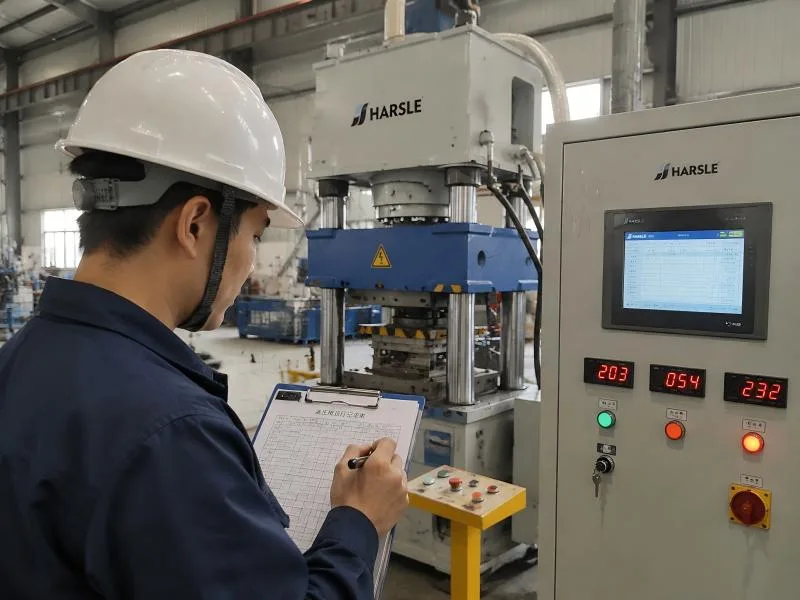
The first step is tracking operating hours, production cycles, maintenance history, and previous failures. Accurate records help determine the most suitable service intervals.
Step 2: Follow Manufacturer Maintenance Guidelines
Each hydraulic press model has different requirements. Always follow the manufacturer’s recommendations for lubrication, oil replacement, component inspection, and calibration.
Step 3: Adjust Maintenance Frequency Based on Conditions
If the machine operates in harsh environments with dust, high temperatures, or heavy loads, maintenance intervals should be shortened.
Regular evaluation allows maintenance teams to create a more effective service schedule.
Benefits of Proper Hydraulic Press Servicing
Reduce Unexpected Downtime
Regular servicing helps identify problems before sudden failures occur. This allows repairs to be planned without affecting production schedules.
Extend Hydraulic Press Lifespan
Proper maintenance reduces wear on hydraulic systems, mechanical structures, and electrical components, helping the machine operate reliably for a longer period.
Improve Production Quality
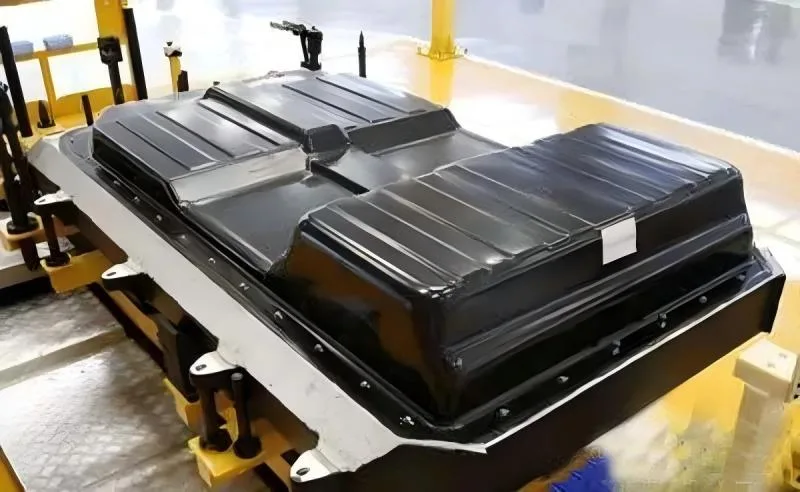
A well-maintained hydraulic press provides more stable pressure and consistent performance, improving product quality and process reliability.
Lower Long-Term Maintenance Costs
Preventive servicing is usually less expensive than emergency repairs. Replacing small worn components early can prevent major system damage.
Perguntas frequentes
How often should a hydraulic press be serviced?
The service frequency depends on operating conditions, workload, and manufacturer recommendations. Daily inspections, monthly checks, and scheduled professional servicing are commonly recommended.
What maintenance should be performed on a hydraulic press?
Common tasks include checking hydraulic oil, inspecting leaks, cleaning components, testing safety systems, and examining hydraulic and electrical parts.
How do I know if my hydraulic press needs servicing?
Warning signs include abnormal noise, slow movement, pressure loss, oil leakage, overheating, and inconsistent pressing results.
Conclusão
Maintaining the correct Hydraulic Press Service Frequency is essential for ensuring safe operation, reliable performance, and long machine life. By performing regular inspections, monitoring hydraulic conditions, maintaining electrical systems, and following a structured service plan, operators can prevent unexpected failures and improve production efficiency.
A proactive maintenance strategy not only reduces downtime but also protects your investment in hydraulic press equipment. For more technical guidance or professional support on hydraulic press maintenance, feel free to contact our team.


