


Prensa hidráulica Motor Not Working is a common issue that can stop machine operation, reduce production efficiency, and affect the entire hydraulic system. When the motor fails to start, runs abnormally, or suddenly stops during operation, the cause may come from the power supply, electrical components, motor protection system, wiring, or mechanical problems. In this guide, I will explain the common reasons why a hydraulic press motor does not work and provide practical troubleshooting steps to help operators identify problems and restore normal machine performance.
Quais são as causas? Prensa hidráulica Motor Not Working Problems?
The hydraulic press motor provides power for the hydraulic pump, which generates the pressure required for machine operation. If the motor cannot run correctly, the hydraulic system may lose pressure, causing the machine to stop or fail to complete its working cycle.
Understanding the possible causes helps operators avoid unnecessary component replacement and locate the fault more efficiently.
Power Supply Failure Affecting Hydraulic Press Motor Operation
An unstable or missing power supply is one of the most common reasons for motor failure. Problems such as incorrect voltage, phase loss, blown fuses, or tripped circuit breakers can prevent the motor from starting.
I recommend checking the incoming power supply, main disconnect switch, circuit breakers, and motor protection devices first. Make sure the voltage and phase sequence meet the motor requirements before further troubleshooting.
Motor Overload and Protection Activation
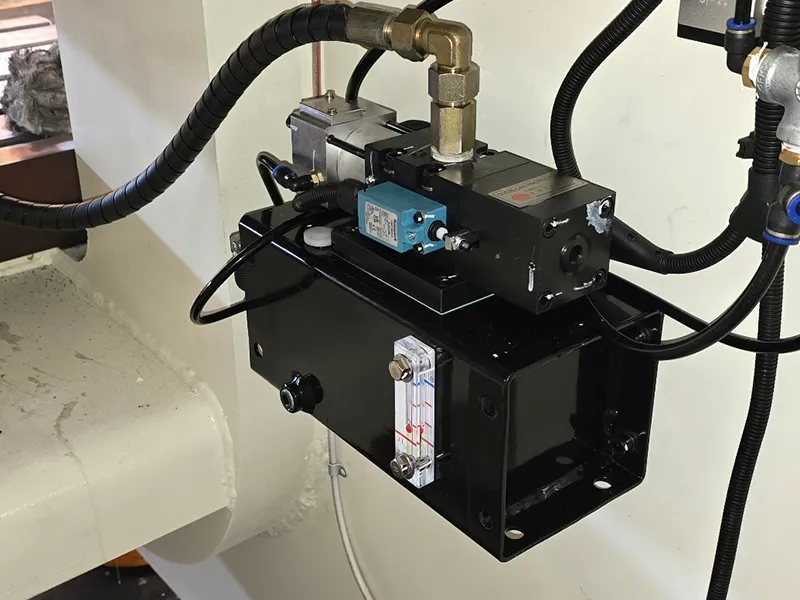
Hydraulic press motors are equipped with protection devices to prevent damage caused by overload, overheating, or abnormal current conditions.
When the motor operates under excessive load, the overload relay may trip and stop the motor automatically. Possible causes include hydraulic system blockage, pump problems, excessive pressure settings, or mechanical resistance.
Before resetting the overload protection, identify and remove the cause of the overload to prevent repeated shutdowns.
Electrical Wiring and Connection Problems
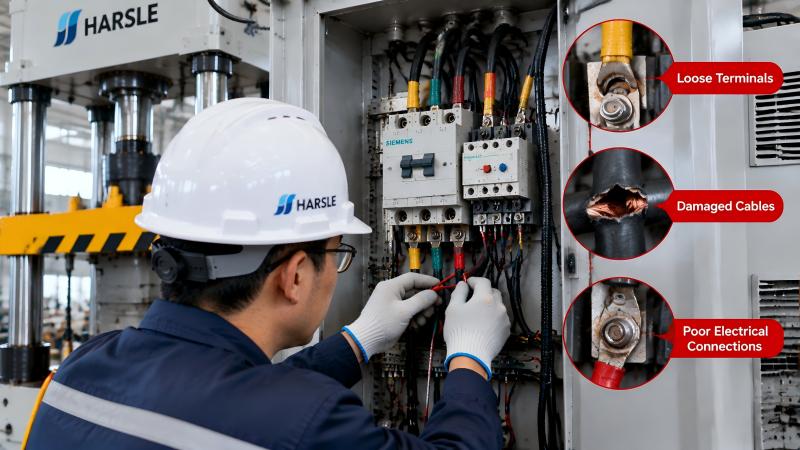
Loose terminals, damaged cables, or poor electrical connections can interrupt power transmission to the motor.
Due to vibration during hydraulic press operation, electrical connections may gradually become loose. I suggest inspecting motor terminals, contactors, relays, and cable connections carefully.
Signs such as burnt marks, unusual heat, or damaged insulation may indicate electrical connection problems that require repair or replacement.
How to Troubleshoot Hydraulic Press Motor Not Working Step by Step
Step 1: Check the Motor Power Supply and Control Circuit
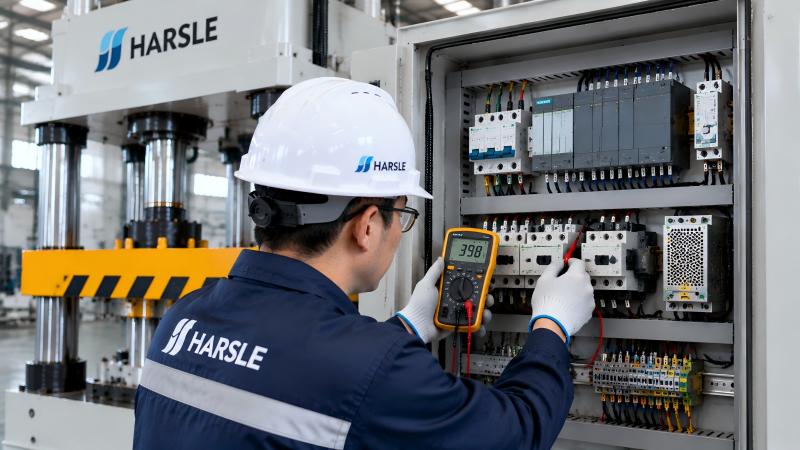
The first step in diagnosing a hydraulic press motor failure is confirming whether the motor receives the correct power supply.
Check the main electrical supply, control voltage, circuit breakers, and motor starter. If the control panel shows an alarm or the motor does not respond after pressing the start button, inspect the related control circuit.
A missing control signal may prevent the contactor from closing, even when the main power supply is normal.
Step 2: Inspect the Motor Contactor and Relay Components
The motor contactor controls power delivery to the hydraulic pump motor. If the contactor fails, the motor may not receive power.
Inspect the contactor for damaged contacts, overheating marks, or abnormal noise during operation. Also check the overload relay status and ensure that the protection device has not been activated without a clear reason.
Replacing damaged contactors or relays can restore normal motor operation.
Step 3: Verify Motor Wiring and Terminal Connections
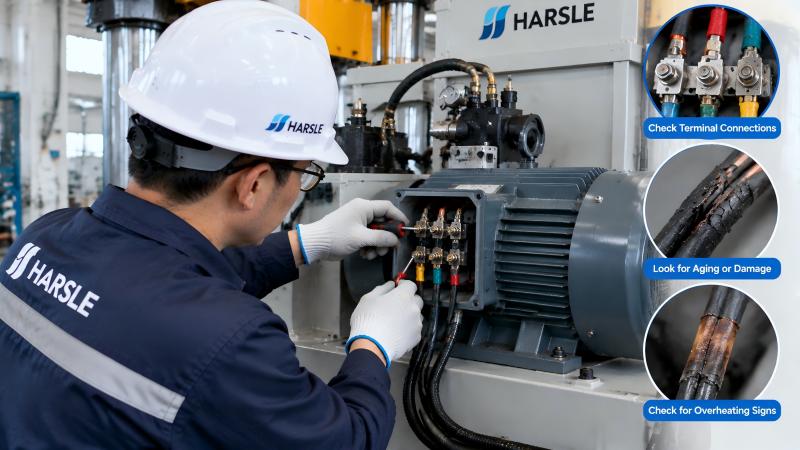
After checking the control components, inspect the motor wiring system.
Check whether the motor terminals are securely connected and whether cables show signs of aging, damage, or overheating. Loose connections can cause voltage drops, unstable operation, or complete motor failure.
For three-phase motors, verify that all phases are present. A phase loss can prevent the motor from starting or cause serious motor damage.
Step 4: Check Hydraulic System Conditions
Although the problem may appear to be electrical, hydraulic conditions can also affect motor operation.
If the hydraulic pump is blocked, the pressure is too high, or internal components are damaged, the motor may experience excessive load and trigger protection.
Check hydraulic oil level, system pressure, pump condition, and abnormal sounds before restarting the machine.
Step 5: Test the Motor Condition
If power supply and control components are normal, the motor itself may require inspection.
Possible motor problems include winding damage, bearing wear, insulation failure, or internal overheating.
Qualified technicians can use appropriate testing equipment to check motor insulation resistance, current balance, and operating condition.
How to Prevent Hydraulic Press Motor Failures?
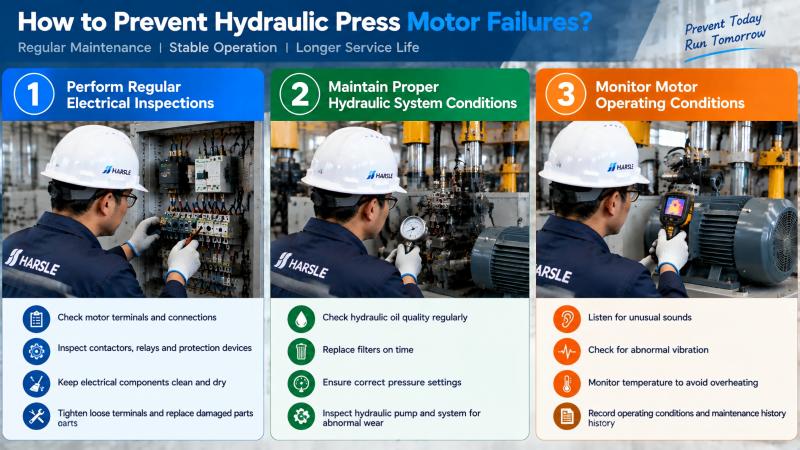
Perform Regular Electrical Inspections
Preventive electrical inspections help identify potential motor problems before they cause unexpected downtime.
I recommend checking motor terminals, contactors, overload relays, cables, and protection devices regularly. Keeping electrical components clean and properly connected improves system reliability.
Maintain Proper Hydraulic System Conditions
A healthy hydraulic system reduces unnecessary stress on the motor. Regularly check hydraulic oil quality, filters, pressure settings, and pump conditions.
Clean hydraulic oil and correct pressure settings help prevent motor overload and extend component service life.
Monitor Motor Operating Conditions
Operators should pay attention to unusual sounds, vibration, overheating, or changes in motor performance.
Recording operating conditions and maintenance history makes it easier to identify repeated issues and plan preventive maintenance.
Common Hydraulic Press Motor Problems and Solutions
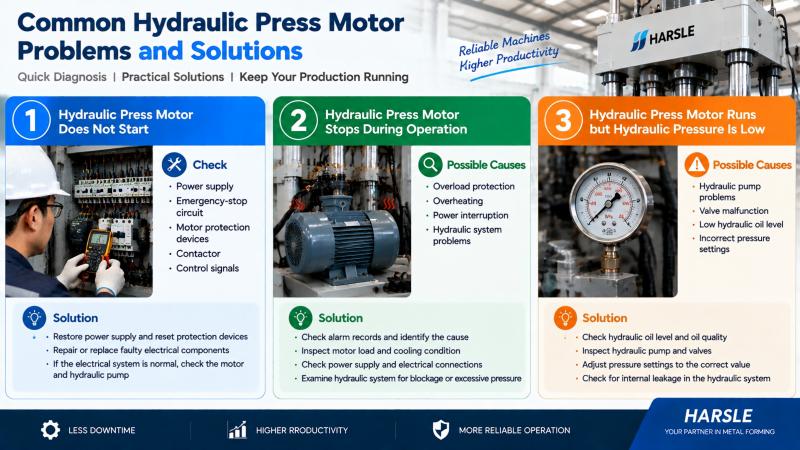
Hydraulic Press Motor Does Not Start
If the motor does not start, check the power supply, emergency-stop circuit, motor protection devices, contactor, and control signals.
If the electrical system is normal, further inspection of the motor and hydraulic pump may be required.
Hydraulic Press Motor Stops During Operation
Unexpected motor stops may be caused by overload protection, overheating, power interruption, or hydraulic system problems.
Review alarm records and check the operating conditions immediately before the shutdown.
Hydraulic Press Motor Runs but Hydraulic Pressure Is Low
If the motor operates but the hydraulic press cannot build enough pressure, the problem may be related to the hydraulic pump, valves, oil level, or pressure settings.
Inspect the hydraulic system rather than replacing the motor without confirming the actual cause.
Perguntas frequentes
What are the most common reasons why a hydraulic press motor is not working?
Common causes include power supply problems, overload protection activation, faulty contactors, loose wiring, motor damage, and hydraulic system overload.
Why does my hydraulic press motor trip the overload relay?
An overload relay may trip because of excessive mechanical load, pump problems, high hydraulic pressure, phase loss, or motor overheating.
How can I check if the hydraulic press motor receives power?
Check the electrical supply, circuit breakers, contactor status, and motor terminals. Electrical measurements should only be performed by qualified personnel using suitable equipment.
Conclusão
Diagnosing Hydraulic Press Motor Not Working problems requires a systematic inspection of electrical systems, motor components, and hydraulic conditions. By checking power supply, protection devices, wiring, contactors, and hydraulic performance step by step, operators can identify faults more efficiently and reduce unnecessary downtime.
At HARSLE, we provide professional hydraulic press solutions and technical support to help customers maintain reliable machine operation. For more troubleshooting guidance or detailed maintenance information, contact our engineering team or explore additional hydraulic press documentation.


