


Prensa hidráulica Abnormal Noise can indicate potential problems with the hydraulic system, mechanical components, or operating conditions of the machine. If unusual sounds appear during pressing, returning, or idle operation, identifying the cause quickly can help prevent equipment damage and production interruptions. In this guide, I will explain the common causes of abnormal noise, provide practical troubleshooting steps, and share maintenance methods to help keep your hydraulic press running smoothly and reliably.
Quais são as causas? Prensa hidráulica Abnormal Noise?
A hydraulic press operates through the cooperation of hydraulic components, mechanical structures, and electrical control systems. Abnormal sounds usually occur when one or more components experience wear, insufficient lubrication, unstable pressure, or improper operation.
Understanding the source of the noise is the first step toward effective troubleshooting.
Hydraulic Oil Problems Causing Abnormal Noise
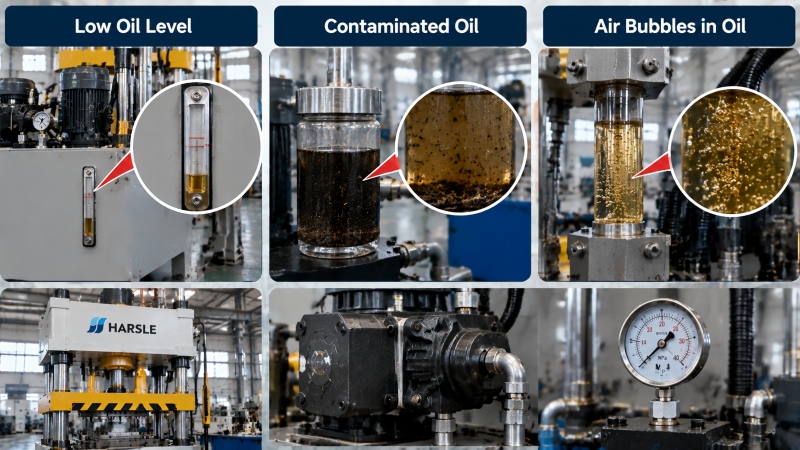
Hydraulic oil plays an important role in transferring pressure and lubricating internal components. When the oil level is too low, contaminated, or contains air bubbles, the hydraulic system may generate unusual sounds.
Air entering the hydraulic circuit can cause cavitation, which often appears as a buzzing, vibration, or knocking noise from the hydraulic pump. Dirty oil can also increase component wear and reduce system efficiency.
I recommend checking the hydraulic oil level, oil quality, and filter condition regularly. Replacing contaminated oil and maintaining proper oil levels can significantly reduce hydraulic press abnormal noise.
Hydraulic Pump Wear and Cavitation Issues
The hydraulic pump is one of the most common sources of abnormal noise. A worn pump, damaged internal parts, or insufficient oil supply may cause loud operating sounds.
Cavitation occurs when the pump cannot receive enough oil, creating air bubbles that collapse inside the system. This can damage the pump over time and reduce hydraulic performance.
When troubleshooting pump noise, I check the pump inlet condition, oil viscosity, suction filter, and connections to ensure the hydraulic system is receiving sufficient oil flow.
Loose Mechanical Components and Insufficient Lubrication
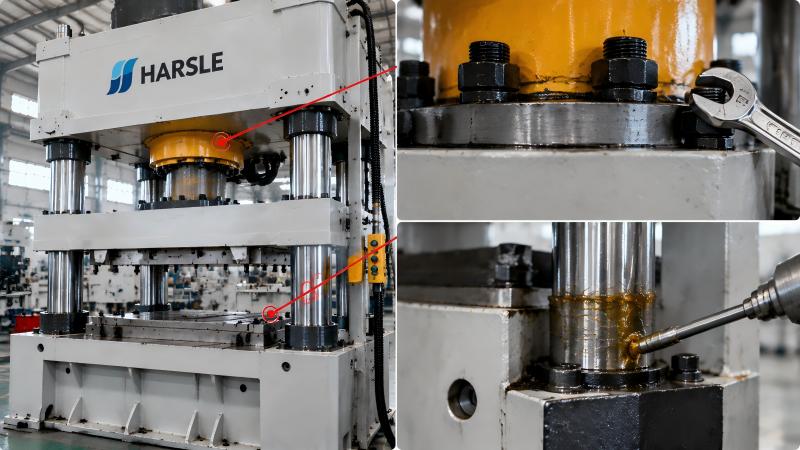
Mechanical parts such as guide rails, fasteners, bearings, and moving connections may produce abnormal noise when they become loose or poorly lubricated.
Continuous operation creates friction and vibration, which can gradually loosen bolts or increase wear between moving parts.
Regular lubrication and tightening inspections help maintain smooth machine movement and prevent unnecessary noise caused by mechanical wear.
How to Troubleshoot Hydraulic Press Abnormal Noise Step by Step
Step 1: Identify the Noise Location and Operating Condition
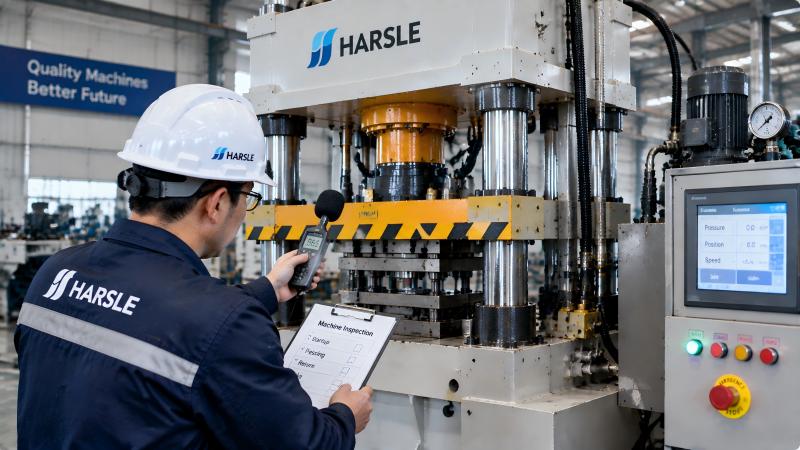
The first step in reducing hydraulic press abnormal noise is identifying where and when the sound appears.
I recommend observing whether the noise occurs during startup, pressing, return movement, or when the machine is idle. Different operating conditions can indicate different causes.
For example, pump-related noise usually appears during hydraulic operation, while mechanical vibration may become more noticeable during movement.
Step 2: Check Hydraulic Oil Level and System Condition
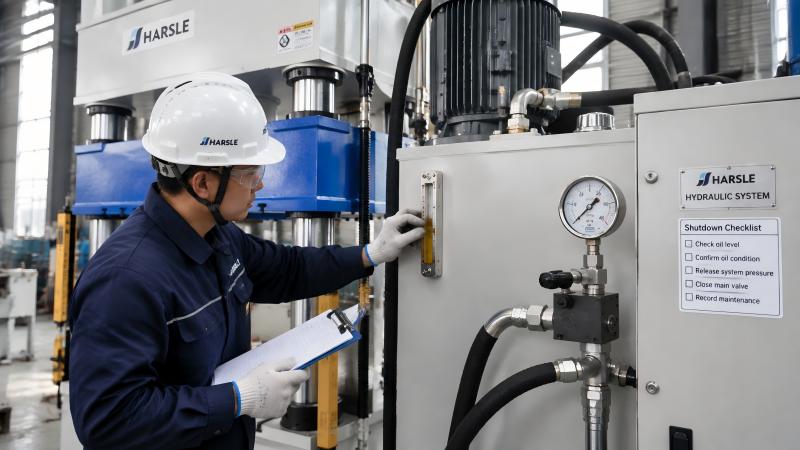
After identifying the noise source, inspect the hydraulic system. Check whether the oil level is within the recommended range and confirm that the oil is clean.
Inspect the hydraulic filter, oil tank, hoses, and connections for possible restrictions or leaks. A blocked filter or poor oil supply can increase pump noise and affect machine performance.
Maintaining proper hydraulic oil conditions is one of the most effective ways to prevent hydraulic system noise.
Step 3: Inspect Hydraulic Pump and Valve Components
If the noise continues after checking the oil condition, inspect the hydraulic pump and related valves.
Listen carefully to determine whether the pump produces abnormal vibration or a grinding sound. Check for signs of wear, leakage, or unstable pressure output.
Hydraulic valves should also be inspected because contamination or internal damage may cause irregular flow and create additional noise.
Step 4: Check Mechanical Parts and Lubrication Points
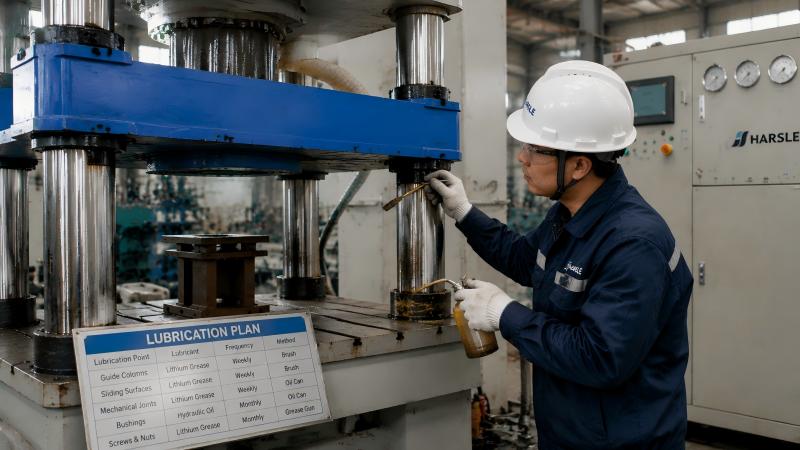
Mechanical inspection should include guide rails, connecting parts, bolts, bearings, and moving structures.
Loose components may create impact sounds during machine operation, while insufficient lubrication can cause friction and squeaking noises.
I recommend following the manufacturer’s lubrication schedule and replacing worn mechanical components when necessary.
How to Prevent Hydraulic Press Abnormal Noise?
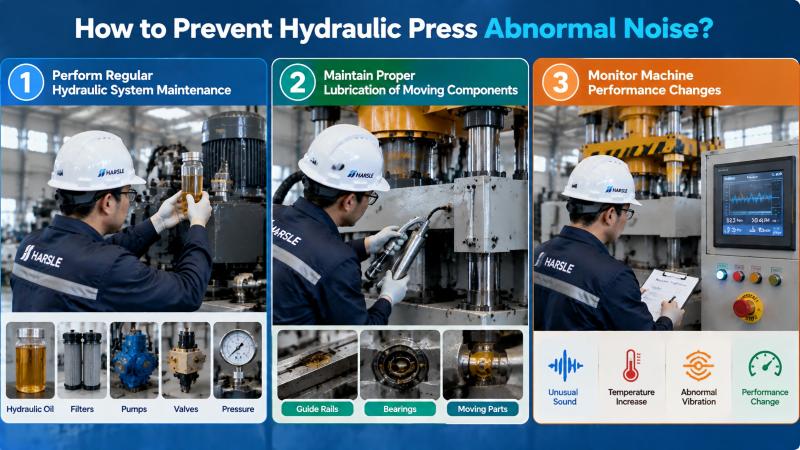
Perform Regular Hydraulic System Maintenance
Preventive hydraulic maintenance is essential for reducing unexpected noise problems. Regularly check hydraulic oil quality, filters, pumps, valves, and pressure conditions.
Keeping the hydraulic system clean helps prevent contamination-related failures and improves overall machine stability.
Maintain Proper Lubrication of Moving Components
Proper lubrication reduces friction between mechanical parts and allows smoother machine movement.
I suggest creating a lubrication schedule based on operating hours and working conditions. Pay special attention to high-frequency moving areas that experience continuous stress.
Monitor Machine Performance Changes
Small changes in machine sound can provide early warning of potential problems. Operators should pay attention to unusual vibration, temperature increases, slower movement, or changes in operating noise.
Recording these changes helps maintenance teams identify problems earlier and avoid major repairs.
Common Hydraulic Press Abnormal Noise Problems and Solutions
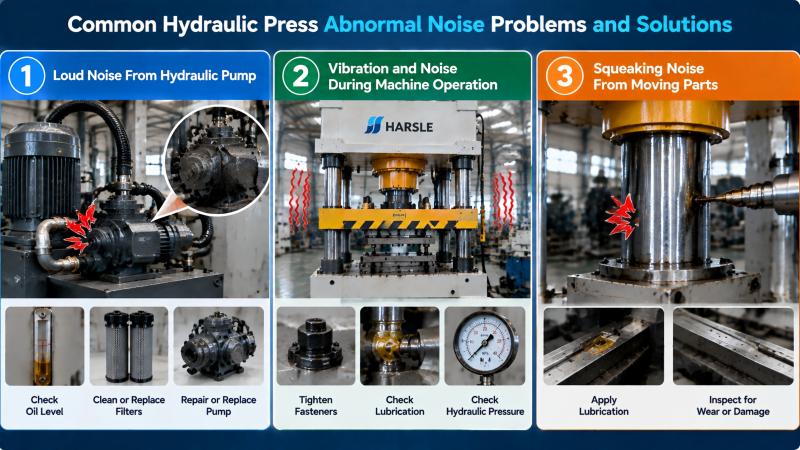
Loud Noise From Hydraulic Pump
A noisy hydraulic pump may be caused by cavitation, insufficient oil supply, contamination, or internal wear.
Check the oil level, suction line, filter condition, and pump components. Repair or replace damaged parts if necessary.
Vibration and Noise During Machine Operation
Excessive vibration may result from loose mechanical connections, worn bearings, or unstable hydraulic pressure.
Inspect fasteners, lubrication points, and hydraulic system pressure to determine the source of the vibration.
Squeaking Noise From Moving Parts
Squeaking sounds usually indicate insufficient lubrication or friction between mechanical components.
Apply suitable lubrication and inspect related parts for wear or damage.
Perguntas frequentes
What are the most common causes of hydraulic press abnormal noise?
Common causes include low hydraulic oil levels, contaminated oil, pump cavitation, worn hydraulic components, loose mechanical parts, and insufficient lubrication.
Can hydraulic oil problems cause abnormal noise?
Yes. Low oil levels, dirty oil, or air contamination can affect hydraulic pump operation and create abnormal sounds during machine operation.
How can I identify whether the noise comes from the hydraulic pump?
Observe when the noise occurs. If the sound appears mainly during hydraulic operation and changes with pressure conditions, the pump or hydraulic system may require inspection.
Conclusão
Reduzindo Hydraulic Press Abnormal Noise requires identifying the source of the problem and applying proper maintenance methods. Checking hydraulic oil conditions, inspecting pumps and valves, maintaining lubrication, and tightening mechanical components can help improve machine reliability.
At HARSLE, we provide professional hydraulic press solutions and technical support to help customers maintain stable production. For more troubleshooting guidance or machine maintenance information, contact our engineering team or explore additional hydraulic press documentation.


