


Prensa hidráulica Cooling Problems can cause hydraulic oil temperatures to rise, reduce system efficiency, and shorten the service life of pumps, valves, seals, and other components. When a hydraulic press cannot dissipate heat effectively, operators may notice overheating, unstable pressure, slower movement, or frequent temperature alarms. In this guide, I will explain the common causes of poor cooling, show you how to troubleshoot the cooling system step by step, and share practical maintenance methods that can help keep your hydraulic press operating at a stable temperature.
Quais são as causas? Prensa hidráulica Cooling Problems?
A hydraulic press continuously generates heat as hydraulic oil flows through pumps, valves, cylinders, and pipelines. The cooling system removes this heat and keeps the oil within the operating range specified for the machine. When heat generation exceeds cooling capacity, hydraulic oil temperature begins to rise.
Blocked or Dirty Oil Cooler
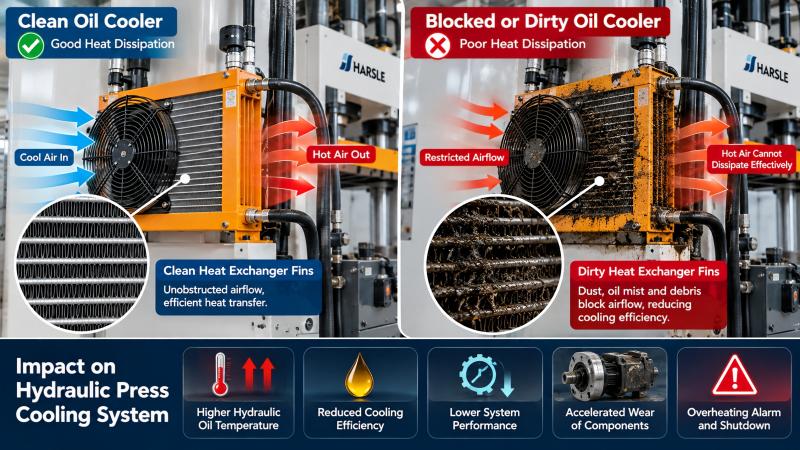
Dust, oil mist, and debris can accumulate on an air-cooled heat exchanger and restrict airflow. In a water-cooled system, scale or contamination can reduce heat transfer inside the cooler.
When inspecting a hydraulic press oil cooler, I check the heat exchanger surface and passages for contamination before replacing other components.
Cooling Fan Failure or Insufficient Airflow
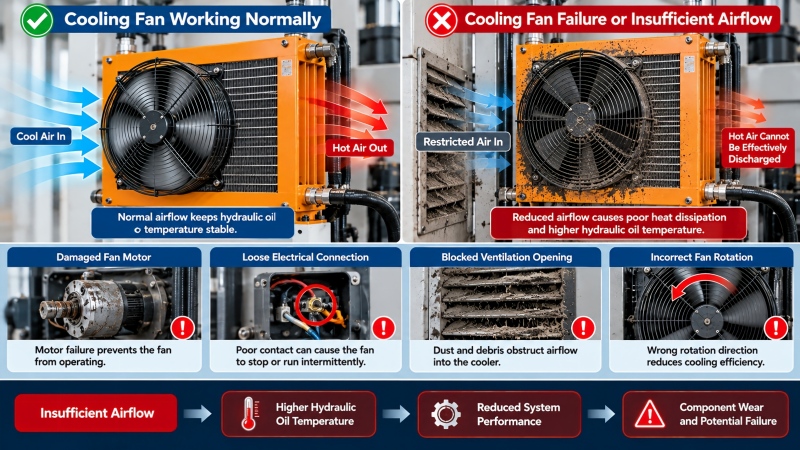
A damaged fan motor, loose electrical connection, blocked ventilation opening, or incorrect fan rotation can significantly reduce cooling performance.
If the fan is operating but the oil temperature remains high, I also check whether surrounding equipment or debris is restricting airflow around the cooler.
High Hydraulic Oil Temperature From System Problems
Not every overheating problem originates from the cooler. Incorrect pressure settings, internal leakage, clogged filters, worn pumps, or continuously operating relief valves can generate excessive heat.
In this situation, repairing the cooling unit alone will not solve the underlying problem.
How to Troubleshoot a Hydraulic Press Cooling System?
Step 1: Check Hydraulic Oil Temperature
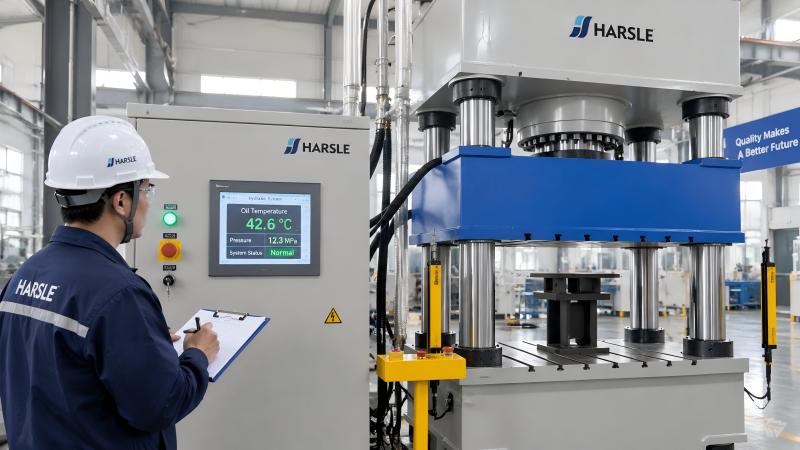
First, I check the actual hydraulic oil temperature and compare it with the normal range specified for the machine and hydraulic oil.
Observe when the temperature begins to rise. Overheating only during continuous production may indicate insufficient cooling capacity or excessive machine load, while rapid temperature increases can indicate a hydraulic fault.
Step 2: Inspect the Oil Cooler
Check the cooler for dust, oil contamination, blocked fins, damaged components, or restricted passages. For an air-cooled unit, make sure air can pass freely through the heat exchanger.
For a water-cooled hydraulic press, inspect cooling-water flow and check whether scale or contamination is reducing heat transfer.
Step 3: Check the Cooling Fan and Electrical System
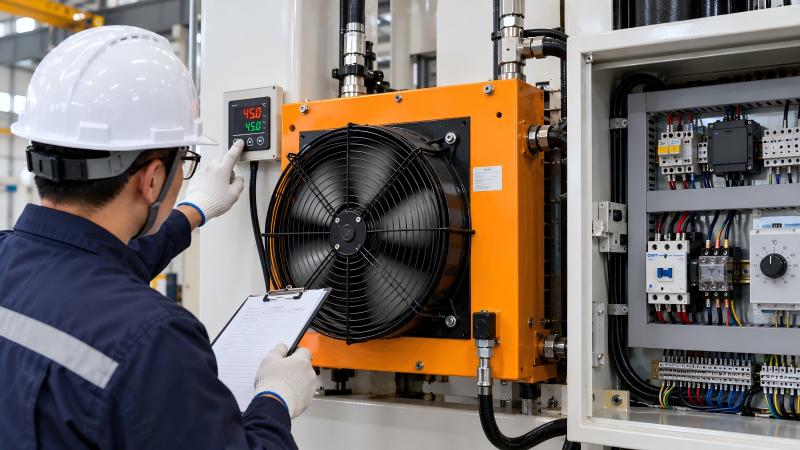
Verify that the cooling fan starts at the correct temperature and rotates normally. Inspect the fan motor, wiring, contactors, relays, and temperature control components.
If the controller sends the correct command but the fan does not operate, I inspect the electrical circuit and fan motor further.
Step 4: Inspect Hydraulic Oil Flow and Filters
Restricted oil circulation can contribute to Hydraulic Press Cooling Problems. Check the oil level, filter condition, oil quality, and hydraulic lines.
A clogged filter creates additional resistance and can increase heat generation. Replace blocked filters and contaminated hydraulic oil when necessary.
Step 5: Check for Excessive Hydraulic Heat Generation
If the cooling system operates correctly but the machine still overheats, inspect the hydraulic system itself.
Check pump condition, relief valve operation, system pressure, internal leakage, and machine loading. Excessive pressure loss converts hydraulic energy into unwanted heat and can overwhelm a normally functioning cooler.
How to Prevent Hydraulic Press Cooling Problems?
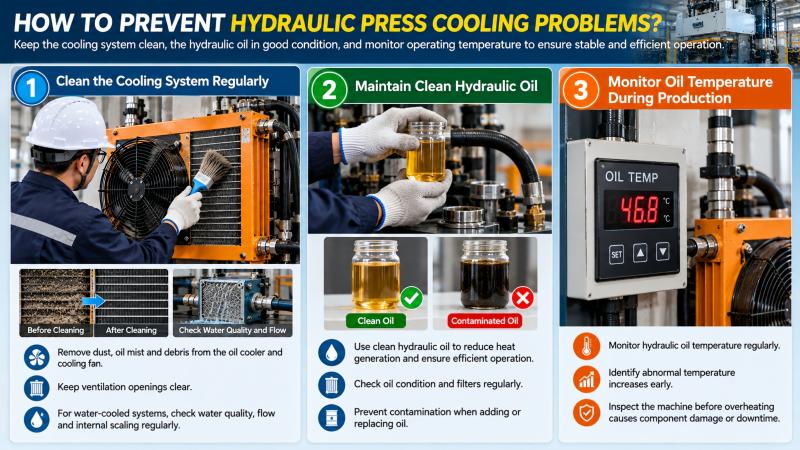
Clean the Cooling System Regularly
I recommend including the oil cooler and cooling fan in routine maintenance. Remove accumulated dust and debris and keep ventilation openings clear.
For water-cooled systems, periodically inspect water quality, flow, and internal scaling.
Mantenha o óleo hidráulico limpo.
Clean hydraulic oil helps pumps and valves operate efficiently and reduces unnecessary heat generation. Check oil condition and filters regularly, and prevent contamination when adding or replacing oil.
Monitor Oil Temperature During Production
Regular temperature monitoring makes it easier to identify gradual changes in cooling performance. If normal operating temperature begins increasing over time, inspect the machine before overheating causes component damage or unexpected downtime.
Common Hydraulic Press Cooling Problems and Solutions
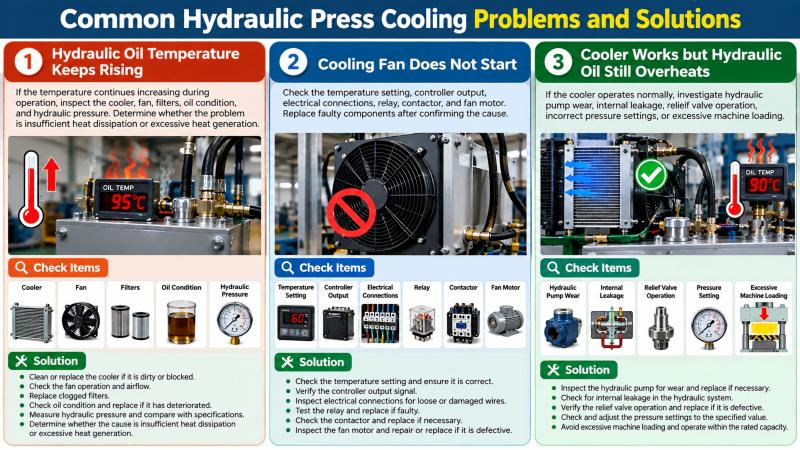
Hydraulic Oil Temperature Keeps Rising
If the temperature continues increasing during operation, inspect the cooler, fan, filters, oil condition, and hydraulic pressure. Determine whether the problem is insufficient heat dissipation or excessive heat generation.
Cooling Fan Does Not Start
Check the temperature setting, controller output, electrical connections, relay, contactor, and fan motor. Replace faulty components after confirming the cause.
Cooler Works but Hydraulic Oil Still Overheats
If the cooler operates normally, investigate hydraulic pump wear, internal leakage, relief valve operation, incorrect pressure settings, or excessive machine loading.
Perguntas frequentes
What are common signs of Hydraulic Press Cooling Problems?
Common signs include high hydraulic oil temperature, overheating alarms, slower machine movement, unstable operation, and unusually high temperatures around hydraulic components.
Can a clogged hydraulic filter cause overheating?
Yes. A restricted filter can reduce oil flow and increase hydraulic resistance, contributing to additional heat generation.
Why does my hydraulic press overheat during continuous operation?
Possible causes include insufficient cooling capacity, a dirty cooler, fan problems, excessive hydraulic pressure, internal leakage, or continuous heavy loading.
Conclusão
Hydraulic Press Cooling Problems should be diagnosed by checking both heat dissipation and heat generation. Inspecting oil temperature, coolers, fans, filters, hydraulic pressure, and oil condition can help locate the actual cause and prevent repeated overheating.
Regular cleaning, oil maintenance, and temperature monitoring can improve cooling reliability and protect critical hydraulic components. If the problem continues after these checks, contact the HARSLE technical team for further hydraulic press troubleshooting and support.


