


Prensa hidráulica Ram Movement Problems can affect machine accuracy, production efficiency, and operator safety. When the ram moves slowly, stops unexpectedly, drops without command, or cannot return to the correct position, the problem may come from hydraulic pressure issues, valve failures, sensor errors, or mechanical wear. In this guide, I will explain the common causes of abnormal ram movement and provide practical troubleshooting steps to help restore stable hydraulic press operation and maintain reliable performance.
Quais são as causas? Prensa hidráulica Ram Movement Problems?
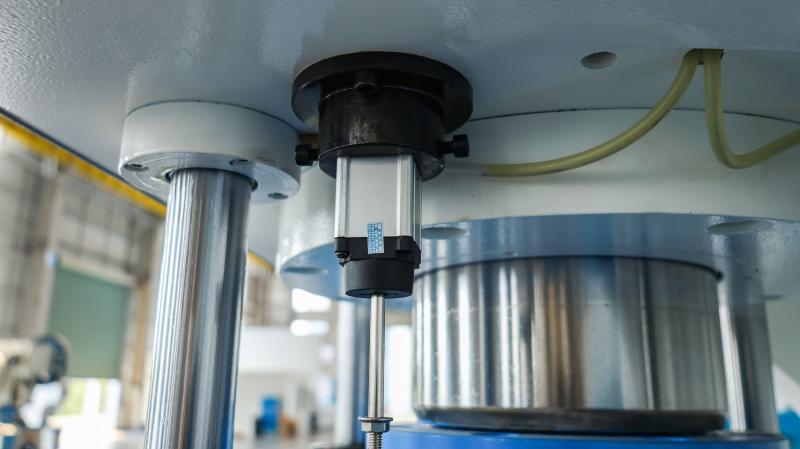
The hydraulic press ram relies on a combination of hydraulic pressure, control signals, cylinders, valves, and mechanical components to achieve accurate movement. Any abnormal condition in these systems can affect ram positioning, speed, and stability.
Understanding the root cause is the first step in solving hydraulic press ram movement problems. A detailed inspection can help operators avoid unnecessary component replacement and reduce machine downtime.
Insufficient Hydraulic Pressure Affecting Ram Movement
Hydraulic pressure directly controls the force and movement speed of the ram. Low pressure caused by insufficient hydraulic oil, pump wear, clogged filters, or internal leakage can result in slow or unstable ram movement.
Common symptoms include slow downward movement, difficulty reaching the required position, or the ram stopping during operation. I recommend checking hydraulic oil levels, pressure readings, pump performance, and filter conditions before further troubleshooting.
Hydraulic Valve Problems Causing Irregular Ram Operation
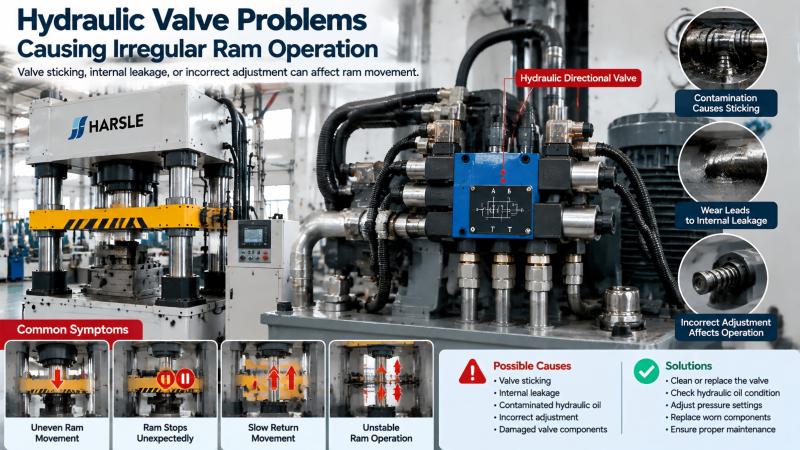
Hydraulic valves control oil flow direction and pressure regulation. If a directional valve, proportional valve, or relief valve becomes contaminated or damaged, the ram may move unevenly or fail to respond correctly.
Valve sticking, internal leakage, or incorrect adjustment can cause problems such as sudden stops, slow return movement, or uncontrolled ram movement. Inspecting valve operation and cleaning or replacing damaged components can help restore normal performance.
Cylinder Seal Wear and Internal Leakage
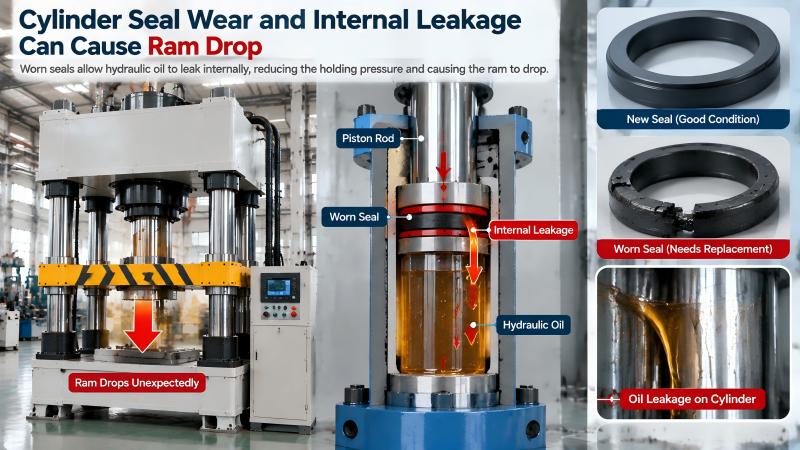
Hydraulic cylinders are responsible for converting hydraulic pressure into ram movement. Over time, worn piston seals or damaged cylinder components may allow internal oil leakage.
This can cause the ram to drift downward, lose holding force, or move inconsistently. Checking cylinder seals and inspecting the cylinder rod condition are important steps when diagnosing ram movement issues.
Sensor and Control System Failures
Modern hydraulic presses use sensors and controllers to monitor ram position and movement. Faulty position sensors, loose wiring, or incorrect control parameters can cause inaccurate ram positioning.
If the control system receives incorrect feedback, the machine may stop unexpectedly or fail to complete the programmed movement sequence. Checking sensor signals, connections, and control parameters can help identify electronic causes.
How to Troubleshoot Hydraulic Press Ram Movement Problems Step by Step
Step 1: Check Ram Movement Symptoms and Operating Conditions
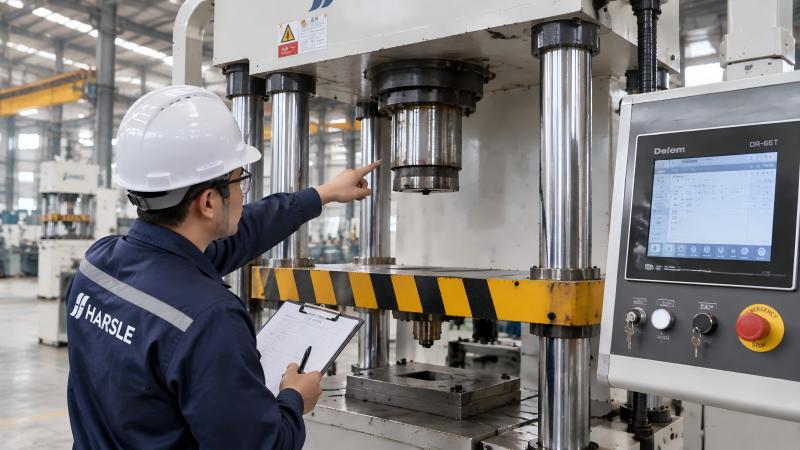
The first step is identifying the exact movement problem. Observe whether the ram moves too slowly, stops during operation, drops after reaching position, or fails to return correctly.
Record when the problem occurs, such as during startup, pressing, holding pressure, or return movement. Checking operating conditions helps determine whether the issue is related to hydraulic pressure, control signals, or mechanical components.
Step 2: Inspect Hydraulic Oil Level and System Pressure
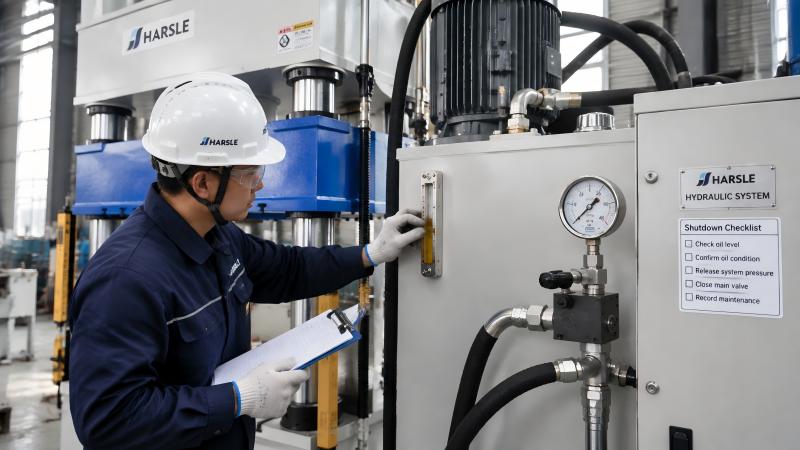
Hydraulic oil condition has a direct impact on ram performance. Check the oil level, oil cleanliness, and hydraulic pressure readings.
Contaminated oil can damage valves and seals, while low oil levels may cause insufficient pressure. If pressure is lower than the recommended value, inspect the hydraulic pump, relief valve, and filters to locate the cause.
Step 3: Check Hydraulic Valves and Flow Control Components
If hydraulic pressure is normal, inspect the valves responsible for ram movement. Check whether directional valves operate correctly and whether proportional valves respond smoothly to control signals.
Clean contaminated valves and replace damaged components when necessary. Proper valve adjustment ensures stable oil flow and accurate ram movement.
Step 4: Inspect Cylinder Condition and Mechanical Components
If the ram still moves abnormally, inspect the hydraulic cylinder and related mechanical parts.
Check for oil leakage around the cylinder, damaged seals, unusual cylinder rod wear, or mechanical resistance. Excessive friction or component deformation can affect ram movement accuracy.
Step 5: Verify Position Sensors and Control Parameters
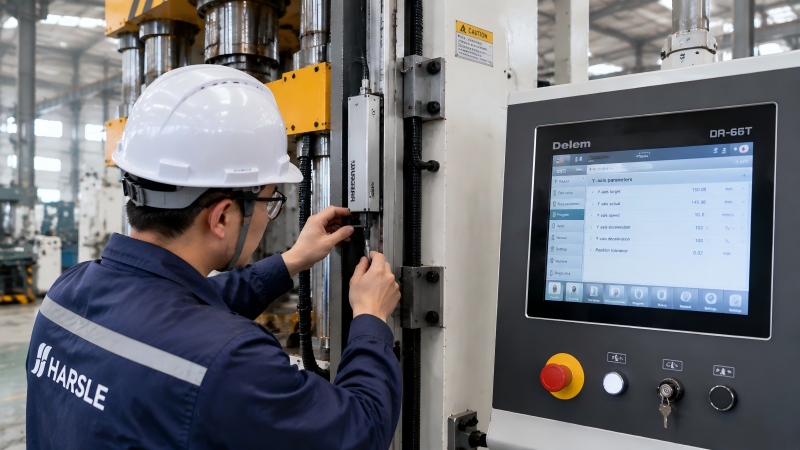
For CNC hydraulic presses, position feedback is essential for accurate ram control. Check whether position sensors provide correct signals and whether the controller receives accurate feedback.
Inspect sensor mounting, wiring connections, and machine parameters. Recalibrating the position system may be required if the feedback value does not match the actual ram position.
How to Prevent Hydraulic Press Ram Movement Problems?
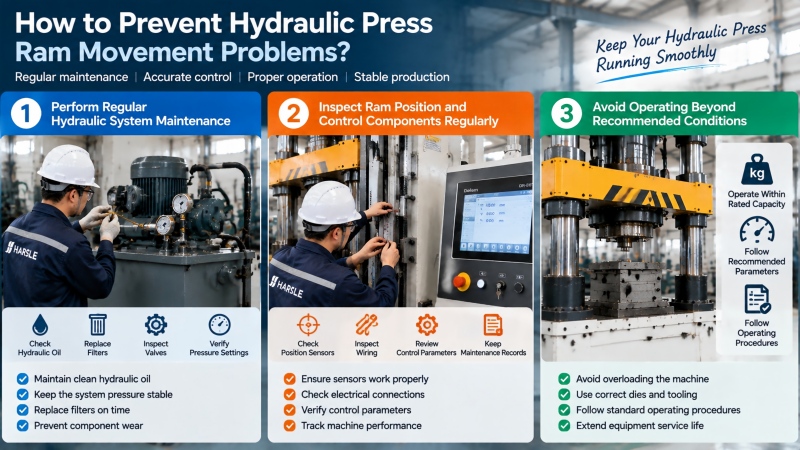
Perform Regular Hydraulic System Maintenance
Regular hydraulic maintenance helps prevent many ram movement issues. I recommend checking hydraulic oil quality, filters, valves, and pressure settings according to machine working conditions.
Clean hydraulic oil and stable pressure reduce wear on hydraulic components and improve ram movement consistency.
Inspect Ram Position and Control Components Regularly
Sensors, wiring, and control components should be inspected regularly to maintain accurate movement control.
Recording machine performance and maintenance history makes it easier to identify early signs of sensor failure or control problems.
Avoid Operating the Hydraulic Press Beyond Recommended Conditions
Overloading the hydraulic press can increase stress on cylinders, valves, and hydraulic components. Operating within the recommended capacity helps prevent excessive wear and unstable ram movement.
Following proper operating procedures improves machine reliability and extends component service life.
Common Hydraulic Press Ram Movement Problems and Solutions
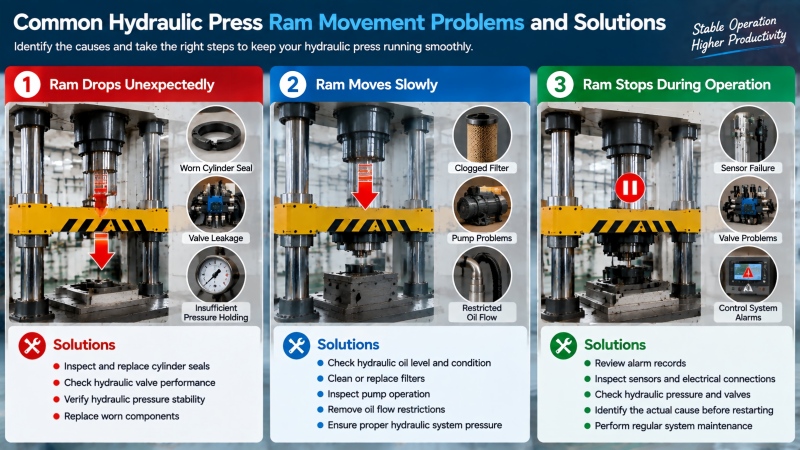
Hydraulic Press Ram Drops Unexpectedly
Unexpected ram drop is often related to cylinder seal wear, hydraulic valve leakage, or insufficient pressure holding.
Inspect cylinder seals, check valve performance, and verify hydraulic pressure stability. Replacing worn components can restore safe ram holding performance.
Hydraulic Press Ram Moves Slowly
Slow ram movement may be caused by low hydraulic pressure, clogged filters, pump problems, or restricted oil flow.
Check hydraulic system conditions, clean or replace filters, and verify pump operation to improve movement speed.
Hydraulic Press Ram Stops During Operation
A ram stopping during operation may result from sensor failures, hydraulic pressure loss, valve problems, or control system alarms.
Review alarm records, inspect related components, and identify the actual cause before restarting production.
Perguntas frequentes
Why does my hydraulic press ram move slowly?
Slow ram movement is commonly caused by insufficient hydraulic pressure, clogged filters, pump wear, valve problems, or contaminated hydraulic oil. Checking the hydraulic system condition can help identify the cause.
Why does my hydraulic press ram drop after stopping?
A ram that drops unexpectedly may have problems with cylinder seals, hydraulic valves, or pressure holding performance. Inspecting the hydraulic circuit can help locate the leakage source.
How can I improve hydraulic press ram movement accuracy?
Regular hydraulic maintenance, proper sensor calibration, and stable control parameters help maintain accurate ram positioning and movement.
Conclusão
Consertando Hydraulic Press Ram Movement Problems requires a systematic inspection of hydraulic pressure, valves, cylinders, sensors, and control systems. By identifying the actual cause and applying proper maintenance procedures, operators can reduce downtime and improve machine reliability.
At HARSLE, we provide professional hydraulic press solutions and technical support to help customers maintain stable production. For more troubleshooting information or detailed maintenance guidance, contact our engineering team or explore additional hydraulic press documentation.


