


Learn four-roll plate rolling machine operation, including startup, manual rolling, automatic programming, roller calibration, cone rolling, and shutdown.
Introduction
Proper four-roll plate rolling machine operation helps operators achieve consistent rolling results while maintaining safe and reliable machine performance. From startup preparation and manual rolling to automatic programming, roller position calibration, and cone rolling, each operating stage requires the correct sequence and suitable machine settings.
This guide explains the main procedures demonstrated in the HARSLE four-roll plate rolling machine operation tutorial. It also highlights the purpose of important adjustments and the checks operators should perform before continuing to the next stage. Because control interfaces, roller configurations, and parameter values may differ between machines, the video should be used as a practical reference rather than a universal operating procedure.
What Is Four-Roll Plate Rolling Machine Operation?
A four-roll plate rolling machine uses an upper roller, a lower roller, and two side rollers to clamp and form metal plate into cylindrical or conical shapes. The lower roller provides clamping support, while the side rollers are adjusted to control the bending process.
The machine shown in this tutorial provides Manual Mode, Automatic Mode, and Cone Rolling Mode. Manual operation allows the operator to control roller movements directly, while automatic operation uses programmed position and rolling values to repeat a process. Cone Rolling Mode provides the adjustments required for conical workpieces.
Understanding these functions is the foundation of efficient four-roll plate rolling machine operation.
Before You Start
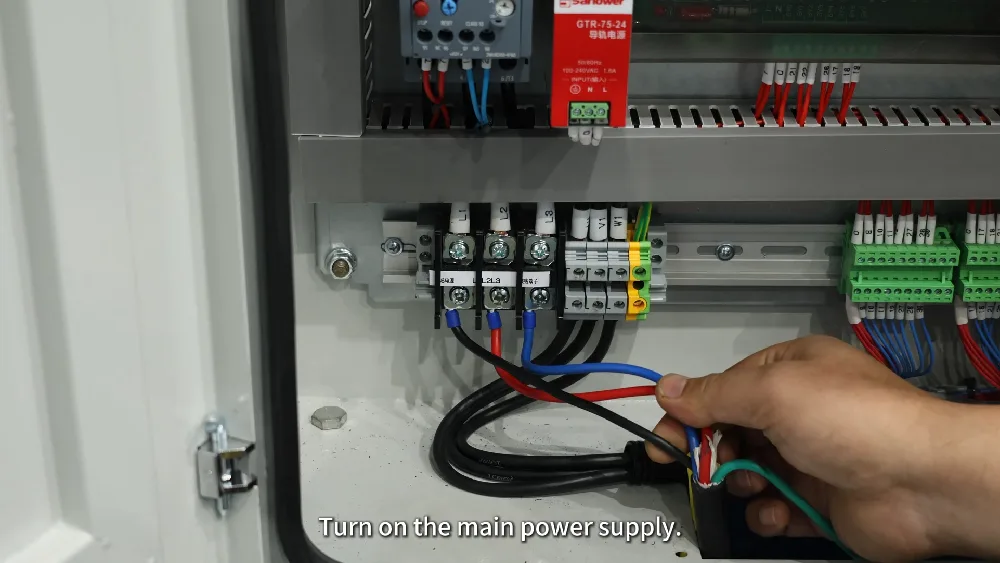
Before operating the machine, confirm that the electrical supply, hydraulic system, and working area are ready. Electrical connections should be checked by qualified personnel according to the machine’s electrical specifications.
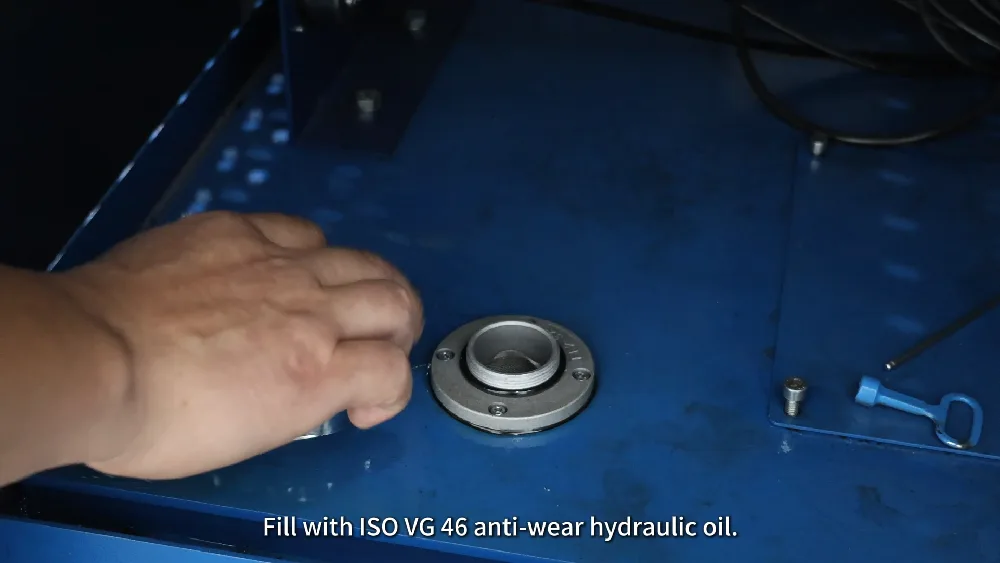
Open the hydraulic oil tank cap and add ISO VG 46 anti-wear hydraulic oil as demonstrated in the video. The oil grade and filling quantity should always be confirmed against the specific machine requirements.
After preparation, turn on the main power supply, start the control system, and then start the hydraulic pump. Check that the machine is operating normally before selecting an operating mode.
Four-Roll Plate Rolling Machine Operation Workflow
Stage 1: Startup Preparation and Mode Selection
The selector switch on the demonstrated machine provides three operating positions: left for Automatic Mode, middle for Manual Mode, and right for Cone Rolling Mode.
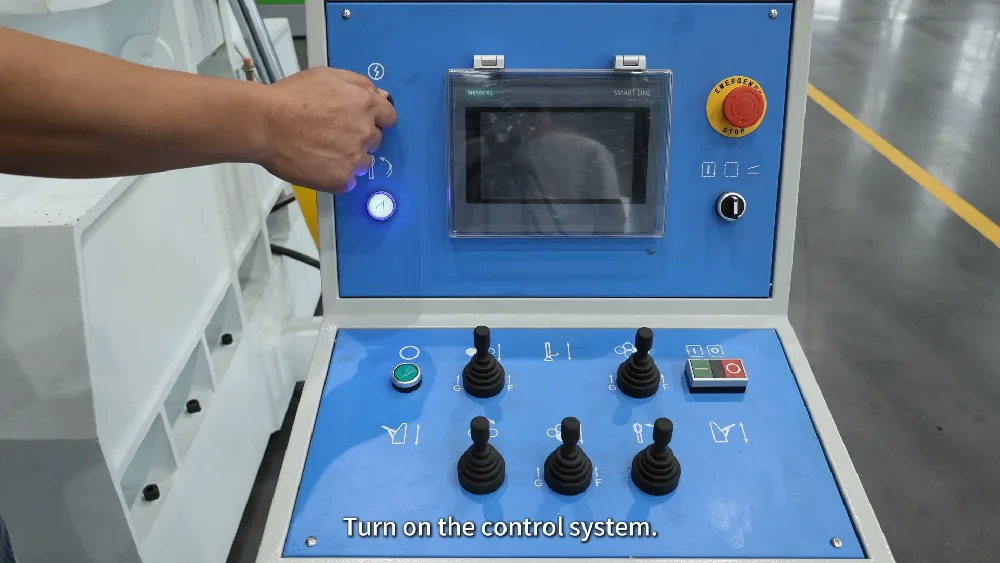
In Manual Mode, the operator can control the lower roller, left side roller, right side roller, and upper roller rotation through the corresponding buttons. The Digital Display Center is used to enter the plate thickness and observe position values during adjustment.
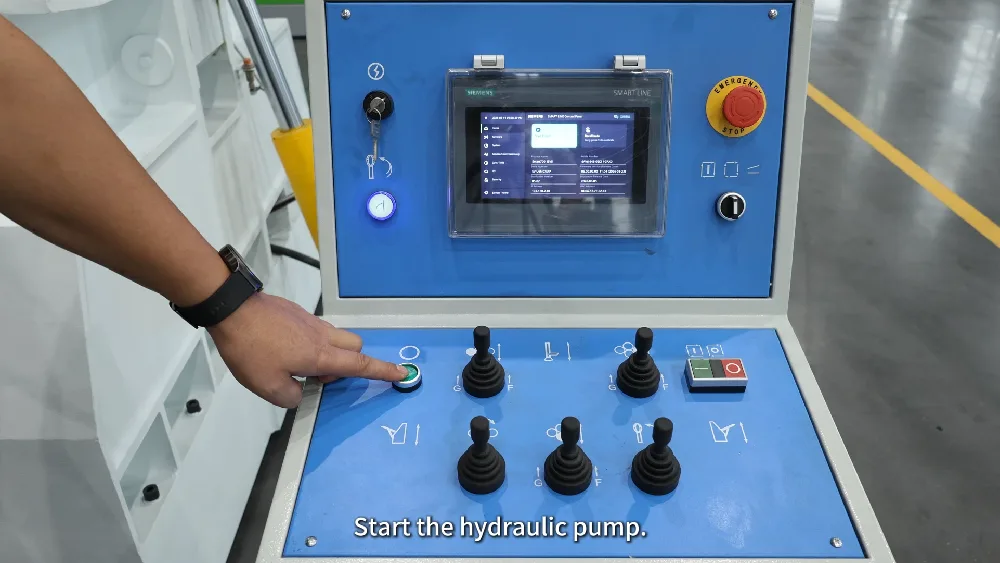
Before rolling, enter the correct plate thickness and confirm that the rollers are in suitable starting positions. The video also demonstrates that the lower roller must be lowered to its lowest position before the unloading device can be opened. This interlock-related sequence should be followed according to the machine’s operating instructions.
Stage 2: Manual Rolling and Unloading
Begin by inserting the plate and raising the lower roller until the plate is properly clamped against the upper roller. Adjust the roller positions carefully to obtain suitable clamping without applying unnecessary pressure.
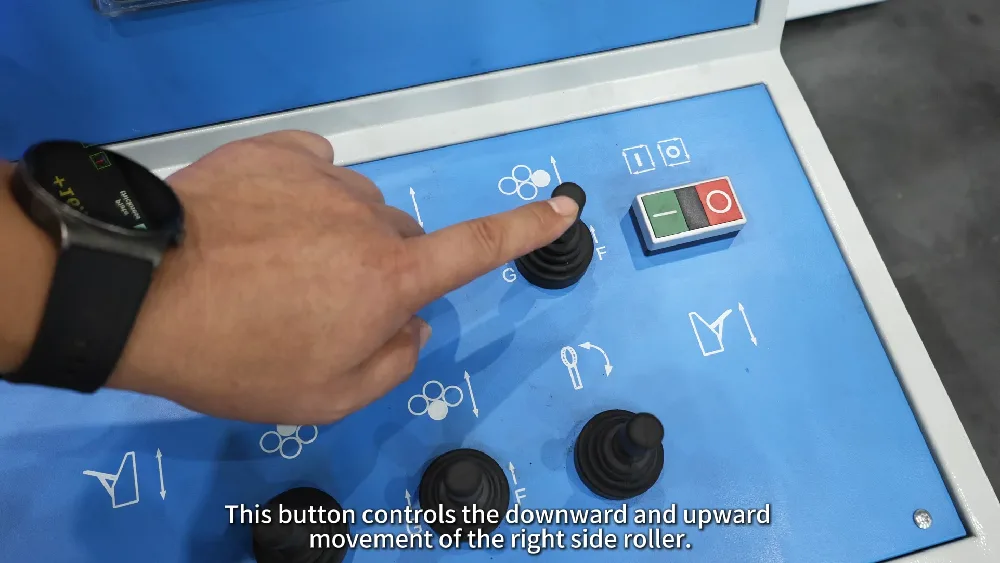
The demonstrated rolling sequence uses the side rollers and upper roller rotation to form the plate. The operator first adjusts the right side roller, rotates the upper roller, and then raises the left side roller when the plate reaches the corresponding position. After observing the position value, the upper roller is rotated in the required direction, and the side roller positions are adjusted for the next rolling movement.
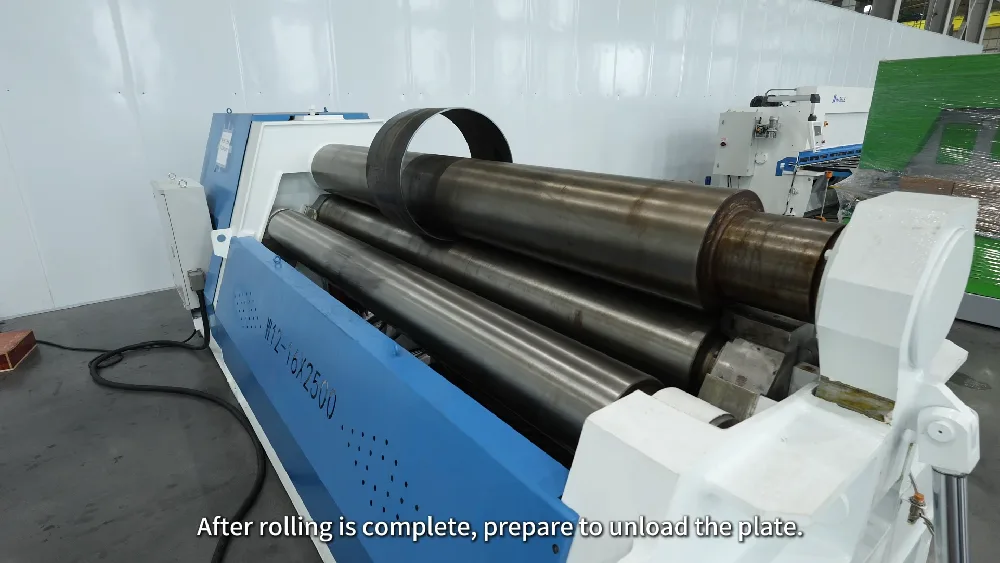
Continue the process until the required cylindrical shape is achieved. Roller movements should be gradual, and the operator should monitor the displayed position values throughout the process.
After rolling is complete, lower the right side roller and then lower the lower roller to its lowest position. Open the unloading device and remove the finished workpiece using the appropriate handling method.
Stage 3: Automatic Mode Programming
Automatic Mode allows the operator to use previously obtained rolling data to create a repeatable process.
Enter the menu and select Round Rolling Process. Set the left and right side roller heights using the position values obtained during the previous manual rolling operation. Then enter the plate length, the right side roller rolling position, and the reverse rolling length.
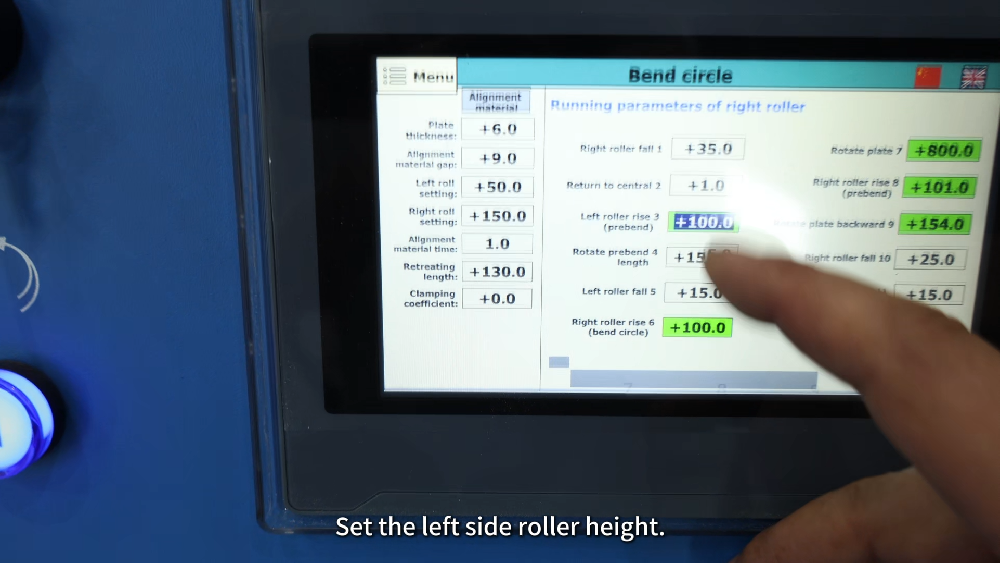
In the video, the reverse rolling length is set to the plate length minus 150 mm. This is a demonstrated setting for the specific process, not a universal formula for every machine or workpiece.
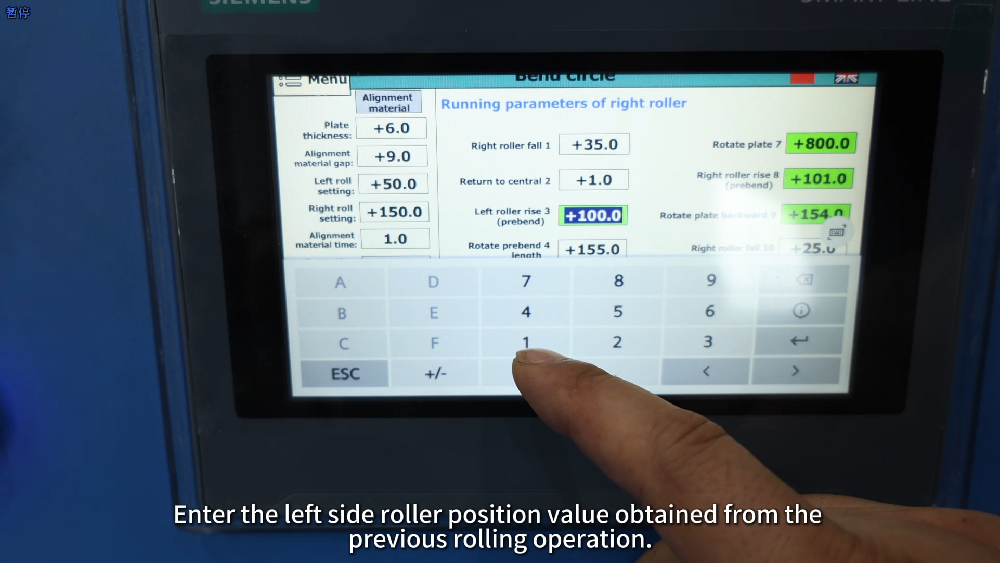
After confirming the programmed values, select Automatic Mode and start the automatic process. Insert the plate and allow the machine to complete the programmed rolling cycle. Once rolling is finished, remove the workpiece according to the unloading procedure.
Using verified manual rolling data as a starting point can make repeated four-roll plate rolling machine operation more efficient and reduce unnecessary setup adjustments.
Stage 4: Roller Position Calibration
If the diameters at both ends of the rolled workpiece are inconsistent, the video demonstrates a roller position calibration procedure.
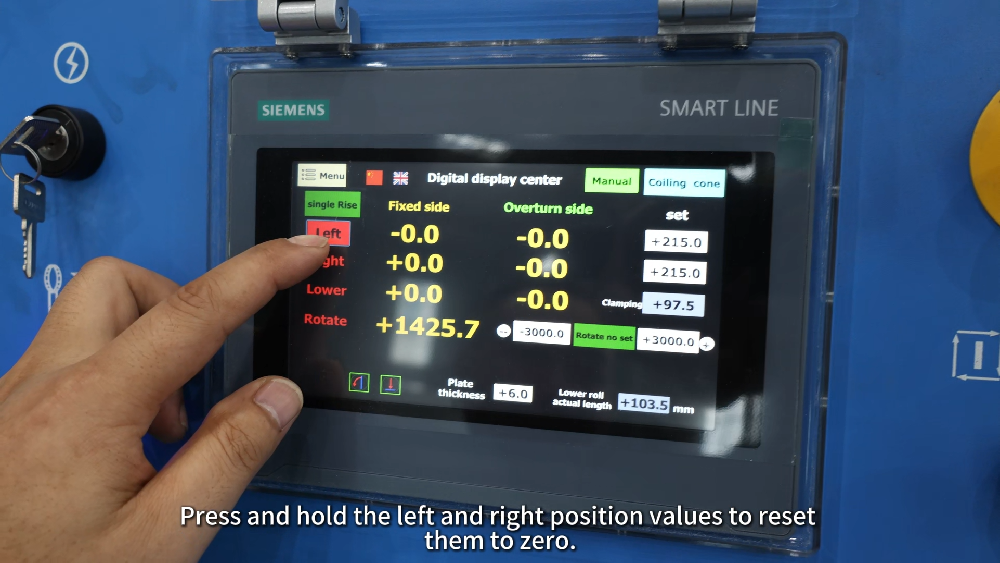
First, lower the rollers to their lowest positions and reset the relevant position values to zero. The demonstrated procedure then uses a negative plate thickness value and raises the lower roller to the clamping position. The operator adjusts the roller until both sides of the plate are evenly clamped.
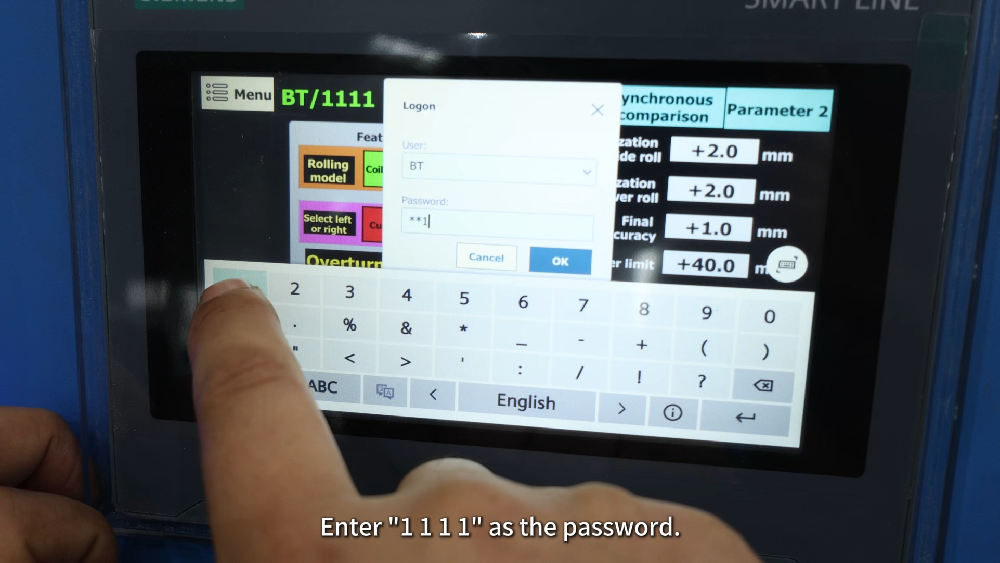
Afterward, the video enters System Parameters → Parameter 2 and selects Lower Roller Compensation. The left and right side rollers are calibrated using a similar principle: clamp the plate evenly, adjust the roller position, and apply the corresponding compensation.
Important: The negative thickness setting, zero-reset procedure, and compensation menu are specific to the demonstrated control system. Do not copy these values or change system parameters on another machine without confirmation from HARSLE technical support. Incorrect calibration may affect roller positioning and rolling accuracy.
Stage 5: Cone Rolling Mode
Cone Rolling Mode is used when the workpiece requires a conical rather than cylindrical shape.
The video demonstrates entering the plate thickness, selecting Cone Rolling Mode, and adjusting the left and right side rollers into a tilted position. The plate is then clamped between the upper and lower rollers before the cone rolling process begins.
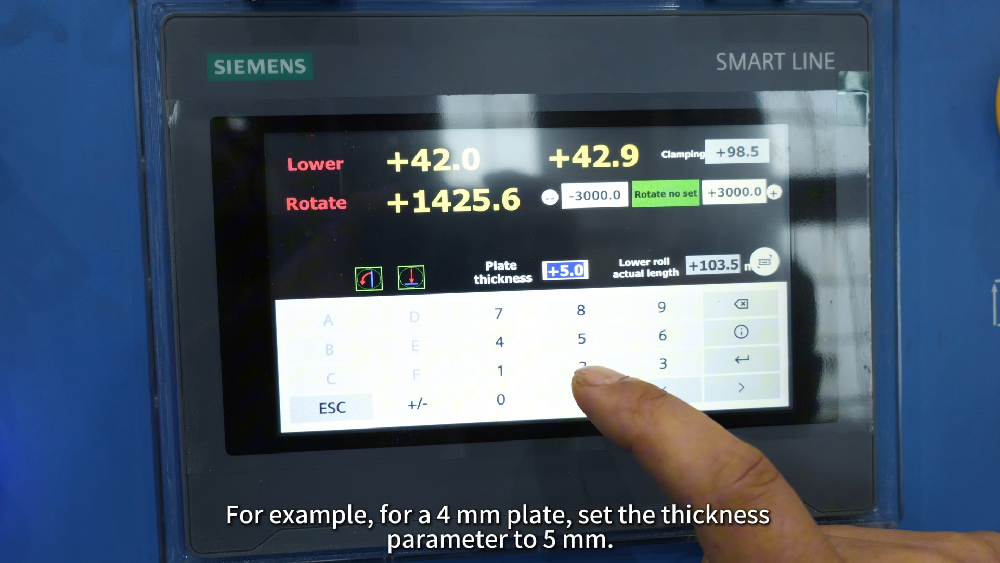
For the demonstrated example, a 4 mm plate is entered as 5 mm, and the maximum tilt value shown is 30. These are video-specific reference settings and should not be treated as general recommendations. The correct thickness setting, tilt limit, and rolling procedure must be confirmed for the actual machine and workpiece.
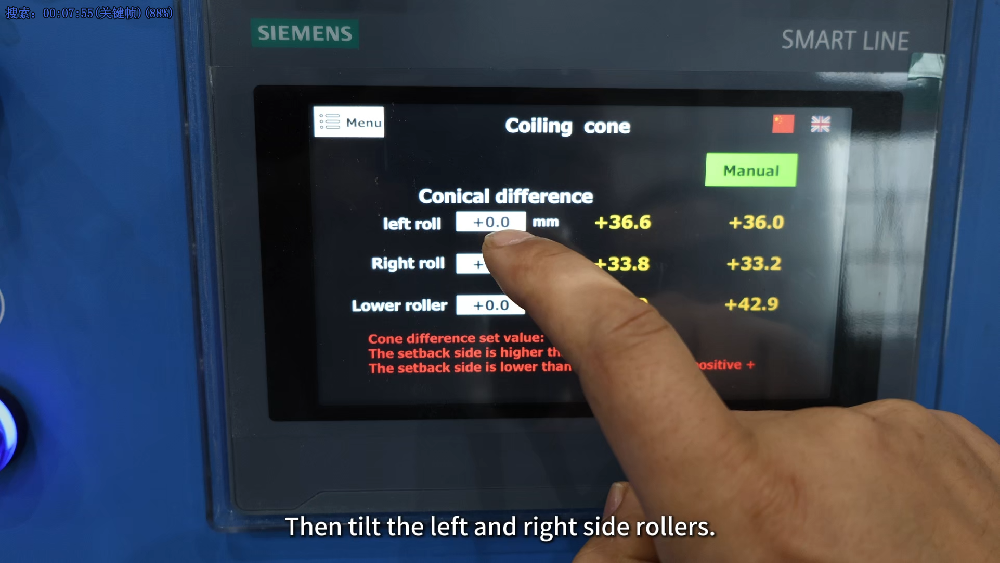
After cone rolling is complete, follow the specified unloading sequence and remove the finished part.
Stage 6: Shutdown
After completing the operation, shut down the machine in the demonstrated sequence.
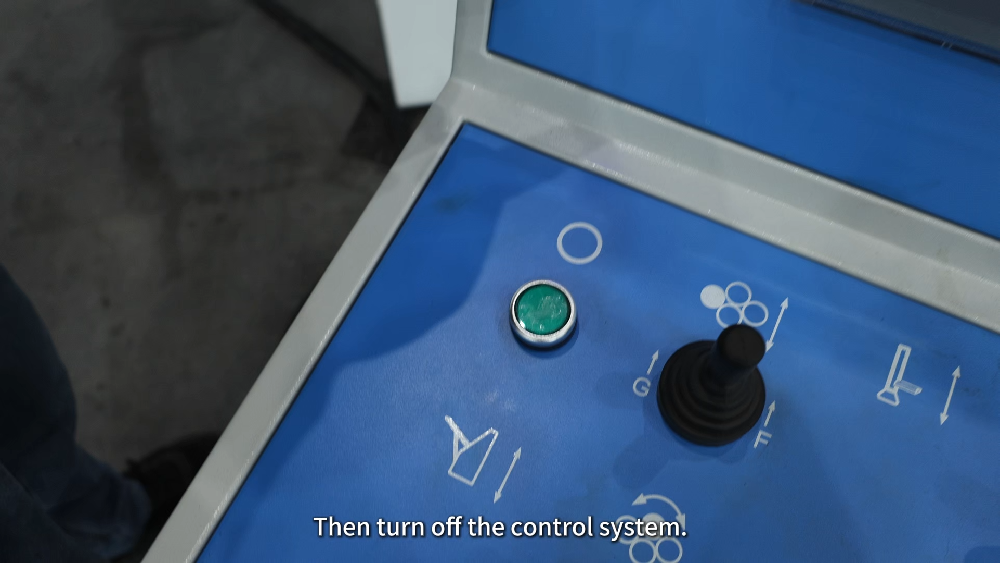
First, turn off the hydraulic pump. Then turn off the control system. If the machine will remain unused or requires maintenance, follow the equipment manual for any additional power-isolation requirements.
Trial Verification and Rolling Quality
Before batch production, perform a trial rolling operation and inspect the finished workpiece. Check the diameter, roundness, and consistency between both ends. If the result is not satisfactory, review the roller position values and make gradual adjustments.
For automatic production, verify the programmed values with a sample workpiece before repeating the cycle. This helps ensure that the stored program matches the actual material and rolling requirements.
Important Notes
The procedures in this guide are based on the HARSLE machine shown in the accompanying video. Different four-roll plate rolling machines may use different control systems, roller movement directions, parameter names, and safety interlocks.
In particular, roller calibration, negative thickness settings, cone rolling parameters, and automatic programming values should only be applied after confirming the requirements of the actual machine. If any operation is unclear, consult the machine manual or contact HARSLE technical support before continuing.
Tips for More Consistent Rolling Results
Consistent rolling quality depends on both correct machine settings and careful observation during operation.
- Confirm the material thickness and workpiece dimensions before rolling.
- Record successful roller position values for frequently processed workpieces.
- Adjust roller positions gradually rather than making large changes at once.
- Inspect the first finished workpiece before starting batch production.
- Check both ends of the rolled cylinder when evaluating diameter consistency.
- Keep the rollers and working area clean, and inspect the hydraulic system regularly.
- Use the machine-specific unloading procedure to avoid interference or damage.
These practices can reduce repeated adjustments and improve the consistency of daily production.
Conclusion
Efficient four-roll plate rolling machine operation requires a clear understanding of startup preparation, manual roller control, automatic programming, calibration, cone rolling, and shutdown. By following the correct operating sequence and verifying the finished workpiece before batch production, operators can improve rolling consistency and reduce unnecessary setup time.
The video provides a useful practical reference, but machine-specific parameters and calibration procedures should always be confirmed before use. Combining the demonstrated workflow with the equipment manual and technical support is the most reliable approach to safe and accurate operation.


