


Máquina de corte Safety Device Failure can expose operators to serious hazards, including blade injuries, unexpected machine movement, and accidental activation during maintenance. When a safety device stops working correctly, operators must immediately stop production, secure the machine, and report the problem to qualified maintenance personnel. In this guide, I’ll explain how to identify common safety device failures, respond to emergency situations, inspect protective systems, and safely restore machine operation. Following these procedures helps prevent workplace accidents and maintain reliable shearing machine performance.
What Are the Common Types of Máquina de corte Safety Device Failures?
1. Emergency Stop Button Failure
An emergency stop button must stop hazardous machine movement when activated. If the button is damaged, unresponsive, or fails to initiate the required safety response, operators may be unable to stop the machine during an emergency.
2. Light Curtain Malfunction
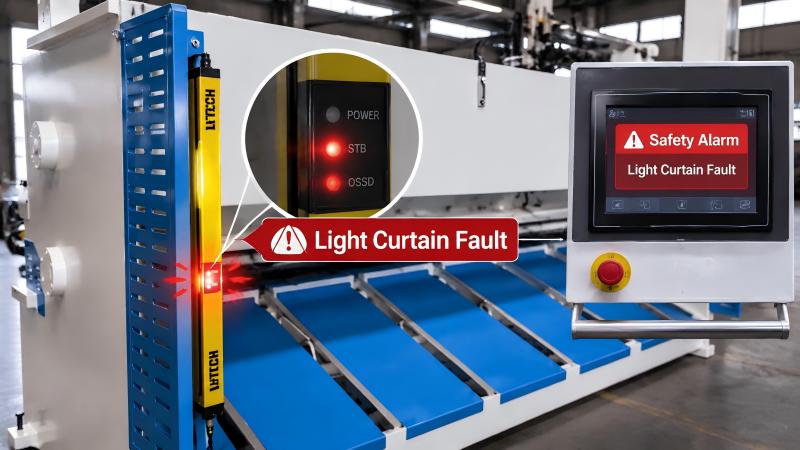
A light curtain protects operators by detecting objects entering a monitored hazardous area. Misalignment, damaged sensors, electrical faults, or blocked optical paths may prevent the system from functioning correctly.
3. Safety Interlock Failure
Safety interlocks prevent machine operation when designated protective guards or access doors are open. A faulty switch, damaged wiring, or incorrect installation may compromise this protection.
4. Protective Guard Damage
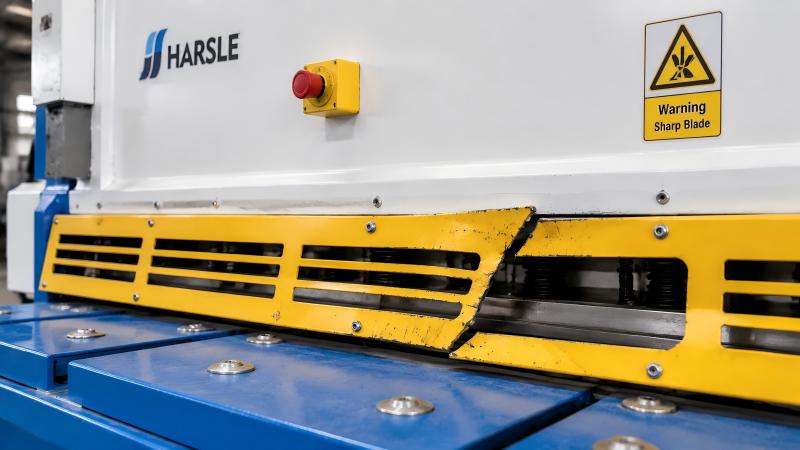
Loose fasteners, cracked panels, missing guards, and damaged protective covers can expose operators to dangerous moving components and cutting areas.
How to Respond to Shearing Machine Safety Device Failure
Step 1: Stop the Machine Immediately
If an operator discovers that an emergency stop, light curtain, interlock, or protective guard is not functioning correctly, production must stop immediately.
Use the emergency stop if necessary and follow the machine’s emergency shutdown procedure. Keep personnel away from the blade area and other hazardous moving components.
Never continue production simply because the machine appears to operate normally despite a safety device failure.
Step 2: Isolate the Machine and Secure the Work Area
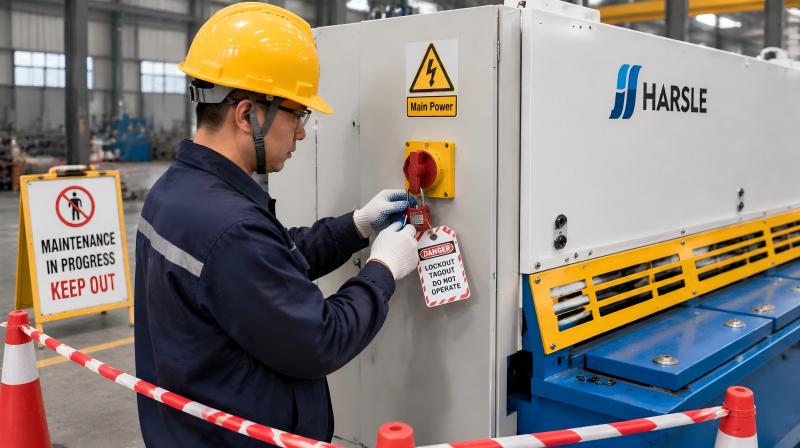
After stopping the machine, prevent unauthorized personnel from operating it.
Apply the facility’s lockout/tagout (LOTO) procedure before maintenance or inspection involving hazardous energy. Isolate electrical, hydraulic, pneumatic, and other relevant energy sources, and verify that stored energy has been safely controlled.
Remember that pressing an emergency stop button does not necessarily isolate all energy sources.
Step 3: Identify the Faulty Safety Device
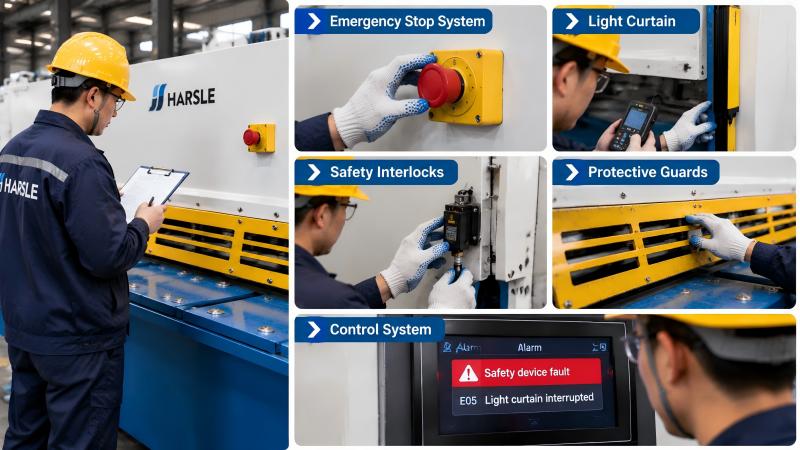
Once the machine has been secured, document the failure and report it to qualified maintenance personnel.
The inspection should focus on the affected safety components:
- Emergency stop system: Check button condition, wiring, and safety relay response.
- Light curtain: Inspect sensor alignment, optical surfaces, cables, and diagnostic indicators.
- Safety interlocks: Examine switches, actuators, mounting positions, and electrical connections.
- Protective guards: Check for cracks, missing fasteners, deformation, or unauthorized modifications.
- Control system: Review alarm messages and safety-related diagnostic information.
Operators should not open electrical cabinets, adjust safety circuits, or attempt repairs unless they are appropriately qualified and authorized.
Step 4: Repair or Replace Faulty Components
Qualified technicians should identify the underlying cause before carrying out repairs.
Replace damaged components with manufacturer-approved parts that meet the original safety specifications. Check electrical connections, sensor mounting, mechanical alignment, and safety control configurations.
Never bypass an interlock, disconnect a light curtain, or modify safety logic to keep production running. These actions can expose workers to serious hazards.
Step 5: Test Safety Functions Before Restarting
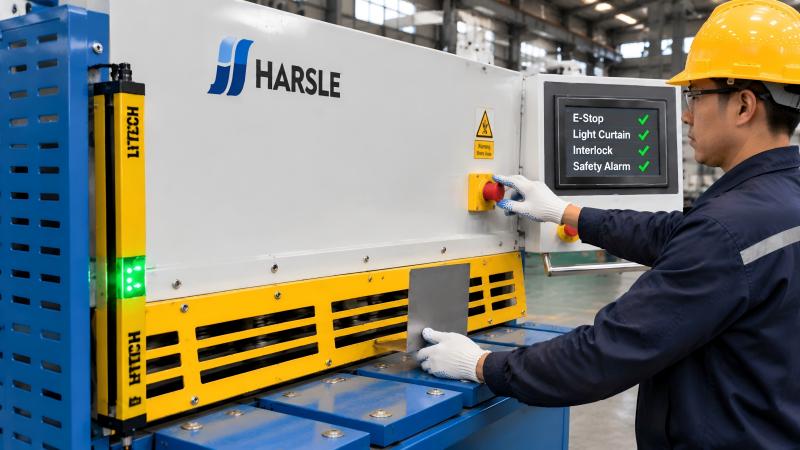
After repairs are completed, qualified personnel must verify that the affected safety devices operate correctly.
Depending on the machine configuration, testing may include:
- Confirming that emergency stop devices initiate the required safe response.
- Checking that light curtains detect interruptions and trigger the specified protective action.
- Verifying that interlocked guards prevent hazardous operation when open.
- Confirming that protective guards are securely installed.
- Checking that safety alarms and indicators function correctly.
Testing must follow the manufacturer’s procedures and applicable safety requirements. Production should only resume after the responsible personnel have confirmed that the machine is safe to operate.
Common Mistakes to Avoid After Safety Device Failure
- Continuing production: Never operate a machine with a defective safety device.
- Resetting without inspection: Clearing an alarm does not mean the underlying fault has been resolved.
- Bypassing safety interlocks: Never defeat protective switches or modify safety circuits.
- Ignoring repeated alarms: Recurring safety faults require investigation rather than repeated resetting.
- Allowing unauthorized repairs: Electrical and hydraulic safety systems must be handled by qualified personnel.
- Restarting without testing: Always verify the repaired safety functions before returning the machine to production.
Preguntas frecuentes
Can I Operate a Shearing Machine If Its Light Curtain Fails?
No. If a required light curtain is faulty, stop the machine and follow the established safety procedures. Do not continue production unless an approved alternative safeguarding arrangement has been formally assessed and authorized.
What Should I Do If the Emergency Stop Button Does Not Work?
Stop the machine using another approved means if it is safe to do so. Keep personnel away from hazardous areas, isolate the machine, and contact qualified maintenance personnel immediately.
Who Is Allowed to Repair Shearing Machine Safety Devices?
Electrical safety circuits, PLC safety logic, interlocks, and hydraulic safety components should only be inspected or repaired by appropriately trained and authorized technicians.
Conclusión
Responding correctly to Shearing Machine Safety Device Failure requires immediate shutdown, proper energy isolation, professional fault diagnosis, and thorough safety testing. I recommend including safety device inspections in routine maintenance schedules and training operators to recognize abnormal conditions.
Most importantly, never bypass protective systems or restart equipment before the fault has been properly resolved. These precautions help protect operators, prevent equipment damage, and maintain stable production.


