


Máquina de corte Posicionamiento del tope trasero plays a critical role in CNC shearing operations because inaccurate positioning can directly affect cutting dimensions, production efficiency, and final product quality. The backgauge system determines whether the sheet can be positioned correctly before cutting, ensuring consistent and precise results. If you are experiencing inconsistent cutting lengths, positioning deviations, or repeated adjustment problems, you are in the right place. In this article, I’ll explain the common causes of backgauge positioning errors and provide practical troubleshooting methods to help you restore cutting accuracy and maintain stable production performance.
Understanding Shearing Machine Backgauge Positioning
What Is Backgauge Positioning in a Máquina de corte?

The backgauge system is a positioning mechanism that controls the distance between the sheet edge and the cutting blade. By moving to a programmed position, the backgauge allows operators to achieve accurate and repeatable cutting dimensions.
Modern CNC shearing machines use servo motors, ball screws, linear guides, and control systems to achieve precise positioning. When these components work together correctly, the machine can maintain high cutting accuracy during continuous production.
Why Accurate Backgauge Positioning Is Important
Preciso Shearing Machine Backgauge Positioning directly affects material utilization and product consistency. Even small positioning errors can cause incorrect sheet dimensions, increased material waste, and additional adjustment time.
For industries requiring high precision, such as metal fabrication, electrical cabinets, and construction equipment manufacturing, stable backgauge performance is essential.
Common Causes of Shearing Machine Backgauge Positioning Errors
Mechanical Wear of Ball Screws and Linear Guides
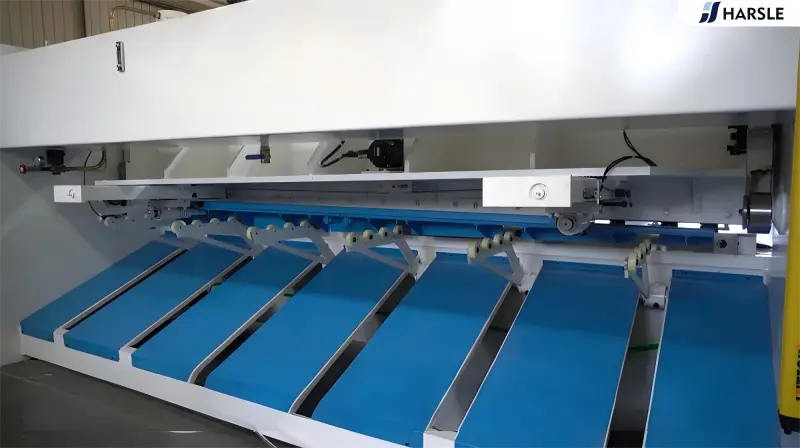
One of the most common causes of positioning errors is mechanical wear. The backgauge relies on ball screws and linear guides to achieve smooth and accurate movement.
After long-term operation, wear or clearance in these components can create positioning deviations. Excessive backlash in the ball screw may cause the backgauge to stop at an incorrect position, especially when changing movement directions.
Regular lubrication and inspection help reduce wear and maintain positioning accuracy.
Loose or Misaligned Backgauge Components
Loose mounting bolts, guide rails, or mechanical connections can affect the stability of the backgauge system.
I recommend checking whether the backgauge frame, guide rails, and support structures are properly tightened. Any misalignment can cause uneven movement and inconsistent positioning results.
Servo Motor or Encoder Problems
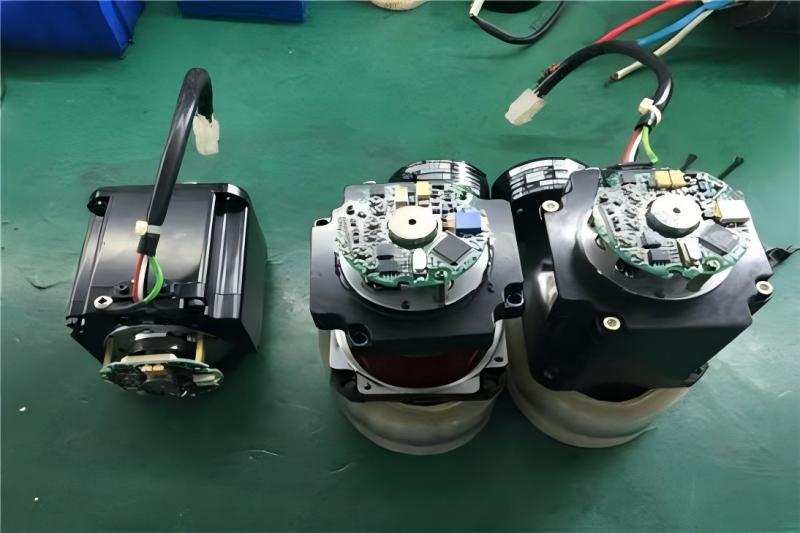
The servo motor and encoder are responsible for controlling the exact movement of the backgauge axis. If the encoder provides incorrect feedback, the CNC controller may receive inaccurate position information.
Los signos comunes incluyen:
- Position errors after repeated movements
- Inconsistent stopping points
- Sudden positioning deviations
Inspecting encoder connections and checking servo system alarms can help identify these issues.
Configuración incorrecta de parámetros CNC
The CNC controller uses programmed parameters to control backgauge movement. Incorrect settings, such as wrong axis calibration values, acceleration parameters, or compensation values, can lead to inaccurate positioning.
After replacing components or performing maintenance, the backgauge system may require recalibration to ensure the CNC system matches the actual mechanical position.
Foreign Materials and Poor Maintenance
Metal chips, dust, and debris can accumulate on guide rails and moving parts. These contaminants increase friction and prevent smooth movement.
Keeping the backgauge area clean is a simple but effective way to maintain stable positioning performance.
How to Troubleshoot Shearing Machine Backgauge Positioning Problems
Step 1: Check the Actual Position Deviation
The first step is measuring the actual positioning error. Move the backgauge to several programmed positions and compare the CNC values with physical measurements.
Recording these differences helps determine whether the problem comes from mechanical movement, calibration, or control settings.
Step 2: Inspect Mechanical Components
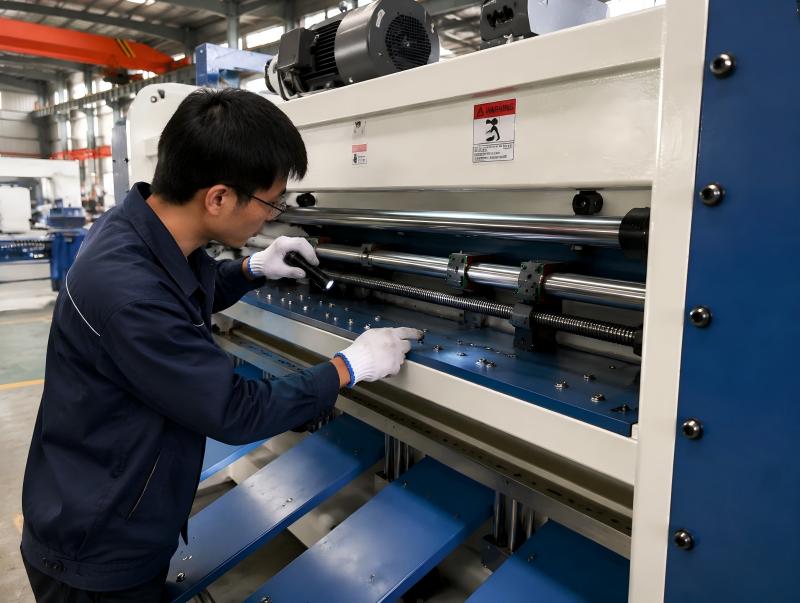
Check ball screws, guide rails, bearings, and mounting structures for wear or looseness.
If excessive clearance is found, repair or replacement may be required to restore accurate movement.
Step 3: Verify Servo System Performance
Check servo motor operation, encoder feedback, and electrical connections. Any abnormal signal may affect positioning accuracy.
I recommend reviewing CNC diagnostic information to identify possible servo-related problems.
Step 4: Recalibrate the Backgauge System
If mechanical components are in good condition, recalibration may solve positioning errors.
Follow the machine manufacturer’s calibration procedure to reset reference positions and compensation values.
Step 5: Maintain Regular Inspection Procedures
Preventive maintenance is essential for avoiding repeated positioning problems. Establish regular checks for lubrication, component wear, electrical connections, and CNC parameters.
A consistent maintenance schedule helps maintain long-term Shearing Machine Backgauge Positioning accuracy.
Best Practices to Improve Backgauge Positioning Accuracy
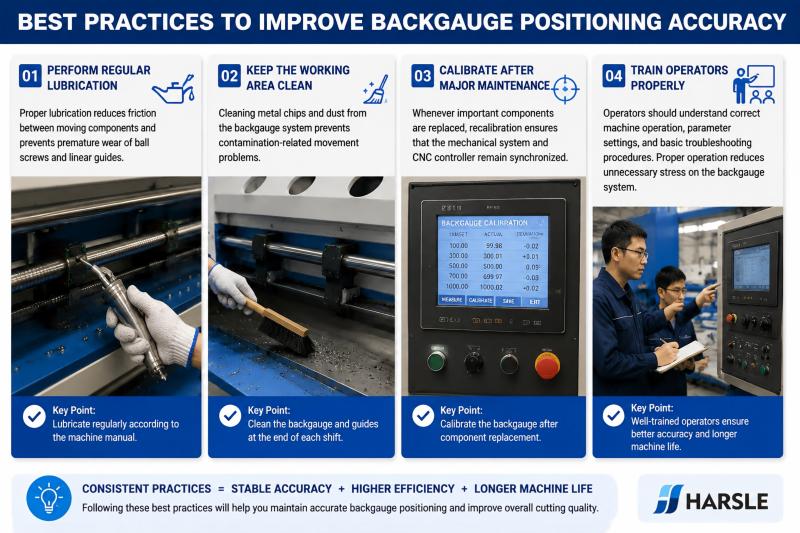
Perform Regular Lubrication
Proper lubrication reduces friction between moving components and prevents premature wear of ball screws and linear guides.
Keep the Working Area Clean
Cleaning metal chips and dust from the backgauge system prevents contamination-related movement problems.
Calibrate After Major Maintenance
Whenever important components are replaced, recalibration ensures that the mechanical system and CNC controller remain synchronized.
Train Operators Properly
Operators should understand correct machine operation, parameter settings, and basic troubleshooting procedures. Proper operation reduces unnecessary stress on the backgauge system.
Preguntas frecuentes
Why does my shearing machine backgauge stop at different positions?
Inconsistent stopping positions may be caused by mechanical wear, encoder problems, loose components, or incorrect CNC parameters.
How can I improve Shearing Machine Backgauge Positioning accuracy?
Regular maintenance, proper lubrication, mechanical inspection, and CNC calibration can significantly improve positioning accuracy.
How often should the backgauge system be calibrated?
Calibration frequency depends on machine usage and production conditions. It should also be performed after major repairs or component replacement.
Can dirty guide rails affect backgauge accuracy?
Yes. Dust and metal debris increase friction and may prevent smooth movement, resulting in positioning errors.
Conclusión
Preciso Shearing Machine Backgauge Positioning is essential for achieving consistent cutting quality and improving production efficiency. Positioning errors are usually caused by mechanical wear, servo system issues, incorrect calibration, or insufficient maintenance.
By regularly inspecting components, maintaining clean working conditions, checking CNC parameters, and performing timely calibration, you can reduce positioning problems and extend the service life of your shearing machine.
For more technical guidance or professional support on improving shearing machine accuracy, feel free to contact our team. We are ready to help you achieve more reliable and efficient cutting performance.


