


A Máquina de corte Standard Operating Procedure helps operators perform cutting tasks safely, consistently, and efficiently. I recommend developing a clear procedure that covers pre-operation inspections, machine setup, cutting operations, emergency responses, and routine maintenance. A well-defined SOP reduces the risk of workplace injuries, improves cutting accuracy, and helps prevent unexpected equipment downtime. In this guide, I’ll explain how to develop and implement a practical shearing machine SOP that operators can follow in daily production.
What Should a Máquina de corte SOP Include?
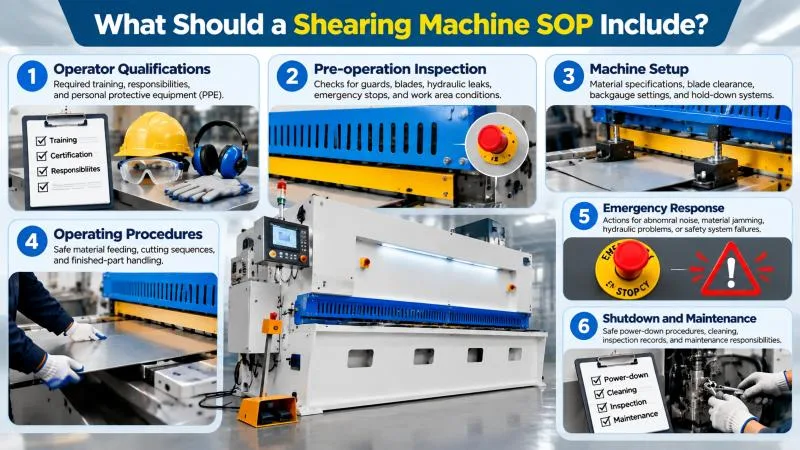
A complete standard operating procedure should provide clear instructions for every stage of machine operation. I recommend including the following sections:
- Operator qualifications: Required training, responsibilities, and personal protective equipment (PPE).
- Pre-operation inspection: Checks for guards, blades, hydraulic leaks, emergency stops, and work area conditions.
- Machine setup: Material specifications, blade clearance, backgauge settings, and hold-down systems.
- Operating procedures: Safe material feeding, cutting sequences, and finished-part handling.
- Emergency response: Actions for abnormal noise, material jamming, hydraulic problems, or safety system failures.
- Shutdown and maintenance: Safe power-down procedures, cleaning, inspection records, and maintenance responsibilities.
The SOP should match the specific shearing machine model, its control system, and the manufacturer’s operating instructions.
How to Develop a Shearing Machine Standard Operating Procedure
Step 1: Identify Machine Specifications and Hazards
Start by collecting the machine manual, rated cutting capacity, applicable material limits, blade specifications, and safety requirements.
Identify hazards such as moving blades, pinch points, sharp sheet edges, hydraulic pressure, and unexpected machine movement. Determine which protective guards, interlocks, light curtains, and emergency stops are installed.
I recommend involving experienced operators and qualified maintenance personnel to ensure the SOP reflects actual working conditions.
Step 2: Establish Pre-Operation Safety Checks
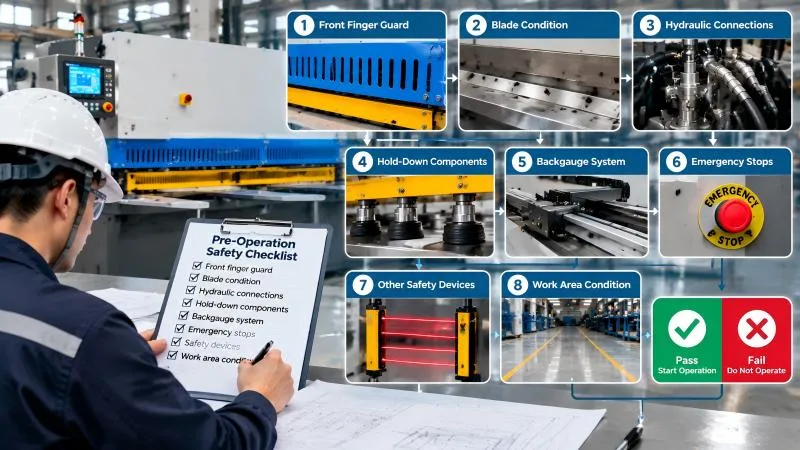
Create a checklist that operators must complete before starting the machine.
Inspect the front finger guard, blade condition, hydraulic connections, hold-down components, and backgauge system. Verify that emergency stops and other safety devices function according to the manufacturer’s approved test procedure.
Check that the floor is free of oil, scrap, and other trip hazards. If a safety device fails or a serious defect is discovered, do not operate the machine until the issue has been assessed and corrected by authorized personnel.
Step 3: Define Machine Setup and Cutting Parameters
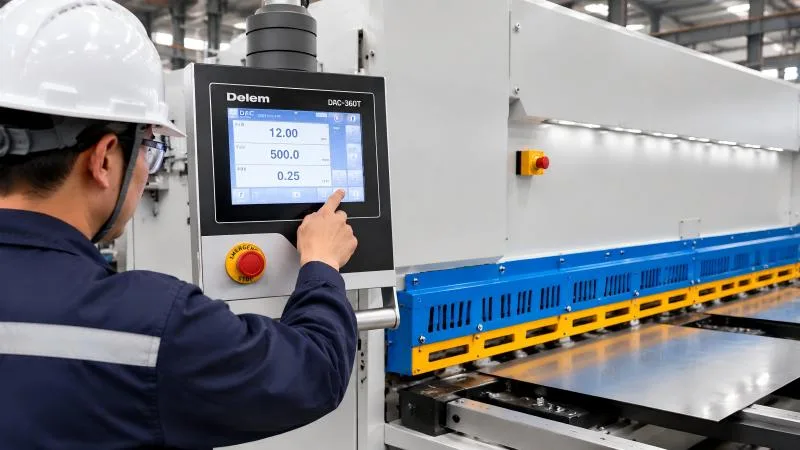
Explain how operators should select cutting parameters according to material type, thickness, tensile strength, and machine capacity.
Include instructions for setting the blade clearance and backgauge position according to the machine manual. Incorrect blade clearance can cause excessive burrs, distorted edges, increased cutting force, or unnecessary blade wear.
Specify that operators must never exceed the machine’s rated capacity. Adjustments involving hydraulic pressure, electrical systems, or safety controls should be restricted to qualified personnel.
Step 4: Document Safe Cutting Procedures
Describe the correct sequence for positioning, supporting, and feeding sheet metal. Operators should use designated support arms and squaring guides where applicable, keeping their hands away from the cutting zone and other moving components.
Before activating a cut, confirm that the material is correctly positioned and securely supported. Ensure that nobody is inside the restricted work area, including behind the machine where applicable.
The SOP should also explain how to handle small workpieces safely using approved tools or fixtures rather than placing hands near the blades.
Step 5: Establish Emergency Stop and Shutdown Procedures
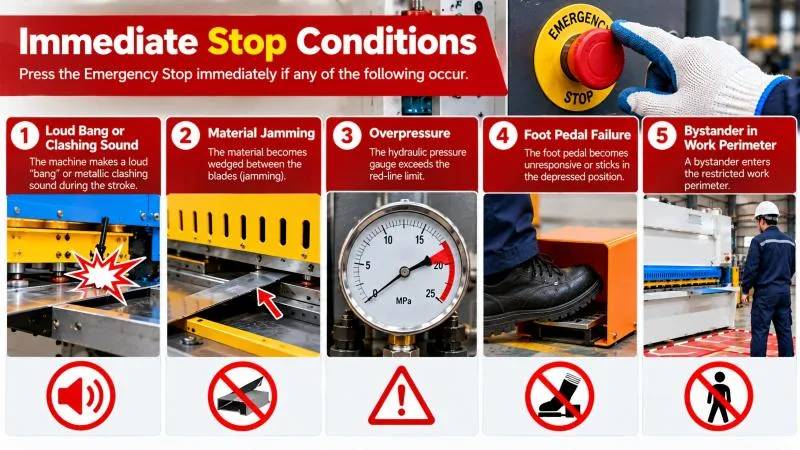
List the conditions that require immediate stoppage, including unusual metallic noises, excessive vibration, material jamming, hydraulic leakage, abnormal pressure readings, or safety device failure.
Operators should activate the emergency stop when necessary, follow the facility’s emergency response procedure, and report the problem to qualified maintenance personnel.
For normal shutdown, follow the manufacturer’s instructions to stop the machine and isolate energy sources when required. Before cleaning, clearing jams, or performing maintenance, apply the appropriate lockout/tagout procedure and verify that hazardous energy has been controlled.
Step 6: Train Operators and Maintain Records
Provide practical training on machine controls, PPE, material handling, emergency stops, and the approved cutting sequence.
Keep records of operator training, completed inspections, maintenance activities, and reported incidents. Review the SOP whenever the machine, tooling, production process, or safety requirements change.
I recommend posting the current procedure near the machine and ensuring operators can easily access the latest version.
Common Mistakes to Avoid When Writing a Shearing Machine SOP
An SOP is only effective when operators can understand and apply it. Avoid vague instructions such as “check the machine” without specifying what to inspect or what constitutes a failure.
Other common mistakes include:
- Omitting model-specific cutting capacity and setup requirements.
- Failing to define operator and technician responsibilities.
- Providing no clear response to abnormal operating conditions.
- Allowing untrained personnel to perform technical adjustments.
- Neglecting periodic reviews, training records, and inspection documentation.
Use concise language, numbered steps, and checklists to make the procedure easier to follow.
Preguntas frecuentes
How Often Should a Shearing Machine SOP Be Reviewed?
Review the SOP whenever equipment, tooling, operating conditions, or safety requirements change. It is also good practice to schedule periodic reviews based on your facility’s safety management system.
Who Is Responsible for Developing a Shearing Machine SOP?
Production supervisors, safety personnel, experienced operators, and qualified maintenance technicians should contribute. The final procedure should be approved by the personnel responsible for machine safety and operations.
What PPE Is Required for Shearing Machine Operation?
Requirements depend on the machine, material, and workplace risk assessment. Common PPE includes safety glasses, safety footwear, and suitable protective clothing. Cut-resistant gloves may be appropriate for handling sharp sheet edges, but they must not introduce an entanglement hazard near moving machinery.
Conclusión
Developing an effective Shearing Machine Standard Operating Procedure requires clear machine-specific instructions, comprehensive safety checks, defined operating steps, emergency response measures, and regular operator training. By implementing these elements, manufacturers can improve workplace safety, maintain consistent cutting quality, and reduce avoidable downtime.


