


Máquina de corte Installation Safety is essential for ensuring stable machine operation, protecting operators, and preventing accidents during production. Improper installation can cause machine vibration, foundation damage, electrical hazards, hydraulic leaks, and insufficient operating clearance. Before installing an industrial shearing machine, I recommend evaluating the workshop layout, floor load capacity, lifting arrangements, electrical connections, and safety protection systems. In this guide, I’ll explain the key installation safety requirements and provide practical steps to help manufacturers install their shearing machines safely and reliably.
Why Is Máquina de corte Installation Safety Important?
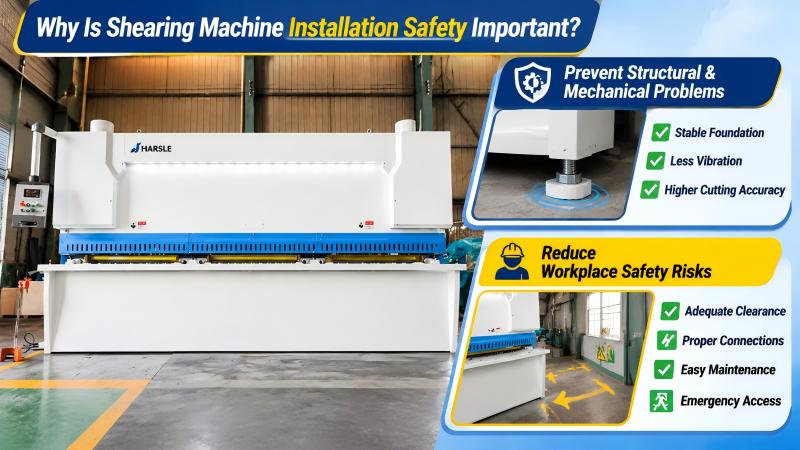
Preventing Structural and Mechanical Problems
A shearing machine is heavy industrial equipment that generates significant mechanical forces during operation. If the foundation is uneven or insufficiently strong, the machine may experience excessive vibration, alignment problems, or structural stress.
Proper foundation preparation, leveling, and anchoring help maintain machine stability and cutting accuracy.
Reducing Workplace Safety Risks
Insufficient installation clearance, exposed electrical connections, and improperly connected hydraulic systems can create serious workplace hazards.
A well-planned installation provides safe access for operators, material handling, routine maintenance, and emergency response.
What Are the Key Shearing Machine Installation Safety Requirements?
1. Check the Workshop Space and Installation Layout
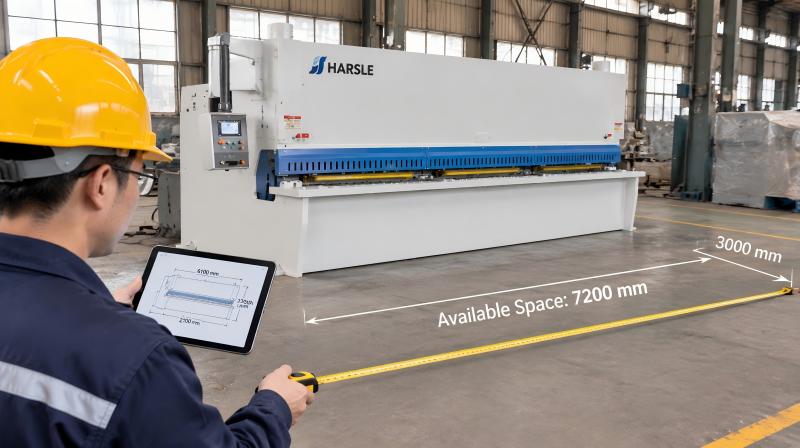
Before installation, measure the available workshop area and compare it with the machine’s overall dimensions.
Consider the following requirements:
- Operating clearance: Provide sufficient space around the machine for safe material feeding and finished-part removal.
- Maintenance access: Leave adequate room for inspecting hydraulic components, electrical cabinets, and mechanical assemblies.
- Material transportation: Ensure that forklifts, overhead cranes, and other handling equipment can move materials safely.
- Emergency access: Keep emergency exits, electrical isolation points, and emergency stop devices accessible.
For workshops with limited space, I recommend planning the machine position carefully before delivery. Avoid placing the machine too close to walls, columns, or other equipment.
Always follow the manufacturer’s installation drawings and recommended clearance requirements.
2. Prepare a Stable Foundation and Level the Machine
The workshop floor must support the combined weight of the machine, workpieces, and operational loads.
Before positioning the equipment, check the floor condition, load-bearing capacity, and installation foundation requirements.
After positioning the machine, use suitable precision leveling instruments to verify its horizontal alignment. Adjust the leveling points according to the manufacturer’s instructions.
If foundation bolts or anchor bolts are required, install and tighten them according to the specified procedures and torque requirements.
An uneven foundation can contribute to vibration, alignment problems, and premature mechanical wear.
3. Use Safe Lifting and Positioning Procedures
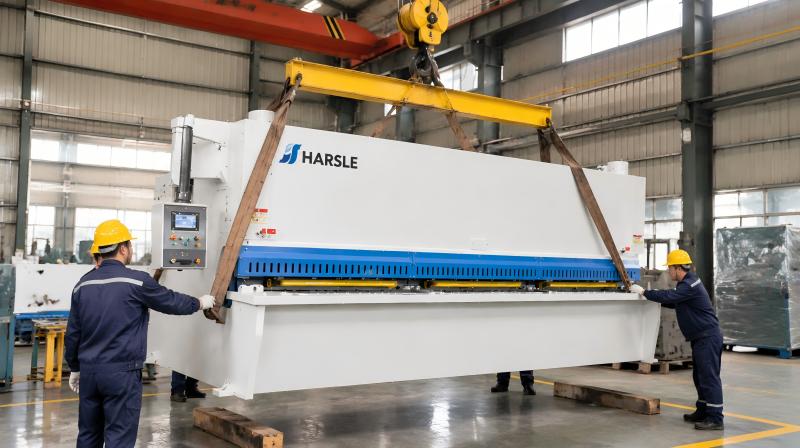
Shearing machines are heavy and require suitable lifting equipment during installation.
Before lifting, check the machine’s weight, center of gravity, designated lifting points, and transportation instructions.
Use appropriately rated overhead cranes, slings, hooks, and other lifting accessories. Inspect all lifting equipment before use.
During positioning:
- Keep personnel away from suspended loads.
- Never stand underneath a lifted machine.
- Use qualified lifting personnel and clear communication signals.
- Avoid sudden movements that could cause the machine to swing or become unstable.
Never lift the machine using components that are not designated as lifting points.
4. Ensure Electrical and Hydraulic Installation Safety
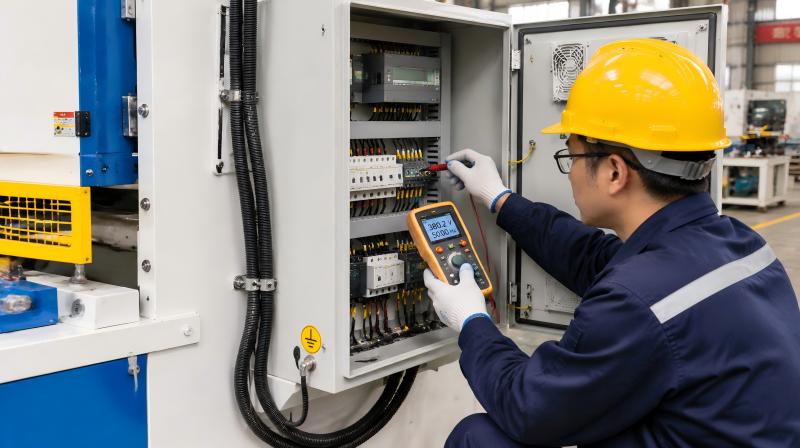
Electrical and hydraulic connections must be completed by qualified personnel.
For electrical installation, verify that the power supply matches the machine’s rated voltage, frequency, and electrical requirements. Check grounding connections, cable protection, and electrical cabinet conditions.
For hydraulic systems, inspect hoses, fittings, pipelines, and connection points. Confirm that the hydraulic oil specification and filling requirements match the manufacturer’s instructions.
Before energizing the machine, inspect all connections for visible damage or leakage.
Never perform electrical or hydraulic maintenance on energized equipment. Follow approved isolation and lockout/tagout procedures.
5. Install and Verify Machine Safety Devices
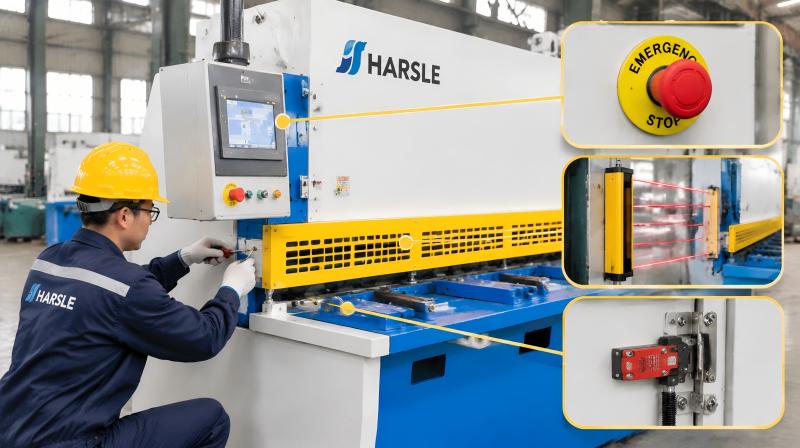
Before commissioning, inspect all protective components and safety systems.
Important items include:
- Front finger guards: Ensure that protective barriers are correctly installed.
- Side guards: Verify that hazardous mechanical areas are properly protected.
- Rear safety barriers: Prevent unauthorized access to the rear working zone.
- Emergency stop buttons: Confirm that accessible emergency stop devices function correctly.
- Safety interlocks: Verify that installed interlocks operate according to their intended safety functions.
- Light curtains: If equipped, check alignment and protective stopping functions according to the manufacturer’s procedures.
Never bypass or modify safety devices to simplify installation or improve production convenience.
How to Perform a Safe Shearing Machine Commissioning Test
Step 1: Complete a Pre-Start Inspection
Check the foundation, machine alignment, electrical connections, hydraulic system, lubrication, and safety guards.
Remove installation tools, packaging materials, and other obstacles from the working area.
Step 2: Perform an Initial No-Load Test
Following the manufacturer’s commissioning procedure, start the machine without processing material.
Observe the motor, hydraulic pump, control system, and moving components. Listen for abnormal noise and check for unusual vibration or hydraulic leakage.
Step 3: Verify Cutting Functions and Safety Systems
Test the backgauge, blade movement, hold-down system, and other installed functions according to the approved commissioning procedure.
Once all preliminary checks are satisfactory, perform controlled test cuts using suitable material within the machine’s rated capacity.
Confirm cutting quality, positioning accuracy, and normal machine operation before releasing the equipment for production.
Preguntas frecuentes
How Much Space Is Required Around a Shearing Machine?
The required clearance depends on machine dimensions, material size, feeding arrangements, and maintenance requirements. Always follow the manufacturer’s installation drawings and applicable workplace safety requirements.
Does a Shearing Machine Need a Special Foundation?
Not every machine requires a separate concrete foundation. However, the floor must meet the manufacturer’s load-bearing and installation requirements. Some models may require foundation bolts or specific anchoring arrangements.
Who Should Install a Shearing Machine?
Qualified installation technicians should handle machine positioning, electrical connections, hydraulic connections, and commissioning. Qualified lifting personnel should perform lifting and transportation operations.
Conclusión
Proper Shearing Machine Installation Safety involves careful workshop planning, foundation preparation, safe lifting, correct electrical and hydraulic connections, and thorough safety system inspections.
I recommend following the manufacturer’s installation instructions and completing a documented commissioning inspection before starting production. These practices help prevent installation-related accidents, protect machine components, and improve long-term operational reliability.


