


Pressa idraulica Crushing Hazards are among the most serious safety risks in metal forming and industrial manufacturing. A hydraulic press generates substantial force through a moving ram, allowing it to compress, shape, and form materials. However, the same force can cause severe crushing injuries if operators enter hazardous areas or safety devices fail. In this guide, I’ll explain how to identify common crushing hazards around a hydraulic press, inspect dangerous machine areas, recognize unsafe operating conditions, and implement effective preventive measures to protect operators and maintenance personnel.
Why Are Pressa idraulica Crushing Hazards Dangerous?
Identifying the Main Crushing Zones
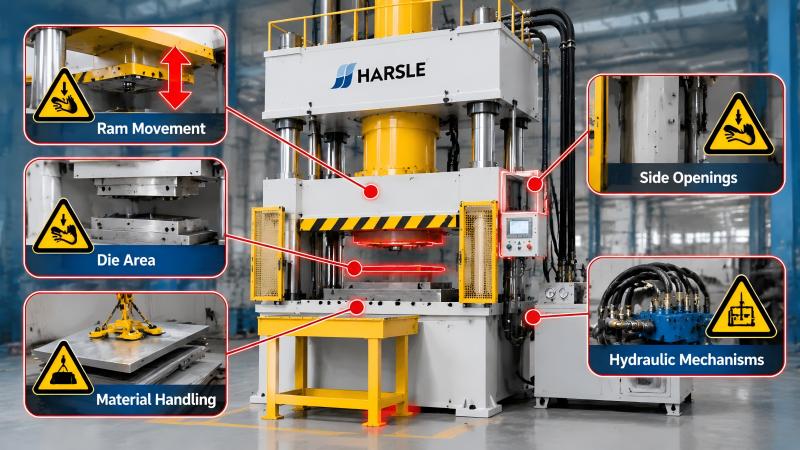
The primary crushing hazard is located between the moving ram and the stationary worktable or lower die. During the pressing cycle, any hand, finger, or body part entering this space can be subjected to extremely high pressure.
Other dangerous areas include:
- Die area: The space between upper and lower tooling where materials are compressed.
- Ram movement area: The moving section that travels vertically during pressing.
- Side openings: Accessible spaces around the press structure where moving components may create pinch points.
- Material handling area: Locations where heavy workpieces may shift, fall, or become trapped.
- Hydraulic mechanisms: Moving cylinders and mechanical linkages that may create additional crushing points.
Identifying these locations is the first step toward reducing workplace injuries.
Understanding the Consequences of Crushing Accidents
Hydraulic press crushing accidents can result in fractured bones, crushed fingers, severe hand injuries, permanent disability, or even fatalities.
Because hydraulic presses can generate significant force, even brief contact with an unguarded moving component may cause serious injuries. Operators must never rely on reaction time or emergency stop buttons as their primary protection.
How to Identify Crushing Hazards Around a Hydraulic Press
Step 1: Inspect the Ram and Die Working Area
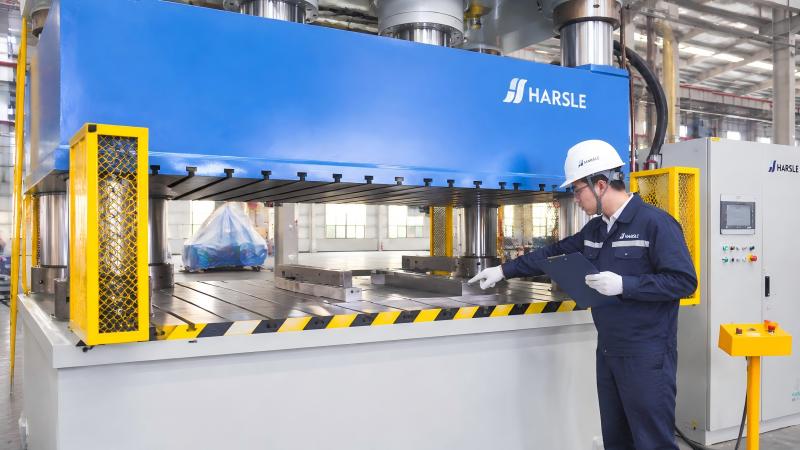
Start by examining the space between the upper ram and lower worktable. Identify any accessible openings where operators could accidentally place their hands during material positioning.
Check whether fixed guards, movable guards, or other appropriate protective devices prevent access to hazardous areas.
Pay particular attention to manual loading and unloading operations. If operators must position workpieces close to the tooling, verify that approved handling methods and protective systems are provided.
Never reach into the die area while the machine is capable of hazardous movement.
Step 2: Check Moving Components and Mechanical Pinch Points
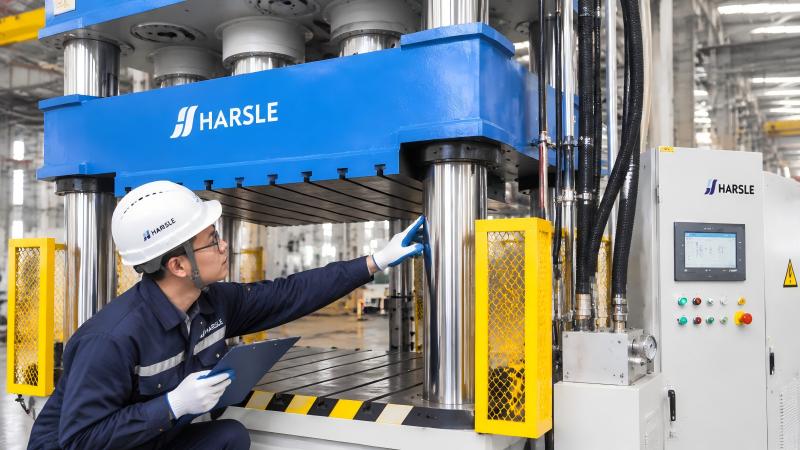
Inspect the ram guides, side openings, hydraulic cylinders, and other moving mechanisms.
Look for exposed moving parts, damaged covers, loose connections, or insufficient guarding. These conditions may create unexpected crushing or trapping hazards.
Also check whether maintenance personnel can safely access these components without entering hazardous areas.
Any inspection requiring access to dangerous moving parts must be performed under appropriate energy isolation procedures.
Step 3: Evaluate Material Loading and Unloading Risks
Heavy or incorrectly positioned materials can create additional crushing hazards during production.
For example, a large metal plate may shift during pressing, while improperly supported workpieces may fall from the worktable.
I recommend checking the following:
- Are workpieces properly supported before pressing?
- Are suitable lifting devices available for heavy materials?
- Can operators position materials without placing their hands beneath suspended loads?
- Is the loading area free from unnecessary obstructions?
- Are operators following approved material-handling procedures?
Proper material support and handling equipment help reduce the risk of trapped fingers and crushing injuries.
Step 4: Inspect Machine Guards and Safety Devices
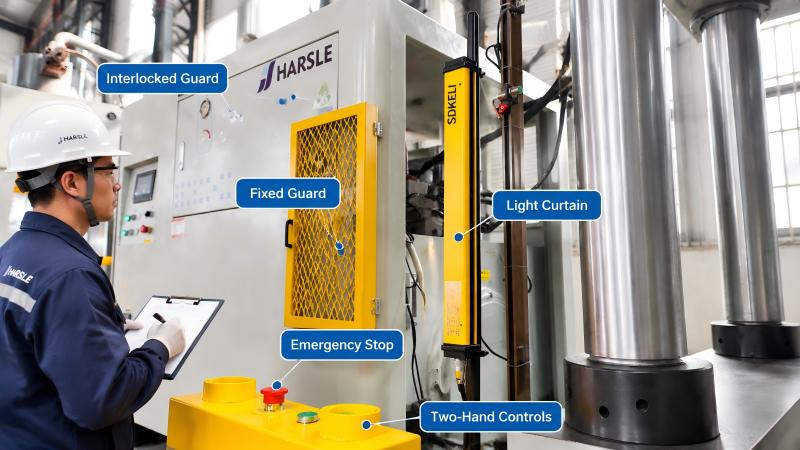
Verify that all required protective devices are installed and functioning correctly.
Important safety components include:
- Fixed guards: Prevent access to dangerous moving mechanisms.
- Interlocked guards: Stop or prevent hazardous operation when protected access points are opened.
- Light curtains: Detect personnel entering designated hazardous zones and initiate the required protective response.
- Two-hand controls: Require simultaneous operation of designated controls to help keep the operator’s hands away from the point of operation.
- Emergency stop buttons: Allow operators to initiate an emergency stop when necessary.
The suitability of each device depends on the press design, operating mode, and applicable safety requirements. Never bypass safety interlocks or assume that an emergency stop alone provides sufficient protection.
Step 5: Observe Operator Behavior and Working Procedures
Observe normal production activities, including material feeding, pressing, unloading, cleaning, and tool changes.
Check whether operators reach into the working area, bypass guards, or attempt to remove trapped materials while the machine is operating.
Operators should receive appropriate training on crushing hazards, safe operating procedures, emergency stops, and hazardous energy isolation.
Maintenance involving hydraulic pressure, electrical systems, or safety-control circuits must be handled by qualified personnel.
Common Warning Signs of Hydraulic Press Crushing Hazards
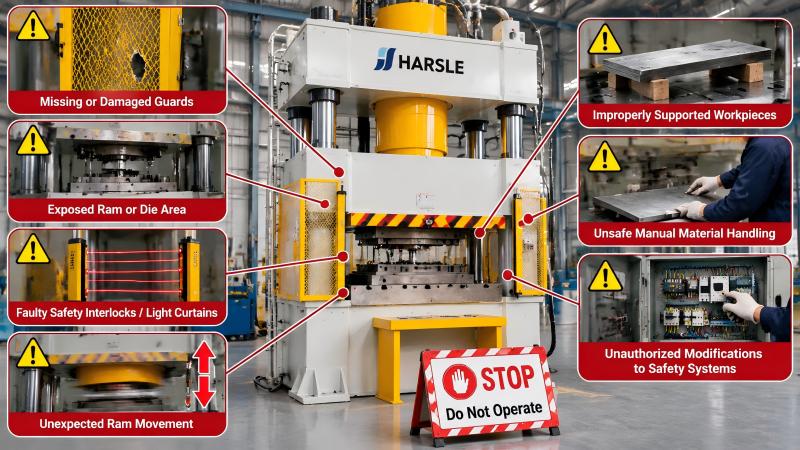
Pay attention to the following conditions during routine inspections:
- Missing or damaged machine guards.
- Exposed ram or die working areas.
- Faulty safety interlocks or light curtains.
- Unexpected ram movement.
- Improperly supported workpieces.
- Unsafe manual material handling.
- Unauthorized modifications to safety systems.
If a serious hazard is identified, stop the affected operation and prevent further use until appropriate corrective measures have been implemented.
Domande frequenti
Where Are the Most Dangerous Crushing Points on a Hydraulic Press?
The most dangerous area is generally between the moving ram and stationary lower tooling. Other hazards may exist around cylinders, mechanical linkages, side openings, and material handling areas.
Can Light Curtains Prevent All Hydraulic Press Crushing Accidents?
No. Light curtains provide protection within their designed detection area but cannot eliminate every crushing hazard. They must be correctly selected, installed, configured, and maintained alongside other required safeguards.
How Often Should Hydraulic Press Crushing Hazards Be Inspected?
Perform routine visual and functional safety checks before operation according to the manufacturer’s instructions. Conduct more detailed inspections periodically and whenever machine configurations or working procedures change.
Conclusione
Identifying Hydraulic Press Crushing Hazards requires a systematic inspection of the ram, die area, moving components, material handling procedures, and protective devices. By recognizing dangerous pinch points, checking machine guards, and improving operator training, manufacturers can significantly reduce the risk of serious workplace injuries.


