


Hidráulico System Heat Problems can reduce machine efficiency, accelerate component wear, and cause unexpected downtime in hydraulic presses. When hydraulic oil temperature continues rising, I recommend checking the cooling system, oil condition, hydraulic components, and operating conditions to identify the actual cause. In this guide, I’ll explain the common reasons behind hydraulic overheating, how to troubleshoot high oil temperature step by step, and practical maintenance methods to keep your hydraulic system operating reliably.
Quais são as causas? Hidráulico System Heat Problems?
Excessive Hydraulic Pressure and System Overload
Operating a hydraulic press under excessive pressure for long periods can generate unnecessary heat.
When the system works near maximum pressure continuously, the hydraulic pump, valves, and oil experience higher energy losses, which are converted into heat.
I recommend checking whether the machine settings match the actual production requirements and avoiding unnecessary pressure buildup during operation.
Hydraulic Oil Contamination or Incorrect Oil Level
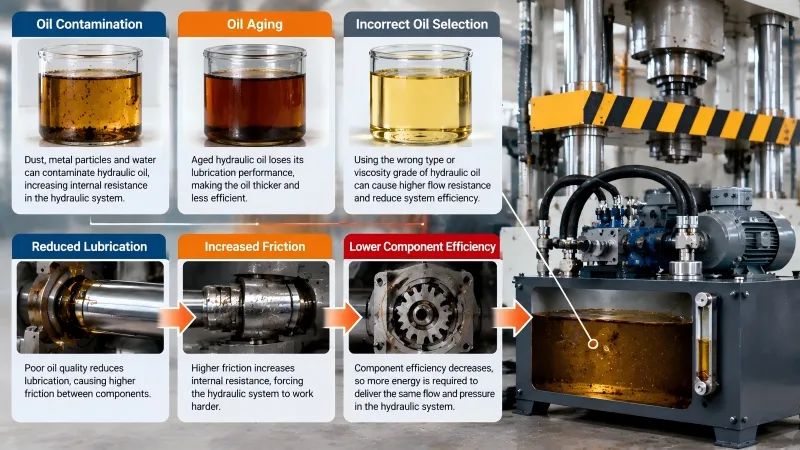
Hydraulic oil plays an important role in heat transfer, lubrication, and component protection.
Contaminated oil, incorrect viscosity, or insufficient oil level can reduce system efficiency and increase friction between internal components.
Dirty oil may also restrict valve operation and reduce cooling performance, causing the hydraulic system temperature to rise.
Cooling System Failure
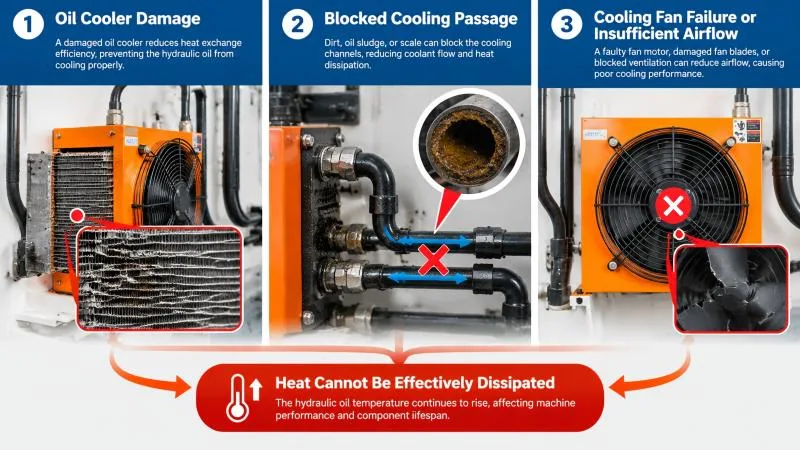
A damaged oil cooler, blocked cooling passages, failed cooling fan, or insufficient airflow can prevent heat from being removed effectively.
When the cooling system cannot maintain normal oil temperature, heat will gradually accumulate during continuous operation.
Regular inspection of cooling components is essential for preventing hydraulic overheating.
Worn Hydraulic Components
Internal leakage from pumps, cylinders, or valves can create additional energy loss and increase heat generation.
As hydraulic components wear, the system may require more power to maintain the same output, resulting in higher operating temperatures.
How to Troubleshoot Hydraulic System Heat Problems
Step 1: Check Hydraulic Oil Temperature and Operating Conditions
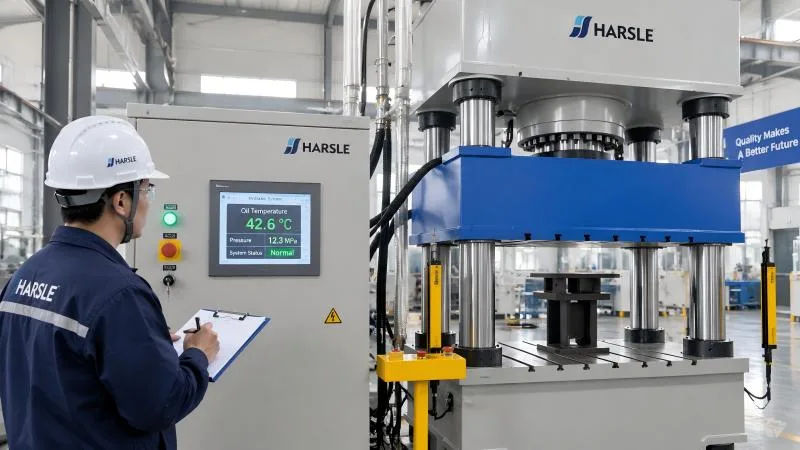
I recommend starting by measuring the actual hydraulic oil temperature during machine operation.
Compare the temperature reading with the manufacturer’s recommended operating range.
Observe when overheating occurs, such as during continuous pressing, idle operation, or high-load cycles.
This information helps determine whether the problem is related to workload, cooling capacity, or internal system faults.
Step 2: Inspect Hydraulic Oil Condition and Level
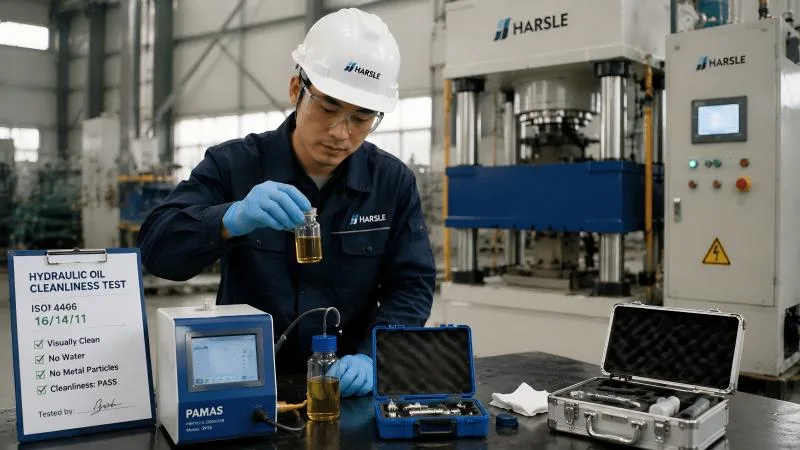
Check the hydraulic oil level through the oil tank indicator and ensure it meets the required range.
Inspect the oil color, clarity, and possible contamination.
If the oil appears dark, cloudy, or contains metal particles, it may indicate internal wear or contamination problems.
Replace the oil and filters according to maintenance requirements to restore proper hydraulic performance.
Step 3: Examine Cooling System Components
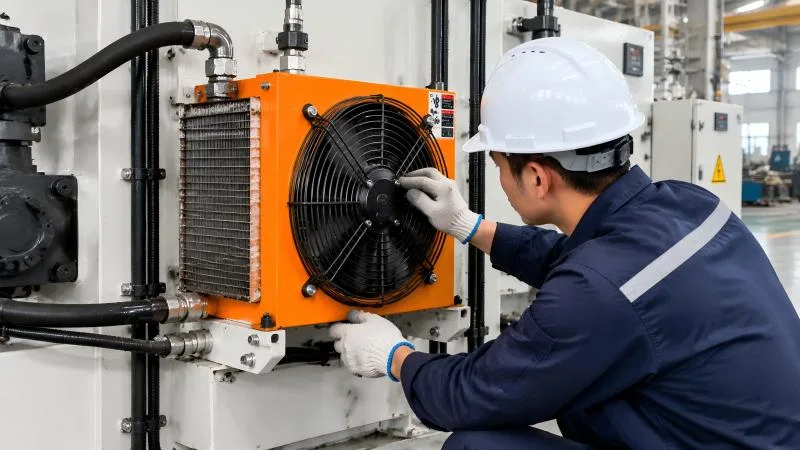
Inspect the oil cooler, cooling fan, ventilation openings, and heat exchange surfaces.
Make sure the fan starts correctly and that airflow is not blocked by dust or debris.
For water-cooled systems, check coolant flow, water quality, and possible scaling inside the cooling channels.
A properly maintained cooling system helps remove heat efficiently.
Step 4: Check Hydraulic Pressure and Component Performance
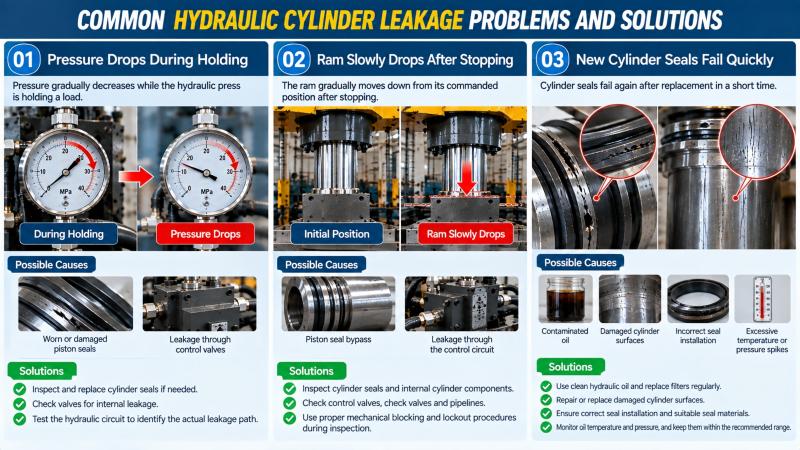
Measure system pressure and compare it with the specified values.
Abnormal pressure fluctuations may indicate problems with relief valves, pumps, or control valves.
Inspect hydraulic components for signs of leakage, unusual noise, or slow movement.
Repair or replace damaged components to prevent continuous heat generation.
Step 5: Verify System Settings and Reduce Unnecessary Heat Generation
Review hydraulic system settings, including pressure limits, standby pressure, and operating cycles.
Incorrect settings can force the hydraulic system to work harder than necessary.
Optimizing machine parameters can reduce energy loss and improve overall system efficiency.
How to Prevent Hydraulic System Heat Problems?
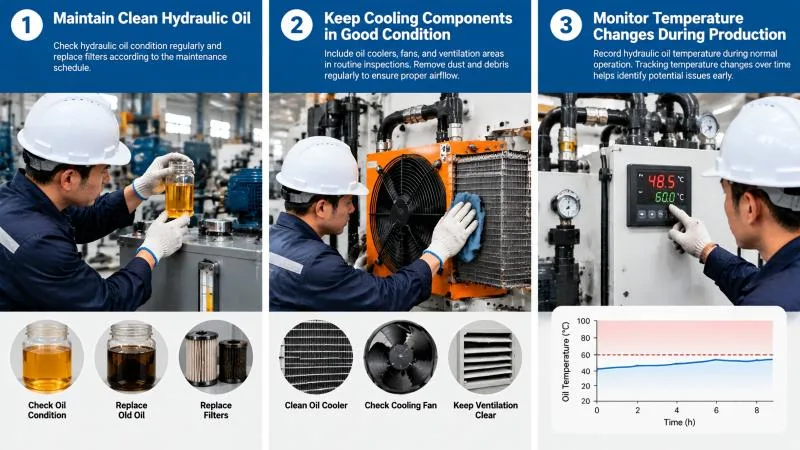
Mantenha o óleo hidráulico limpo.
I recommend checking hydraulic oil condition regularly and replacing filters according to the maintenance schedule.
Clean oil reduces friction, protects hydraulic components, and improves heat transfer efficiency.
Keep Cooling Components in Good Condition
Include oil coolers, fans, and ventilation areas in routine maintenance inspections.
Remove dust and debris regularly to ensure proper airflow and cooling performance.
Monitor Temperature Changes During Production
Record hydraulic oil temperature during normal operation.
Tracking temperature changes over time helps identify gradual performance problems before overheating causes serious damage.
Perguntas frequentes
What Is the Normal Hydraulic Oil Temperature Range?
Most hydraulic systems operate effectively within approximately 40°C to 60°C, but the recommended range depends on the machine design and hydraulic oil type.
Why Does My Hydraulic Press Oil Temperature Keep Rising?
Common causes include cooling system failure, contaminated oil, excessive pressure, internal leakage, and worn hydraulic components.
Can Dirty Hydraulic Oil Cause Heat Problems?
Yes. Contaminated hydraulic oil increases friction, reduces component efficiency, and can contribute to higher operating temperatures.
Conclusão
Fixing Hydraulic System Heat Problems requires a systematic inspection of oil condition, cooling performance, hydraulic pressure, and component condition. Regular maintenance and temperature monitoring can help prevent overheating, reduce downtime, and extend hydraulic system service life.


