


А Машина для стрижки овец Emergency Stop System is one of the most important safety features for protecting operators during sheet metal cutting operations. It allows operators to stop hazardous machine movements quickly when an unexpected situation occurs, such as material jamming, abnormal blade movement, or a person entering a dangerous area. However, simply installing an emergency stop button does not guarantee machine safety. In this guide, I’ll explain how to inspect and test a shearing machine emergency stop system, identify common problems, and ensure that it functions correctly during an emergency.
Why Is an Emergency Stop System Important on a Машина для стрижки овец?
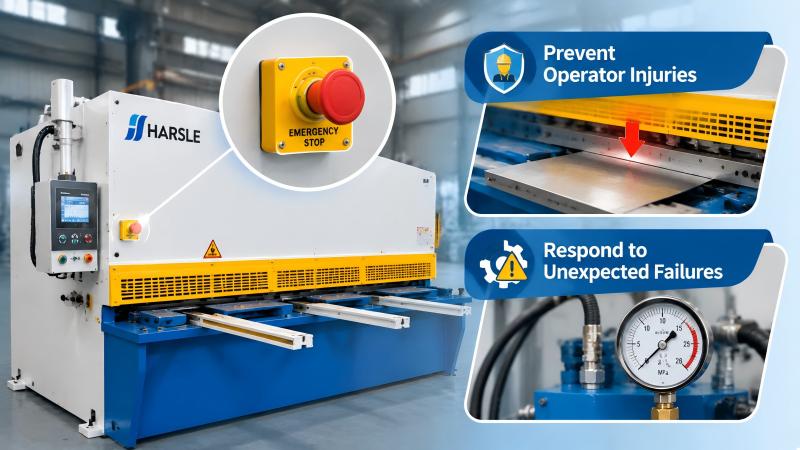
Preventing Serious Operator Injuries
During shearing operations, the moving blade, hydraulic system, and material handling area can create serious hazards. If an operator notices an unexpected movement or dangerous situation, the emergency stop system provides a means of initiating an immediate stop.
A properly functioning E-stop system helps reduce the risk of crushing injuries, cuts, and other accidents. Operators must know the locations of all emergency stop devices before operating the machine.
Responding to Unexpected Machine Failures
Mechanical failures, electrical faults, material jams, and abnormal hydraulic pressure can create dangerous operating conditions.
An accessible emergency stop button allows operators to respond quickly instead of waiting for the normal cutting cycle to finish. However, an emergency stop does not replace machine guards, interlocks, or proper energy isolation procedures.
How to Test a Shearing Machine Emergency Stop System
Step 1: Identify All Emergency Stop Button Locations
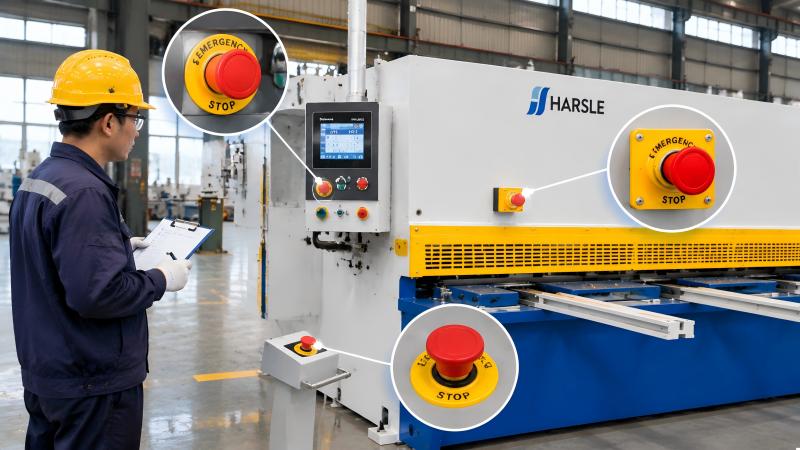
Before testing, identify every emergency stop device installed on the machine.
Common locations include:
- Main control panel: Usually equipped with a prominent red mushroom-shaped emergency stop button.
- Operator control station: Additional emergency stop buttons may be installed near the operating position.
- Remote control stations: Some machines include additional emergency stop devices for specific operating configurations.
Check that each button is clearly visible, accessible, securely mounted, and free from physical damage.
Step 2: Inspect the Emergency Stop Circuit
Before conducting a functional test, inspect the visible condition of the emergency stop devices and their associated wiring.
Check for loose connections, damaged cables, broken button housings, and signs of unauthorized modification.
The emergency stop circuit should be designed according to the machine’s safety architecture. Depending on the configuration, it may use safety relays, safety PLCs, redundant contacts, or other monitored safety components.
Any electrical inspection or internal circuit testing must be performed by qualified personnel.
Step 3: Test Emergency Stop Functionality
Perform the functional test according to the manufacturer’s approved testing procedure. Keep the machine clear of material and personnel, and ensure that nobody is exposed to moving components.
Test each emergency stop device individually under controlled conditions.
When an E-stop button is activated, verify that:
- The machine responds as designed and initiates a stop of hazardous movement.
- The hydraulic drive or other relevant systems enter their specified safe state.
- The CNC controller displays the appropriate emergency status or alarm.
- The machine cannot resume hazardous operation simply because the button is released.
The actual stopping behavior depends on the machine’s electrical and hydraulic design. Never assume that pressing an E-stop automatically removes all stored hydraulic or electrical energy.
Step 4: Check Emergency Stop Reset Procedures
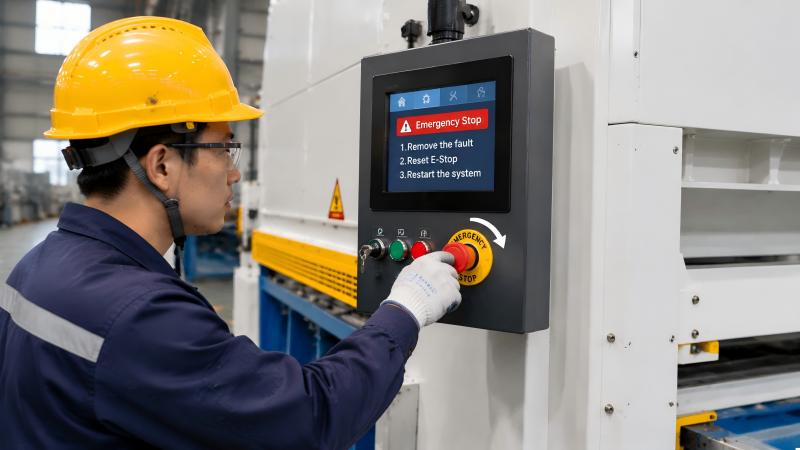
After activating an emergency stop, identify and resolve the cause before attempting to reset the system.
Most mushroom-style emergency stop buttons require twisting or pulling to release, depending on their design.
After resetting the button, the machine should not start automatically. The operator must follow the manufacturer’s restart procedure and perform the required safety checks before resuming production.
Step 5: Record Test Results and Report Faults
Document each emergency stop test, including the device location, inspection date, test result, and any identified problems.
If an emergency stop button fails to operate correctly, stop using the machine and report the fault to qualified maintenance personnel.
Do not bypass the emergency stop circuit or continue production while a safety-related fault remains unresolved.
Common Emergency Stop System Problems to Avoid
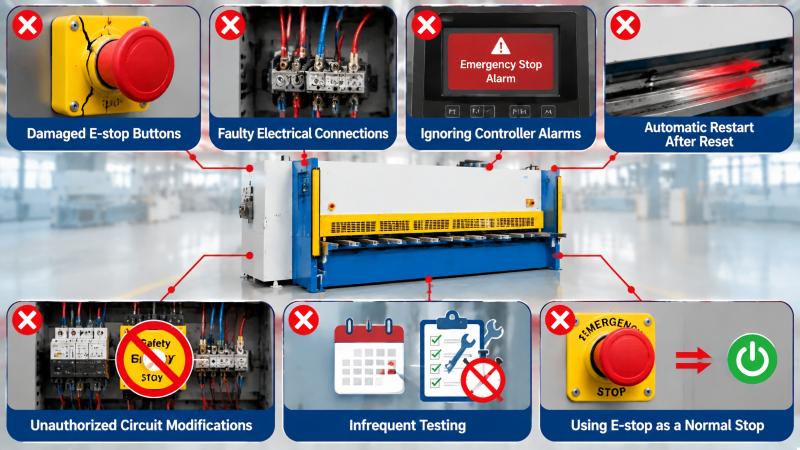
- Damaged E-stop buttons: Cracked housings, loose mounting, or worn mechanisms can affect reliable operation.
- Faulty electrical connections: Damaged cables or loose terminals may interrupt the emergency stop circuit.
- Ignoring controller alarms: Emergency status warnings and safety-related fault messages should be investigated promptly.
- Automatic restart after reset: The machine must not unexpectedly resume hazardous movement when an E-stop is released.
- Unauthorized circuit modifications: Never bypass safety relays, interlocks, or emergency stop wiring.
- Infrequent testing: Neglecting scheduled functional inspections may allow hidden faults to remain undetected.
- Using E-stop as a normal stop: Emergency stop devices are intended for emergency situations, not routine production shutdowns.
Вопросы и ответы
How Often Should a Shearing Machine Emergency Stop System Be Tested?
Perform functional checks according to the manufacturer’s instructions and applicable workplace safety requirements. Visual inspections should also be included in routine pre-operation checks.
Can a Shearing Machine Restart Automatically After an E-Stop Reset?
No. Releasing or resetting an emergency stop device should not automatically initiate hazardous machine movement. A separate, intentional restart command should be required.
Does an Emergency Stop Button Disconnect All Machine Power?
Not necessarily. An emergency stop initiates the designed safety response, but some electrical circuits or stored hydraulic energy may remain present. Follow the machine’s isolation procedure before maintenance.
Заключение
A reliable emergency stop system is essential for safe shearing machine operation. I recommend regularly inspecting emergency stop buttons, checking their electrical safety circuits, performing controlled functional tests, and documenting all results.
More importantly, operators must understand how to activate and reset emergency stop devices correctly. Combining reliable E-stop functionality with proper machine guarding, operator training, and preventive maintenance helps reduce workplace accidents and improve production safety.


