


Машина для стрижки овец Moving Components can create serious workplace hazards, including crushing, pinching, cutting, and entanglement injuries during metal cutting operations. Components such as the upper blade, ram, hydraulic cylinders, hold-down devices, and backgauge can move with considerable force, making proper safety precautions essential. In this guide, I’ll explain the main risks associated with moving parts, how to protect operators through machine guarding and safe operating procedures, and what preventive measures manufacturers should implement to reduce workplace accidents.
What Are the Main Hazards of Машина для стрижки овец Moving Components?
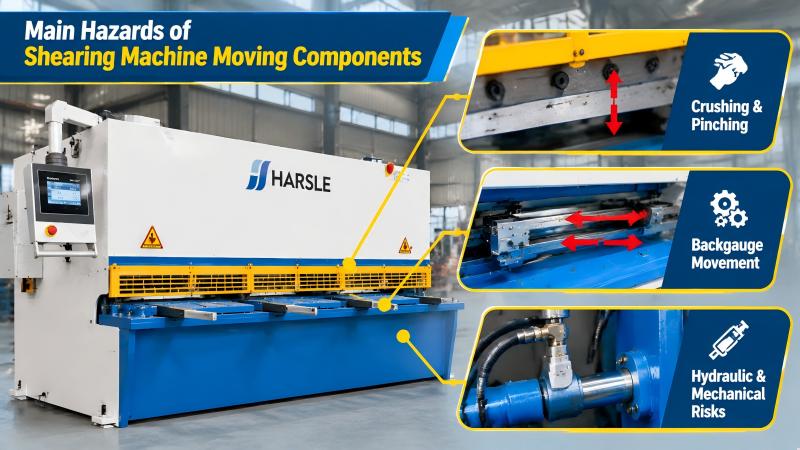
1. Crushing and Pinching Hazards
The upper blade and ram move vertically during the shearing cycle. Operators who place their hands near the cutting area may suffer severe crushing or amputation injuries.
The hold-down cylinders also generate significant pressure to secure the sheet metal before cutting. Fingers caught between the hold-downs and workpiece can be seriously injured.
2. Backgauge Movement Hazards
The CNC backgauge moves automatically to position metal sheets according to programmed dimensions. Its fingers, guide rails, and mechanical drive components can create pinch points during movement.
Operators should never reach behind the machine or attempt to reposition the backgauge manually while its drive system is energized.
3. Hydraulic and Mechanical Movement Risks
Hydraulic cylinders, connecting mechanisms, and other moving components operate under substantial mechanical forces. Unexpected movement caused by control faults, maintenance errors, or incorrect operating procedures can expose personnel to serious injuries.
Proper machine guarding, regular inspections, and energy isolation are essential for controlling these hazards.
How to Prevent Injuries from Shearing Machine Moving Components
Step 1: Install and Maintain Proper Machine Guards
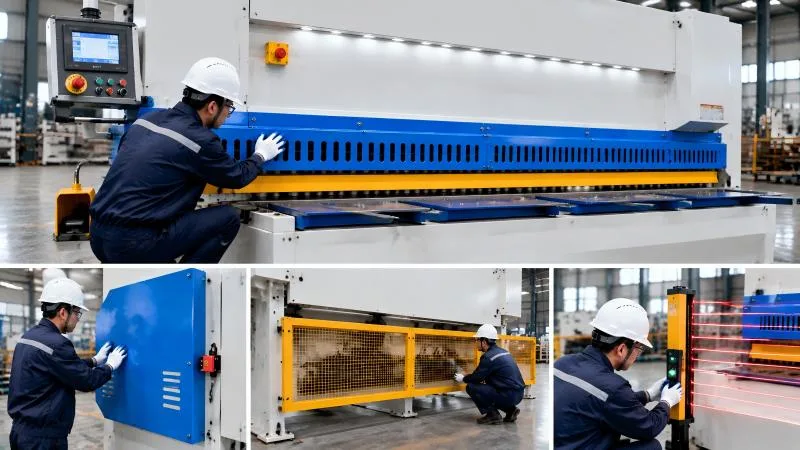
Fixed guards and protective barriers help prevent operators from accessing hazardous moving components.
I recommend checking the following protective devices:
- Front finger guards: Prevent accidental access to the cutting area while allowing appropriate material feeding.
- Side guards: Restrict access to hazardous mechanical and cutting areas from the sides.
- Rear safety barriers: Prevent unauthorized personnel from entering the backgauge movement zone.
- Interlocking guards: Prevent hazardous machine operation when designated protective doors or barriers are open.
- Light curtains: Detect personnel entering protected areas and initiate a safety stop when correctly configured.
All guards must remain securely installed and function according to the machine’s safety design. Never remove or bypass protective devices to speed up production.
Step 2: Keep Hands Away from Moving Components
Operators must maintain safe hand positions throughout material feeding and cutting.
Keep fingers away from the upper and lower blades, hold-down cylinders, and moving backgauge components. Use front support arms, auxiliary tables, and suitable material-handling equipment to stabilize sheet metal.
For small workpieces, use approved feeding tools or dedicated handling devices where required. Never reach beneath unsupported sheets or attempt to retrieve material from hazardous areas while the machine is operating.
Step 3: Follow Safe CNC and Machine Operating Procedures
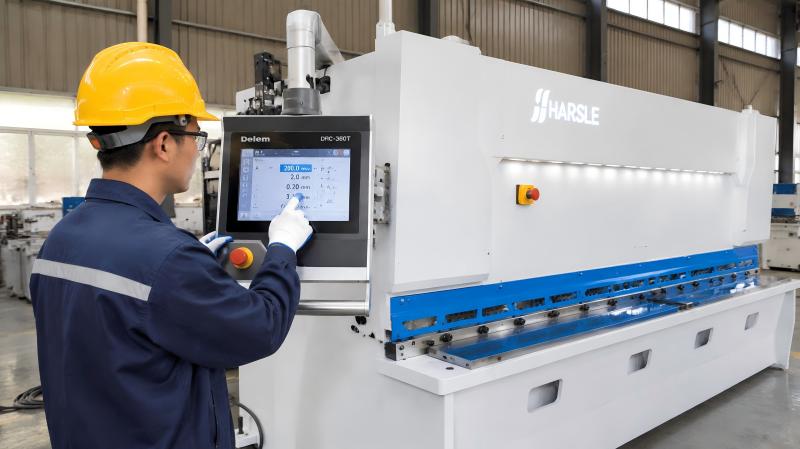
Before starting production, verify that the machine is operating in the correct mode and that the programmed cutting sequence is appropriate.
Check the backgauge position, material dimensions, and operating parameters through the CNC controller.
During automatic operation, observe the movement of the ram, backgauge, and hold-down devices. If any component moves unexpectedly, makes unusual noises, or fails to follow the programmed sequence, stop the machine and report the problem.
Never manually adjust moving components while the machine is running.
Step 4: Use Emergency Stops and Energy Isolation Correctly
Emergency stop buttons must remain accessible to operators during production. If an unexpected movement, mechanical failure, or hazardous situation occurs, activate the emergency stop immediately.
For maintenance, cleaning, or repairs involving hazardous moving components, simply pressing the emergency stop is not sufficient.
Follow the approved lockout/tagout procedure to isolate electrical, hydraulic, and other hazardous energy sources. Release or safely restrain stored energy and verify the machine is in a safe condition before beginning work.
Only qualified personnel should perform electrical, hydraulic, and mechanical maintenance.
Step 5: Conduct Regular Inspections and Operator Training
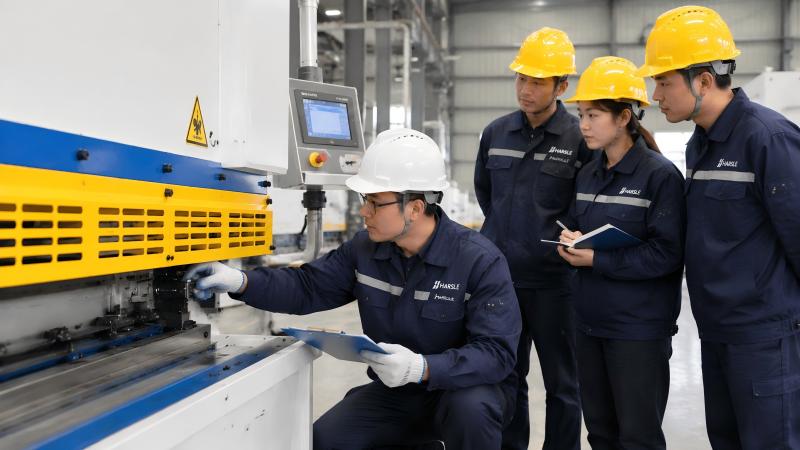
Inspect moving components and protective devices according to the manufacturer’s maintenance schedule.
Pay particular attention to blade mounting, hydraulic cylinders, backgauge guides, mechanical connections, safety switches, and emergency stop devices.
I also recommend providing operators with regular safety training covering pinch-point recognition, emergency procedures, correct material feeding, and safe machine positioning.
Any damaged guard, faulty interlock, or abnormal component movement should be reported and corrected before production resumes.
Common Safety Mistakes to Avoid
- Removing machine guards: Never remove protective barriers to accommodate oversized materials.
- Reaching into hazardous areas: Keep hands away from blades, hold-downs, and moving backgauge components.
- Ignoring abnormal movement: Unexpected ram or backgauge movement requires immediate investigation.
- Bypassing safety interlocks: Never disable protective switches or modify safety circuits.
- Performing maintenance without isolation: Always follow approved lockout/tagout procedures.
- Allowing unauthorized access: Keep untrained personnel away from the machine’s operating and rear hazard zones.
Вопросы и ответы
Which Shearing Machine Components Are Most Dangerous?
The upper blade, ram, hold-down cylinders, and backgauge are among the main hazardous moving components because they can create crushing, cutting, and pinching risks.
How Can Operators Avoid Pinch Injuries?
Keep hands outside hazardous areas, use appropriate material supports and feeding tools, and never reach into moving mechanisms during operation.
Are Machine Guards Enough to Prevent All Injuries?
No. Guards are essential, but they must work together with interlocks, emergency stops, operator training, and safe operating procedures.
Заключение
Preventing injuries from shearing machine moving components requires effective machine guarding, correct operating procedures, regular maintenance, and comprehensive operator training. I recommend paying particular attention to blade movement, hold-down cylinders, and automatic backgauge positioning, as these areas present significant injury risks.
By maintaining protective devices, following proper energy-isolation procedures, and training operators to recognize mechanical hazards, manufacturers can create a safer working environment and reduce unexpected downtime.


