


Машина для стрижки овец Blade Beam Safety is essential for protecting operators and maintenance personnel from crushing injuries, unexpected machine movement, and mechanical failures during sheet metal cutting. The blade beam, also known as the upper blade carrier, moves vertically during the shearing process and generates significant force when cutting metal sheets. Improper operation, damaged components, or inadequate maintenance can create serious safety hazards. In this guide, I’ll explain how to inspect the blade beam, prevent accidents during operation, and maintain a safe working environment around an industrial shearing machine.
Why Is Blade Beam Safety Important on a Машина для стрижки овец?
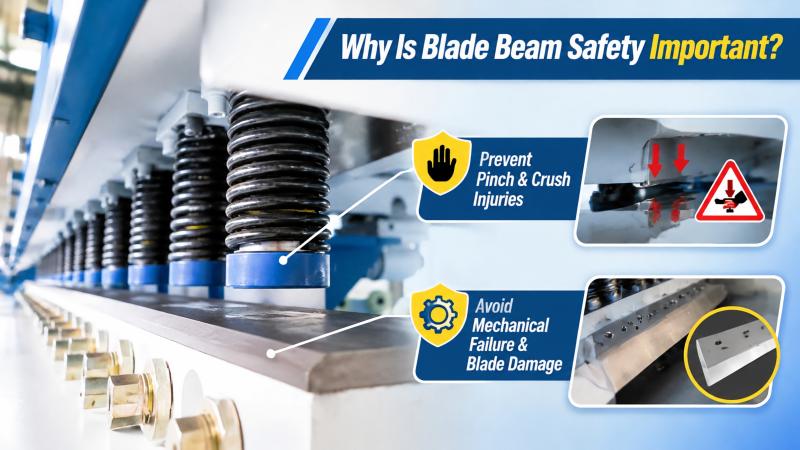
Preventing Pinch and Crush Injuries
The blade beam moves between its upper and lower positions during each cutting cycle. The space between the moving beam, upper blade, lower blade, and machine frame creates dangerous pinch and crush zones.
Operators must never place their hands or tools inside the cutting area while the machine is energized. Proper machine guards, safety interlocks, and emergency stop devices help reduce the risk of accidental contact with moving components.
Preventing Mechanical Failure and Blade Damage
Loose blade bolts, worn guide components, damaged hydraulic connections, or uneven beam movement can affect cutting performance and machine stability.
Regular inspections help identify potential problems before they develop into serious mechanical failures. Maintaining correct blade installation and beam alignment also supports consistent cutting quality.
How to Improve Shearing Machine Blade Beam Safety
Step 1: Inspect the Blade Beam Before Operation
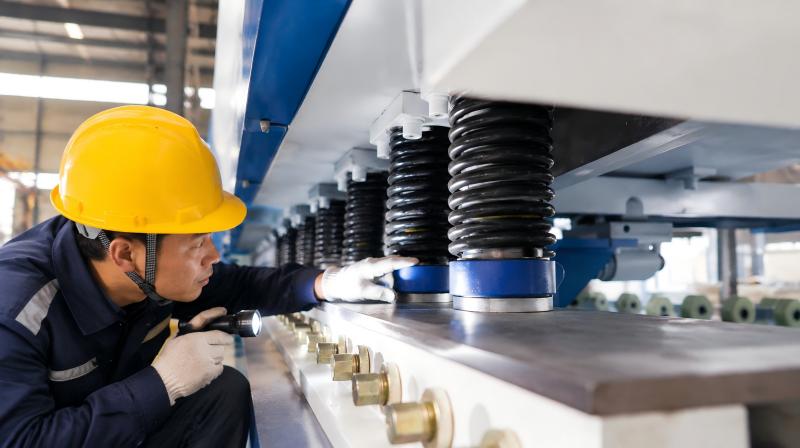
Before starting production, perform a visual inspection of the blade beam and its surrounding components.
Check the following items:
- Beam structure: Look for visible cracks, deformation, or unusual damage.
- Blade mounting bolts: Check for loose or damaged fasteners according to the manufacturer’s specifications.
- Guide components: Inspect accessible guide surfaces for excessive wear, contamination, or abnormal gaps.
- Hydraulic connections: Check for visible oil leakage around cylinders, hoses, and fittings.
- Safety guards: Confirm that protective covers and interlocks are correctly installed and functioning.
If you notice abnormal movement, hydraulic leakage, or structural damage, stop the machine and report the problem to qualified maintenance personnel.
Step 2: Keep the Blade Beam Operating Area Clear
Ensure that the working area around the blade beam is free from unnecessary tools, scrap metal, and other obstacles.
Never place your hands between the upper and lower blades or underneath an unsupported moving beam.
Keep unauthorized personnel away from the cutting zone and ensure that all required protective devices are in place before production begins.
Step 3: Monitor Blade Beam Movement During Operation
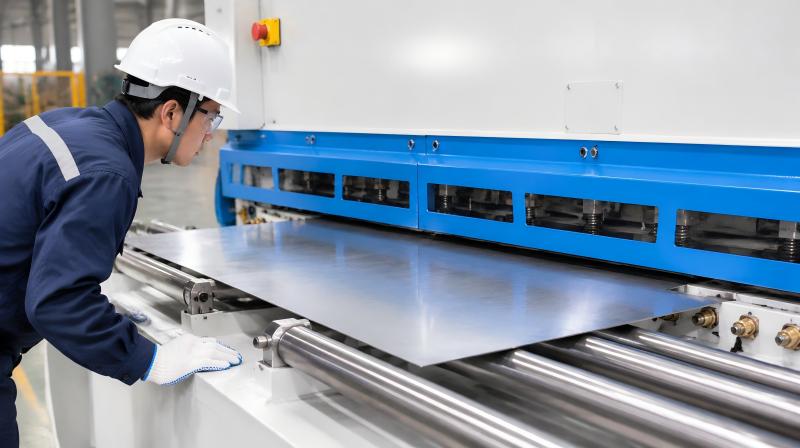
During the cutting process, observe the blade beam’s movement carefully.
The beam should move smoothly through its intended operating cycle and return to its designated upper position according to the machine configuration.
Pay attention to the following warning signs:
- Uneven or jerky beam movement.
- Unusual banging, grinding, or vibration.
- Delayed return to the upper position.
- Abnormal hydraulic pressure readings.
- Unexpected movement or repeated operating alarms.
If any abnormal condition occurs, stop the machine using the appropriate safety procedure. Do not continue production until the cause has been identified and resolved.
Step 4: Maintain Correct Blade Installation and Alignment
Correct blade installation is important for both cutting quality and machine safety.
Inspect the upper and lower blades for visible cracks, chipped edges, excessive wear, and loose mounting hardware.
Blade clearance should match the material thickness and type, following the machine manufacturer’s recommendations.
Blade replacement, rotation, alignment, and bolt tightening must be performed by qualified personnel using approved procedures and specifications.
Step 5: Follow Safe Maintenance and Energy Isolation Procedures
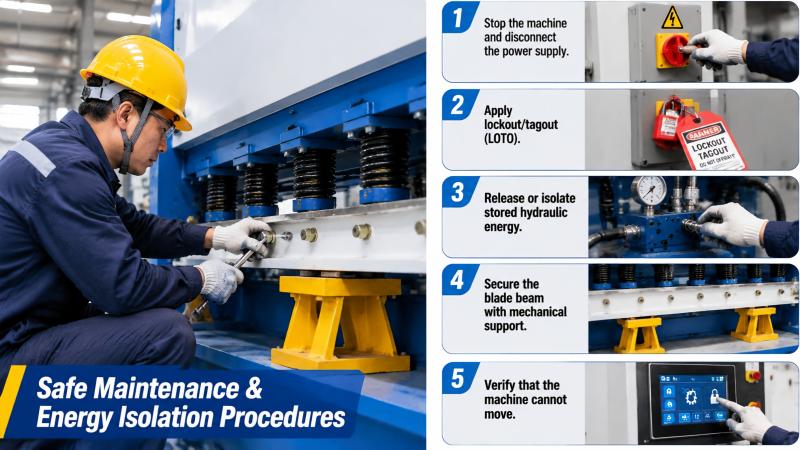
Maintenance involving the blade beam requires special attention because hydraulic systems may contain stored energy and the beam may move unexpectedly.
Before performing maintenance:
- Stop the machine and disconnect the power supply according to the approved procedure.
- Apply lockout/tagout (LOTO) to prevent unexpected startup.
- Release or safely isolate stored hydraulic energy according to the manufacturer’s instructions.
- Secure the blade beam using the specified mechanical support or blocking arrangement.
- Verify that the machine cannot move before accessing hazardous components.
Never rely solely on hydraulic pressure to hold the blade beam in position. Maintenance and repairs should only be performed by appropriately trained personnel.
Common Blade Beam Safety Mistakes to Avoid
- Reaching into the cutting zone: Never place hands near moving blades or beneath an unsupported beam.
- Ignoring abnormal movement: Uneven movement or unusual vibration may indicate mechanical or hydraulic problems.
- Using damaged components: Cracked blades, loose fasteners, and worn guides require prompt attention.
- Bypassing safety devices: Never disable guards, interlocks, or emergency stop systems.
- Incorrect maintenance procedures: Never work beneath a raised blade beam without approved mechanical support and energy isolation.
- Unauthorized adjustments: Hydraulic pressure, blade alignment, and structural adjustments must be handled by qualified personnel.
Вопросы и ответы
What Is the Main Safety Risk of a Shearing Machine Blade Beam?
The main risk is crushing or trapping injuries caused by unexpected vertical movement of the blade beam. Operators must stay outside hazardous areas and use the required machine safeguards.
How Often Should the Blade Beam Be Inspected?
Perform basic visual checks before each shift. More detailed inspections should follow the manufacturer’s maintenance schedule and consider actual operating conditions.
What Should I Do If the Blade Beam Moves Unevenly?
Stop the machine and investigate the cause. Possible issues include hydraulic problems, guide wear, mechanical obstruction, or control-system faults. Qualified technicians should perform further diagnosis.
Заключение
Improving blade beam safety requires regular inspections, effective machine guarding, correct blade installation, and proper maintenance procedures. I recommend training operators to recognize abnormal beam movement and keeping all personnel away from hazardous areas during operation.
Most importantly, always isolate hazardous energy and secure the blade beam before maintenance. By following these practices, manufacturers can reduce workplace accidents, protect machine components, and maintain reliable shearing performance.


