


Hydraulic Press Cooling System Maintenance is essential for keeping hydraulic presses operating at stable temperatures and preventing performance problems caused by overheating. During continuous production, hydraulic systems generate significant heat due to oil circulation, friction, and pressure changes. If the cooling system cannot remove heat effectively, it may lead to hydraulic oil degradation, component wear, reduced pressing force, and unexpected downtime. In this article, I’ll explain how I maintain hydraulic press cooling systems, including inspection methods, cleaning procedures, and preventive maintenance practices to help improve machine reliability and extend service life.
Why Hydraulic Press Cooling System Maintenance Is Important
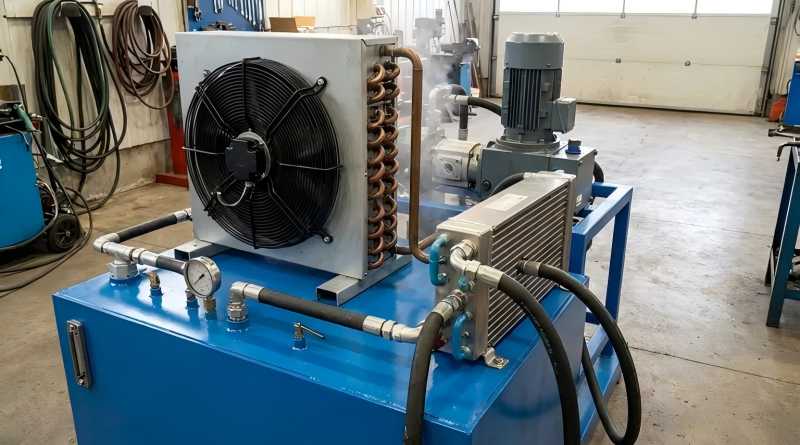
Prevent Hydraulic System Overheating
The cooling system plays a critical role in controlling hydraulic oil temperature. When hydraulic oil becomes too hot, its viscosity decreases, reducing lubrication performance and increasing wear on pumps, valves, seals, and cylinders.
Regular Hydraulic Press Cooling System Maintenance helps ensure that heat exchangers, cooling fans, water circuits, and other cooling components work properly. Maintaining stable operating temperatures allows the hydraulic press to maintain consistent pressure and performance.
Protect Hydraulic Components and Extend Service Life
Excessive heat accelerates oil oxidation and damages internal hydraulic components. Over time, overheated oil can create sludge, reduce lubrication quality, and increase contamination levels.
By keeping the cooling system clean and efficient, I can reduce unnecessary stress on hydraulic components and improve the overall service life of the machine.
How to Maintain Hydraulic Press Cooling System Effectively
Step 1: Check Hydraulic Oil Temperature Regularly
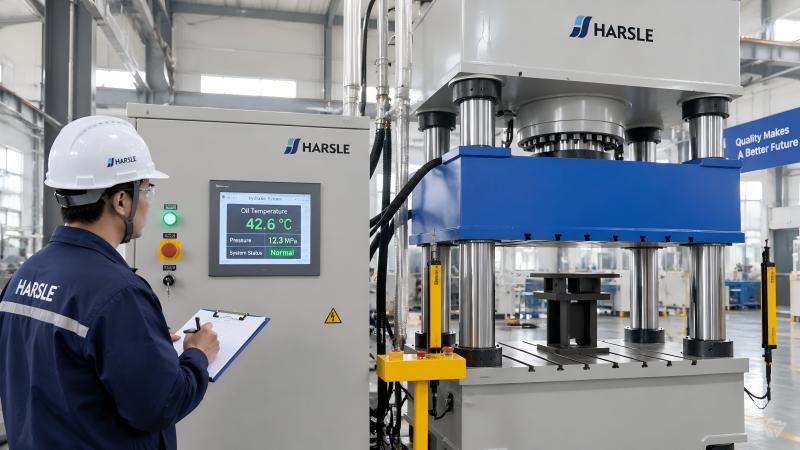
The first step in cooling system maintenance is monitoring hydraulic oil temperature during operation. Most hydraulic presses are equipped with temperature indicators or monitoring systems that allow operators to check real-time conditions.
I recommend recording temperature changes during different production stages. If the oil temperature rises higher than normal, it may indicate problems with the cooling system, insufficient oil circulation, blocked filters, or excessive system load.
Early detection helps prevent overheating-related failures.
Step 2: Inspect Cooling System Components
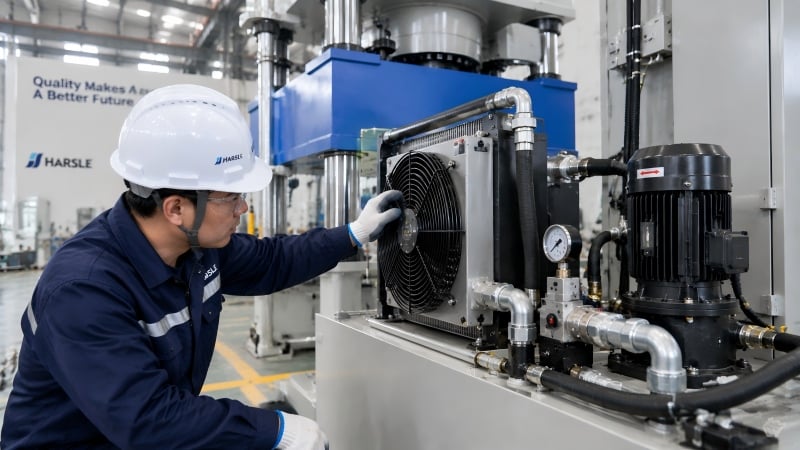
A hydraulic press cooling system usually includes components such as oil coolers, cooling fans, pumps, pipes, temperature sensors, and control devices.
During inspection, I check:
- Cooling fan operation
- Oil cooler condition
- Pipe connections
- Water or air flow condition
- Temperature sensor accuracy
- Signs of leakage or damage
Loose connections, blocked passages, or damaged components can reduce cooling efficiency and should be repaired as soon as possible.
Step 3: Clean Hydraulic Oil Coolers Regularly
Oil coolers can accumulate dust, oil residue, and contaminants over time. These deposits reduce heat transfer efficiency and cause the hydraulic system to operate at higher temperatures.
I recommend cleaning air-cooled radiators and removing surface contamination regularly. For water-cooled systems, checking water quality and cleaning internal passages are also important.
A clean cooler allows heat to transfer effectively and improves overall cooling performance.
Step 4: Maintain Proper Cooling Fluid Flow
Stable fluid circulation is necessary for effective heat removal. Restricted flow caused by blocked pipes, dirty filters, or pump problems can significantly reduce cooling performance.
During maintenance, I inspect cooling lines and ensure that there are no blockages or abnormal pressure changes. If the cooling system uses water circulation, I also check water supply pressure and flow rate.
Maintaining proper circulation helps prevent temperature fluctuations during long-term operation.
Step 5: Check Cooling Fans and Electrical Components
For air-cooled hydraulic press systems, cooling fans are essential for heat dissipation. Fan failure can quickly cause temperature increases, especially during continuous production.
I inspect fan blades, motors, electrical connections, and control signals regularly. Any unusual noise, vibration, or reduced airflow should be investigated immediately.
Electrical components related to cooling control should also be checked to ensure reliable operation.
Step 6: Monitor Hydraulic Oil Quality
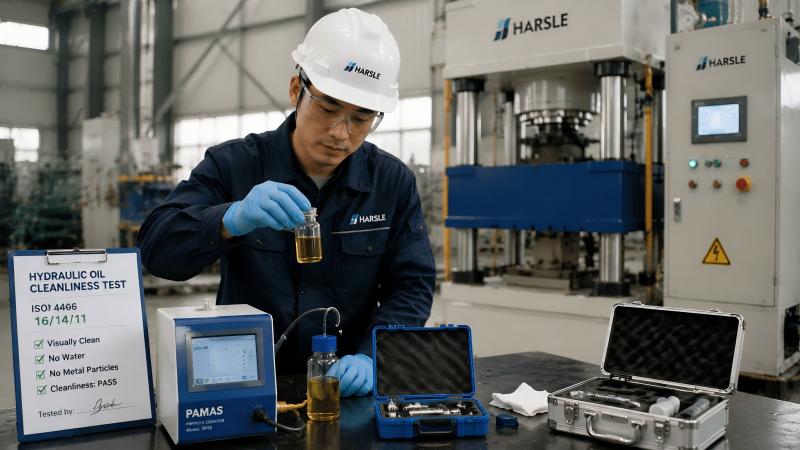
Cooling performance and hydraulic oil condition are closely connected. High temperatures accelerate oil aging, while contaminated oil increases friction and heat generation.
I regularly check hydraulic oil color, cleanliness, viscosity, and contamination levels. If the oil shows signs of oxidation or contamination, replacement or filtration may be required.
Maintaining clean hydraulic oil reduces heat generation and supports efficient cooling system operation.
Common Problems Affecting Hydraulic Press Cooling Systems
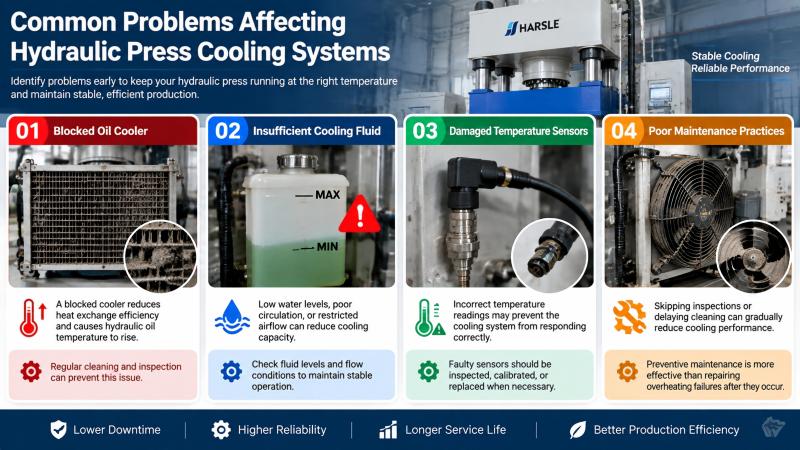
Blocked Oil Cooler
A blocked cooler reduces heat exchange efficiency and causes hydraulic oil temperature to rise. Regular cleaning and inspection can prevent this issue.
Insufficient Cooling Fluid
Low water levels, poor circulation, or restricted airflow can reduce cooling capacity. Checking fluid levels and flow conditions helps maintain stable operation.
Damaged Temperature Sensors
Incorrect temperature readings may prevent the cooling system from responding correctly. Faulty sensors should be inspected, calibrated, or replaced when necessary.
Poor Maintenance Practices
Skipping inspections or delaying cleaning can gradually reduce cooling performance. Preventive maintenance is more effective than repairing overheating failures after they occur.
Best Practices for Long-Term Hydraulic Press Cooling System Performance
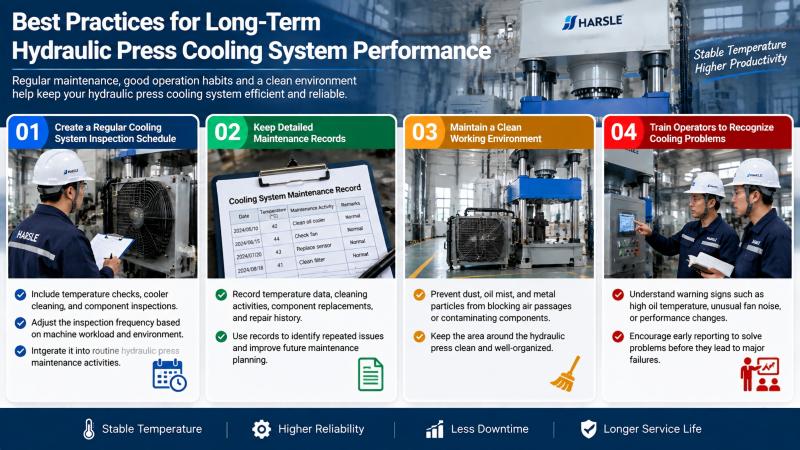
Create a Regular Cooling System Inspection Schedule
A planned maintenance schedule helps identify cooling problems before they affect production. I recommend including temperature checks, cooler cleaning, and component inspections in routine hydraulic press maintenance activities.
The inspection frequency should depend on machine workload, operating environment, and production requirements.
Keep Detailed Maintenance Records
Recording temperature data, cleaning activities, component replacements, and repair history helps track cooling system performance.
These records make it easier to identify repeated issues and improve future maintenance planning.
Maintain a Clean Working Environment
Dust, oil mist, and metal particles can reduce cooling efficiency by blocking air passages and contaminating components.
Keeping the area around the hydraulic press clean helps protect cooling equipment and improves long-term reliability.
Train Operators to Recognize Cooling Problems
Operators should understand common cooling system warning signs, including abnormal temperature increases, unusual fan noise, and hydraulic performance changes.
Early reporting allows maintenance teams to solve problems before they develop into major failures.
FAQs
How often should I perform Hydraulic Press Cooling System Maintenance?
Maintenance frequency depends on operating conditions, machine workload, and cooling system type. Regular inspections should be included in the machine’s preventive maintenance schedule.
What causes hydraulic press oil temperature to rise?
Common causes include blocked coolers, insufficient cooling flow, dirty hydraulic oil, excessive system pressure, component wear, or cooling fan failure.
How can I improve hydraulic press cooling efficiency?
Regularly cleaning coolers, maintaining proper fluid circulation, checking sensors, and keeping hydraulic oil clean can improve cooling efficiency.
Conclusion
Proper Hydraulic Press Cooling System Maintenance is an important part of ensuring stable hydraulic press operation and long-term machine reliability. By monitoring oil temperature, inspecting cooling components, cleaning heat exchangers, maintaining proper fluid circulation, and keeping accurate maintenance records, I can prevent overheating problems and reduce unexpected downtime.
A well-maintained cooling system improves hydraulic efficiency, protects critical components, and extends the service life of the hydraulic press. For more technical guidance on hydraulic press maintenance and troubleshooting, contact our team for professional support.


