


Hydraulic Press Emergency Stop Problems can interrupt production, prevent machine startup, or indicate a serious safety circuit fault. When an emergency stop button fails to reset or the hydraulic press remains locked, I recommend checking the emergency stop switch, safety relay, electrical connections, and control system before attempting to restart. In this guide, I’ll explain the most common causes of emergency stop failures, walk through practical troubleshooting steps, and share preventive maintenance tips to help keep your hydraulic press operating safely and reliably.
What Causes Hydraulic Press Emergency Stop Problems?
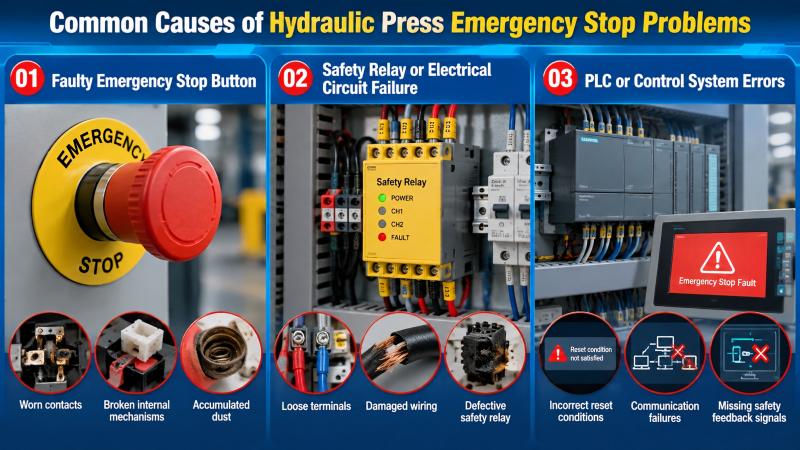
Emergency stop systems are designed to bring hazardous machine functions to a safe condition when activated. However, electrical faults, damaged components, or control system errors can prevent the machine from resetting correctly.
Faulty Emergency Stop Button
A damaged emergency stop button is a common cause of hydraulic press shutdown problems. Worn contacts, broken internal mechanisms, or accumulated dust may prevent the switch from functioning correctly.
I recommend inspecting the button for visible damage and confirming that its mechanical release mechanism operates normally.
Safety Relay or Electrical Circuit Failure
The safety relay monitors emergency stop signals and controls safety-related outputs. Loose terminals, damaged wiring, or a defective safety relay may prevent the hydraulic press from restarting.
A safety circuit fault may also trigger an alarm on the machine’s control panel.
PLC or Control System Errors
Some hydraulic presses use a programmable logic controller (PLC) to monitor safety system status. Incorrect reset conditions, communication failures, or missing safety feedback signals can prevent normal operation.
How to Troubleshoot Hydraulic Press Emergency Stop Problems
Before troubleshooting, stop production, secure the press against unexpected movement, and follow the manufacturer’s lockout/tagout procedures. Electrical testing and safety circuit repairs should only be performed by qualified personnel.
Step 1: Inspect the Emergency Stop Button
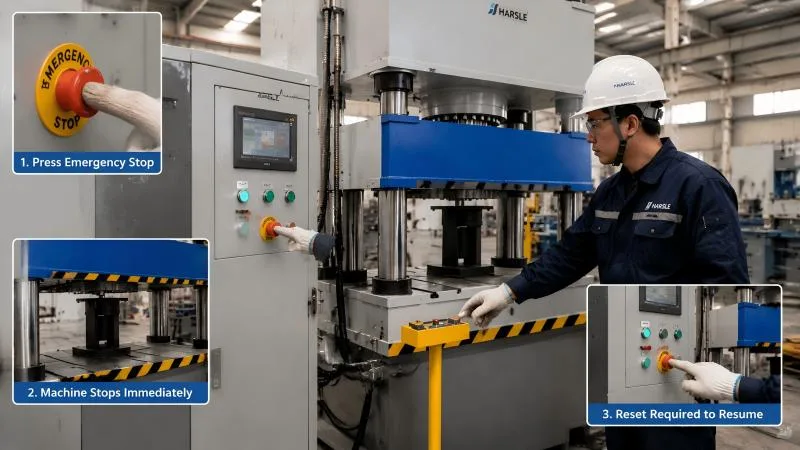
First, check whether the emergency stop button is physically damaged or stuck.
Rotate or release the button according to its design and confirm that it returns to its normal position.
If the button cannot reset mechanically, replace the defective component with a manufacturer-approved replacement.
Step 2: Check Electrical Connections and Wiring
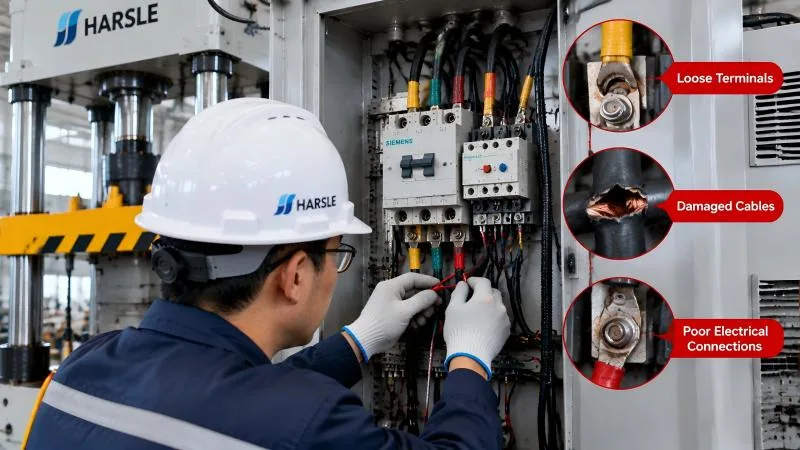
Loose electrical connections can interrupt emergency stop signals and prevent the hydraulic press from operating.
After isolating electrical power, a qualified technician should inspect the emergency stop wiring, terminals, and connectors.
Look for damaged insulation, corrosion, loose terminals, or broken conductors. Repair any identified defects according to the machine’s electrical schematic.
Step 3: Inspect the Safety Relay
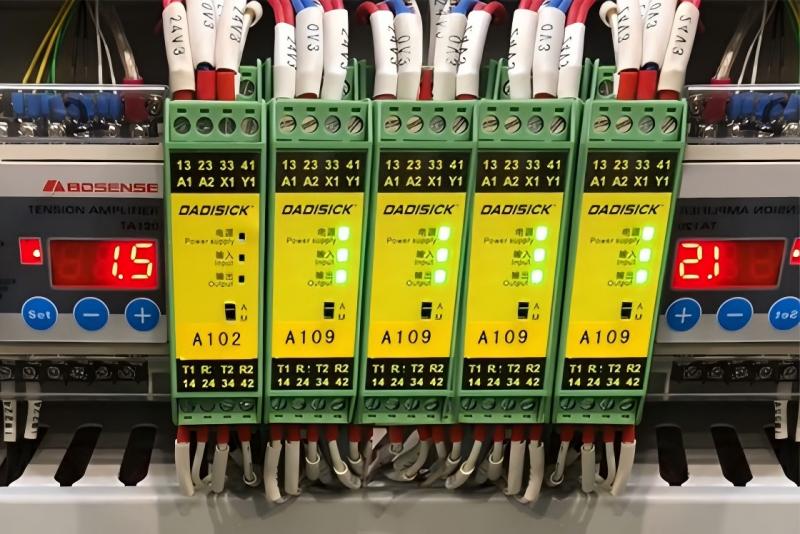
If the emergency stop button operates normally but the machine cannot restart, inspect the safety relay.
Check the relay’s diagnostic indicators and compare their status with the manufacturer’s documentation.
A qualified technician should verify that the safety relay receives the required input signals and that its reset conditions are satisfied.
Never bypass or jumper the safety relay to restore production.
Step 4: Check PLC Alarms and Reset Conditions
Review the hydraulic press control panel for emergency stop alarms or safety system fault messages.
I recommend recording the alarm code before clearing any messages.
Check whether safety guards, interlocks, and other protective devices are in their required operating conditions.
After correcting the fault, follow the manufacturer’s approved reset procedure. Releasing the emergency stop button must not automatically initiate hazardous movement.
Step 5: Verify Hydraulic Press Safety Functions
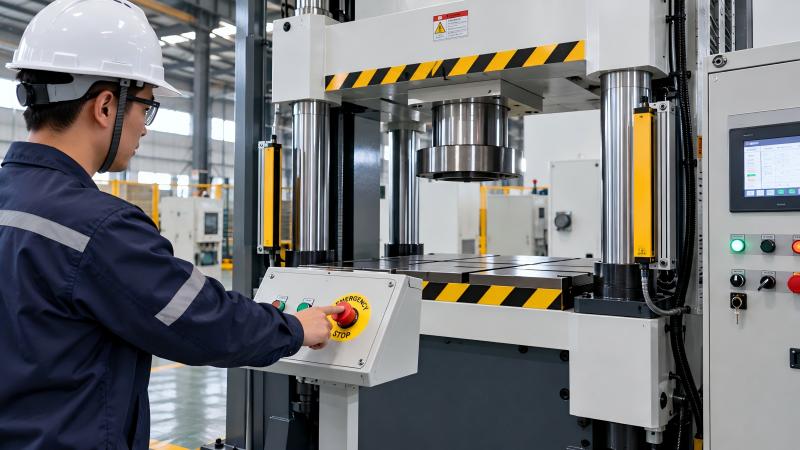
After completing repairs, qualified personnel should test the emergency stop system using the manufacturer’s prescribed procedure.
Confirm that activating each emergency stop device brings hazardous motion to the required safe condition and prevents unexpected restarting.
Return the machine to production only after all safety functions have been verified.
How to Prevent Hydraulic Press Emergency Stop Failures
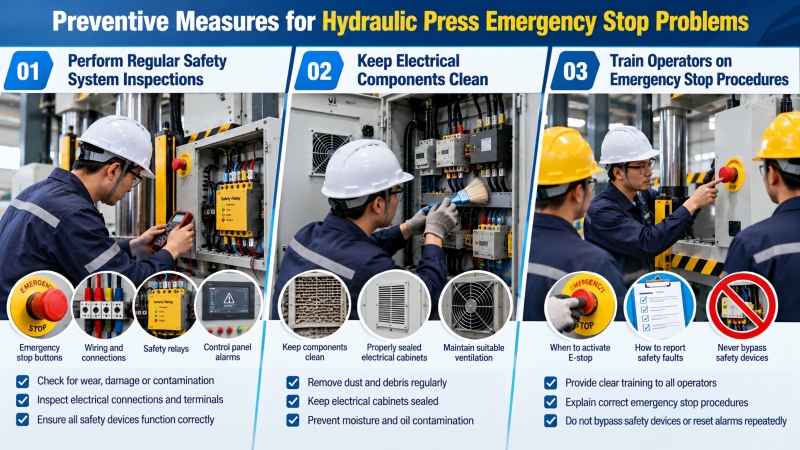
Perform Regular Safety System Inspections
I recommend checking emergency stop buttons, wiring, safety relays, and control panel alarms during scheduled maintenance.
Inspect components for mechanical wear, contamination, corrosion, and loose connections.
Keep Electrical Components Clean
Dust, moisture, and oil contamination can damage electrical contacts and reduce control system reliability.
Keep electrical cabinets properly sealed and maintain suitable ventilation to protect sensitive components.
Train Operators on Emergency Stop Procedures
Operators should understand when to activate emergency stop devices and how to report safety system faults.
Never allow operators to bypass safety devices or repeatedly reset unexplained emergency stop alarms.
FAQs
Why Won’t My Hydraulic Press Reset After an Emergency Stop?
A hydraulic press may fail to reset because of a defective emergency stop button, safety relay fault, open safety interlock, or unresolved PLC alarm. Check the indicated fault before attempting another reset.
Can Hydraulic Press Emergency Stop Problems Affect Production Safety?
Yes. A malfunctioning emergency stop system may prevent hazardous movement from being stopped as intended. The machine should remain out of service until the fault is corrected and safety functions are verified.
How Often Should Emergency Stop Systems Be Tested?
Testing frequency depends on the manufacturer’s recommendations, operating conditions, risk assessment, and applicable safety requirements. Include functional testing in your preventive maintenance program.
Conclusion
Resolving Hydraulic Press Emergency Stop Problems requires systematic inspection of emergency stop buttons, electrical wiring, safety relays, and control system conditions. I recommend identifying the actual fault rather than repeatedly resetting alarms or bypassing protective devices.
Regular inspections, operator training, and proper safety testing can reduce unexpected downtime while maintaining reliable machine operation.
For professional hydraulic press troubleshooting assistance, contact the HARSLE technical support team.


