


Hydraulic Press Accuracy Decrease is a common concern for manufacturers who rely on hydraulic presses for precise forming operations. Over time, factors such as component wear, hydraulic system changes, mechanical deformation, and improper maintenance can affect machine accuracy and product consistency. In this guide, I will explain why hydraulic press accuracy decreases, how to identify the causes, and what maintenance methods can help restore stable and reliable pressing performance.
What Causes Hydraulic Press Accuracy Decrease Over Time?
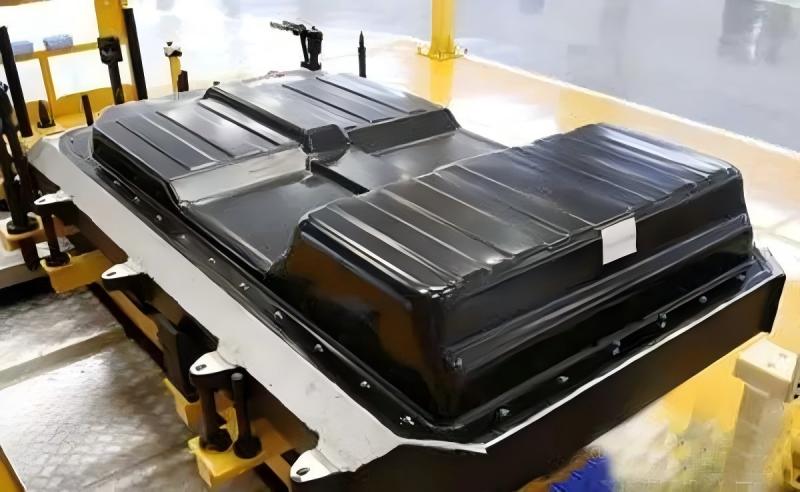
A hydraulic press depends on the cooperation of the hydraulic system, mechanical structure, control components, and measurement devices to achieve accurate operation. When any part of the system changes after long-term use, the machine may experience reduced positioning accuracy, uneven pressure distribution, or inconsistent forming results.
Understanding the main causes helps operators take preventive action before accuracy problems affect production quality.
Mechanical Wear Affects Hydraulic Press Precision
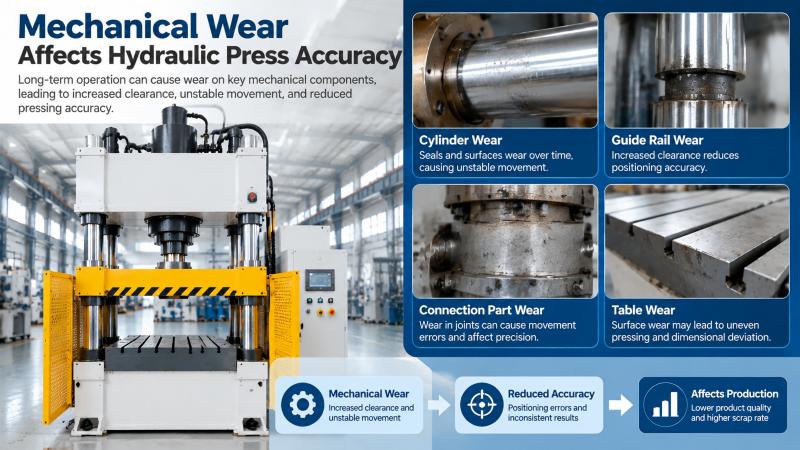
Mechanical components are continuously exposed to high loads and repeated movements during operation. Over time, wear may occur on guide systems, cylinders, connecting parts, and moving structures.
Excessive clearance between mechanical components can cause inaccurate movement and reduce repeatability. For example, worn guide rails may allow unwanted movement during pressing, affecting the final product dimensions.
Regular inspection of mechanical parts, lubrication points, and alignment conditions helps reduce the impact of wear on hydraulic press accuracy.
Hydraulic System Performance Changes
The hydraulic system plays an important role in maintaining stable pressing force and movement control. Changes in hydraulic oil quality, pressure stability, or valve performance can gradually affect machine accuracy.
Contaminated hydraulic oil may increase internal wear, while unstable pressure can cause inconsistent pressing results. Worn hydraulic valves or pumps may also reduce control precision.
I recommend regularly checking hydraulic oil condition, filtration performance, pressure values, and hydraulic components to maintain stable operation.
Sensor and Control System Errors
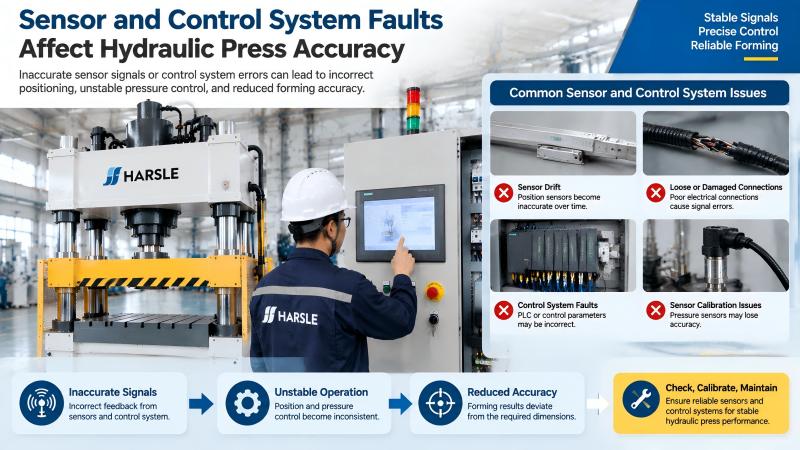
Modern hydraulic presses often use sensors, encoders, and PLC systems to control position and pressure. If these components become inaccurate, the machine may not receive correct feedback signals.
Sensor drift, loose connections, damaged cables, or incorrect parameters can lead to positioning errors. Even small signal deviations may affect final product accuracy in precision applications.
Checking sensor calibration, electrical connections, and control parameters is essential when investigating hydraulic press accuracy decrease.
How to Diagnose Hydraulic Press Accuracy Decrease Step by Step?
Step 1: Check Product Accuracy and Machine Repeatability
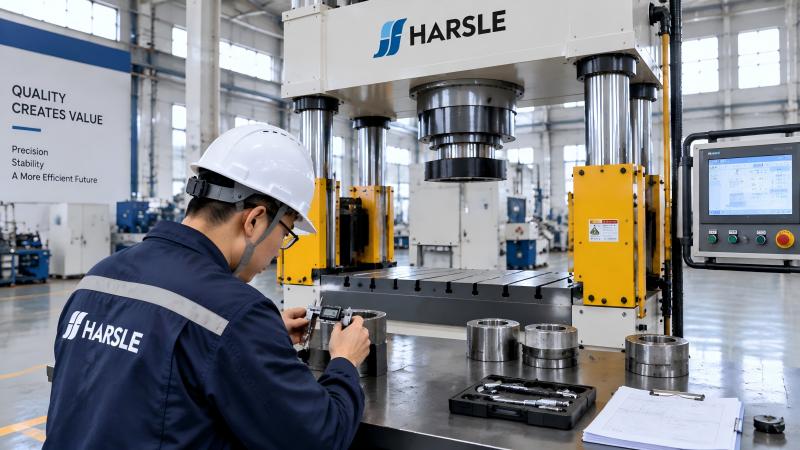
The first step is identifying when the accuracy problem occurs. Measure finished workpieces and compare the results with previous production data.
Check whether errors appear consistently or randomly. Consistent errors may indicate parameter or calibration issues, while random variations may suggest mechanical wear, hydraulic instability, or sensor problems.
Recording accuracy changes over time helps determine whether the problem is developing gradually or caused by a sudden failure.
Step 2: Inspect Hydraulic Pressure Stability
Stable hydraulic pressure is necessary for consistent pressing performance. Use pressure gauges or monitoring systems to verify whether the hydraulic system maintains the required pressure during operation.
If pressure fluctuates during pressing, inspect the hydraulic pump, valves, seals, and oil condition. Correcting pressure instability can significantly improve machine repeatability.
Step 3: Check Mechanical Alignment and Component Wear
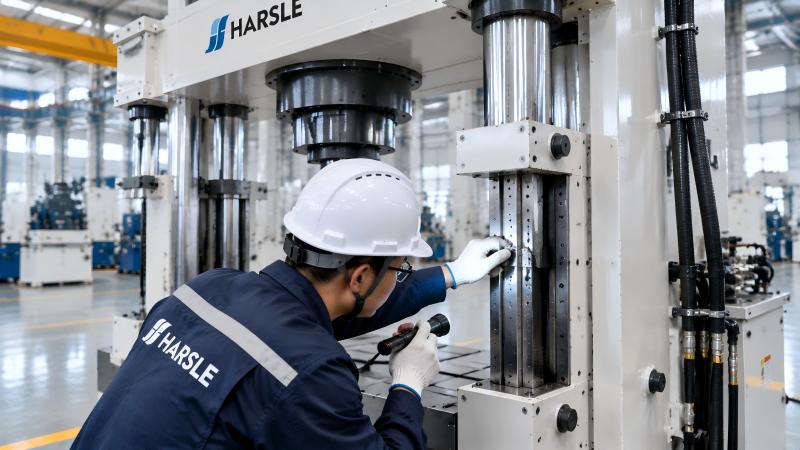
Inspect the machine structure, moving parts, guides, and connection points for signs of wear or misalignment.
Loose connections or excessive mechanical clearance can affect movement accuracy. Check lubrication conditions and ensure that all moving components operate smoothly.
Replacing worn components and restoring proper alignment can help recover machine precision.
Step 4: Verify Sensor Calibration and Control Parameters
Incorrect sensor feedback or control parameters can directly affect hydraulic press accuracy.
Check position sensors, pressure sensors, encoders, and PLC settings. Compare current parameters with the original machine configuration and recalibrate components when necessary.
Proper calibration ensures that the control system receives accurate information and makes correct adjustments.
How to Maintain Hydraulic Press Accuracy Long Term?
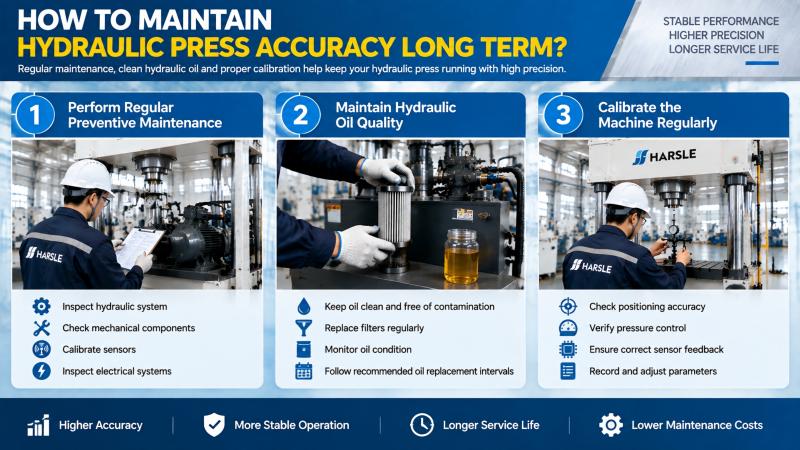
Perform Regular Preventive Maintenance
Preventive maintenance is one of the most effective ways to reduce hydraulic press accuracy decrease. I recommend creating a maintenance schedule that includes hydraulic system inspection, mechanical checks, sensor calibration, and electrical inspections.
Regular maintenance helps identify small problems before they develop into accuracy issues.
Maintain Hydraulic Oil Quality
Clean hydraulic oil protects pumps, valves, cylinders, and other precision components. Contaminated oil accelerates wear and may reduce system stability.
Replace filters regularly, monitor oil conditions, and follow recommended oil replacement intervals to maintain reliable hydraulic performance.
Calibrate the Machine Regularly
Calibration ensures that the hydraulic press continues to operate according to required accuracy standards.
I suggest checking positioning accuracy, pressure control, and sensor feedback at regular intervals, especially for machines used in high-volume or precision production.
Common Hydraulic Press Accuracy Problems and Solutions
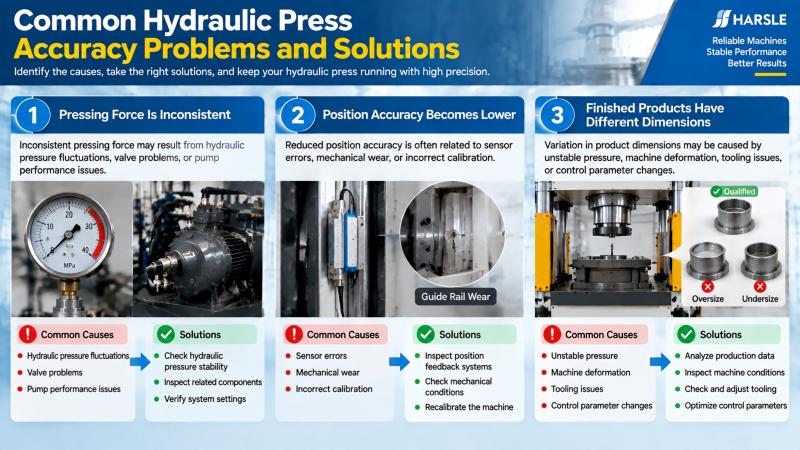
Pressing Force Is Inconsistent
Inconsistent pressing force may result from hydraulic pressure fluctuations, valve problems, or pump performance issues.
Check hydraulic pressure stability, inspect related components, and verify system settings to restore consistent operation.
Position Accuracy Becomes Lower
Reduced position accuracy is often related to sensor errors, mechanical wear, or incorrect calibration.
Inspect position feedback systems, check mechanical conditions, and recalibrate the machine when necessary.
Finished Products Have Different Dimensions
Variation in product dimensions may be caused by unstable pressure, machine deformation, tooling issues, or control parameter changes.
Analyze production data, inspect machine conditions, and correct the source of variation rather than adjusting only the final product measurements.
FAQs
Why does hydraulic press accuracy decrease over time?
Hydraulic press accuracy may decrease due to mechanical wear, hydraulic system changes, sensor errors, calibration issues, and insufficient maintenance.
How can I improve hydraulic press accuracy?
Regular maintenance, hydraulic system inspection, sensor calibration, proper parameter settings, and replacement of worn components can help improve accuracy.
How often should a hydraulic press be calibrated?
Calibration frequency depends on machine usage, production requirements, and accuracy standards. High-precision applications usually require more frequent checks.
Conclusion
Hydraulic Press Accuracy Decrease is usually caused by gradual changes in mechanical components, hydraulic performance, control systems, or maintenance conditions. By monitoring machine performance, inspecting key components, maintaining hydraulic systems, and performing regular calibration, operators can maintain stable accuracy and extend equipment service life.
At HARSLE, we provide professional hydraulic press solutions and technical support to help customers improve machine reliability and production quality. For more maintenance guidance or troubleshooting support, contact our engineering team or explore additional hydraulic press documentation resources.


