


Hydraulic Press Positioning Errors can affect production accuracy, reduce product consistency, and increase material waste. If your hydraulic press cannot maintain the correct ram position or repeatedly stops at different points, I recommend checking the hydraulic system, position sensors, mechanical components, and control settings. In this guide, I’ll explain the common causes of positioning errors, how to troubleshoot them step by step, and practical ways to restore reliable positioning accuracy.
What Causes Hydraulic Press Positioning Errors?
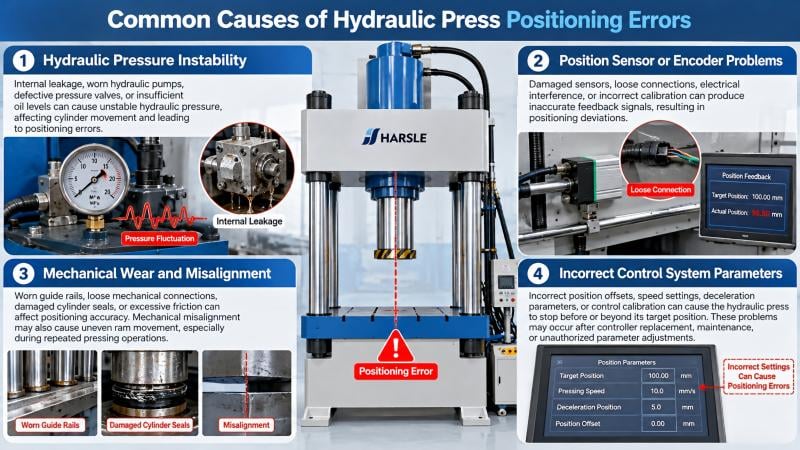
Hydraulic Pressure Instability
Unstable hydraulic pressure is a common cause of inaccurate ram positioning. Internal leakage, worn hydraulic pumps, defective pressure valves, or insufficient oil levels can affect cylinder movement.
When hydraulic pressure fluctuates, the ram may move inconsistently or fail to stop at the programmed position.
Position Sensor or Encoder Problems
Hydraulic presses often use linear displacement sensors, linear encoders, or other position feedback devices to monitor ram movement.
Damaged sensors, loose connections, electrical interference, or incorrect calibration can produce inaccurate feedback signals, resulting in positioning deviations.
Mechanical Wear and Misalignment
Worn guide rails, loose mechanical connections, damaged cylinder seals, or excessive friction can affect positioning accuracy.
Mechanical misalignment may also cause uneven ram movement, particularly during repeated pressing operations.
Incorrect Control System Parameters
Incorrect position offsets, speed settings, deceleration parameters, or control calibration can cause the hydraulic press to stop before or beyond its target position.
These problems may occur after controller replacement, maintenance, or unauthorized parameter adjustments.
How to Troubleshoot Hydraulic Press Positioning Errors
Step 1: Check Hydraulic Oil Level and Pressure
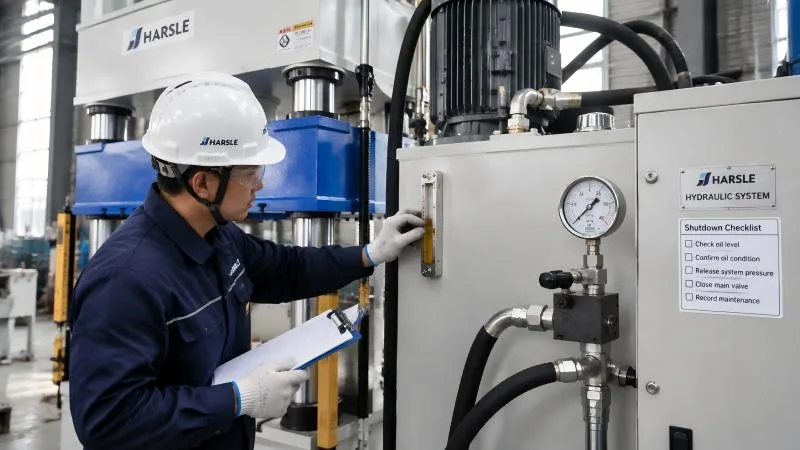
I recommend starting with the hydraulic oil level and operating pressure.
Check whether the oil level meets the manufacturer’s requirements and inspect the system for visible leakage.
Use an appropriate pressure gauge or diagnostic display to verify hydraulic pressure during operation.
If pressure fluctuates unexpectedly, inspect the pump, relief valve, directional valves, and cylinder seals. Any pressure adjustment should follow the manufacturer’s specifications.
Step 2: Inspect Position Sensors and Feedback Signals
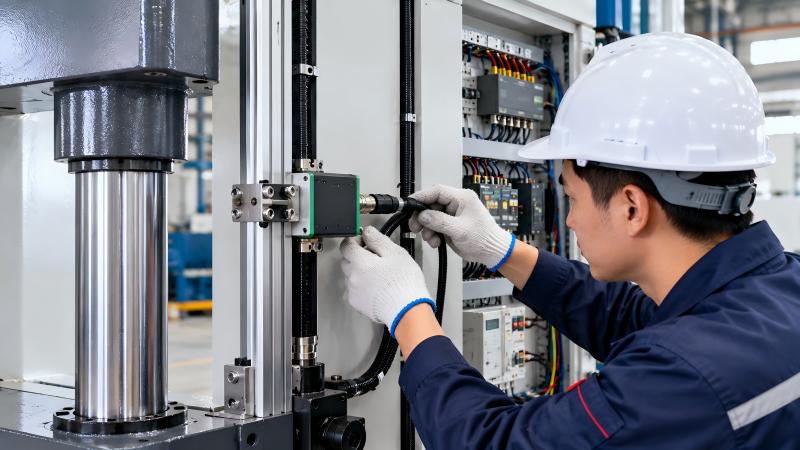
Check the position sensor, encoder, and associated electrical connections for damage or loose wiring.
Compare the actual ram position with the position displayed on the control system using suitable calibrated measuring equipment.
If the readings differ, inspect sensor mounting, signal stability, and calibration settings.
Replace defective components when necessary and recalibrate the feedback system according to the manufacturer’s instructions.
Step 3: Examine Mechanical Components
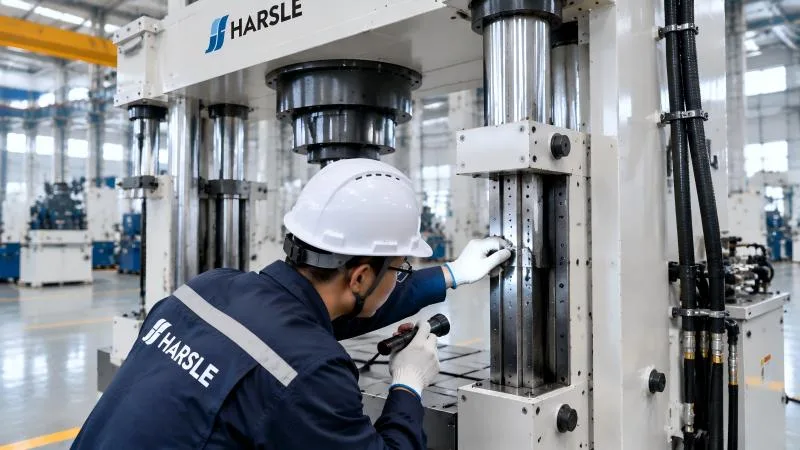
Before mechanical inspection, isolate electrical power, release stored hydraulic pressure, and mechanically support the ram using approved safety procedures.
Inspect guide rails, sliding surfaces, cylinder mounting points, and mechanical connections.
Look for excessive wear, looseness, contamination, or abnormal friction.
Correct mechanical alignment problems and replace damaged components before restarting production.
Step 4: Verify Control System Parameters
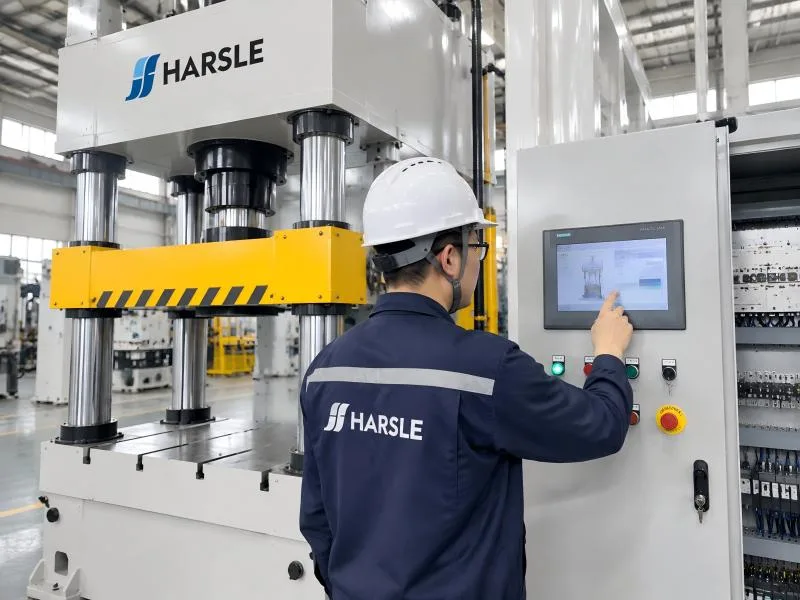
Review the hydraulic press controller’s positioning parameters, including target position, speed transitions, deceleration settings, and position compensation.
Compare these values with the manufacturer’s approved settings.
I recommend backing up the original parameters before making adjustments.
Avoid changing multiple parameters simultaneously, as this makes it difficult to identify the actual cause of positioning errors.
Step 5: Test Positioning Accuracy and Repeatability
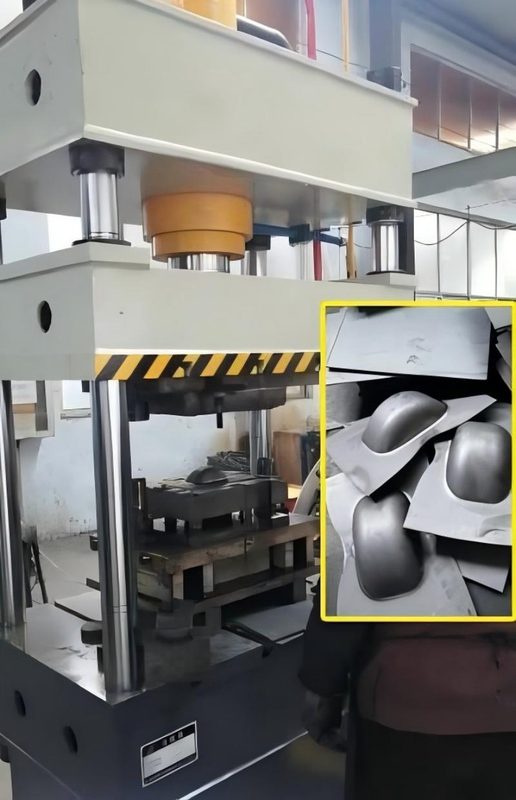
After completing repairs, qualified personnel should verify the positioning system using the manufacturer’s prescribed testing procedure.
Measure the actual ram position at several programmed positions and compare the results with the controller readings.
Repeat the positioning cycle several times under controlled conditions.
If deviations remain outside the machine’s specified tolerance, continue troubleshooting before returning the press to production.
How to Prevent Hydraulic Press Positioning Errors
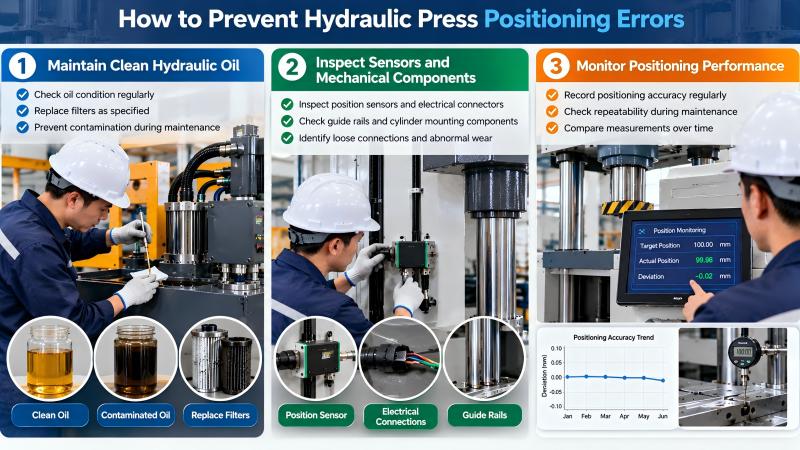
Maintain Clean Hydraulic Oil
Contaminated hydraulic oil can damage valves, accelerate component wear, and affect positioning stability.
I recommend checking oil condition regularly, replacing filters as specified, and preventing contamination during maintenance.
Inspect Sensors and Mechanical Components
Include position sensors, electrical connectors, guide rails, and cylinder mounting components in routine inspections.
Identify loose connections, abnormal wear, and sensor movement before they develop into serious positioning problems.
Monitor Positioning Performance
Record positioning accuracy and repeatability during scheduled maintenance.
Comparing measurements over time helps identify gradual deterioration in hydraulic or mechanical performance.
FAQS
What Are the Main Causes of Hydraulic Press Positioning Errors?
The main causes include unstable hydraulic pressure, faulty position sensors, mechanical wear, incorrect controller parameters, and internal cylinder leakage.
How Can I Improve Hydraulic Press Positioning Accuracy?
Start by checking hydraulic pressure stability, verifying sensor feedback, inspecting mechanical alignment, and confirming controller calibration. Always follow the manufacturer’s positioning tolerance requirements.
Why Does My Hydraulic Press Stop at Different Positions?
Inconsistent stopping positions may result from fluctuating hydraulic pressure, unstable sensor signals, excessive mechanical friction, or incorrect deceleration settings.
Can Hydraulic Oil Contamination Affect Positioning Accuracy?
Yes. Contaminated oil can interfere with hydraulic valve operation and increase component wear, potentially causing inconsistent cylinder movement and positioning errors.
Conclusion
Fixing Hydraulic Press Positioning Errors requires systematic inspection of hydraulic pressure, position feedback, mechanical components, and controller settings. Regular maintenance and positioning accuracy checks help reduce unexpected downtime and maintain consistent production quality.
If your hydraulic press continues experiencing positioning problems, contact the HARSLE technical support team for professional assistance.


