


Hydraulic Press Operating Hazards include crushing injuries, hydraulic fluid injection, electrical shocks, unexpected machine movement, excessive pressure, and flying workpiece fragments. Hydraulic presses generate extremely high forces, making improper operation, inadequate guarding, and poor maintenance particularly dangerous. In this guide, I’ll explain the main hazards associated with hydraulic press operation, how these risks can affect operators and equipment, and what practical safety measures manufacturers should implement to create a safer working environment.
What Are the Main Hydraulic Press Operating Hazards?
1. Crushing and Pinching Hazards
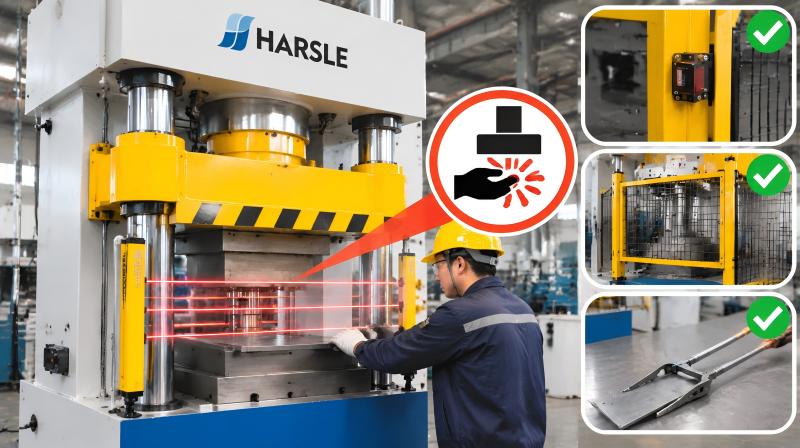
The most serious hazard when operating a hydraulic press is the risk of crushing or pinching injuries. The moving ram, upper and lower tooling, and worktable can generate enormous force during pressing operations.
If an operator places their hands or fingers inside the working area, accidental machine activation may cause severe injuries.
Preventive measures:
- Install appropriate fixed guards and interlocked protective devices.
- Use light curtains or other suitable presence-sensing devices where required.
- Keep hands away from the pressing area during automatic operation.
- Use approved tools or material-handling devices when positioning small workpieces.
- Never bypass safety interlocks or protective systems.
2. Hydraulic Fluid Leakage and High-Pressure Hazards
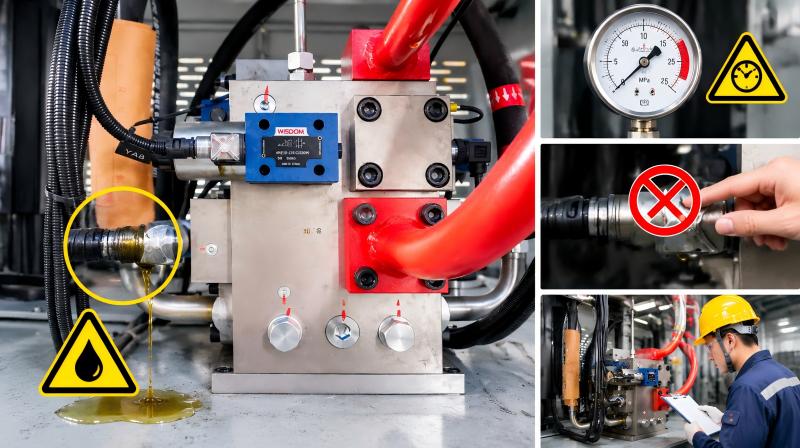
Hydraulic presses operate through pressurized hydraulic fluid. Damaged hoses, loose fittings, worn seals, or deteriorated connections may cause oil leakage.
High-pressure hydraulic fluid can penetrate human skin and cause serious injection injuries, even when the external wound appears small. Hydraulic leaks may also create slippery floors and increase fire risks under certain conditions.
Preventive measures:
- Inspect hydraulic hoses, fittings, cylinders, and seals regularly.
- Monitor hydraulic pressure and oil temperature.
- Never use hands to search for high-pressure leaks.
- Depressurize and isolate the hydraulic system before authorized maintenance.
- Replace damaged hoses and components according to manufacturer specifications.
3. Excessive Pressure and Machine Overload
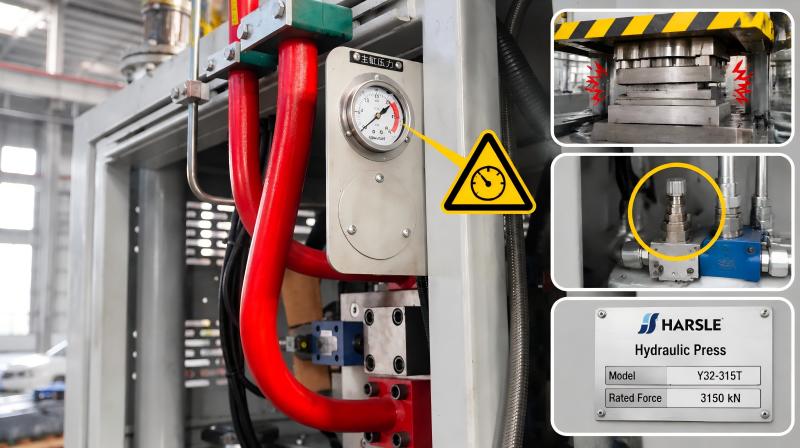
Operating a hydraulic press beyond its rated capacity can damage cylinders, pumps, valves, tooling, and structural components.
Overloading may occur when the material is too thick or hard, the tooling is unsuitable, or incorrect pressure settings are used.
Preventive measures:
- Calculate the required pressing force before production.
- Compare the required force with the machine’s rated capacity.
- Check material specifications and tooling requirements.
- Maintain properly functioning pressure relief valves.
- Stop operation if abnormal pressure readings or overload alarms appear.
4. Electrical Hazards and Unexpected Machine Movement
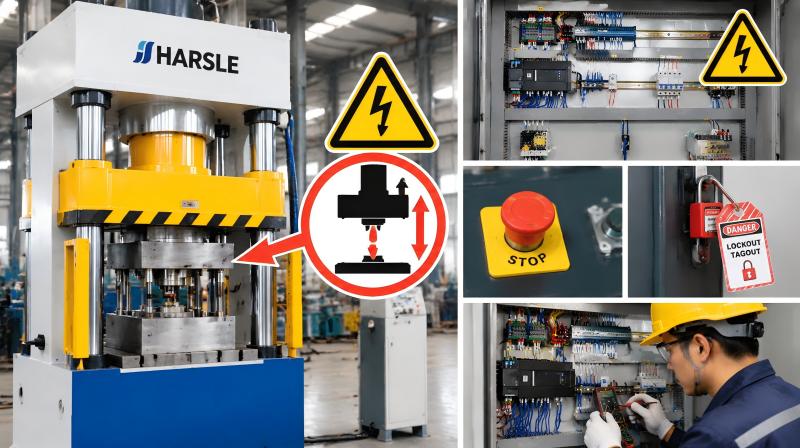
Hydraulic presses contain electrical control systems, motors, sensors, PLCs, and other components. Damaged wiring, electrical faults, or control-system failures may cause unexpected machine movement or electrical shock.
Unexpected ram movement is particularly dangerous during setup, cleaning, and maintenance.
Preventive measures:
- Inspect electrical connections and control cabinets regularly.
- Verify that emergency stop buttons and safety interlocks function correctly.
- Keep electrical cabinets closed and accessible only to authorized personnel.
- Apply lockout/tagout procedures before maintenance.
- Allow qualified electricians to troubleshoot electrical faults.
5. Flying Workpiece Fragments and Tooling Failure
Improperly positioned materials, damaged dies, excessive pressing force, or incorrect tooling installation may cause workpieces or tooling fragments to break loose during operation.
These fragments can strike operators and nearby personnel, causing eye and facial injuries.
Preventive measures:
- Inspect dies and tooling for cracks, deformation, and excessive wear.
- Confirm that workpieces are correctly positioned and supported.
- Use suitable protective barriers where necessary.
- Wear appropriate safety glasses or face protection.
- Never operate the machine with visibly damaged tooling.
How to Reduce Hydraulic Press Operating Hazards
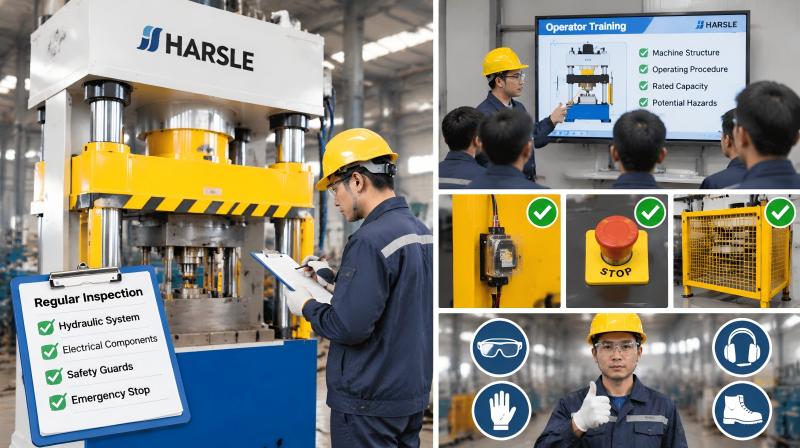
Establish Regular Machine Inspections
Before each shift, inspect the hydraulic system, electrical components, guards, emergency stops, and working area.
Check for oil leakage, unusual noises, damaged cables, loose connections, and visible structural damage. Any serious safety defect should be addressed before production begins.
Provide Proper Operator Training
Operators should understand the hydraulic press structure, operating procedures, rated capacity, emergency shutdown process, and potential hazards.
Training should also explain how to recognize abnormal pressure readings, hydraulic leakage, unexpected ram movement, and safety-system failures.
Maintain Safety Devices and Protective Equipment
Ensure that guards, interlocks, emergency stops, and other protective devices are properly installed and maintained.
Operators should also wear suitable personal protective equipment, including safety glasses, protective footwear, and task-appropriate gloves. PPE must supplement rather than replace machine safeguarding.
FAQs
What Is the Most Dangerous Hydraulic Press Hazard?
Crushing injuries caused by contact with the moving ram and tooling are among the most serious hazards. Hydraulic fluid injection and unexpected machine movement can also result in severe injuries.
What Causes Hydraulic Press Overloading?
Common causes include excessive material thickness, incorrect pressure settings, unsuitable tooling, and improper force calculations. Always compare the required pressing force with the machine’s rated capacity.
How Often Should a Hydraulic Press Be Inspected?
Operators should perform basic visual and functional inspections before each shift. More detailed inspections of hydraulic, electrical, mechanical, and safety components should follow the manufacturer’s maintenance schedule.
Conclusion
Understanding Hydraulic Press Operating Hazards is essential for protecting operators, maintaining equipment reliability, and preventing unexpected production downtime. Crushing injuries, hydraulic leakage, excessive pressure, electrical failures, and tooling damage all require appropriate preventive measures.
I recommend combining regular inspections, operator training, effective machine guarding, and preventive maintenance to establish a comprehensive hydraulic press safety program.


