


Hydraulic Press Two-Hand Control Safety is an essential measure for protecting operators from crushing injuries during hydraulic press operations. A two-hand control system requires the operator to use both hands simultaneously to initiate a machine cycle, helping keep their hands away from the hazardous pressing area. However, simply installing two push buttons does not guarantee safe operation. The system must meet applicable safety requirements, maintain an appropriate safety distance, and prevent unauthorized or unintended activation. In this guide, I’ll explain how hydraulic press two-hand controls work, their main safety requirements, and how to inspect and maintain them for reliable protection.
Why Are Two-Hand Controls Important on Hydraulic Presses?
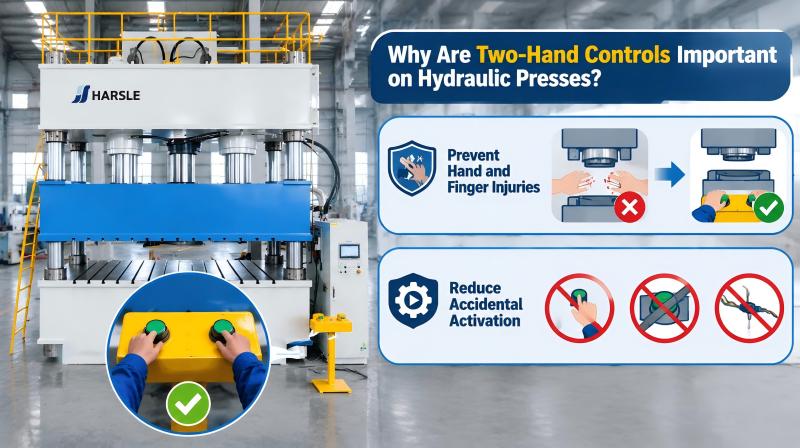
Preventing Hand and Finger Injuries
Hydraulic presses generate substantial force during pressing, forming, and stamping operations. If an operator’s hands enter the working area during a pressing cycle, contact with the moving ram or tooling can cause severe crushing injuries.
A properly designed two-hand control system requires both hands to remain on separate operating buttons during cycle initiation. This reduces the possibility of accidental hand entry into the danger zone during the protected portion of the machine cycle.
Reducing Accidental Machine Activation
Two-hand controls also help prevent unintended machine operation. Safety-related control functions should ensure that the press cannot start through a single button, a stuck switch, or an unauthorized electrical connection.
What Are the Main Safety Requirements for Hydraulic Press Two-Hand Controls?
1. Simultaneous Operation of Both Buttons
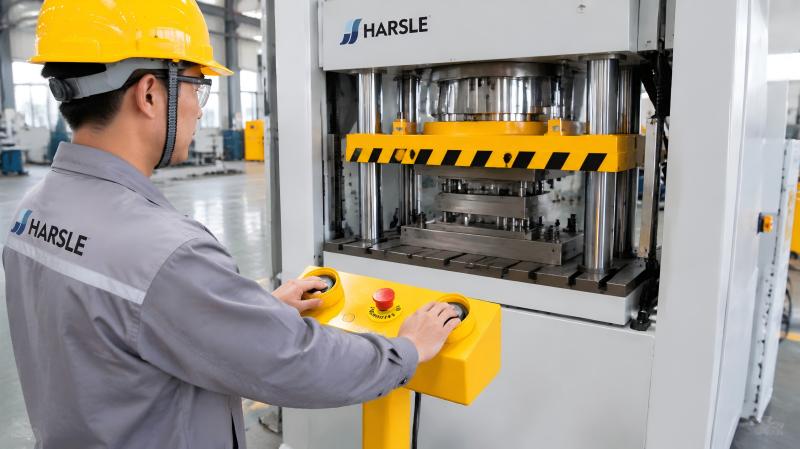
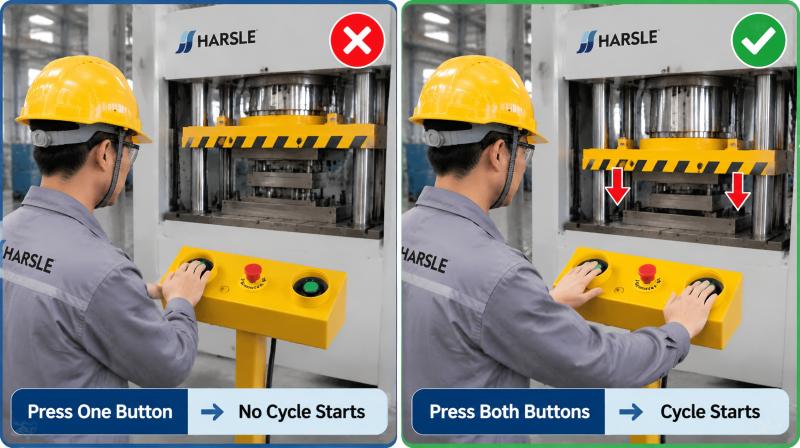
The two-hand control system must require both push buttons to be actuated within the permitted simultaneity time specified by the applicable safety standard and system design.
Pressing only one button must not initiate the hazardous machine movement. If the operator releases either button before the required control action is completed, the system must respond according to its validated safety design.
This requirement prevents operators from initiating a cycle using only one hand while placing the other hand near the tooling.
2. Anti-Tie-Down and Anti-Repeat Protection
Anti-tie-down protection prevents operators from holding or permanently fixing one button in the activated position to operate the press with only the other hand.
Anti-repeat protection ensures that releasing and pressing the buttons again cannot unintentionally initiate another cycle without the required reset or release sequence.
Both functions are important for preventing unsafe operation caused by stuck buttons, mechanical interference, or deliberate bypass attempts.
3. Correct Safety Distance Between Controls and the Danger Zone
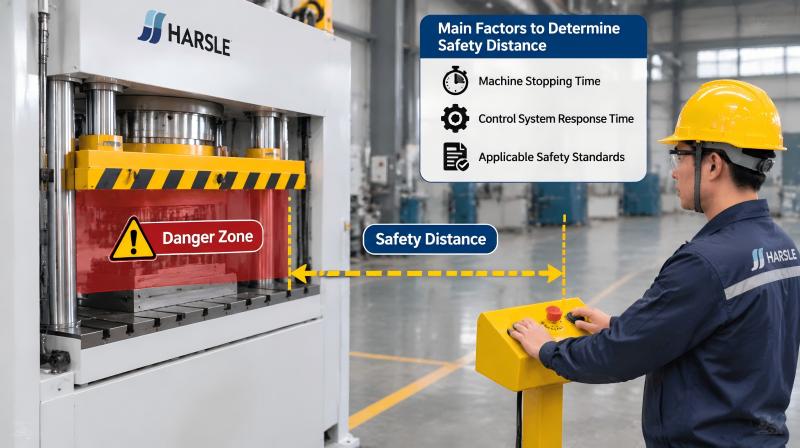
The distance between the two-hand control station and the hydraulic press danger zone is critical.
The control station must be positioned so that the operator cannot reach the hazardous area before the machine completes its safety-related stopping response, where applicable.
The required distance depends on factors such as machine stopping time, control system response time, and applicable safety standards.
I recommend having qualified safety engineers calculate and verify the installation distance rather than estimating it during machine setup.
4. Independent and Reliable Control Devices
Both push buttons should be suitable for industrial safety applications and installed in a stable control station.
The safety-related control system should detect relevant faults, such as contact failures, short circuits, and wiring abnormalities, according to its required performance level.
For hydraulic presses requiring safety-rated control functions, the two-hand system must be designed and validated using appropriate safety components and control architecture.
5. Protection Against Unauthorized Bypassing
Operators must never use tape, mechanical objects, or electrical modifications to keep a push button permanently activated.
Safety circuits should not be bypassed to accelerate production or overcome a faulty control device.
Any electrical troubleshooting, safety relay replacement, or PLC safety logic adjustment must be performed by qualified personnel following approved procedures.
How to Inspect a Hydraulic Press Two-Hand Control System
Step 1: Perform a Visual Inspection
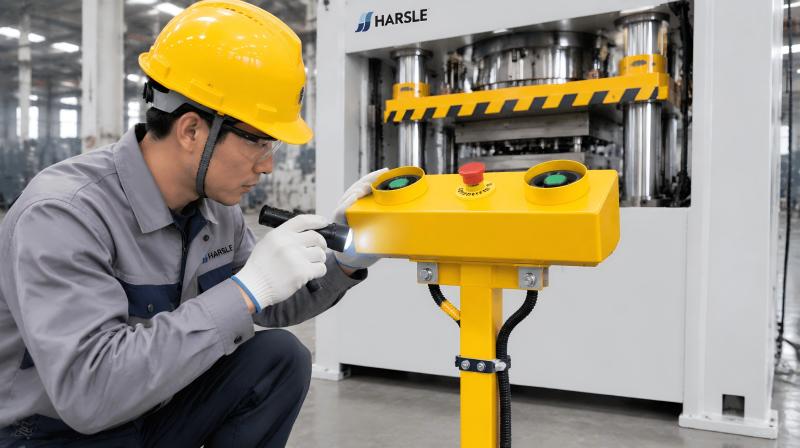
Before operation, inspect both push buttons, their mounting brackets, cables, and protective housings.
Look for cracked button covers, loose connections, damaged wiring, or signs of unauthorized modification.
Step 2: Test Simultaneous Operation
Following the manufacturer’s approved test procedure, verify that operating only one button does not initiate the hazardous cycle.
Confirm that both buttons must be activated within the specified time window.
Step 3: Verify Anti-Tie-Down and Anti-Repeat Functions
Check that holding one button continuously cannot enable repeated cycles through operation of the second button.
Verify that the system requires the appropriate release and reset sequence before another cycle can begin.
Step 4: Test the Safety Response
Have qualified personnel verify the system’s response to button release and relevant simulated faults using approved testing procedures.
Confirm that the hydraulic press behaves as specified by its validated safety design.
Do not perform tests that expose personnel to moving tooling or require bypassing safety devices.
Common Two-Hand Control Safety Mistakes to Avoid
- Operating with one button: Never attempt to bypass simultaneous operation requirements.
- Incorrect installation distance: Poor positioning may allow operators to reach the danger zone before the required safety response.
- Ignoring damaged buttons: Defective switches and cables require immediate attention.
- Disabling safety functions: Never bypass anti-tie-down or anti-repeat protection.
- Skipping inspections: Regular functional testing is essential for identifying control system faults.
- Relying only on two-hand controls: Additional guards and protective devices may be necessary to protect other personnel and prevent access to hazardous areas.
FAQs
Are Two-Hand Controls Mandatory for Every Hydraulic Press?
Not necessarily. Required safeguarding depends on the machine design, application, risk assessment, and applicable safety regulations. Other protective solutions may be required or more appropriate.
What Is the Purpose of Anti-Tie-Down Protection?
It prevents an operator from holding one button continuously and activating the machine using only the second button. Both controls must follow the required activation sequence.
Can Two-Hand Controls Replace Physical Machine Guards?
No. Two-hand controls primarily protect the operator using the control station. They do not automatically protect other workers or prevent access to the danger zone from other directions.
How Often Should Hydraulic Press Two-Hand Controls Be Tested?
Perform the required functional checks before operation according to the manufacturer’s instructions and workplace safety procedures. More detailed inspections and validation should follow the applicable maintenance schedule and safety requirements.
Conclusion
Hydraulic Press Two-Hand Control Safety depends on correct system design, simultaneous operation, anti-tie-down protection, appropriate safety distance, and regular functional testing.
I recommend combining two-hand controls with suitable machine guarding, operator training, and preventive maintenance to achieve reliable protection throughout production.


