


Machine à cisailler Foot Pedal Maintenance is essential for ensuring reliable machine activation, smooth cutting operations, and safe production performance. The foot pedal plays an important role in controlling the shearing machine, and proper maintenance helps prevent unexpected stops, improve operator safety, and extend the service life of the control system. In this article, I’ll explain how to inspect, clean, lubricate, and troubleshoot a shearing machine foot pedal system to keep it working reliably in daily production. Whether you are an operator or maintenance engineer, following these practical steps can help reduce downtime and maintain stable machine performance.
Comprendre le Machine à cisailler Foot Pedal System
How the Foot Pedal Controls Shearing Operations
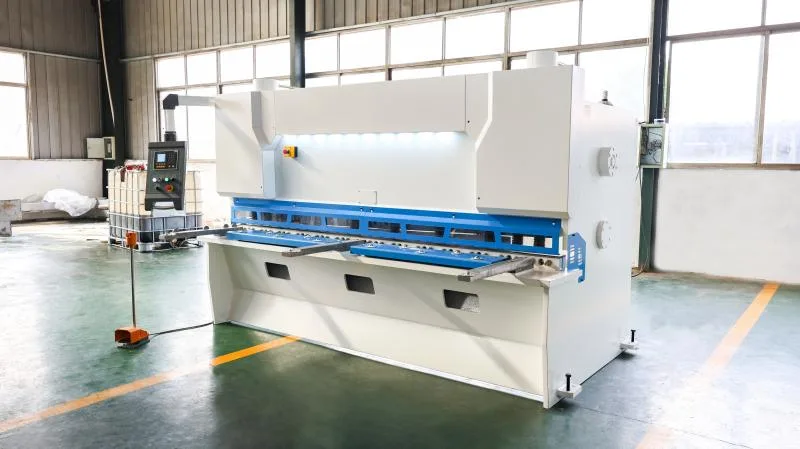
The foot pedal is a key control component that allows operators to start the cutting cycle without using their hands. When the pedal is pressed, it sends an electrical or mechanical signal to the machine control system, activating the blade movement.
A properly functioning foot pedal ensures quick response, accurate operation, and safer workflow. Any delay, sticking, or signal failure can affect production efficiency and may create safety risks.
Common Problems Caused by Poor Maintenance
Without regular inspection, the foot pedal may experience issues such as delayed response, unstable signals, accidental activation, or complete failure. Dust, metal chips, moisture, and mechanical wear are common factors that affect its performance.
Régulier Shearing Machine Foot Pedal Maintenance helps identify these problems early and prevents more serious control system failures.
Step-by-Step Shearing Machine Foot Pedal Maintenance Guide
Step 1: Inspect the Foot Pedal Appearance and Condition
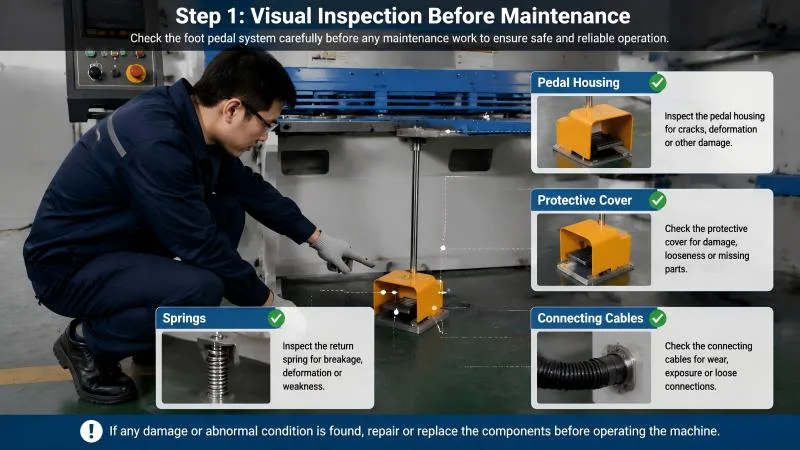
I always recommend starting with a visual inspection before performing any maintenance work. Check the pedal housing, protective cover, springs, and connecting cables for signs of damage.
Look for cracks, deformation, loose parts, or excessive wear. A damaged pedal cover can allow dust and metal particles to enter the internal components, causing electrical or mechanical failures.
Step 2: Clean Dust and Metal Debris Regularly
During shearing operations, metal scraps and dust can accumulate around the foot pedal area. These contaminants may block pedal movement or affect internal switches.
Use a clean cloth, soft brush, or compressed air to remove debris regularly. Avoid using excessive air pressure near electrical components, as it may push contaminants deeper into the system.
Keeping the working area clean is one of the simplest but most effective methods for maintaining a reliable foot pedal system.
Step 3: Check Electrical Connections and Wiring
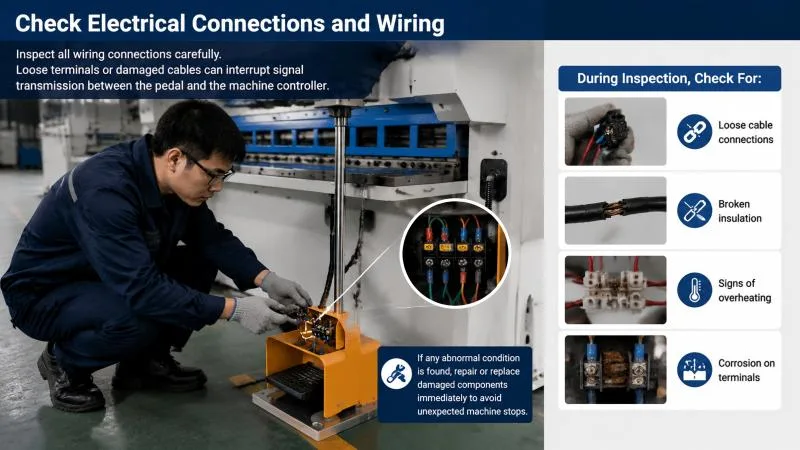
For electrically controlled foot pedals, inspect all wiring connections carefully. Loose terminals or damaged cables can interrupt signal transmission between the pedal and the machine controller.
During inspection, check for:
- Loose cable connections
- Broken insulation
- Signs of overheating
- Corrosion on terminals
If any abnormal condition is found, repair or replace damaged components immediately to avoid unexpected machine stops.
Step 4: Inspect Mechanical Movement and Lubricate Moving Parts
Mechanical foot pedals rely on smooth movement of internal components. Check whether the pedal returns smoothly after being pressed.
If the pedal feels stiff or slow, inspect the spring mechanism and moving joints. Apply suitable lubricant to mechanical connection points according to the manufacturer’s recommendations.
Avoid excessive lubrication because oil accumulation can attract dust and create additional problems.
Step 5: Test Foot Pedal Response and Accuracy
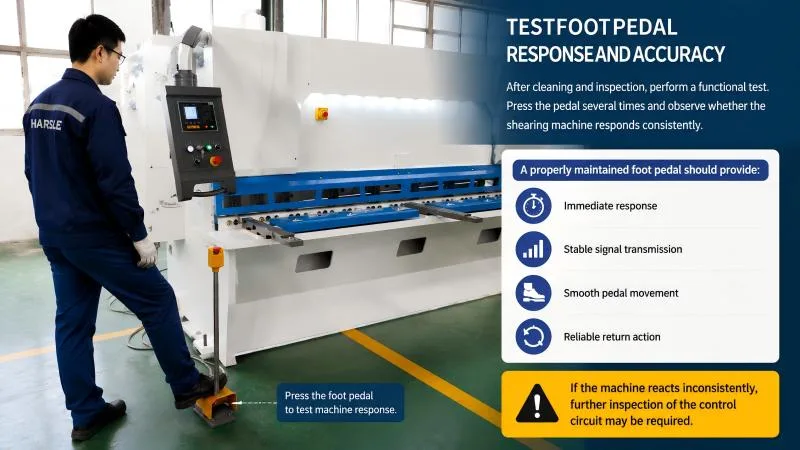
After cleaning and inspection, perform a functional test. Press the pedal several times and observe whether the shearing machine responds consistently.
A properly maintained foot pedal should provide:
- Immediate response
- Stable signal transmission
- Smooth pedal movement
- Reliable return action
If the machine reacts inconsistently, further inspection of the control circuit may be required.
Common Maintenance Tips for Long-Term Foot Pedal Performance
Keep the Pedal Area Clean and Dry
Moisture and contamination are major causes of electrical failures. Keeping the area around the foot pedal clean and dry helps prevent corrosion and improves component reliability.
Avoid Excessive Operating Force
Operators should press the pedal normally without applying unnecessary force. Excessive pressure can damage internal switches, springs, and mechanical structures.
Follow a Regular Inspection Schedule
I recommend including foot pedal inspection in routine shearing machine maintenance plans. Monthly checks are suitable for most production environments, while heavy-duty applications may require more frequent inspections.
FAQ
How often should I perform Shearing Machine Foot Pedal Maintenance?
Regular inspection should be performed at least once a month. Machines operating in dusty or high-volume environments may require more frequent maintenance.
Why does my shearing machine foot pedal have a delayed response?
Delayed response may be caused by loose wiring, damaged switches, accumulated debris, or internal mechanical wear.
Can I use any lubricant on the foot pedal mechanism?
No. Use only suitable lubricants recommended for industrial equipment. Incorrect lubricants may attract dust or damage components.
What should I do if the foot pedal does not work at all?
First check the power connection, wiring, and switch condition. If the problem continues, inspect the control system or contact professional technical support.
Conclusion
Approprié Shearing Machine Foot Pedal Maintenance is essential for ensuring safe operation, reducing unexpected downtime, and extending equipment lifespan. Regular cleaning, electrical inspection, mechanical adjustment, and performance testing can help keep the foot pedal system working reliably.
By adding foot pedal maintenance to your regular machine care routine, you can improve production efficiency and maintain safer working conditions. For more technical guidance or support with shearing machine maintenance, feel free to contact our team.


