


Machine à cisailler Encoder Signal problems are one of the common issues I encounter when troubleshooting modern CNC shearing machines. When the encoder signal becomes unstable or disappears completely, the machine may experience positioning errors, inaccurate cutting, unexpected stops, or control system alarms. If you want to understand why encoder signal loss happens and how to solve it effectively, you’re in the right place. In this article, I’ll explain the main causes of encoder signal failure, inspection methods, and practical solutions to help you maintain stable machine operation and improve cutting accuracy.
Understanding the Role of Encoder Signals in Cisailles
What Does a Shearing Machine Encoder Do?
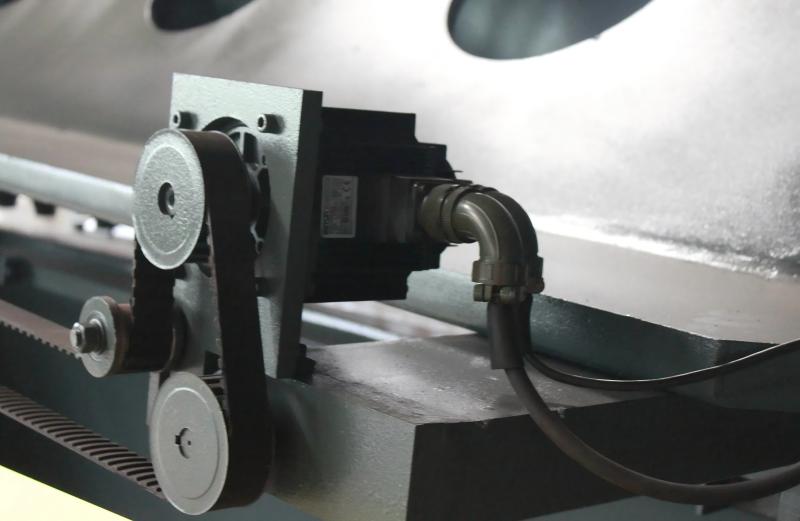
An encoder is an important feedback device used to measure the position, speed, and movement of machine components. In CNC shearing machines, encoders provide real-time position information to the controller, allowing the system to accurately control blade movement, backgauge positioning, and cutting operations.
Le Shearing Machine Encoder Signal acts as a communication bridge between mechanical movement and the CNC control system. Without accurate feedback signals, the controller cannot determine the actual position of moving components, which affects machine performance.
Why Encoder Signal Stability Is Important
A stable encoder signal ensures precise positioning and repeatable cutting results. When the signal is interrupted or incorrect, the machine may produce inaccurate dimensions, inconsistent cutting quality, or even stop operation to protect itself.
Regular inspection and maintenance of encoder systems are essential for maintaining long-term machine reliability.
Common Causes of Shearing Machine Encoder Signal Loss
Loose or Damaged Encoder Wiring
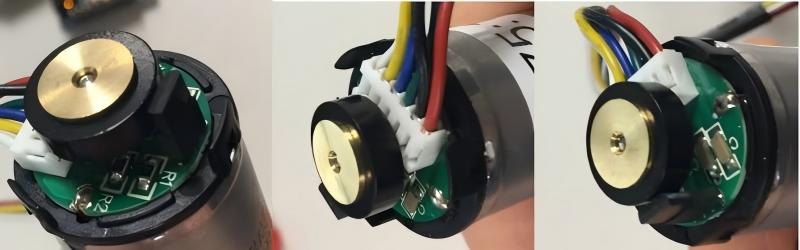
Check Cable Connections and Terminals
One of the most common causes of encoder signal loss is loose or damaged wiring. Continuous machine vibration can gradually loosen connectors or damage cables, causing intermittent signal problems.
I recommend checking all encoder cables, terminals, and connectors regularly. Ensure that connections are tight and that cables are protected from mechanical damage, oil contamination, and excessive bending.
Inspect Cable Shielding
Encoder signals are sensitive to electrical interference. Damaged shielding or poor grounding can allow electromagnetic noise from motors or power systems to affect signal transmission.
Proper cable shielding and grounding help maintain a stable Shearing Machine Encoder Signal pendant le fonctionnement.
Encoder Contamination or Physical Damage
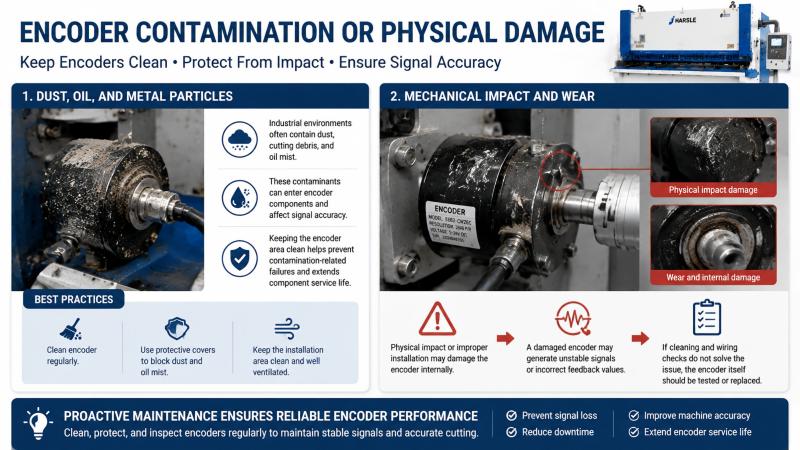
Dust, Oil, and Metal Particles
Industrial environments often contain dust, cutting debris, and oil mist. These contaminants can enter encoder components and affect signal accuracy.
Keeping the encoder area clean helps prevent contamination-related failures and extends component service life.
Mechanical Impact and Wear
Physical impact or improper installation may damage the encoder internally. A damaged encoder may generate unstable signals or incorrect feedback values.
If cleaning and wiring checks do not solve the issue, the encoder itself should be tested or replaced.
Electrical Interference and Power Issues
Electromagnetic Interference From Motors
Large motors, frequency converters, and power cables can create electrical noise that interferes with encoder signals.
To reduce interference, encoder cables should be installed separately from high-power cables whenever possible.
Unstable Power Supply
Voltage fluctuations can affect encoder performance and CNC control systems. Installing stable power protection equipment helps maintain reliable operation.
Incorrect Encoder Parameter Settings
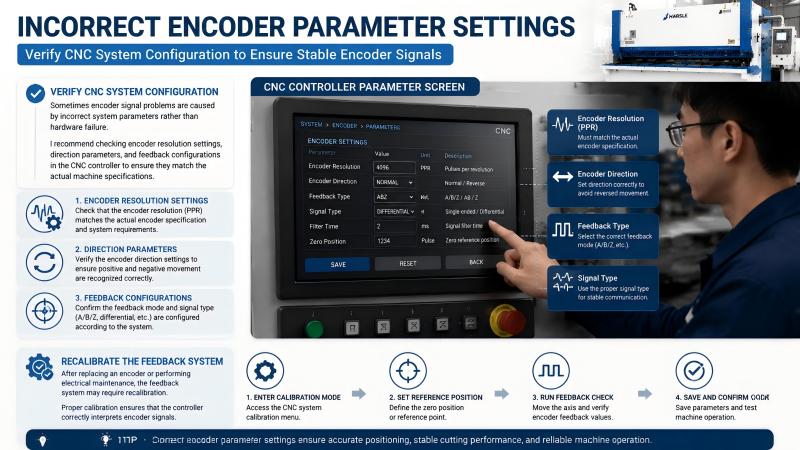
Verify CNC System Configuration
Sometimes encoder signal problems are caused by incorrect system parameters rather than hardware failure.
I recommend checking encoder resolution settings, direction parameters, and feedback configurations in the CNC controller to ensure they match the actual machine specifications.
Recalibrate the Feedback System
After replacing an encoder or performing electrical maintenance, the feedback system may require recalibration. Proper calibration ensures that the controller correctly interprets encoder signals.
How to Troubleshoot Shearing Machine Encoder Signal Problems
Step 1: Check Encoder Connections
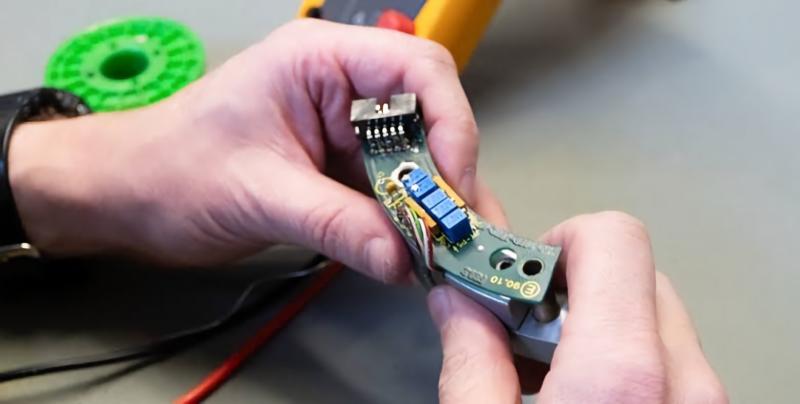
Start by inspecting all cables, connectors, and terminals. Look for loose connections, damaged insulation, or signs of overheating.
Reconnect any loose terminals and verify whether the signal returns to normal.
Step 2: Monitor Encoder Feedback Data
Use the CNC diagnostic interface to check encoder feedback values. Abnormal readings, signal interruptions, or inconsistent position data can help identify the source of the problem.
Step 3: Inspect Mechanical Movement
Mechanical issues such as excessive vibration, misalignment, or backlash can affect encoder performance.
Check moving components and ensure that the encoder installation position remains stable.
Step 4: Test or Replace Faulty Components
If wiring, parameters, and mechanical conditions are normal, the encoder may be damaged. Replace defective components according to manufacturer recommendations.
Best Practices to Prevent Encoder Signal Loss
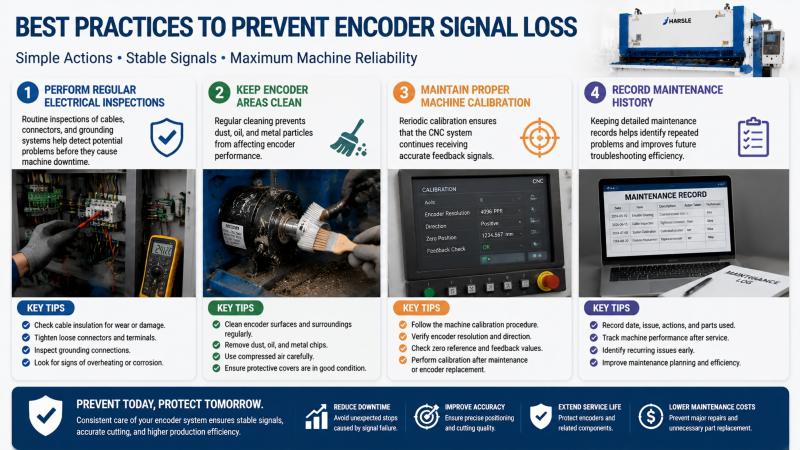
Perform Regular Electrical Inspections
Routine inspections of cables, connectors, and grounding systems help detect potential problems before they cause machine downtime.
Keep Encoder Areas Clean
Regular cleaning prevents dust, oil, and metal particles from affecting encoder performance.
Maintain Proper Machine Calibration
Periodic calibration ensures that the CNC system continues receiving accurate feedback signals.
Record Maintenance History
Keeping detailed maintenance records helps identify repeated problems and improves future troubleshooting efficiency.
FAQ
What are the common symptoms of Shearing Machine Encoder Signal failure?
Common symptoms include positioning errors, inaccurate cutting dimensions, CNC alarms, unstable movement, and unexpected machine stops.
Can a damaged cable cause encoder signal loss?
Yes. Broken wires, loose connectors, and damaged shielding are among the most common causes of unstable encoder signals.
How often should I inspect the encoder system on a shearing machine?
Inspection frequency depends on operating conditions, but regular monthly checks are recommended for machines working in demanding environments.
Q: Does replacing an encoder require machine recalibration?
Yes. After encoder replacement, the CNC system usually needs parameter verification and calibration to ensure accurate feedback.
Conclusion
A stable Shearing Machine Encoder Signal is essential for accurate positioning, reliable operation, and consistent cutting performance. Encoder signal loss is usually caused by wiring problems, contamination, electrical interference, mechanical issues, or incorrect settings.
By performing regular inspections, maintaining clean working conditions, checking electrical connections, and calibrating the control system, you can reduce unexpected downtime and extend the service life of your shearing machine.
For more technical support or guidance on CNC shearing machine maintenance, feel free to contact our team for professional assistance.


