


Le Machine à cisailler Emergency Stop is a critical safety feature that helps prevent serious injuries and reduce equipment damage when unexpected hazards occur. It allows operators to stop machine operation quickly in situations such as material jamming, abnormal blade movement, or dangerous malfunctions. In this guide, I’ll explain how to locate and activate the emergency stop, what to do after stopping the machine, and how to reset it safely before resuming production.
Qu'est-ce qu'un Machine à cisailler Emergency Stop?
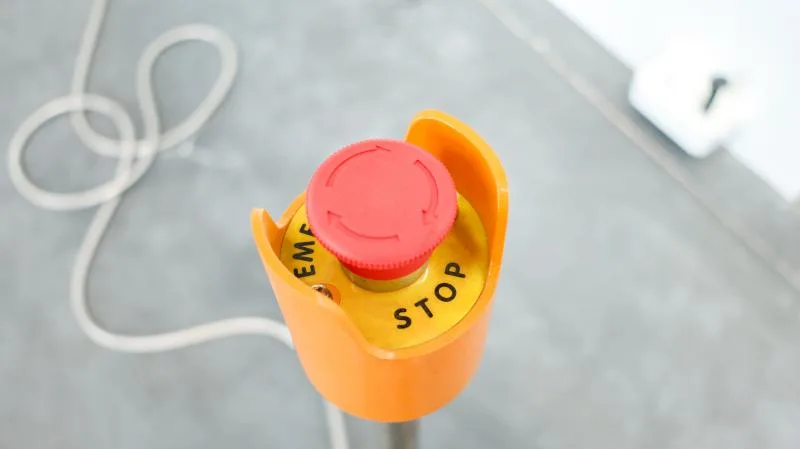
An emergency stop, commonly called an E-stop, is a safety device that allows an operator to initiate an emergency shutdown quickly. It is typically a red mushroom-shaped button mounted on a yellow background near the control panel. Depending on the machine design, additional emergency stop devices may be installed at other operator stations.
When activated, the E-stop sends a stop command through the machine’s safety control system. The resulting response depends on the machine’s electrical and hydraulic design. Operators should never assume that pressing the button immediately eliminates all stored hydraulic pressure or makes every moving component safe to touch.
When Should You Use the Shearing Machine Emergency Stop?
Stop Immediately When Abnormal Noise Occurs
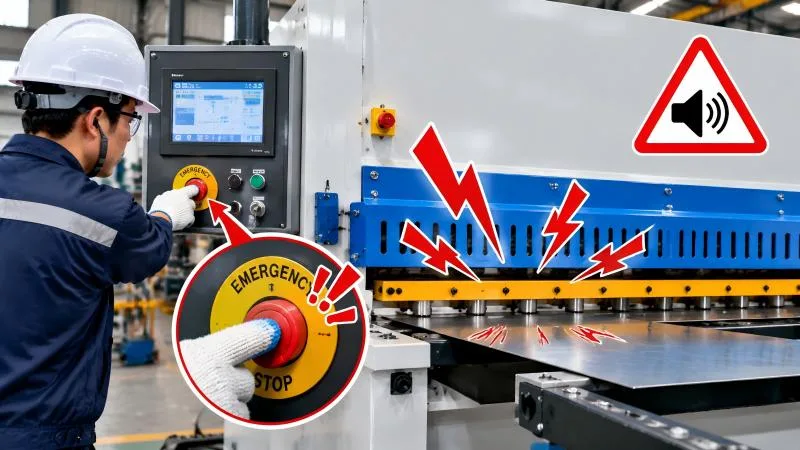
If the shearing machine produces unusual banging, grinding, or metallic clashing sounds during a cutting cycle, stop the operation immediately. These noises may indicate loose components, blade interference, or a mechanical fault. Do not continue cutting to determine whether the sound disappears.
Stop When Material Jamming Occurs
If a workpiece becomes trapped between the blades, shifts unexpectedly, or cannot move through the cutting area normally, activate the emergency stop when necessary to prevent further movement. Never pull jammed material out by hand while the machine remains capable of cycling.
Stop When Hydraulic or Electrical Faults Appear
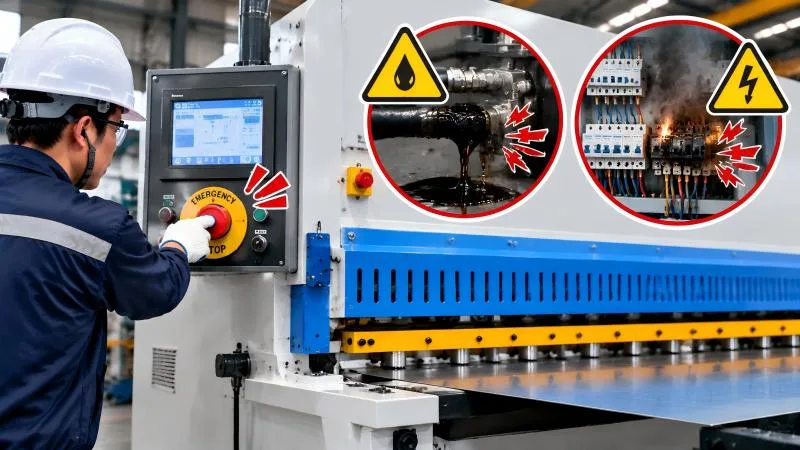
Unexpected ram movement, abnormal pressure readings, electrical burning odors, smoke, or visible hydraulic leaks may indicate a serious fault. Stop the machine and report the problem to qualified maintenance personnel.
Stop When Someone Enters a Restricted Area
If a person enters a hazardous zone during operation, stop the machine immediately using the appropriate emergency control. Keep the machine stopped until the area is confirmed safe and the cause of the unsafe situation has been addressed.
How to Use a Shearing Machine Emergency Stop Step by Step
Step 1: Locate the Emergency Stop Button
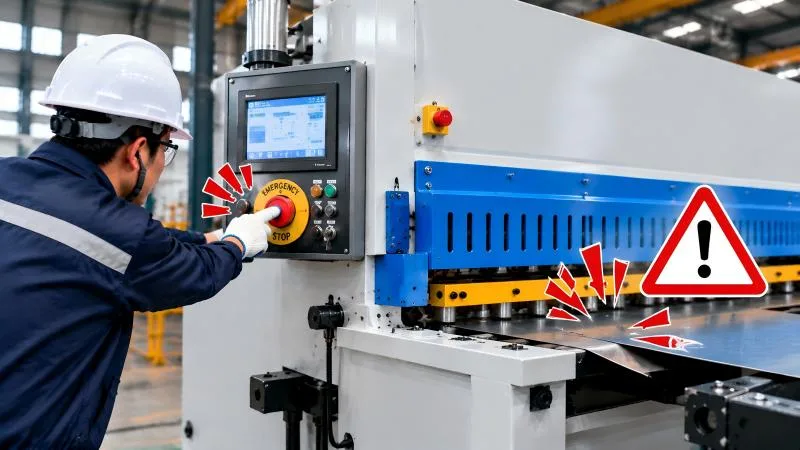
Before starting a shift, identify the emergency stop buttons on the main control panel and any additional operator stations. Check the machine manual to understand which devices are installed and how they function.
Operators should know where the nearest emergency stop is located without having to search for it during an emergency.
Step 2: Press the Emergency Stop Immediately
When a dangerous condition occurs, press the nearest accessible emergency stop button firmly. Do not delay shutdown to finish a cut or save a workpiece.
Keep clear of the blade area and other moving components. Remember that the machine may require additional time to stop, depending on its design.
Step 3: Keep the Machine Stopped and Assess the Situation
After activation, do not immediately restart the machine. Identify the apparent cause of the emergency from a safe position and notify the supervisor or maintenance team as required.
If inspection or repair is necessary, follow the site’s lockout/tagout procedure to isolate electrical and hydraulic energy and safely control stored energy. Never reach into the cutting zone merely because the emergency stop has been pressed.
Step 4: Resolve the Fault Before Resetting
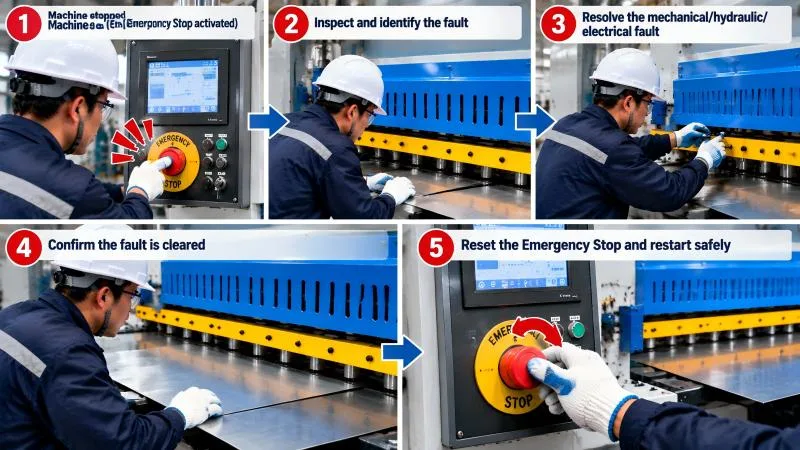
Qualified personnel must inspect and correct mechanical, hydraulic, or electrical faults before operation resumes. If material is jammed, follow the manufacturer’s approved procedure for removing it after the machine has been safely isolated.
Do not bypass safety interlocks or modify the control circuit to restore operation more quickly.
Step 5: Reset the Emergency Stop and Restart Safely
Once the hazard has been removed and the machine has been confirmed safe, reset the emergency stop according to the manufacturer’s instructions. Depending on the button design, this may require twisting or pulling the button.
Resetting the button does not necessarily restart the machine. Reinitialize the control system if required, verify that guards and safety devices are functioning, and use the prescribed startup procedure. Resume production only when the responsible personnel have authorized a safe restart.
How to Maintain a Reliable Emergency Stop System
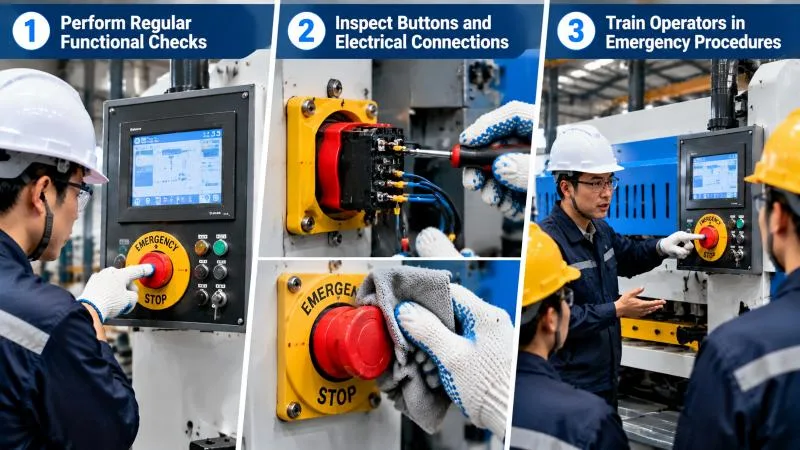
Perform Regular Functional Checks
Follow the manufacturer’s inspection schedule to verify the condition and operation of emergency stop devices. Any functional test should use the approved procedure and a safe test condition.
Inspect Buttons and Electrical Connections
Look for damaged button housings, loose mounting hardware, contamination, or other visible defects. Electrical testing and repairs must be performed by qualified personnel with the machine safely isolated as required.
Train Operators in Emergency Procedures
Provide hands-on training on button locations, emergency scenarios, reporting procedures, and safe recovery steps. Operators should understand that an emergency stop is not a substitute for machine guards, interlocks, or proper operating practices.
FAQ
Does the Shearing Machine Emergency Stop Disconnect All Power?
Not necessarily. The emergency stop initiates the machine’s designed safety response, but it may not isolate every electrical supply or release stored hydraulic energy. Use the formal energy-isolation procedure before maintenance or entry into hazardous areas.
Can I Restart the Machine Immediately After Pressing E-Stop?
No. First identify and resolve the cause of the stop, inspect the machine as required, and confirm that the work area is safe. Reset the button and restart only according to the manufacturer’s procedure.
What Should I Do If the Emergency Stop Does Not Work?
Stop using the machine and prevent further operation. Notify qualified maintenance personnel immediately. Do not bypass the device or attempt unauthorized repairs.
How Often Should I Check the Emergency Stop?
Follow the machine manufacturer’s instructions and your facility’s documented safety inspection schedule. Check for visible damage before operation and perform functional tests at the prescribed intervals.
Conclusion
Correct use of the Shearing Machine Emergency Stop is essential for protecting operators and reducing the consequences of unexpected machine faults. By recognizing emergency conditions, activating the stop promptly, investigating the cause, and following the approved reset procedure, operators can support safer and more reliable production.


