


Машина для стрижки овец Risk Assessment is an essential process for identifying workplace hazards, evaluating potential injuries, and establishing effective safety measures before operating an industrial shearing machine. During sheet metal cutting, operators may face risks from moving blades, hydraulic systems, electrical components, heavy materials, and unexpected machine movement. In this guide, I’ll explain how to conduct a systematic risk assessment for a shearing machine, identify common hazards, evaluate their severity, and implement practical control measures. These steps help manufacturers improve workplace safety, protect operators, and reduce unexpected production interruptions.
Why Is Risk Assessment Important for Машины для стрижки?
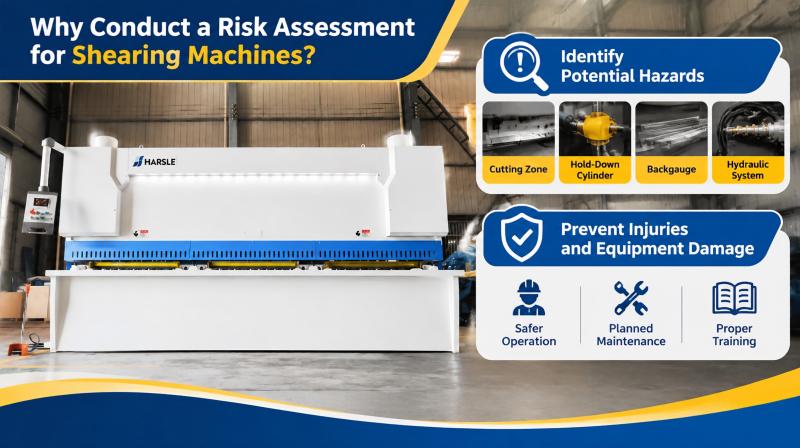
Identifying Potential Machine Hazards
A shearing machine contains several hazardous areas, including the upper and lower blades, hold-down cylinders, backgauge, and hydraulic drive system.
Without proper assessment, hazards such as exposed cutting zones, damaged guards, hydraulic leaks, and faulty emergency stops may go unnoticed.
Preventing Workplace Injuries and Equipment Damage
Risk assessment helps identify unsafe operating conditions before they result in accidents. It also allows manufacturers to prioritize safety improvements, establish maintenance requirements, and provide appropriate operator training.
Regular assessments contribute to safer production and more reliable machine operation.
How to Conduct a Shearing Machine Risk Assessment
Step 1: Identify All Potential Hazards
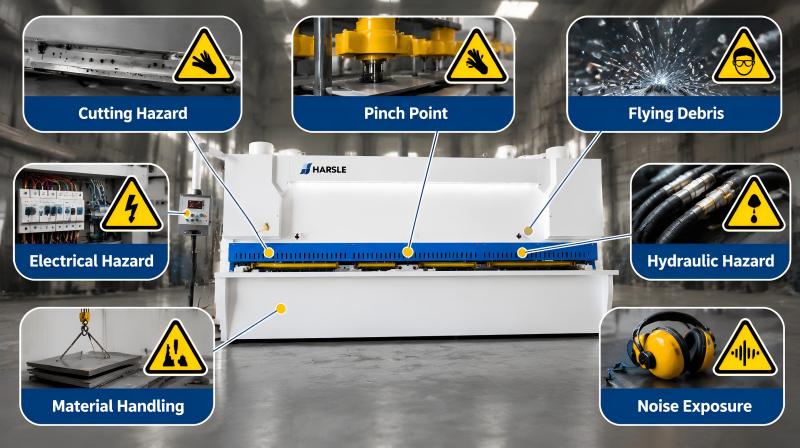
Start by inspecting the entire machine and surrounding work area. Consider hazards during material loading, cutting, unloading, cleaning, and maintenance.
Common shearing machine hazards include:
- Cutting hazards: Contact with upper and lower blades can cause severe cuts or crushing injuries.
- Pinch points: Moving hold-down cylinders and mechanical components may trap fingers or hands.
- Flying debris: Metal fragments and sharp offcuts may cause eye or facial injuries.
- Hydraulic hazards: Damaged hoses, oil leaks, and high-pressure fluid can create serious risks.
- Electrical hazards: Faulty wiring, damaged control panels, and electrical malfunctions may cause shocks or unexpected machine operation.
- Material handling hazards: Heavy steel plates may slip, fall, or cause musculoskeletal injuries.
- Noise exposure: Repeated cutting operations may expose workers to excessive industrial noise.
I recommend discussing these hazards with operators and maintenance technicians because they often understand the actual risks encountered during daily production.
Step 2: Evaluate the Severity and Likelihood of Each Risk
After identifying potential hazards, evaluate how likely each event is to occur and how serious its consequences could be.
A simple risk matrix can help organize the assessment:
| Уровень риска | Описание | Recommended Action |
|---|---|---|
| Низкий | Minor injury or unlikely occurrence | Maintain existing controls |
| Середина | Possible injury requiring attention | Introduce additional safety measures |
| Высокий | Serious injury or frequent exposure | Implement immediate risk reduction |
| Critical | Potential fatality or severe injury | Stop operation until risks are controlled |
For example, an exposed cutting area presents a serious risk because accidental contact with moving blades can cause severe injuries. This hazard requires effective guarding and appropriate safety devices.
The assessment should also consider how frequently workers are exposed to each hazard.
Step 3: Inspect Machine Guards and Safety Devices
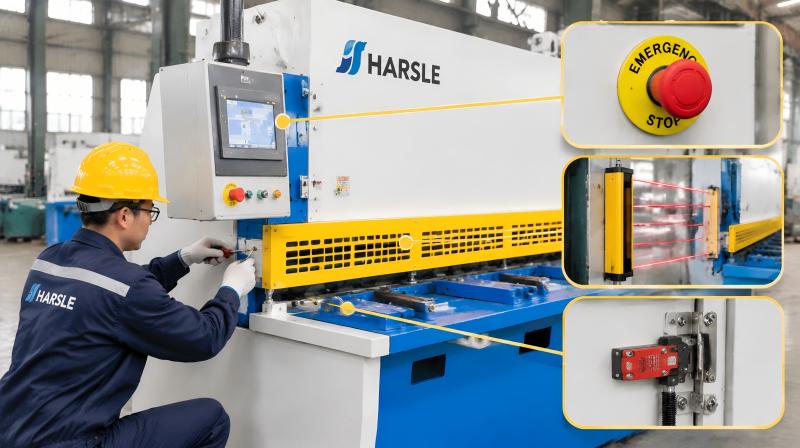
Check whether all required protective devices are correctly installed and functioning.
Important components include:
- Front finger guards: Prevent access to dangerous cutting areas.
- Side guards: Restrict access to hazardous moving components.
- Rear safety barriers: Prevent unauthorized entry into the rear working area.
- Emergency stop buttons: Allow operators to stop the machine during emergencies.
- Safety interlocks: Prevent hazardous operation when protected access points are open.
- Light curtains: Where fitted, detect intrusion into designated hazardous zones and initiate the appropriate safety response.
Never assume that an installed safety device is functioning correctly. Inspect and test protective systems according to the manufacturer’s instructions and applicable safety standards.
Step 4: Evaluate Operating Procedures and Operator Training
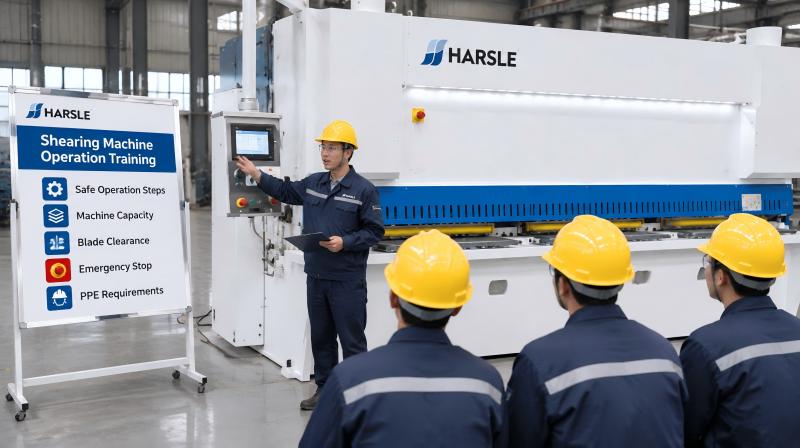
Review how employees operate the shearing machine, including material feeding, backgauge positioning, cutting operations, and finished-part removal.
Check whether operators understand the machine’s rated capacity, blade clearance requirements, emergency stop locations, and safe material-handling procedures.
Operators should receive appropriate training before using the equipment independently. Any maintenance involving electrical systems, hydraulic pressure adjustments, or safety-control circuits must be performed by qualified personnel.
Step 5: Implement Risk Control Measures
Once the risks have been evaluated, establish suitable measures to reduce them.
I recommend following the hierarchy of controls:
- Elimination: Remove unnecessary hazardous activities or access to dangerous areas.
- Engineering Controls: Install fixed guards, interlocks, light curtains, and suitable material-handling equipment.
- Administrative Controls: Establish operating procedures, inspection schedules, warning signs, and operator training.
- Personal Protective Equipment: Provide appropriate safety glasses, hearing protection, protective footwear, and task-appropriate gloves.
PPE should supplement, not replace, effective machine guarding and other higher-level safety controls.
Step 6: Document Findings and Review the Assessment
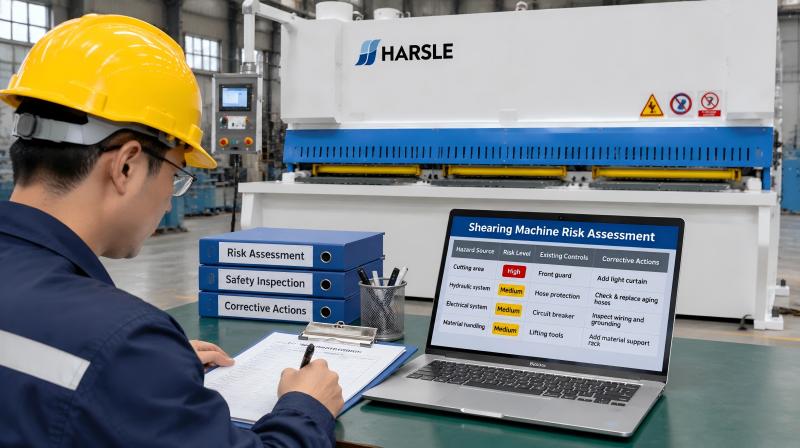
Record identified hazards, risk levels, existing safeguards, and required corrective actions.
Assign responsibilities and deadlines for completing safety improvements. I also recommend reviewing the assessment whenever the machine configuration changes, new equipment is installed, an accident occurs, or production procedures are modified.
Вопросы и ответы
How Often Should a Shearing Machine Risk Assessment Be Conducted?
Conduct an initial assessment before introducing the machine into production. Review it periodically and whenever significant changes, accidents, or newly identified hazards occur.
Who Is Responsible for Conducting a Risk Assessment?
The assessment should involve workplace safety personnel, machine operators, supervisors, and qualified maintenance technicians. Technical specialists should evaluate electrical and hydraulic hazards when necessary.
What Are the Most Dangerous Areas of a Shearing Machine?
The blade area, hold-down cylinders, rear working zone, and moving mechanical components are important hazard areas. Their risks must be controlled through appropriate guarding and safe operating procedures.
Заключение
Conducting a comprehensive shearing machine risk assessment helps manufacturers identify hazards, evaluate potential consequences, and implement appropriate safety controls. By inspecting machine components, reviewing operating procedures, training employees, and documenting corrective actions, companies can significantly improve workplace safety.
I recommend making risk assessment part of your regular machine safety management program rather than treating it as a one-time inspection.


