


Machine à cisailler Encoder Calibration is essential when a shearing machine starts producing inaccurate cutting lengths or inconsistent positioning results. The encoder is a key component that provides position feedback to the control system, ensuring the machine achieves precise cutting performance. In this article, I’ll explain the calibration process, common encoder problems, and practical maintenance methods to help operators and technicians improve cutting accuracy and maintain reliable machine operation.
Compréhension Machine à cisailler Encoder Calibration
What Is a Shearing Machine Encoder?
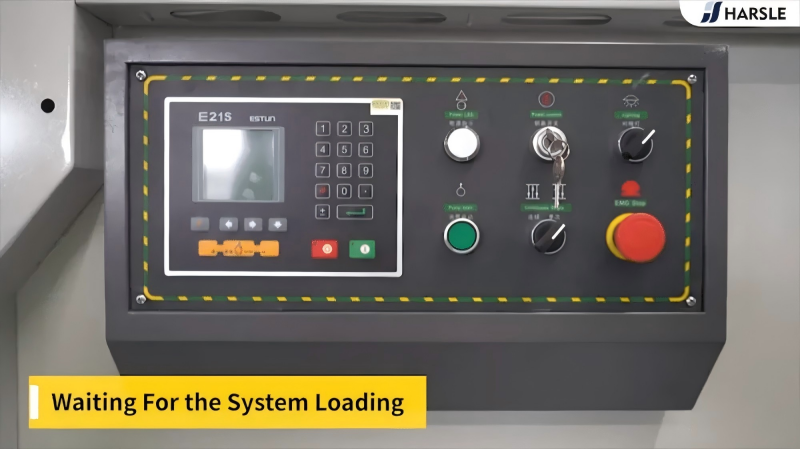
An encoder is a precision feedback device that converts mechanical movement into electrical signals. In a shearing machine, the encoder usually monitors the position of the backgauge system or moving components and sends real-time data to the CNC controller.
Accurate encoder feedback is essential because the controller relies on this information to determine the exact positioning of the material before cutting.
Why Encoder Calibration Is Important
Incorrect encoder calibration can cause several problems, including inaccurate sheet positioning, incorrect cutting dimensions, repeated positioning errors, and reduced production efficiency.
Through regular Shearing Machine Encoder Calibration, operators can correct position deviations, improve cutting consistency, and prevent unnecessary material waste.
Common Causes of Encoder Calibration Problems
Encoder Signal Errors
A weak or unstable signal may occur due to damaged cables, loose connections, electrical interference, or encoder aging. These issues can cause incorrect position readings.
Mechanical Installation Errors
If the encoder mounting position changes or the coupling between the encoder and mechanical system becomes loose, the feedback value may no longer match the actual movement distance.
Controller Parameter Mismatch
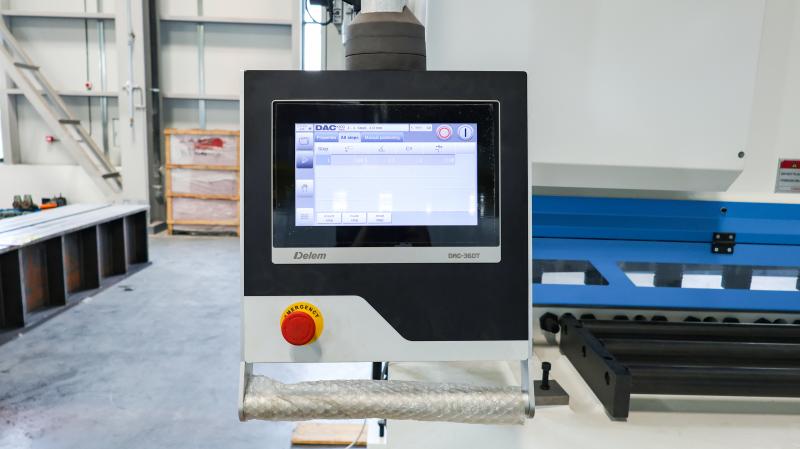
The CNC system requires correct encoder resolution and movement parameters. Incorrect settings can result in inaccurate positioning even when the encoder itself is working properly.
How to Perform Shearing Machine Encoder Calibration Step by Step
Step 1: Inspect the Encoder Installation
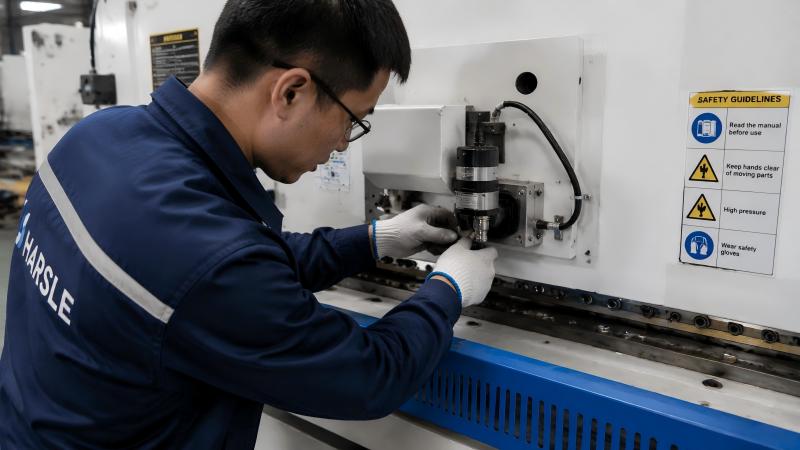
Before calibration, I always recommend checking the physical condition of the encoder. Make sure the encoder is firmly mounted and that there are no loose screws, damaged couplings, or abnormal mechanical movement.
Inspect the encoder cable and connectors carefully. Poor electrical connections can create unstable signals and affect calibration accuracy.
Step 2: Check Encoder Feedback Signals
Access the CNC controller’s diagnostic menu and monitor the encoder feedback value while manually moving the backgauge.
The displayed position should change smoothly and match the actual movement direction. If the value jumps, stops, or moves incorrectly, further inspection is required.
Step 3: Verify Machine Reference Position
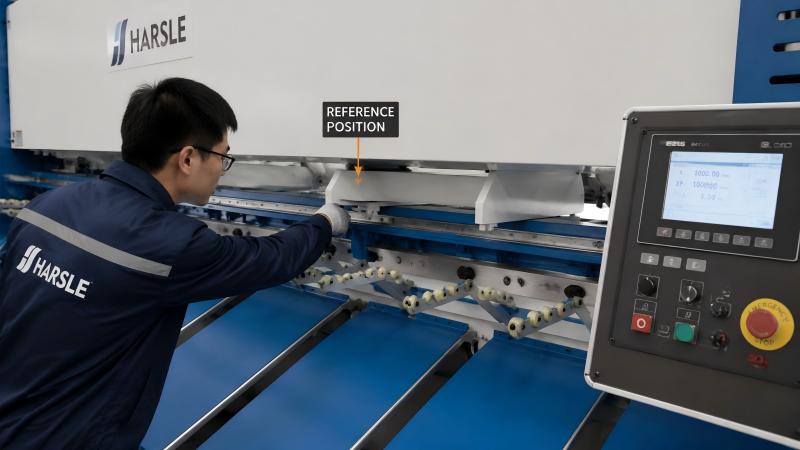
The machine reference point provides the basic position used by the CNC system. Before calibration, move the backgauge to the reference position and confirm that the controller recognizes the correct starting point.
Incorrect reference positioning will affect all subsequent measurements.
Step 4: Measure Actual Movement Distance
Use a precision measuring tool to compare the actual mechanical movement distance with the value displayed by the CNC system.
For example, if the backgauge moves 500 mm physically but the controller displays 498 mm, encoder parameters need adjustment.
Step 5: Adjust Encoder Parameters
Enter the CNC parameter settings and modify encoder-related values, such as pulse equivalent, resolution, or scaling factor, according to the manufacturer’s instructions.
After adjustment, repeat the movement test to confirm that the displayed value matches the actual position.
Step 6: Perform Test Cutting
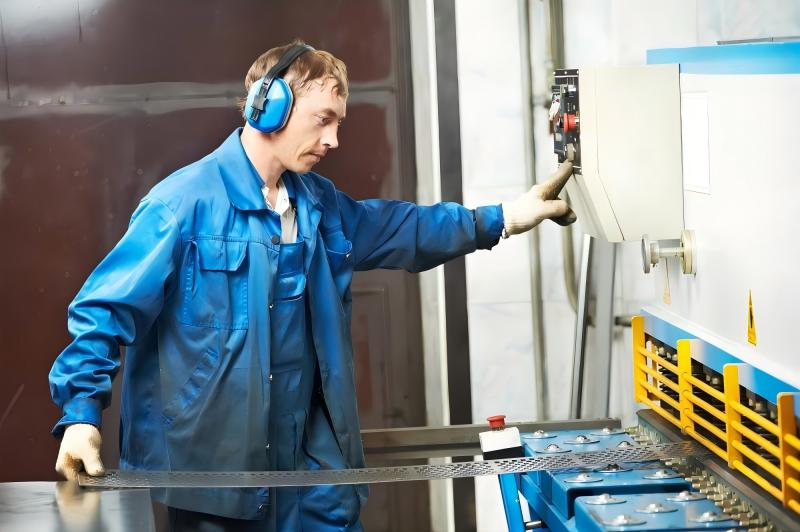
After completing calibration, I recommend performing several test cuts using standard material.
Measure the cut dimensions carefully and confirm that the positioning accuracy meets production requirements. If errors remain, repeat the calibration process or inspect mechanical components.
Best Practices for Maintaining Encoder Accuracy
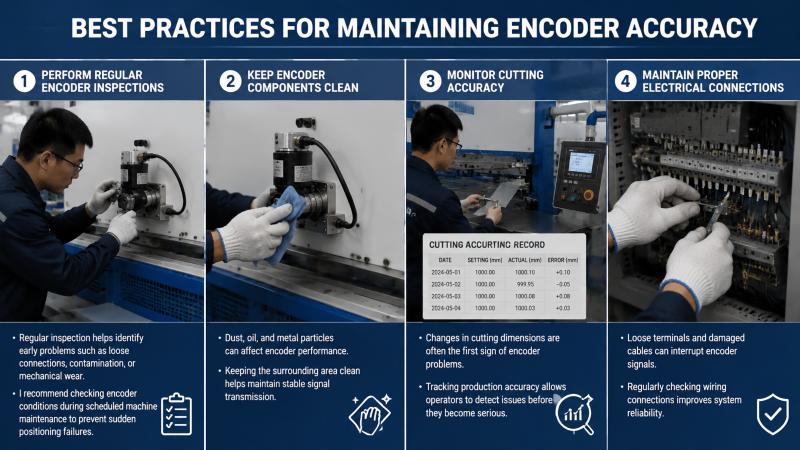
Perform Regular Encoder Inspections
Regular inspection helps identify early problems such as loose connections, contamination, or mechanical wear.
I recommend checking encoder conditions during scheduled machine maintenance to prevent sudden positioning failures.
Keep Encoder Components Clean
Dust, oil, and metal particles can affect encoder performance. Keeping the surrounding area clean helps maintain stable signal transmission.
Monitor Cutting Accuracy
Changes in cutting dimensions are often the first sign of encoder problems. Tracking production accuracy allows operators to detect issues before they become serious.
Maintain Proper Electrical Connections
Loose terminals and damaged cables can interrupt encoder signals. Regularly checking wiring connections improves system reliability.
FAQ
How often should I perform Shearing Machine Encoder Calibration?
Calibration frequency depends on machine usage and operating conditions. Regular inspection is recommended, especially when cutting accuracy decreases.
What are the signs that an encoder needs calibration?
Common signs include inaccurate cutting length, unstable backgauge positioning, incorrect displayed values, and repeated dimensional errors.
Can I calibrate the encoder without checking mechanical parts?
No. Mechanical looseness, coupling problems, or guide system wear can also cause positioning errors. These issues should be checked before calibration.
Does encoder calibration improve cutting quality?
Yes. Proper calibration improves positioning accuracy, reduces material waste, and helps maintain consistent cutting results.
Conclusion
Approprié Shearing Machine Encoder Calibration is essential for maintaining accurate positioning and reliable cutting performance. By checking encoder installation, verifying signals, adjusting parameters, and performing test cuts, operators can effectively solve positioning errors and improve production efficiency.
Regular maintenance, clean working conditions, and timely inspections help extend encoder service life and reduce unexpected downtime. For more technical guidance or support with shearing machine maintenance, feel free to contact our team for professional assistance.


